




















The Highest Stakes treats poker less like a sport and closer to ritual theater. Five strangers arrive at a luxury hotel for a private tournament with a $20 million jackpot, the kind of premise that suggests slick card-table psychology, expensive suits, and smug men pretending mathematics is destiny.
The film has some of that, yet its real interest lies elsewhere. This is a revenge thriller disguised as a poker movie, with mystery-box construction, faint supernatural shading, and a nasty little moral engine turning underneath the velvet surface.
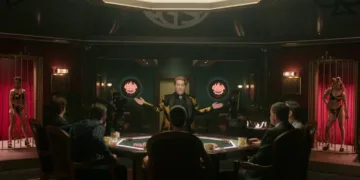
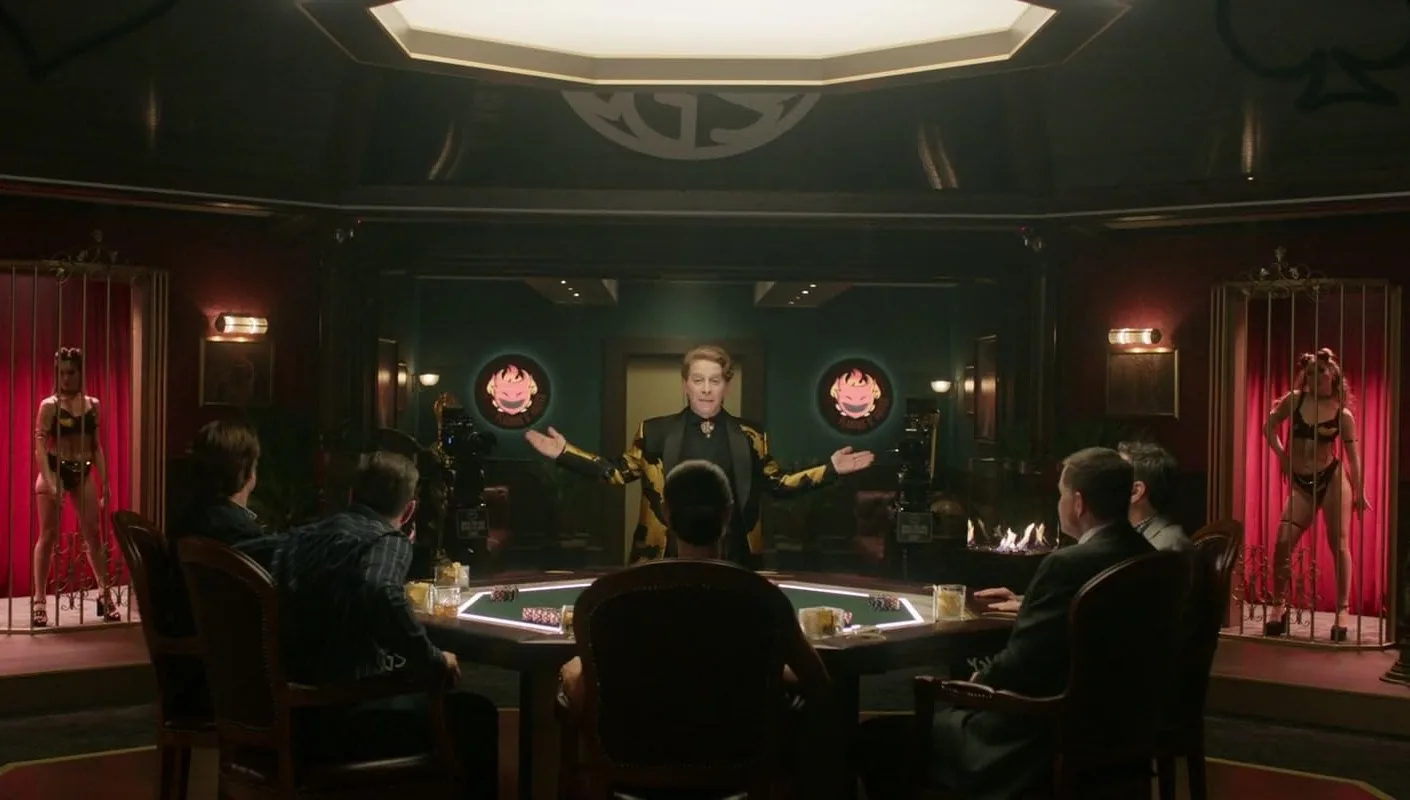
The setup is pulpy in a pleasingly old-fashioned way: strangers trapped in a controlled space, watched by unseen eyes, forced to play through secrets they thought had stayed buried. The hotel becomes a sealed arena, part casino, part confession booth, part theatrical punishment chamber. There is little here that feels polished in the prestige-thriller sense, but the film knows the value of a lurid hook. It has the air of a low-budget genre piece grinning at its own bad manners.
The Table as Confession Machine
The narrative plants its first wound before the cards appear. Celeste, a young girl, hides in a closet during a home invasion that ends with her mother’s death. Beside her sits Aurora, impossibly present as an adult woman, offering a cryptic promise that the attacker will receive “just desserts.” That opening gives the film its moral grammar. Time, guilt, and punishment are already warped before the poker tournament begins.
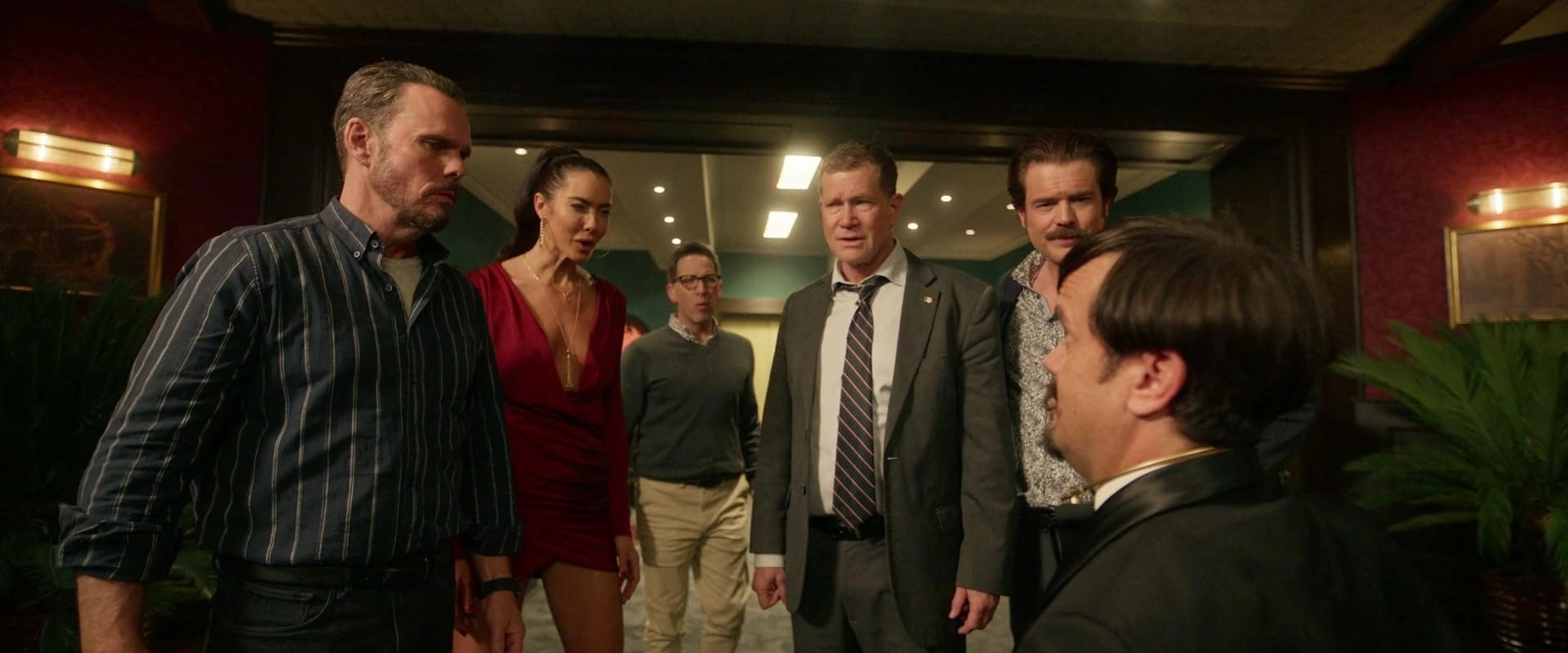
In the present, the invited players arrive with distinct public masks: a failing actor acting as host, a disgraced congressman, a corrupt detective, a debt-ridden surgeon, a con man, and Aurora herself. They appear disconnected at first, yet the film keeps tightening the thread between them.
The poker table becomes a mechanical device for revelation. Losing a hand means removal from the game, with death hanging in the air as the likely price. Winning, meanwhile, offers no real freedom. Every card pushes someone closer to exposure.
This design gives The Highest Stakes a structure closer to a puzzle room than a serious poker drama. The gambling rules matter less than the ethical bookkeeping. In that sense, it resembles certain single-location thrillers and anthology-horror wraparounds, where a sinister host gathers sinners for staged reckoning.
It also borrows from game design logic: each round functions like a level, each backstory like an unlocked file, each reveal like a scripted event. The weakness is that many clues announce themselves early. The viewer often arrives at the destination before the film does. Still, there is pleasure in watching the machinery click together, even when the gears are visible.
Players, Masks, and Moral Debt
Seth Green gives Samuel Nicholas a sharp, theatrical charge. At first, he plays the role with restraint, keeping his energy coiled behind the polished surface of a host who seems to know far too much. As the game grows stranger, his performance becomes broader, stranger, and closer to carnival showmanship.
That shift suits the film’s artificial design. Green understands that this world is slightly exaggerated, a place where guilt wears formalwear and every line of dialogue sounds like it may be hiding a trapdoor.
Kevin Dillon’s Detective Michael Quinn brings a useful ugliness to the table. Quinn is corrupt, abrasive, and openly self-serving, a man whose moral rot requires very little excavation. Dillon plays him with a blunt force that makes him easy to despise, which helps the film maintain tension even during its clumsier stretches.
Eloise Lovell Anderson’s Aurora is the film’s most charged presence. Her heightened delivery could have tipped into decorative mystery, yet she gives Aurora a strange emotional weight, especially as her connection to the opening tragedy begins to clarify.
Pancho Moler’s Dante does heavy lifting in the room, giving the film an animated pulse whenever the setting risks becoming static. Charlie Weber’s Billy Gray and Dan Buckinsky’s surgeon receive less space to shape the story, which leaves their roles feeling thinner. Still, the ensemble works because each character understands performance as survival. Everyone at the table is bluffing long before anyone checks their cards.
A Low-Budget Judgment Chamber
Tony Dean Smith directs The Highest Stakes with a clear sense of containment. The hotel is staged like a pressure chamber, polished enough to suggest wealth, limited enough to reveal the film’s budget. The digital look can feel cheap, and some of the visual texture lacks the seductive danger that a stronger noir or casino thriller might bring. Yet the film compensates through pace, theatrical blocking, and a willingness to let its sordid energy spill across the table.

The editing keeps the narrative moving, cutting between clues, confrontations, and staged reveals with enough momentum to keep the room alive. The music supports the bigger turns without smothering them, adding a faint pulse of melodrama when the film leans into its moral-fable instincts.
The final act, however, moves too quickly for its own good. Revelations stack up fast, and several character motivations could have used extra breathing room. Some backstory material lands as unpleasant shock value rather than earned darkness.
The film’s cross-cultural appeal sits in its use of poker as a global image of risk, greed, and self-invention. Texas Hold’em has traveled far beyond its American roots through televised tournaments, casino tourism, and digital gaming spaces. Here, the game becomes symbolic machinery rather than a credible study of poker itself.
Viewers seeking tactical authenticity may feel shortchanged. Viewers open to a slightly mad revenge chamber piece may find enough nasty charm in its staged punishments, flamboyant performances, and crooked moral architecture.
Where to Watch The Highest Stakes (2026) Online






The Highest Stakes is a psychological thriller film that premiered at the Beverly Hills Film Festival on April 13, 2026, before making its digital and video-on-demand debut the following day on April 14, 2026. Directed by Tony Dean Smith and produced by Steven Paul, the suspenseful story follows five strangers independently invited to an exclusive, luxury hotel for an elite poker game promising vast wealth. As personal secrets are systematically brought to light and the doors are locked, the players realize they have been brought together for a calculated act of retribution. Audiences can purchase or rent the film digitally on major platforms including Apple TV and Amazon Prime Video.
Full Credits
Title: The Highest Stakes
Distributor: Paramount Global Content Distribution, Republic Pictures
Release date: April 13, 2026 (Beverly Hills Film Festival premiere), April 14, 2026 (United States digital release)
Rating: R
Running time: 105 minutes
Director: Tony Dean Smith
Writers: Gary Preisler, Steven Paul
Producers and Executive Producers: Steven Paul
Cast: Seth Green, Kevin Dillon, Charlie Weber, Dylan Walsh, Eloise Lovell Anderson, Chloe Fox, Dan Bucatinsky, Pancho Moler, Miranda Heldt, Nathan Cooper
Director of Photography (Cinematographer): Ivan Vatsov
Editors: Shaun Lang
Composer: Laurent Eyquem
The Review
The Highest Stakes
The Highest Stakes is messy, theatrical, and visibly constrained by its budget, yet its strange poker-table morality play has enough bite to stay watchable. The mystery is often predictable, and the final act rushes through key reveals, but Seth Green, Eloise Lovell Anderson, Kevin Dillon, and Pancho Moler give the film the pulpy charge it needs. It works best as a lurid revenge thriller, not a serious poker drama.
PROS
- Strong cast energy
- Seth Green fits the role well
- Aurora gives the story mystery
- Fast pace keeps it watchable
- Fun revenge-thriller setup
CONS
- Predictable twists
- Uneven digital look
- Rushed final act
- Thin supporting characters
- Poker element lacks depth