


























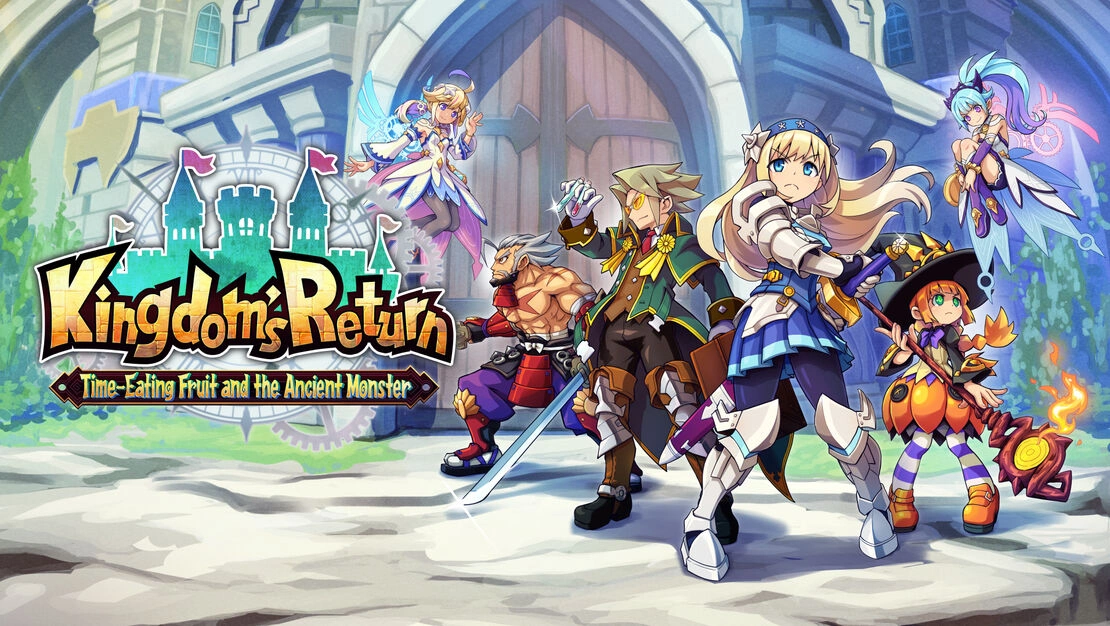

Kingdom’s Return: Time-Eating Fruit and the Ancient Monster places Inti Creates back in comfortable territory: crisp 2D action, bright pixel art, class-based combat, and a structure that keeps pushing players into short, repeatable missions.
The twist is Almacia, a ruined kingdom in Norlant that has been thrown far into the future, leaving its castle, roads, shops, and citizens in decay. Chronos, the Great Fairy of Time, pulls a lone adventurer into the disaster, asking them to restore the kingdom by battling through monster-filled dungeons and gathering the materials needed to rebuild.
The premise has enough charm to work. A land tied to fairies, a broken royal seat, and an ancient monster lurking behind the title all suggest a fantasy adventure with a playful sense of scale. In practice, the game leans hardest on its side-scrolling action. The town restoration system gives the campaign a light strategic frame, and RPG upgrades add steady growth, yet the strongest appeal comes from picking a hero, entering a stage, clearing enemies, and inching Almacia back toward working order.
Four Heroes, Snappy Fights, and a Repetitive Mission Cycle
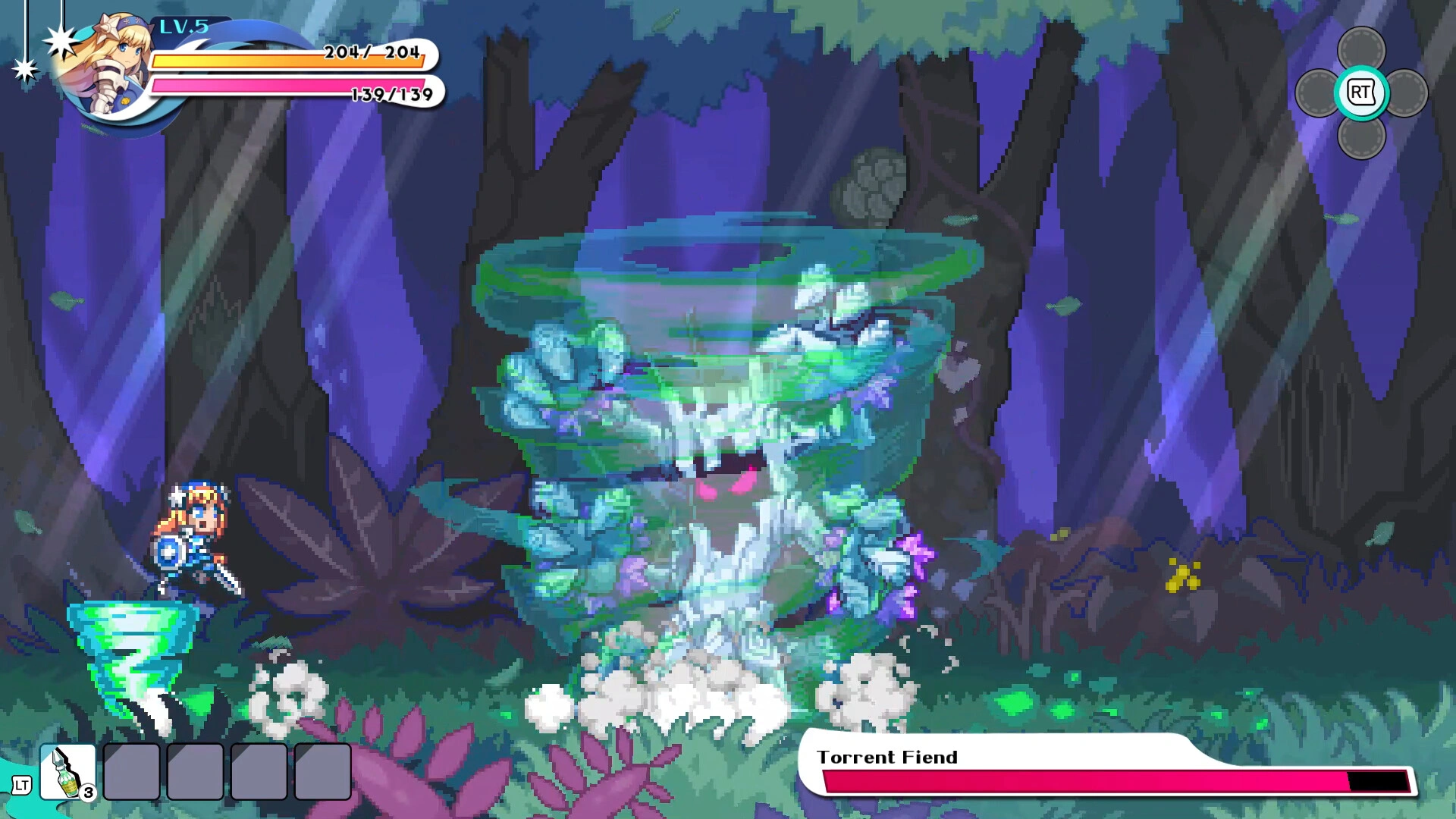
The action loop begins in Almacia, then sends players into isometric field areas where enemies and points of interest lead into side-scrolling combat zones. Forests, caves, and other hostile locations become compact arenas where every monster must be defeated before progress continues.
The controls are direct: move, jump, dash, guard, strike, use special attacks, trigger character skills, and consume items when trouble starts piling up. It is a familiar Inti Creates rhythm, closer to a lean action RPG than a grand platforming epic.
The four playable heroes give the combat its best texture. Imperial is the safest starting point, a sword-and-shield knight with balanced stats, strong endurance, and guard-focused tools. Her parry-centered Shield Combat gives close-range fighting a satisfying defensive edge, especially once abilities like Shield Charge and Leaping Slash enter the rotation. Spark Knight+ adds a flashier option, letting her thrust forward with lightning and a chance to inflict paralysis.
Wizard plays from a distance, using magic and buffs to compensate for fragile defense. Alchemist brings a tactical slant through chemicals, elemental changes, and status ailments. Zipangu favors speed and dual-blade pressure, rewarding aggressive combo play while punishing sloppy positioning. Since each class has its own Class Circle, CP upgrades provide a real reason to experiment rather than settle into one routine too early.
Moment to moment, the combat is solid. Dodging telegraphed attacks, countering at the right time, and cutting through mobs has a clean arcade feel. Boss fights are less consistent. Their patterns can be readable, yet their large health pools stretch encounters past their best ideas. Repeated dungeon visits, recycled enemy types, and similar-looking rooms add fatigue, though hazards like poisonous mushrooms, tidal waves, mine carts, falling embers, and geysers help later stages avoid total sameness.
Rebuilding Almacia, One Stat Bonus at a Time
The restoration system sounds richer than it feels. During missions, players collect gold and materials such as fine timber, iron, cotton nets, torrent rubber, and sapphire fruit. Back in Almacia, those resources go toward clearing broken roads, dismantling ruins, and constructing a new version of the kingdom.
The player also chooses a castle type linked to one of the four classes: Imperial, Wizard, Alchemist, or Zipangu. That choice affects the castle’s area of influence, which then shapes the bonus effects created by nearby buildings.
The available structures fit the fantasy town template: weapon shop, armor shop, accessory shop, general store, tavern, inn, and similar facilities. Each one boosts performance in practical ways, raising attack, defense, HP, or other stats that make future missions easier. Road connections and placement matter enough to give players a reason to think before placing buildings, and the system creates a steady sense of mechanical improvement.
The issue is depth. Almacia rarely feels like a living settlement. Buildings function less like parts of a recovering society and closer to physical menu options that raise numbers. There are few tough choices, little civic personality, and limited visual payoff for the kingdom’s supposed revival.
The loop becomes predictable: run a mission, gather resources, place a structure, gain a bonus, run another mission. Stronger tutorials would have helped as well, since class upgrades, structure effects, and placement logic could use clearer explanation. The ideas are workable, yet the game rarely develops them into something with real strategic bite.
Bright Pixel Art, Thin Storytelling, and Modest Staying Power
The presentation carries a lot of goodwill. The 16-bit-style pixel art is clean, colorful, and easy to read in motion. Character sprites have lively animations, clear silhouettes, and enough personality to make each hero stand apart before their move sets even enter the discussion.

Enemy designs are similarly readable, which matters in a game built around quick reactions and repeated combat rooms. The fantasy environments are cheerful and inviting, and the music fits the mood with a bouncy adventure tone, though few tracks linger after play.
The visual identity becomes less assured outside combat. The action sprites look stronger than the plain town structures and static story scenes. Cutscenes lean on portrait conversations against illustrated backdrops, which drains energy from a premise that should carry greater urgency.
A kingdom has been torn from its era, a fairy companion guides the hero, and an ancient monster waits somewhere in the distance. Those pieces should create a stronger pull. Instead, the story often settles into exposition and light quest chatter, leaving Almacia oddly empty for a place the player is meant to save.
The campaign runs about seven hours, with replay value tied to the four classes and their distinct approaches to combat. At $14.99, the game is priced fairly for a compact action RPG. Players seeking charming pixel art and straightforward side-scrolling battles will find a pleasant diversion here. Those expecting deep town-building, memorable storytelling, or a gripping progression loop may find Almacia restored in function before it ever feels restored in spirit.
The Review
Kingdom's Return: Time-Eating Fruit and the Ancient Monster
Kingdom's Return: Time-Eating Fruit and the Ancient Monster works best as a compact action RPG with charming pixel art and four distinct heroes. Its combat is responsive, its class variety gives repeat runs some value, and its $14.99 price feels fair. The weak story, thin town-building, repeated missions, and overlong boss fights keep it from reaching the standard of Inti Creates’ stronger work.
PROS
- Crisp pixel art
- Four distinct playable classes
- Responsive side-scrolling combat
- Fair price
- Enjoyable short-session structure
CONS
- Shallow kingdom-building
- Weak storytelling
- Repetitive dungeon design
- Boss fights drag
- Limited sense of progression