

















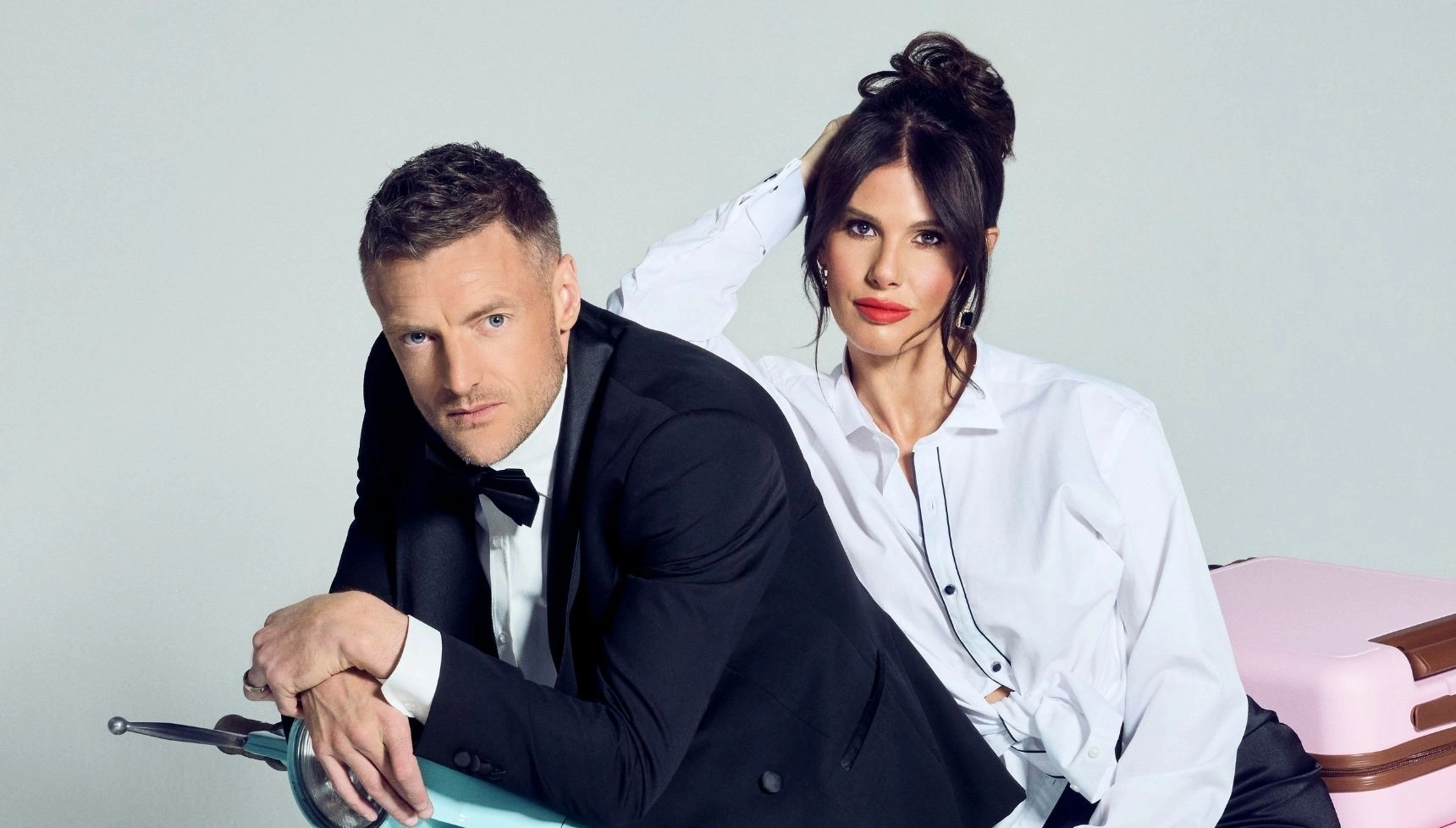

The Vardys arrives on ITV as a three-part reality series with a premise that sounds almost engineered in a lab for modern celebrity television. Jamie Vardy leaves Leicester City after 13 years and heads to Italian side Cremonese, while Rebekah Vardy manages the family’s move to northern Italy, complete with packing, property searches, schools, visas, children, cameras, and the lingering public shadow of the “Wagatha Christie” libel case.
On paper, this should be rich material. There is football history, celebrity damage control, tabloid mythology, family pressure, and the odd spectacle of English sporting fame being repackaged through Italian relocation drama. The series seems designed to capture a particular media moment: the era in which famous people try to reclaim their image through curated access.
The trouble is that access can be a thin substitute for revelation. The Vardys has the ingredients for sharp, messy reality television, yet it often feels strangely inert, as if the cameras have been invited inside only to find everyone keeping the best doors locked.
Relocation Without Rhythm
Much of The Vardys is built around the logistics of moving: packing up the family home, looking for rental properties, finding school places, sorting visas, and wondering how long the Italian chapter might last. These are real pressures, and television has often found comedy, tension, and class commentary in domestic upheaval. Here, though, the practical problems sit on screen like paperwork with a production budget.
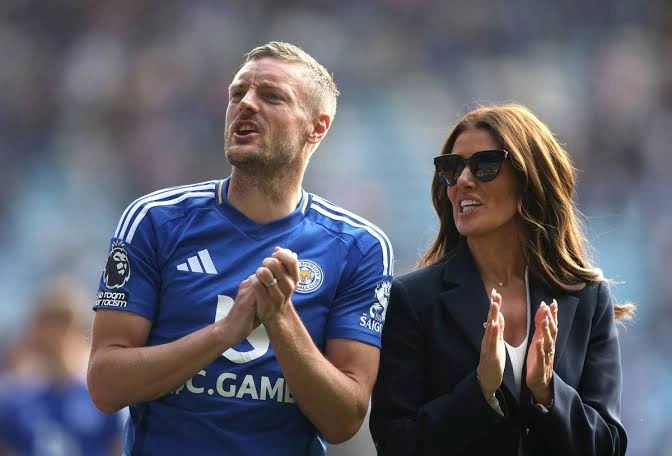
The move to Cremonese gives the series a clear line of motion. Jamie is leaving behind a club where he became a Premier League icon, stepping into a late-career challenge in Serie A. That could have opened a window into athletic aging, masculinity, and the emotional cost of leaving a place that helped define him. The series gestures toward those ideas through injury, stress, a muted debut, and uncertainty around the club’s form, yet it rarely stays close enough to Jamie’s mind to make the sporting stakes feel alive.
Instead, suspense is built around questions that feel either thin or already settled. Will Jamie score? Will Cremonese survive? Will the family settle into Italy? Reality television does not need shocking turns every five minutes, but it does need rhythm, texture, or a sense that ordinary moments are revealing something hidden. The Vardys often gives us the ordinary part and forgets the revelation.
There is a social angle buried here too. The series captures the gendered machinery of elite football families, where a man’s career move becomes a household migration managed largely by his wife. Rebekah handles schools, houses, and family logistics while Jamie’s professional life drives the relocation. The show notices this dynamic without pressing on it, which is a missed opportunity.
Guarded Stars, Carefully Managed Selves
Rebekah Vardy is positioned as the series’ main force: blunt, combative, image-aware, and permanently linked to one of the strangest celebrity legal dramas of recent British pop culture. She understands the camera, and she knows the public has already assigned her a role. That awareness gives the series its few sparks. Her refusal to apologise, her insistence that she has moved on, and her claim that she carries no negative feeling toward Coleen Rooney all create tension because the audience can sense the performance of restraint.
The problem is that the show rarely gets past that restraint. Rebekah appears guarded at the exact points where the series needs candor. The “Wagatha Christie” case hangs over the programme as both hook and obstacle. It gives the show cultural relevance, then becomes the subject everyone seems reluctant to unpack. There are hints of anger, fatigue, defiance, and self-protection, but the series never shapes those hints into a serious portrait of public shame, reputation, and the cost of living inside a tabloid story.
Jamie Vardy is quieter, sometimes to the point of vanishing from his own supposed vehicle. His Leicester legacy matters, yet the show offers limited insight into what that legacy means to him now. His calm refrain that things will be fine makes him seem emotionally steady, but it also flattens scenes that need friction. The memorabilia sequence briefly suggests a richer football documentary waiting in the wings, while his tangent about Robin Hood offers a small flash of oddball charm. Rebekah’s reply that he is “an encyclopedia of crap” may be one of the few moments with genuine comic life.
The strongest emotional detail involves the children, especially the image of car windows being blocked from photographers. That single detail says far more about fame, intrusion, and family damage than most of the staged relocation material surrounding it.
Reality TV Without Enough Reality
As celebrity television, The Vardys tries to serve several audiences at once. Football fans might expect a deeper look at Jamie’s post-Leicester transition. Viewers drawn by the Wagatha fallout might expect confrontation or reflection. Reality-TV viewers might hope for glamour, chaos, wit, or some shamelessly entertaining social theater. The series offers fragments of each, then backs away before any one mode can take shape.
The Milan property search is the clearest example of the show’s uncertain craft. Rebekah tours an expensive and apparently unsuitable home, complete with odd interiors and the faint smell of production-assisted inconvenience. It should be funny, revealing, or absurd in a sharper way. Instead, it becomes another scene where the series seems aware that it needs drama, then settles for a camera-friendly errand.
This matters because modern reality television has shifted. Streaming and broadcast platforms increasingly use documentary formats as reputation management tools for athletes, musicians, actors, and public figures. The promise is intimacy. The product often feels like image repair with better lighting. The Vardys fits neatly into that trend, yet it lacks the polish, self-awareness, or emotional openness that can make such projects work.
Its representation of WAG culture is similarly underdeveloped. Rebekah’s public persona carries years of class-coded, gendered scrutiny, with the familiar British habit of turning outspoken women near football into national sport. A sharper series could have examined that machine while still holding its subjects to account. This one mostly circles the issue.
The Vardys may hold some curiosity value for viewers already invested in Jamie and Rebekah Vardy, yet as television, it lacks the candor, pace, and wit needed to turn access into entertainment.
The Vardys is an intimate British fly-on-the-wall reality television documentary series that officially premiered on ITV1 and the ITVX streaming platform on June 1, 2026. The three-part series chronicles a major turning point for the prominent football and entertainment family as striker Jamie Vardy concludes his historic 13-year legacy with Leicester City FC to sign with Italian underdogs US Cremonese. The episodes focus heavily on his wife, Rebekah Vardy, as she attempts to leave the intense British tabloid scrutiny of her high-profile legal battles behind, managing the chaotic logistics of house hunting, school searches, and cultural adjustments for their four children in Italy. Viewers can currently stream the entire docuseries on demand via ITVX in the United Kingdom or watch for international distribution updates on local reality platforms.
Full Credits
Title: The Vardys
Distributor: ITV1, ITVX
Release date: June 1, 2026
Rating: TV-MA
Running time: 46 minutes per episode
- Producers and Executive Producers: Dan Grabiner, Nat Lippiett, Nicola Hill, Josh Jacobs, Louise Major
Cast: Rebekah Vardy, Jamie Vardy, Sofia Vardy, Finlay Vardy, Olivia Vardy, George Vardy
The Review
The Vardys
The Vardys offers an inside look at a high-profile family navigating relocation and lingering public scrutiny, but it struggles to turn access into compelling television. The pacing is slow, emotional stakes are flattened, and the central figures remain guarded, leaving few genuine moments of insight. While the series has curiosity value for fans, it rarely delivers the drama, humor, or reflection that could justify its premise.
PROS
- Rare behind-the-scenes access to a celebrity football family
- Highlights gendered dynamics in elite football households
- Occasional flashes of humor and personality
CONS
- Slow pacing and repetitive domestic focus
- Guarded central figures limit emotional engagement
- Minimal new insight on high-profile events or public scandal
- Property and relocation sequences often feel staged or inert