


























The Chishui River keeps changing direction, and the film edits as if stillness would count as defeat. Orders are shouted, maps are unfolded, soldiers charge uphill, and Mao Zedong pauses for another cigarette before the next tactical reversal. Crossing turns the Four Crossings of the Chishui River into a two-hour rush of movement, yet rarely allows that movement to settle into fear, grief, or anticipation.
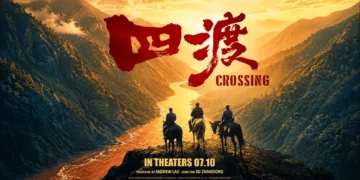
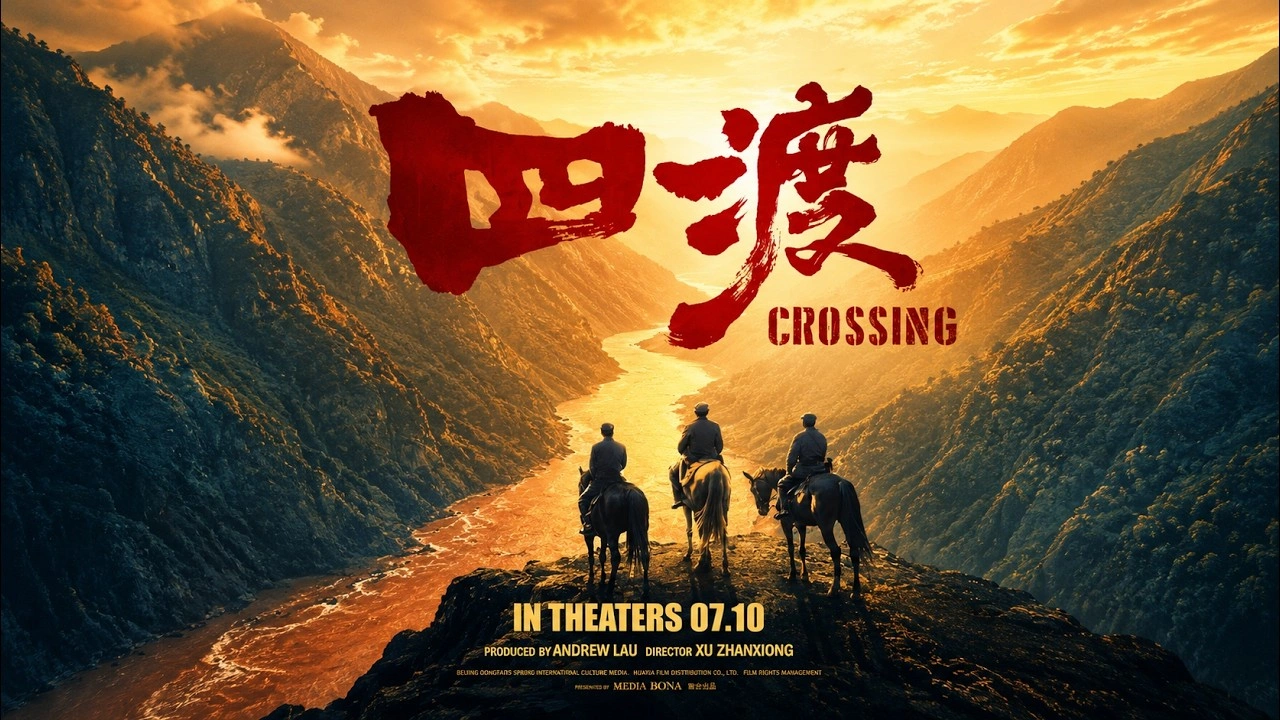
Directed by Xu Zhanxiong and written by Xu with Liu Yi, the film takes place in 1935, when the Central Red Army faces encirclement by Chiang Kai-shek’s much larger Kuomintang force. Mao, played by Liu Ye, gains political influence during the Zunyi Conference and proposes a series of unpredictable river crossings intended to confuse enemy commanders. The premise has the clean tension of a military chase: one army survives by remaining impossible to pin down.
The filmmaking behaves the same way. Shots rarely hold for longer than a few seconds. Officers burst through doors, fingers stab at routes on maps, cavalry and infantry surge through mountain passes. The pace creates urgency, then keeps applying pressure long after urgency has hardened into fatigue.
Faces in a Roll Call
The Zunyi Conference should establish the people responsible for the campaign. Instead, it resembles a historical attendance sheet delivered at sprinting speed. Zhou Enlai, Zhu De, Deng Xiaoping, Zhang Wentian, Wang Jiaxiang, Peng Dehuai, and several other officials arrive with names, ranks, and short statements before the film moves elsewhere.
The tactical objective remains fairly easy to understand. Mao wants mobility. Chiang wants containment. The people discussing those ideas prove harder to retain because the screenplay introduces them as functions within history rather than personalities occupying a room.
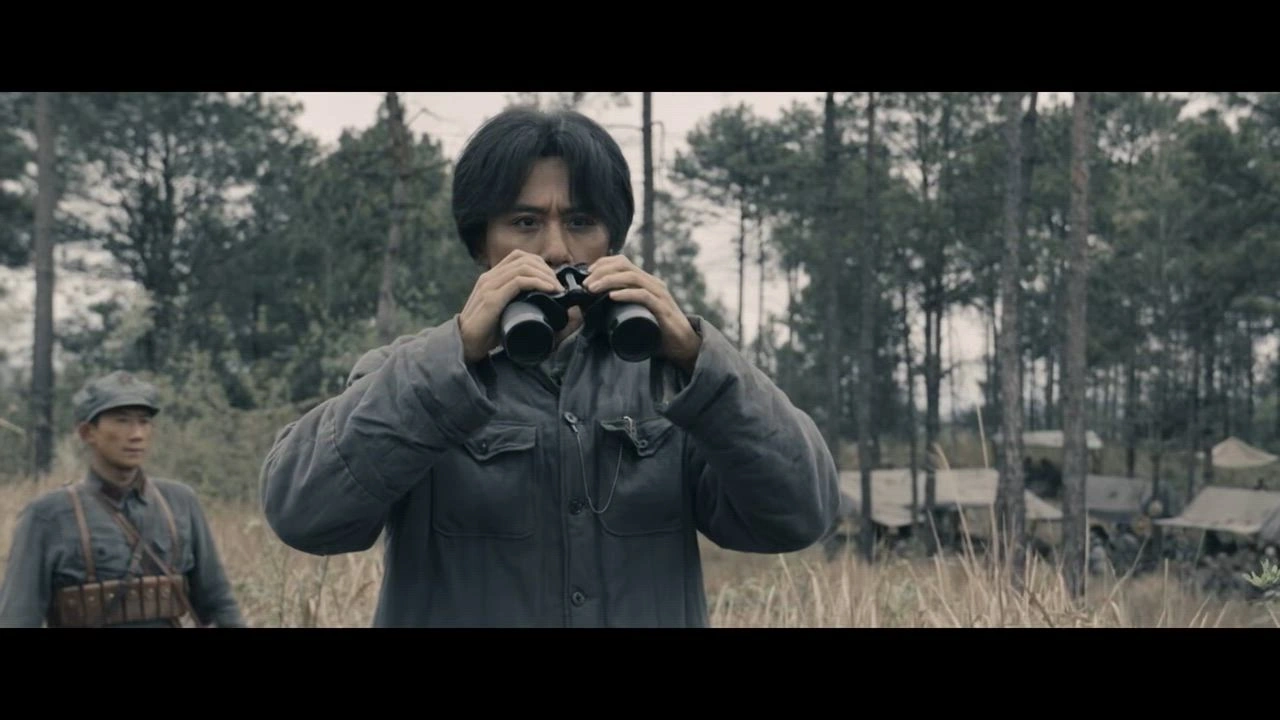
Liu Ye gives Mao a brooding physical presence. He smokes, studies his opponents, and speaks with the assurance of someone whose doubts have already been edited out. A few scenes present him as an outsider whose unconventional thinking clashes with established commanders. When his proposal wins support, the moment could reveal the uncertainty surrounding his rise. The film treats it as confirmation that history has found the correct man.
Also Read






Wang Yaoqing’s Chiang offers a controlled counterweight. He studies troop positions from comfortable headquarters while Mao’s army survives on limited supplies. Their long-distance contest has the shape of a tense duel, especially when Mao predicts how Chiang will react to a retreat or crossing. Yet neither man appears vulnerable enough for the contest to feel personal. They move armies across maps without ever seeming haunted by what those movements cost.
Grief Without Memory
The frontline story tries to give the campaign a human pulse through Zhao Defa, played by Yu Shi, and the soldiers around him. Zhao travels with Zhu Huiyong, Guo Chuang, and Bo Gu, while an orphan named Ajin gradually becomes attached to the unit. They share food, paint signs, carry supplies, improvise bridges, and push through terrain that can kill them before the enemy gets a chance.
These details should accumulate into affection. The editing keeps interrupting that process. Bo Gu dies during an uphill assault, and Guo reacts with a silent cry framed as a major rupture. The score rises, the image slows, and the film asks us to feel that a brother has been lost.
Their bond has received so little screen time that the grief feels instructed rather than discovered. Guo later dies, prompting another anguished reaction from Zhao. The gestures repeat, but the relationships beneath them remain thin.
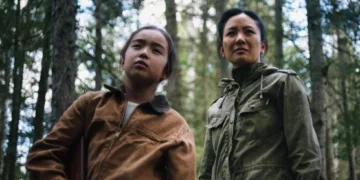
Ajin fares slightly better because his presence changes Zhao’s behaviour. Zhao begins as a hardened soldier with little room for tenderness, then protects the boy during marches and attacks. Ajin’s resilience gives the film a clear symbol of the future the army believes it is defending. His fear, confusion, and dependence on Zhao receive brief attention before patriotism absorbs him into its design.
The soldiers are constantly surrounded by death, yet Crossing rarely lets them live beside one another. Without those quieter stretches, each casualty disappears into the next explosion.
A Campaign at Maximum Volume
The battle sequences display considerable physical scale. Brown-clad Red Army troops race across muddy ground while blue-uniformed Kuomintang soldiers fire from fortified positions. Aircraft destroy handmade bridges. Men drag supplies through mountain paths, climb dangerous cliffs, and attack from angles their opponents considered inaccessible.
The cliff assault is the film’s sharpest action passage because its geography is readable. Soldiers scale the rock face under extreme pressure, and the danger comes from height, exposure, and time rather than editing alone. The bridge sequences have a similar force. Villagers surrender doors and windows so the army can build crossings, while soldiers insist on leaving payment behind. The material sacrifice becomes visible: homes are dismantled so an army can keep moving.
Too many later battles arrive with the same visual vocabulary. Dirt erupts, bodies fall, commanders shout, and the score announces another heroic loss. Speed ramps and whip pans attempt to make every charge feel decisive. The repeated intensity drains distinctions between the four crossings, turning a campaign famous for tactical unpredictability into a familiar cycle of map tent, battlefield, map tent, battlefield.
The production design, costumes, sound effects, and troop movements give the campaign weight on screen. Some digital effects falter, particularly around large-scale destruction, yet the larger issue is emotional scale. The film knows how many soldiers are moving and where they need to go. It has much less sense of who they become while getting there.
The epic historical action drama Crossing made its grand theatrical premiere across mainland China on June 26, 2026, where it instantly topped the box office before debuting in select cinemas across the United States a couple of days ago on July 10, 2026, through Well Go USA Entertainment. Audiences can catch the cinematic release on the big screen during its current worldwide theatrical run, with digital video-on-demand streaming platform details expected to follow later this season. Commemorating the 90th anniversary of the Long March, the film chronicles the famous Battle of Chishui River in 1935, detailing how a battered Red Army used strategic mobile warfare and rapid river crossings to outmaneuver an encirclement of 400,000 opposing troops.
Where to Watch Crossing (2026) Online
Full Credits
Title: Crossing (originally titled 四渡)
Distributor: Bona Film Group, Well Go USA Entertainment, Guangzhou Broadcasting Network, August First Film Studio
Release date: June 26, 2026 (China), July 10, 2026 (United States)
Running time: 122 minutes
Director: Xu Zhanxiong
Writers: Liu Yi
Producers and Executive Producers: Andrew Lau, Yu Dong
Cast: Liu Ye, Wang Lei, Yu Shi, Wang Zhifei, Wang Yaoqing, Lin Yongjian, Zhang Li, Timmy Xu, Lan Yingying, Cao Bingkun, Ashton Chen, Wu Yue, Xiong Ziqi, Li Chen, Yu Xiaoguang
Composer: Zhou Shen
The Review
Crossing
Crossing keeps asking its explosions to carry feelings the screenplay never properly builds. The four river crossings provide a strong tactical spine, and the bridge assaults, cliff attack, and troop movements often look impressive on a large screen. Yet Zhao, Guo, Bo Gu, and Ajin receive too little quiet time for their losses to hurt, while Mao and Chiang remain symbols moving pieces across maps. The film can make strategy exciting for a few minutes at a time. It struggles to make sacrifice linger.
PROS
- Impressive battlefield scale
- Clear tactical premise
- Strong period production design
- Effective sound and costume work
CONS
- Frantic, exhausting editing
- Thin soldier relationships
- Overloaded historical exposition
- Unearned emotional deaths
- Simplistic political characterisation