






























Nika & Madison understands that injustice rarely arrives as a single event. It accumulates through assumptions, institutions, and the quiet distance created between people who once understood each other. Eva Thomas’ debut feature takes the familiar shape of a fugitive thriller and uses it to examine identity, belonging, and the fragile structures people depend on when everything collapses.
Madison (Star Slade) returns to her Indigenous community after building a life at university in Toronto. She carries the confidence of someone who has learned to exist in a different world, yet that confidence creates tension when she reunites with Nika (Ellyn Jade), her cousin and former best friend. Nika remains connected to the reserve, working a modest job and finding meaning through nature and hunting. Their first interactions suggest two people who have grown apart, each carrying assumptions about the other.
The film’s early scenes are interested in that separation. Madison’s university friends reveal their limited understanding of Indigenous identity through casual comments, including the uncomfortable suggestion that they sometimes forget she is Native. Thomas captures a particular kind of alienation here: Madison is seen as different in the city and feels distant from home. Nika represents a different form of isolation, one created by staying rooted in a place where people remember who you were.
The relationship between the two women gives the film its emotional foundation. Thomas avoids turning their differences into a simple argument between tradition and modernity. Nika and Madison are both searching for a version of themselves that feels complete.
A Thriller Built Around Trust
The film changes direction when Madison is arrested after a conflict and is sexually assaulted by a police officer. Nika intervenes, leaving the officer critically injured. The decision to flee comes from fear that the legal system will protect the officer before it listens to them.
This is where Nika & Madison becomes a story about perception. The same event can produce radically different realities depending on who has power over the narrative. The women know the official version of what happened may erase their experience before anyone investigates it.
Thomas creates a parallel storyline through Detectives Timmins (Amanda Brugel) and Warhurst (Shawn Doyle). Timmins approaches the case with patience and a willingness to question the assumptions surrounding the incident. Warhurst represents institutional loyalty and the instinct to defend authority first. The contrast between them gives the film a familiar investigative structure, yet Thomas uses that familiarity to examine how systems protect themselves.
The film is direct with its themes. It does not hide its anger toward racism, misogyny, and failures within policing. Some viewers may find the message clearly stated, but clarity has its own value here. Statistics about violence against Indigenous women can become abstract numbers. Thomas transforms those concerns into the experiences of two people whose choices are shaped by fear and loyalty.
Two Performances Holding Everything Together
The film’s strongest argument comes through Star Slade and Ellyn Jade. Their performances give the material its necessary intimacy. Jade plays Nika with restraint. She does not present Nika as someone without emotion; she presents someone who has learned to protect those emotions. Her silences carry the history of a person who has spent years understanding the limits placed around her.
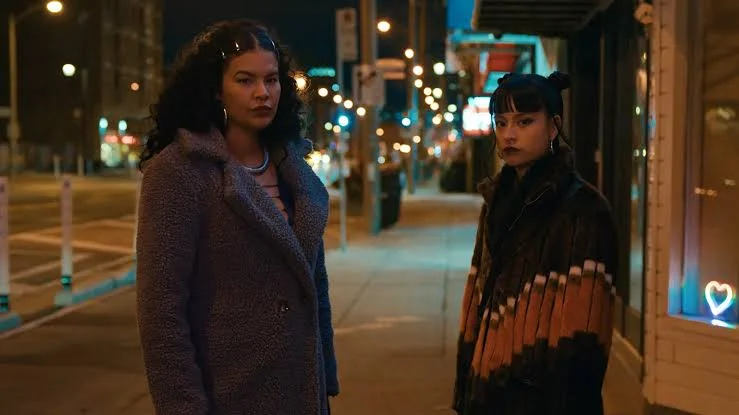
Slade brings a different energy to Madison. She captures someone ambitious and intelligent who still carries uncertainty about where she belongs. The scenes between the two women work because the performances allow frustration and affection to exist together.
The supporting cast strengthens the film’s examination of community. Gail Maurice’s Chief Sampson brings authority and calm to every scene. She represents Indigenous leadership in a story where outside institutions fail to provide safety. Billy Merasty adds warmth as a family figure who understands the weight of the situation.
A Debut With Something to Say
Thomas directs with a clear sense of purpose. The film’s 87-minute runtime keeps the story moving, though some conversations could have used more room to breathe. Certain themes arrive quickly through dialogue when the characters themselves already communicate so much through performance.
The influence of Thelma & Louise is visible, yet Thomas reshapes the fugitive structure around Indigenous women whose experiences are rarely placed at the center of this genre. The wilderness sections are not simply locations for escape. They connect the characters to memory, community, and a sense of belonging that the outside world often misunderstands.
The final scenes are where the film’s personal and political ideas meet. A conversation between Nika and Madison on a bench reveals hidden truths about their relationship. Later, a hallway scene involving the women, a lawyer, and Chief Sampson turns community support into a force stronger than institutional power. The final image focused on Nika leaves space for interpretation while recognizing the strength required to keep moving through a world that has repeatedly failed you.
Nika & Madison occasionally feels constrained by its short runtime, yet its central relationship gives the film lasting weight. Thomas creates a story where friendship becomes a form of resistance, and where being believed can mean the difference between surviving and disappearing.
Nika & Madison premiered at the Toronto International Film Festival on September 7, 2025, and is available to stream on platforms like Prime Video. Fearing they will not be believed, two young Indigenous women go on the run after one of them defends the other against a predatory police officer.
Full Credits
Title: Nika & Madison
Distributor: Game Theory Films, Vertical Entertainment
Release date: September 7, 2025
Rating: R
Running time: 1 hour 27 minutes
Director: Eva Thomas
Writers: Eva Thomas, Michael McGowan
Producers and Executive Producers: Eva Thomas
Cast: Ellyn Jade, Star Slade, Shawn Doyle, David Reale, Amanda Brugel, Gail Maurice, Jennifer Podemski, Billy Merasty
Director of Photography (Cinematographer): Jesse Wicklund
Editors: Jane MacRae
Composer: Nigel Irwin
The Review
Nika & Madison
Nika & Madison turns a familiar fugitive thriller framework into a study of identity, trust, and institutional failure. Thomas finds its strongest ideas through the bond between its two leads, where every choice carries personal and cultural weight. The film occasionally rushes through its larger conflicts, yet its emotional architecture remains intact. It understands that survival can be an act of connection (a simple idea, until systems make it complicated).
PROS
- Strong lead performances
- Indigenous perspective
- Emotional friendship arc
- Grounded direction
CONS
- Rushed pacing
- Familiar detective structure
- Limited exploration of some conflicts