

























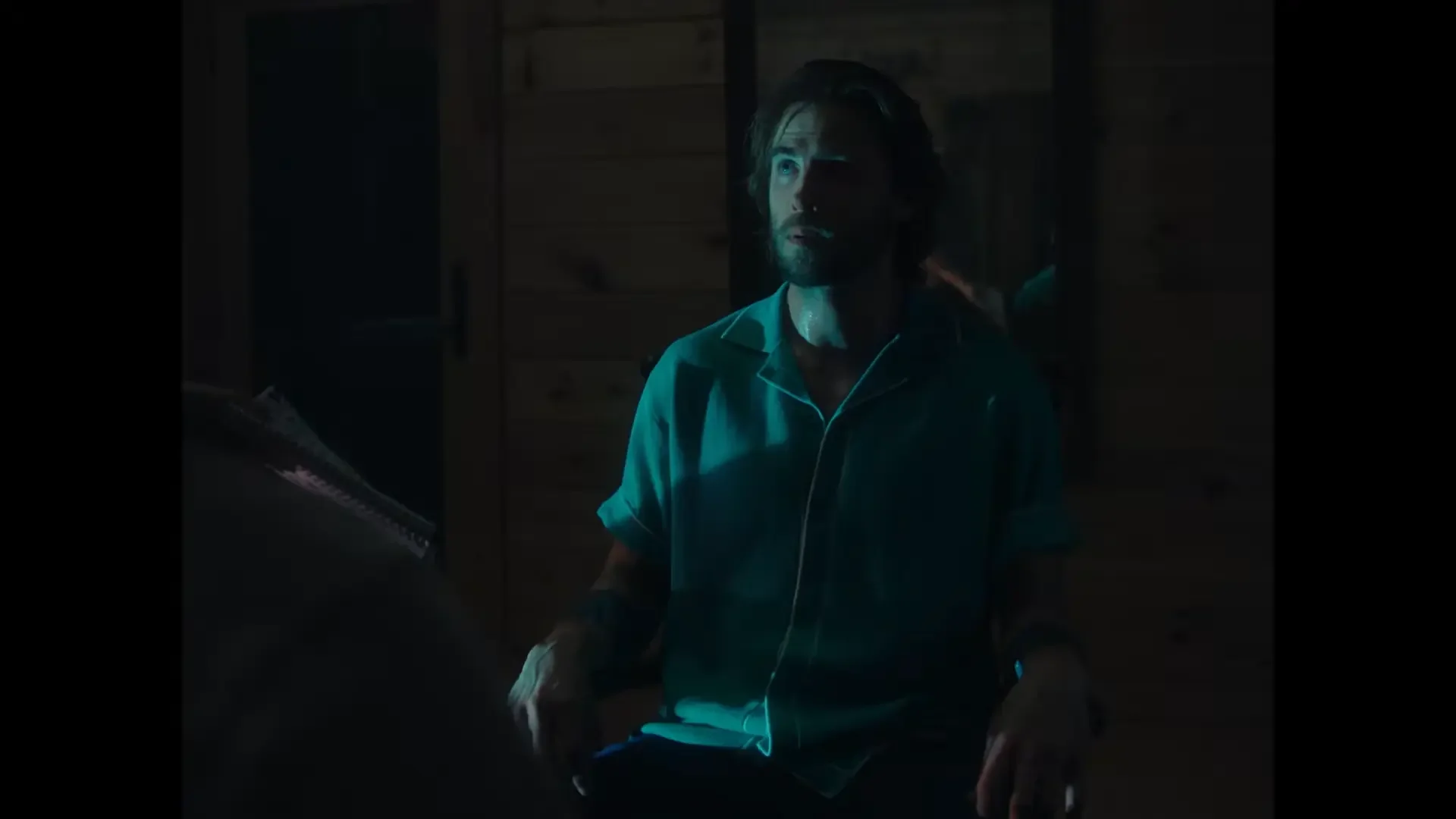

Anton Sigurdsson builds tension by turning a reunion into a test of trust, where every conversation can become evidence and every friendship can become a liability. Refuge takes the familiar isolated cabin thriller setup and focuses on the emotional damage created when grief transforms a person’s need for answers into something dangerous.
Sam (Adam Sinclair) invites his longtime friends Barry, Jay, and Mike to a fishing trip at his remote cabin after spending four years searching for answers about his missing daughter, Sophie. The weekend appears ordinary from their perspective. They expect drinks, jokes, and old stories. Sam has a different plan. After discovering a diary entry that suggests one of them may know something about Sophie’s disappearance, he drugs them, restrains them, and forces them into a brutal interrogation.
The setup works because the film understands that fear is most effective when it attacks relationships first. The cabin is frightening because these men know each other. They are not strangers trapped together. Every accusation carries the weight of years of friendship, old mistakes, and personal resentment.
The Weight of Knowing Someone
The emotional hook of Refuge comes from watching these friendships collapse under pressure. Barry, Jay, and Mike each carry details that make them believable suspects. Barry’s success hides a troubling past. Mike’s anger creates suspicion, especially as his resentment toward his brother Jay surfaces. Jay arrives with his own history of addiction and poor choices, yet he also becomes the person who brings unexpected warmth and humor into the darkest moments.
That balance gives the film its strongest quality. The violence is harsh, but the characters still feel human. Jay’s nervous jokes do not remove the horror around him. They make the situation feel stranger because people often cling to normal conversations even when their world has fallen apart. A discussion about an acquaintance dying of cancer becomes funny and uncomfortable at the same time because these men are trying to hold onto pieces of their old lives.
The film also asks a painful question about friendship: how much do people really know about each other? Sam believes one of these men destroyed his family, yet he also understands them well enough to know exactly where their weaknesses are.
Sam’s Grief Becomes a Weapon
Adam Sinclair gives Sam a performance built around contradiction. He is a father searching for his child, but he is also someone capable of extreme cruelty. The film does not ask the audience to excuse his actions. It asks viewers to sit with the uncomfortable reality that grief can distort a person’s sense of justice.
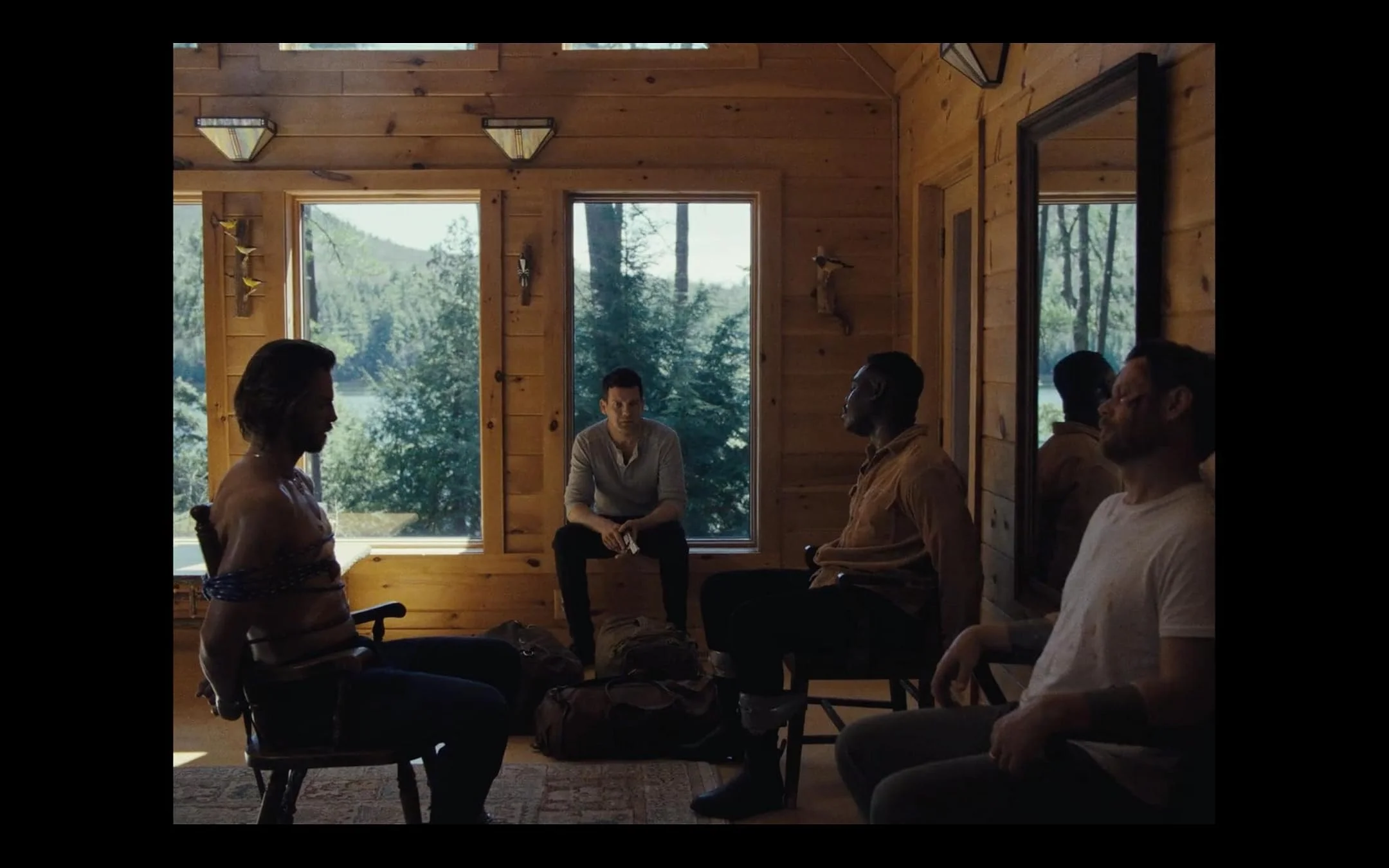
Sigurdsson presents Sam as someone trapped between the past and present. The opening sequence uses news footage and fragmented audio to show how Sophie’s disappearance has consumed him. The sound of television static reflects a mind constantly returning to the same painful memories.
The visual language strengthens that feeling. Mirrors, reflections, and glass separate Sam from himself, showing the difference between the friend who welcomes everyone into his cabin and the person willing to hurt them for answers. Sinclair’s calm moments are often as unsettling as his violent ones because they suggest someone who has spent years preparing for this confrontation.
A Small Space With Heavy Tension
The cabin becomes a character in the story. Sigurdsson uses the limited location to create a feeling of confinement, making every room feel connected to the secrets hidden inside the group. The basement becomes especially important, creating a physical divide between what the characters want to reveal and what they want to bury.
The filmmaking keeps the pressure constant. Tight framing, close-ups, and the 4:3 aspect ratio make the audience feel trapped alongside the characters. The camera stays close enough to capture every nervous reaction, every moment of hesitation, and every shift in loyalty.
The sound design adds another layer of tension. Footsteps, distant voices, and the separation between the basement and upper rooms create a sense that danger can arrive from anywhere. Yo Miyashita’s electronic score pushes the anxiety further, giving the peaceful outdoor setting an unsettling contrast.
Refuge does not always move with perfect rhythm. The interrogation structure repeats itself, and some discoveries could use more buildup before they arrive. The friendships before the crisis could have received more attention, since the emotional impact depends on believing these connections mattered.
Still, the film’s strongest moments come from its understanding of fear as something personal. The real horror is not only what Sam does inside the cabin. It is watching people who thought they knew each other discover how much remains hidden.
Refuge premiered on digital streaming platforms via Saban Films on March 27, 2026. Four estranged friends reunite on a fishing trip, but a missing child and a desperate father’s accusation turn the reunion into a deadly reckoning.
Full Credits
Title: Refuge
Distributor: Saban Films
Release date: March 27, 2026
Rating: R
Running time: 1 hour 27 minutes
Director: Anton Sigurðsson
Writers: Anton Sigurðsson
Producers and Executive Producers: Anton Sigurðsson, Wes Hull, Jason Armstrong, Erlingur Jack Gudmundsson, Sara Hamilton, Diana Hull, Dustin Schoenfeld, Cory Tucek
Cast: Christopher Dietrick, Adam Dorsey, Donald Paul, Adam Sinclair
Director of Photography (Cinematographer): Gunnar Auðunn Jóhannsson
Editors: Sharif M. Es. Ali
Composer: Yu Miyashita
The Review
Refuge
Refuge finds its power in the uneasy space between horror and human connection. The cabin becomes a place where grief, fear, and friendship collide, with Adam Sinclair’s performance anchoring the emotional damage behind every violent choice. The tension works because the characters feel like people before they become suspects. Some repetition weakens the middle stretch, yet the film leaves a lasting impression through its raw look at trust falling apart.
PROS
- Strong emotional tension
- Sinclair’s intense performance
- Effective cabin atmosphere
- Dark humor balance
CONS
- Repetitive interrogation structure
- Final reveal lacks buildup
- Limited friendship exploration