







The perimeter alarm does something useful before the film has explained much of anything: it turns technology into a warning from a world that no longer trusts technology. The Kid’s father hands her a knife, tells her to kill anyone who comes through the door, then sits at his desk while masked intruders close in. Their demand is simple. They want his daughter. His refusal ends with a samurai sword through his body.
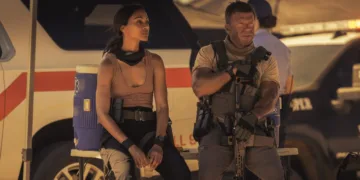
James Anthony Usas builds The Last Assassins from that collision of old and new. The future has collapsed, yet scraps of circuitry remain. The Event has crippled civilization, toxic fog has swallowed the landscape, and cities survive as dim industrial carcasses. The Kid, played by Athena Park, escapes with Nobel, Josh Bainbridge’s bearded family ally, who intends to deliver her to Metiseaya, an aunt she never knew existed. The plot is familiar. The light is less so.
Fog as Architecture
Usas comes from an art department background, and the film behaves like it knows where its real authority lies. Silty green fog turns the ruined city into a shallow field of visibility, cutting buildings into fragments and giving every street the look of a place already half erased. Asian signage, industrial structures, and low artificial illumination announce the debt to Blade Runner without disguise.
The smarter details are smaller. Conventional vehicles carry holographic interfaces. A light installation sits above a substation. Security images arrive through red filters that immediately recall The Terminator. Gas masks convert breathing into visual shorthand for danger. None of these choices requires the film to show us a vast digital metropolis. They imply one around the edges of the frame.
That restraint matters because the fog is doing production work too. It hides distance, scale, and empty space. The trick is visible if you look for it, yet it rarely feels cheap because the concealment suits the world. Here, obscurity is both budget strategy and atmosphere.
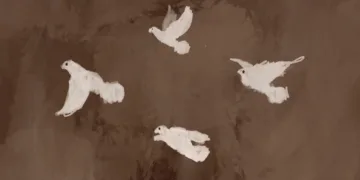
Geoff Raffan’s synthesizer score pushes the film further toward 1980s science fiction, sometimes with heavier insistence than the images need. The late vision of a floating iridescent fetus is stranger and freer. For a few minutes, the film stops quoting dystopian grammar and begins hallucinating in its own dialect.
The Road and the Blade
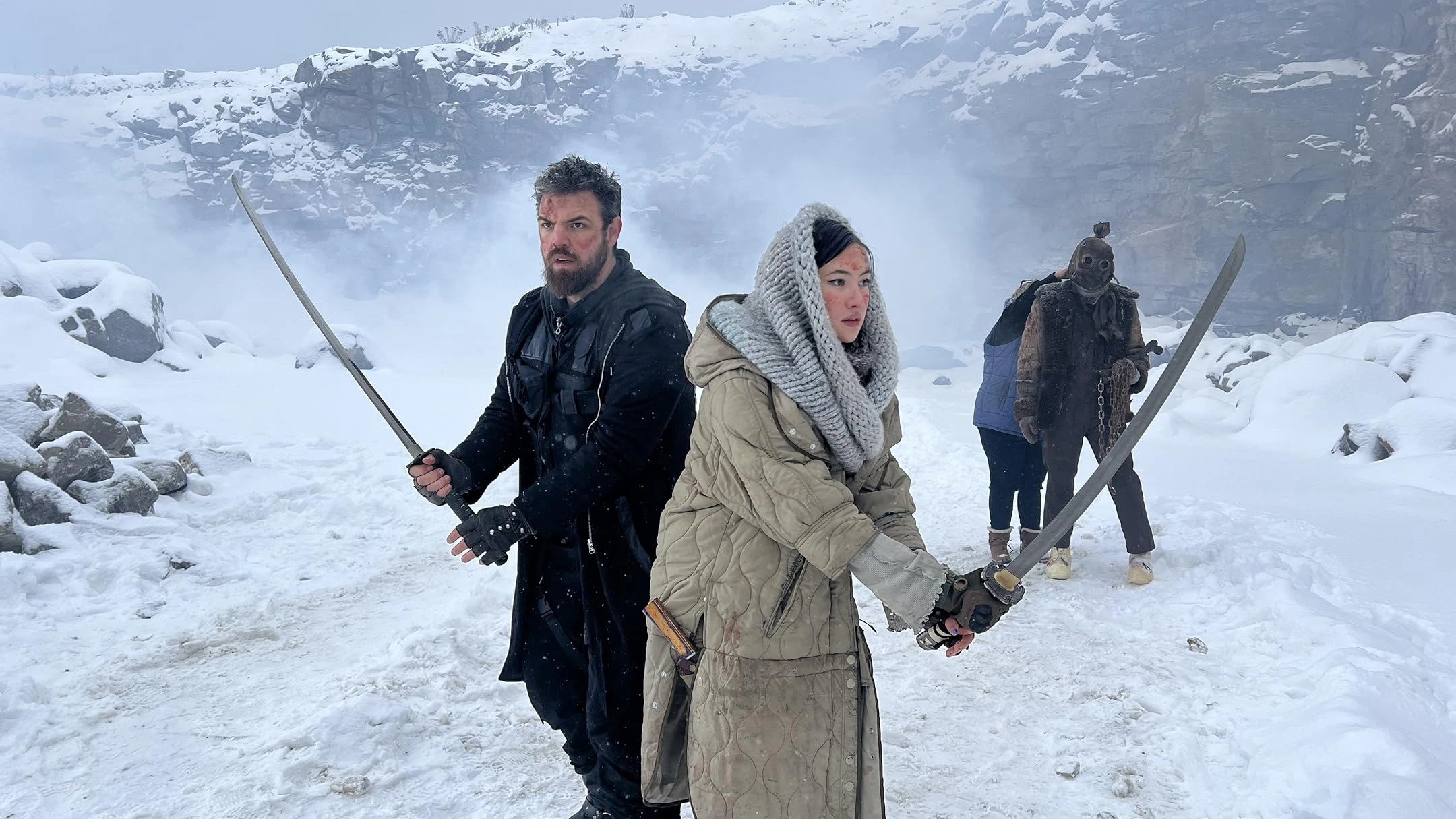
Once Nobel gets the Kid out of the city, the screenplay settles into a road structure built from recognizable wasteland checkpoints. There is a makeshift garage and roadside settlement, armed gangs, a rescue mission, and a confrontation with cannibalistic survivors. Each stop keeps the pair moving. Few of them deepen the social order surrounding the Event.
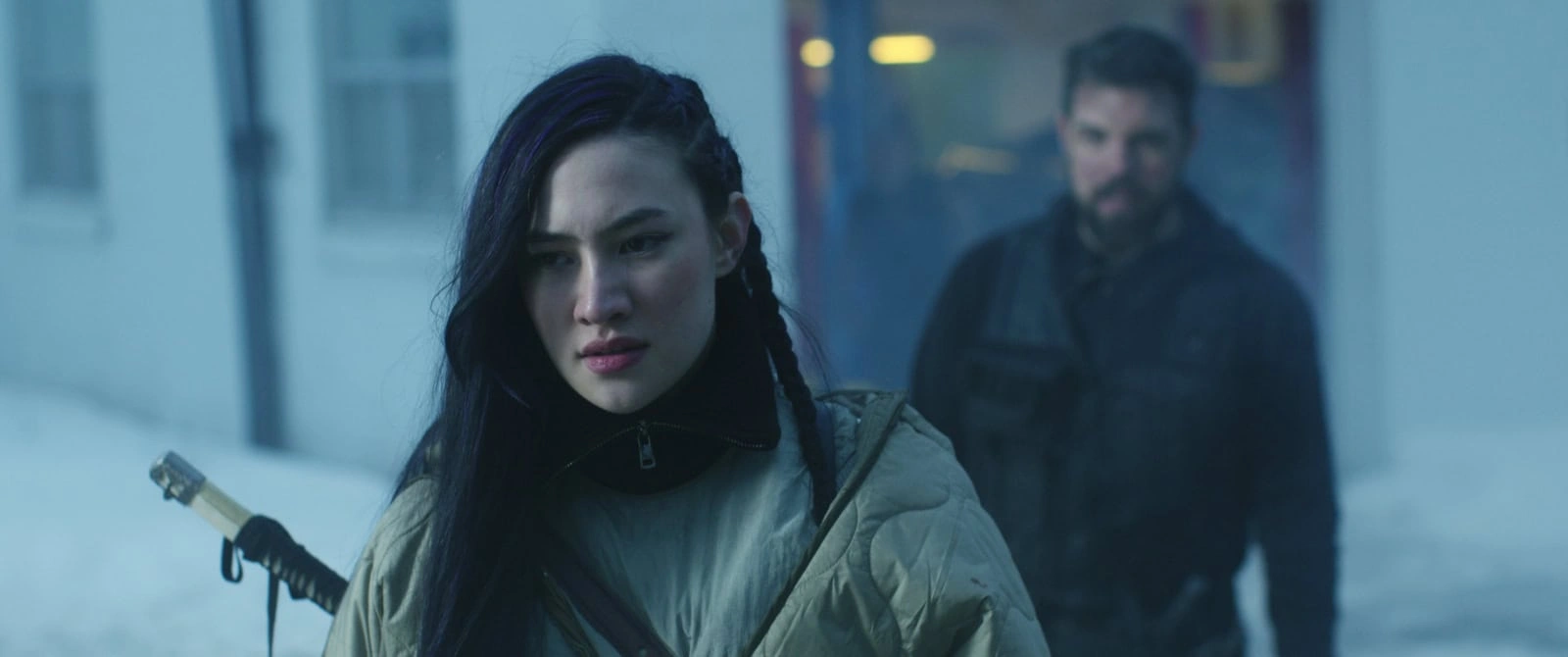
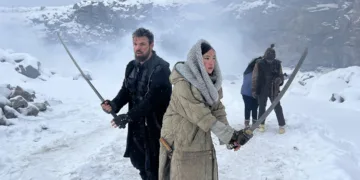
Park gives the Kid a credible edge of anger after her father’s murder. Her pursuit of revenge clashes with Nobel’s simpler objective of keeping her alive long enough to reach Metiseaya. Bainbridge plays that duty with physical stillness. The beard, katana, and stoicism could have turned Nobel into costume shorthand, yet Bainbridge gives him enough weight to make his restraint feel chosen.
Their dynamic works best when their goals diverge. The Kid wants an answer shaped like vengeance. Nobel wants survival, which is less satisfying and probably wiser. The film has the ingredients for a moral argument there, but it rarely presses hard enough. Their route keeps interrupting the question with another gang, another threat, another piece of genre furniture.
The action suffers from the same hesitation. Swords, masked pursuers, and rescue scenarios promise sharper escalation than Usas delivers. The confrontations arrive, function, and pass. They seldom tighten the frame around the characters long enough for fear to accumulate.
Human Machinery
The most interesting idea arrives through the Kid’s father and the cybernetic technology tied to Metiseaya. It gives the masked attackers a reason to hunt the Kid and introduces a question the film keeps circling without fully entering: what happens to human identity when technology survives civilization itself?
That question belongs naturally to cyberpunk, yet The Last Assassins treats the technology mainly as narrative currency. We learn enough for pursuit and revelation, less about how it altered the dead world around these characters. The same thinness applies to the Event, the surviving clans, and the economics of settlements. The city looks governed by decay, but the screenplay rarely tells us who actually governs it.
Usas remains strongest whenever the camera and production design are allowed to carry meaning that the dialogue leaves untouched. Red surveillance feeds suggest a culture still trying to watch itself. Fog reduces citizens to silhouettes. Holographic dashboards place futuristic interfaces inside aging machines, a neat visual metaphor for a civilization whose technology has outlived its confidence.
The digital effects in the finale expose the production’s limits more readily than the practical environments do. Still, the Kid’s psychedelic visions break the film’s established visual order at exactly the right moment. The floating fetus is grotesque, luminous, and hard to classify. For once, the future stops looking inherited.
The Last Assassins is a dystopian sci-fi action film that premiered digitally on July 6, 2026, followed by a US VOD release on August 18, 2026, where it is available to stream on platforms like Fandango. The story follows a young warrior and her loyal guardian as they journey through a hazardous post-apocalyptic landscape to avenge her murdered father.
Where to Watch The Last Assassins (2026) Online





Full Credits
Title: The Last Assassins
Distributor: Seven Tales, 4Digital Media
Release date: July 6, 2026
Running time: 1 hour 23 minutes
Director: James Anthony Usas
Writers: Ryan Keller, James Anthony Usas, Jonathan Hlibka
Producers and Executive Producers: Ryan Keller, Derek Diorio
Cast: Athena Park, Josh Bainbridge, Lora Burke, Donno Mitoma, Morgan Bedard, Jason Manella, Verlyn Plowman
Director of Photography (Cinematographer): Clement Lush
Editors: James Anthony Usas
Composer: Geoff Raffan
The Review
The Last Assassins
The Last Assassins finds its strongest language in light, fog, and decay. James Anthony Usas turns industrial spaces, red security feeds, holographic dashboards, and poisoned green streets into evidence of a civilization barely remembering technology. The screenplay has less to say. The Kid’s cybernetic inheritance gestures toward questions of identity while the road narrative keeps returning to gangs, cannibals, and familiar wasteland obstacles. Josh Bainbridge gives Nobel welcome gravity, and the hallucinatory finale hints at the stranger film hiding beneath the genre machinery.
PROS
- Excellent low-budget production design
- Distinctive fog-soaked cinematography
- Strong, stoic Josh Bainbridge
- Memorable psychedelic imagery
CONS
- Thin post-Event mythology
- Familiar wasteland encounters
- Cybernetic themes lack development
- Action rarely builds real tension