
























![Kingdom Hearts Collection [I-III] Review](https://gazettely.com/wp-content/uploads/2026/10/Kingdom-Hearts-Collection-I-III-1-360x180.webp "Kingdom Hearts Collection [I-III] Review: KHII Holds Steady as Newer Entries Fluctuate 37")



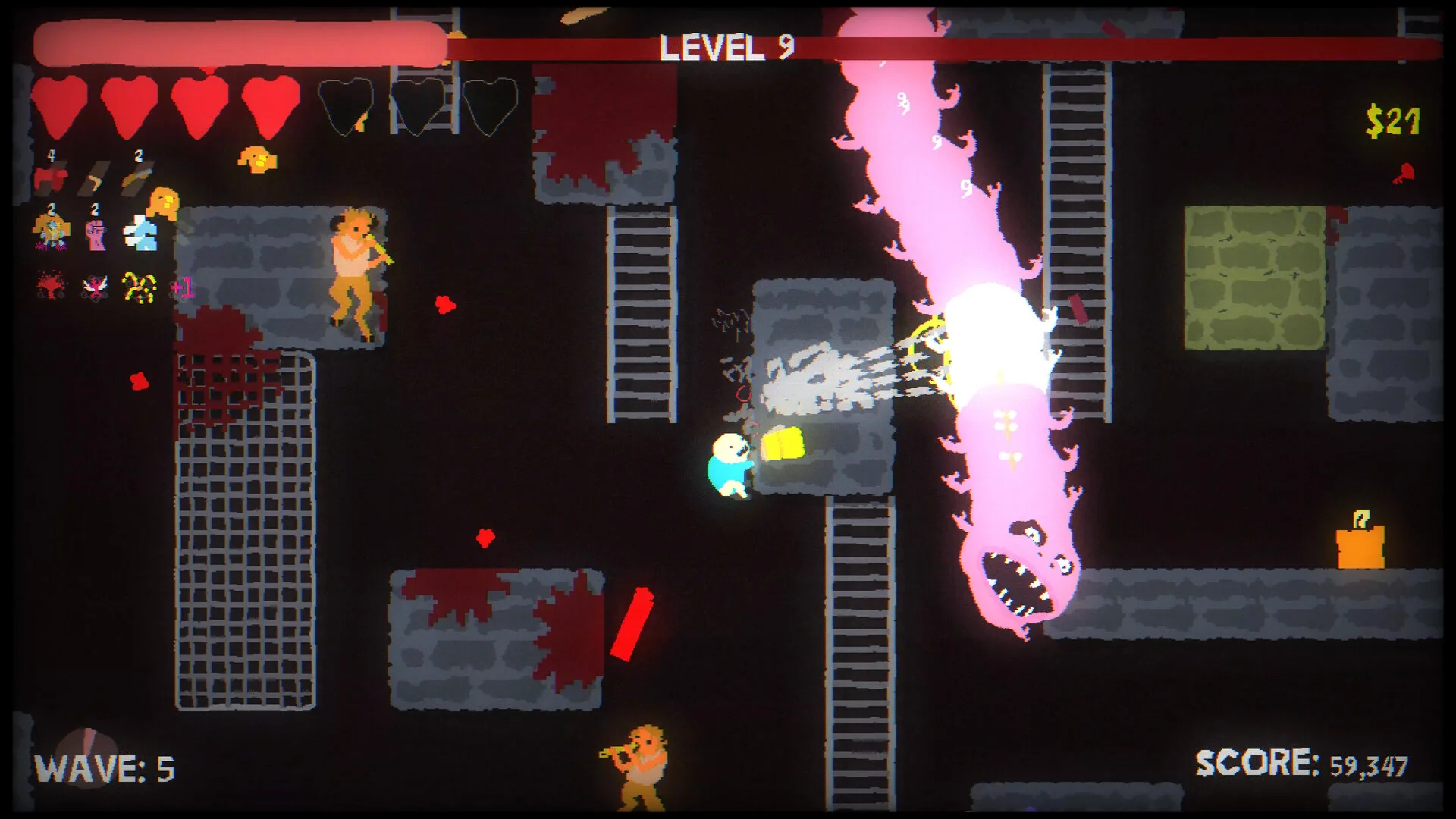

Blood Dungeon understands that the biggest challenge facing a Survivors-like game is finding a reason for players to care after the first few hours. The genre has produced countless variations of the same loop: enter an arena, watch automatic weapons erase enemies, collect experience, unlock upgrades, and repeat.
Messhof’s approach keeps that foundation intact while moving the action into a 2D platforming space where every jump, climb, and route choice changes how a run unfolds. The result is a game that feels familiar from the first minute, yet develops its own identity through movement and level design.
A Different Kind of Bullet Heaven
The basic structure follows the formula popularized by Vampire Survivors. You control a character who attacks automatically while enemies flood the screen. Your responsibility is movement, positioning, and collecting the blood dropped by defeated creatures to gain experience. Every level grants a choice of upgrades, allowing each run to develop into a different combination of weapons and abilities.
The difference comes from how Blood Dungeon uses its platforming systems. These are not flat arenas where survival simply means circling enemies. Characters can climb walls, grab chains, jump between platforms, and use the environment to escape danger. Since weapons automatically target enemies, positioning becomes part of the combat strategy. Standing in the right place can turn a weak weapon into a devastating tool.
This creates a different rhythm from many games in the same genre. The player is constantly making small decisions about movement while the screen fills with enemies and projectiles.
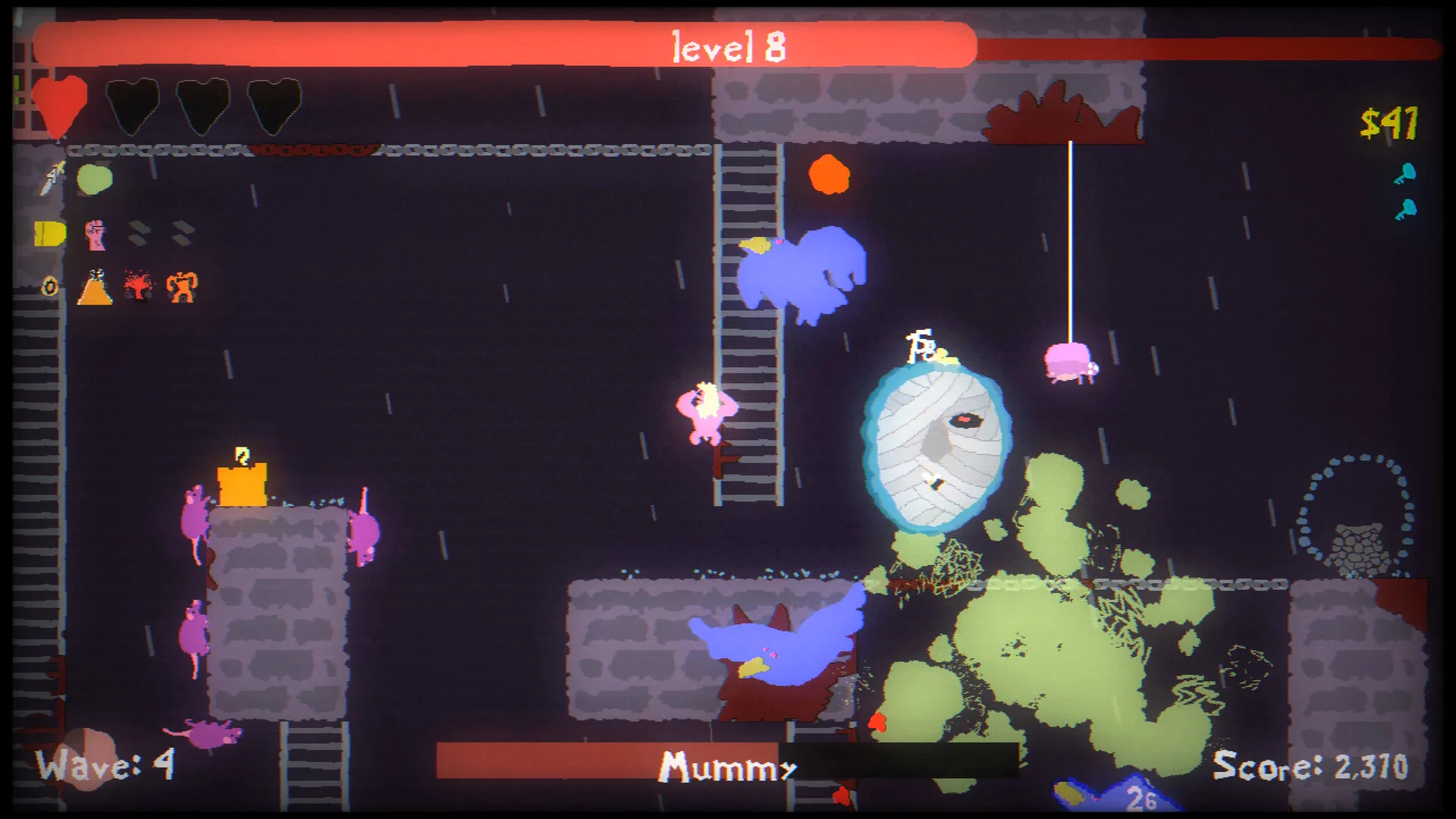
The six dungeons reinforce this idea. Rather than relying on completely random layouts, Messhof builds handcrafted stages with their own structures and hazards. One area focuses on water and forces players to manage oxygen while searching for safe spaces.
Another uses destructible blocks that reveal paths and resources. Some stages loop vertically or horizontally, rewarding players who learn their layouts and remember where useful items appear. That familiarity gives Blood Dungeon a sense of progression beyond simply unlocking stronger numbers. Returning to a stage feels like returning to a place you understand better.
Creating the Perfect Build
The appeal of any Survivors-like depends heavily on its weapons, and Blood Dungeon offers enough variety to keep experimentation interesting. A successful run comes from finding combinations that turn a fragile character into a walking disaster.
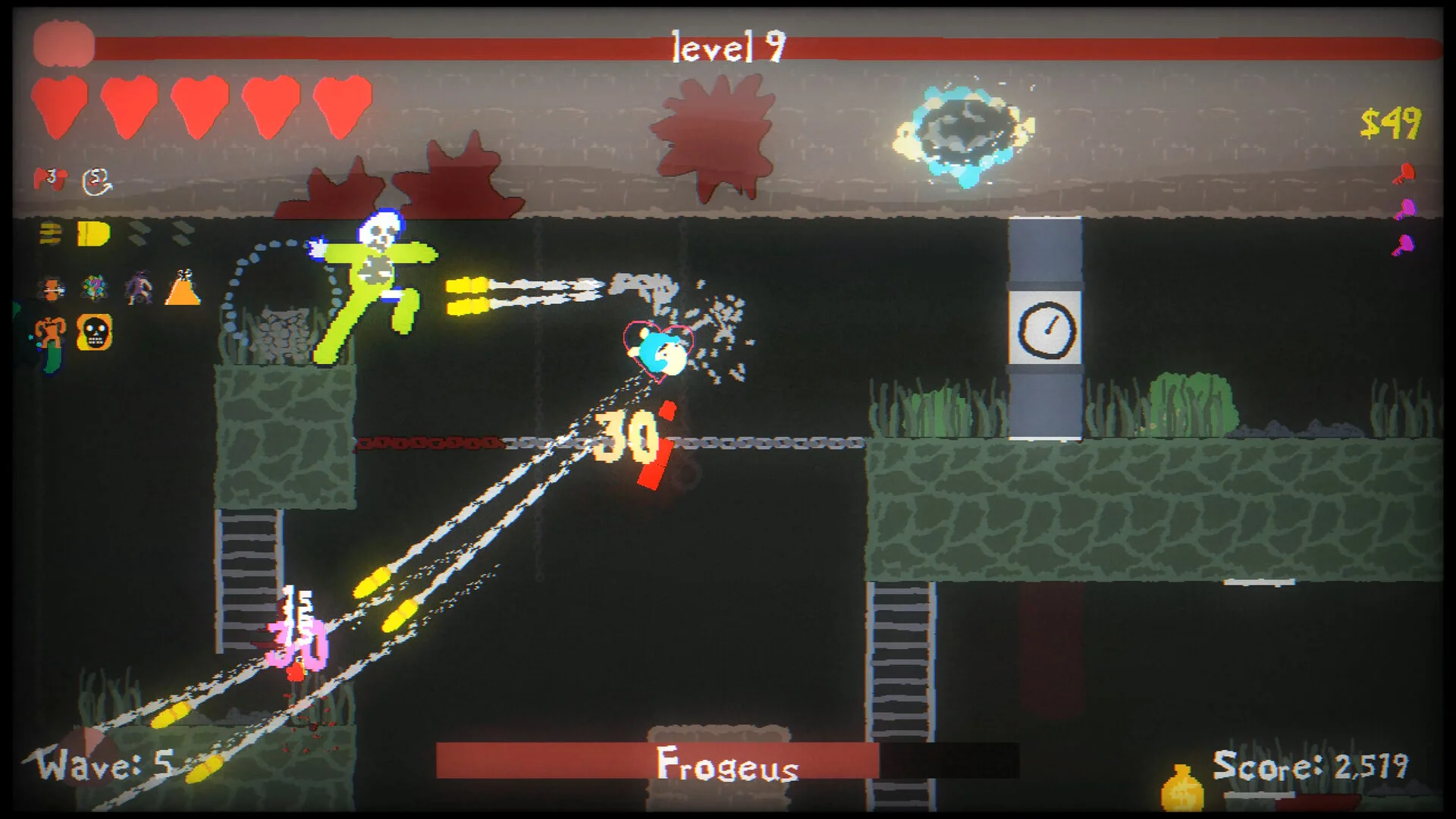
The rotating swords are useful for dealing with enemies that get too close, while guns provide consistent ranged damage. The bouncing ball quickly becomes one of the most entertaining options, especially in cramped areas where it can ricochet through groups of enemies. The shotgun can evolve into a screen-clearing weapon with a huge spread, and options like the whip, turrets, lasers, and gas attacks give players plenty of ways to approach a dungeon.
Spells provide statistical improvements, while charms create more noticeable changes to how a character behaves. A shield that blocks damage or a mobility-focused item can completely alter the way a run feels. The strongest moments come from discovering a combination that changes a character from struggling survivor into an unstoppable force.
The playable characters also help create variety. Skinja’s speed and shotgun-focused setup encourage aggressive movement, while Baby trades durability for a powerful revolver. Leggy’s web abilities change how players interact with the environment, and Hypnomancer’s unusual attacks fit the game’s strange sense of humor. These characters are not simply cosmetic choices. Their starting tools influence the decisions made throughout each run.
Progression outside individual runs keeps that experimentation moving forward. The Bone Shop offers permanent upgrades, while new characters, weapons, and abilities are unlocked through continued play. Even a failed attempt usually leaves behind something valuable.
A Strange World With Familiar Problems
Messhof’s visual style immediately separates Blood Dungeon from other games in the genre. The crude, globular characters and rough animations give the game the feeling of a bizarre internet cartoon brought to life. The simplicity works because every character and enemy has a clear identity, from the strange heroes to the creatures filling each dungeon.
The soundtrack matches this energy with jungle, breakbeat, and drum-and-bass influences that keep the action moving. The music gives even quiet moments in the hub area a sense that another chaotic run is waiting.
The problem is that the genre’s weaknesses eventually appear. The early hours are packed with discoveries, unlocks, and new possibilities. After a long stretch of play, the same systems can begin to feel less surprising. Stronger characters and better equipment make survival easier, but they also reveal that progression is doing much of the work.
Blood Dungeon still gives players room to improve through movement and decision-making, though randomness remains a major factor. A good build can transform a run, while an unlucky selection of upgrades can end one quickly.
A Familiar Formula With Its Own Identity
Blood Dungeon does not reinvent the Survivors-like genre, but it understands exactly where to make changes. The platforming movement, handmade arenas, and strange cast give it a personality that many similar games lack.
Its long-term appeal depends on how much enjoyment players find in repeating runs after the biggest unlocks have arrived. Messhof has taken a familiar structure and found a new angle within it. The dungeon may eventually become predictable, but getting there is a chaotic and entertaining climb.
The Review
Blood Dungeon
Blood Dungeon takes the Vampire Survivors formula and gives it a platforming identity that makes each run feel different from its many cousins. The handmade arenas, strange characters, and enormous weapon combinations create a satisfying progression path, even if the long-term grind reveals some of the genre’s familiar weaknesses. Messhof understands what makes these games addictive and adds enough movement-based strategy to keep the chaos fresh.
PROS
- Excellent platforming movement
- Creative weapon combinations
- Memorable character designs
- Rewarding progression system
CONS
- Repetitive late-game loop
- Heavy reliance on RNG
- Some weaker weapon balance
- Hub navigation issues







