






















![Kingdom Hearts Collection [I-III] Review](https://gazettely.com/wp-content/uploads/2026/10/Kingdom-Hearts-Collection-I-III-1-360x180.webp "Kingdom Hearts Collection [I-III] Review: KHII Holds Steady as Newer Entries Fluctuate 37")



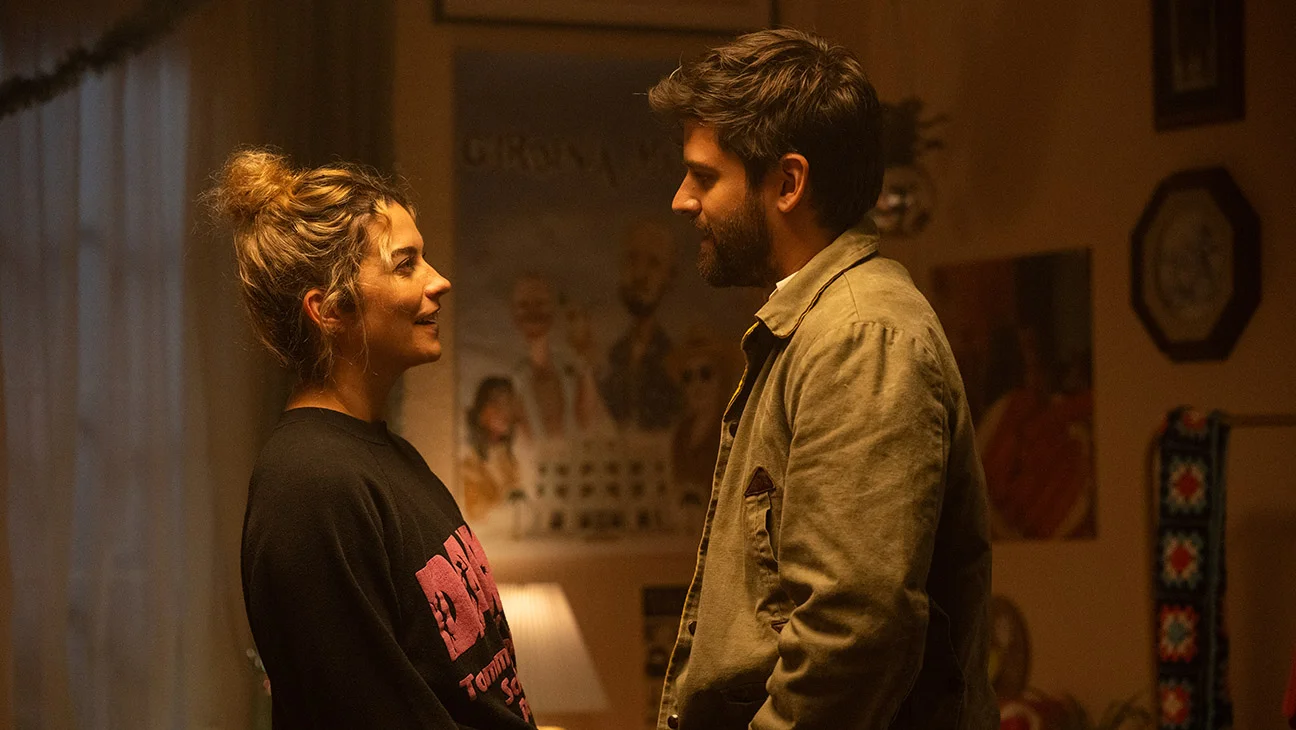

Emma spends much of All That She Wants mistaking embarrassment for evidence. A degrading commercial shoot has her dancing in a Santa-themed costume beside an oversized feminine hygiene product, her longtime boyfriend treats commitment like a clerical error, and her younger sister’s pregnancy quietly exposes a desire Emma has spent years postponing. None of these things proves that her life has gone wrong. Emma reads them that way anyway.
That distinction matters because David West Read’s screenplay keeps placing Annie Murphy’s Emma in situations where humiliation becomes a form of self-surveillance. She is watching herself age, watching other people reach milestones, watching the imagined judgment of her mother, Linda, and trying to determine what all of it says about her. Murphy is exceptionally good at making this visible. Her face rarely settles before the next defensive reaction arrives, and her physical comedy gives Emma the air of somebody continually revising her own behavior while she is still performing it.
Then she meets Luke. Their encounter at a Toronto nightclub has the loose rhythm that romantic comedies need and often counterfeit. Cooper Raiff plays Luke as calm without becoming bland, which gives Murphy room to ricochet around him. Their attraction is immediate, and the subsequent trip to his dorm room has enough ease that the film scarcely needs to insist upon their compatibility. Morning supplies the premise’s advertised complication: Luke is the child Emma once babysat, the former “Lukie” whose family photographs suddenly make the previous night look much stranger in retrospect.
It is a terrific comic reveal and a fairly weak dramatic obstacle. The roughly ten-year age gap and childhood connection give Emma reasons to panic, yet neither carries the moral danger she keeps assigning to them. Luke is an adult graduate student when they meet. Their earlier relationship existed when he was four. The screenplay understands this quickly, which creates a structural problem later when Emma continues treating their age difference as though it contains some hidden ethical trapdoor. There is awkwardness here. There is social anxiety. There is very little actual transgression.
The stronger conflict is internal, and considerably less tidy. Emma fears that Luke will eventually resent the years separating them. She believes she wasted part of her own adulthood and suspects he may be entitled to waste his too. Linda’s disapproval has trained her to imagine an audience for every personal decision, while Macy’s pregnancy turns motherhood from an abstract possibility into something painfully visible. Emma wants a child. She also wants proof that wanting one has not made her conventional, desperate, selfish, or old.
This is where Murphy’s performance carries weight that the high-concept setup cannot. Her comedy relies on recoil: a statement leaves her mouth, she recognizes its implications, and her body attempts an emergency evacuation. One of the sharpest examples comes when Emma approaches Luke intending a romantic surprise and discovers him with Paige. She immediately tries to recode the encounter as accidental. Murphy turns the retreat into a miniature study in pride. Emma would rather look ridiculous than look exposed.
Raiff works in the opposite register. Luke rarely needs the room to bend around him. His relative stillness gives the pairing its balance, and his affection for Emma makes her excesses feel observed rather than indulged. When she later asks him to become a sperm donor, the arrangement makes romantic-comedy sense precisely because it pretends to remove romance from a relationship already saturated with it. Emma wants a transactional solution. Luke agrees to the transaction while plainly wanting the person.
The film is strongest when its spaces make that contradiction harder to avoid. A planned Costa Rica trip collapsing into Niagara Falls could have become another piece of rom-com machinery, but the tacky hotel atmosphere and tourist spectacle suit Emma and Luke almost embarrassingly well. They are trying to stage something practical inside a setting designed to manufacture romance. Production designer Caitlin Byrnes and costume designer Mara Zigler lean into the artificial cheerfulness, while Bermingham and Rhymer allow the scene’s silliness to sit beside genuine tenderness. An encounter with an older couple supplies the sequence with a bittersweet edge without forcing either lead into a speech about what the trip means.
Elsewhere, the visual design serves the story less confidently. Robert Scarborough’s cinematography is clean and functional, yet Toronto seldom develops into a place with much expressive pressure. The film covers years, careers change, relationships shift, children arrive, and December keeps returning, yet many interiors feel boxed in and several exterior stretches retain the flattened polish of streaming television. Even the winter scenes rarely communicate physical cold. For a story concerned with time passing, the world itself seems strangely resistant to weather.
That limitation becomes noticeable because the screenplay is constantly measuring Emma against changing circumstances. Seasonal title cards announce those transitions with unnecessary insistence, and a later montage revisiting romantic moments performs another act of explanation after Murphy and Raiff have already done the work. The film occasionally mistrusts the audience at the precise moment its actors have earned trust.
Its final-third reversals create a related problem. Emma’s hesitation makes psychological sense for a long time, but repeated retreats eventually begin to resemble screenwriting maintenance. The narrative needs separation after the emotional argument for separation has weakened. A romance can survive predictability. It struggles when obstacles remain onscreen after their dramatic authority has expired.
What keeps All That She Wants alive is that Emma’s central question remains richer than the device built around her. She changes careers, confronts family expectations, pursues motherhood, and keeps discovering that independence does not require the absence of desire. Wanting Luke does not invalidate the life she is building for herself. Wanting a child does not require surrendering that life to somebody else’s definition of adulthood.
The film’s visual language rarely deepens that idea, but Murphy does. Watch her whenever Emma is caught between saying what she wants and disguising it. Her posture tightens, the joke arrives, the retreat begins. By the time she learns to stop performing that retreat, the romantic outcome is hardly a surprise, but the relief of watching her finally stop disguising desire still lands.
All That She Wants had its world premiere at the Toronto International Film Festival on September 13, 2026. The romantic comedy follows Emma, who hooks up with a charming younger man after a difficult breakup, only to discover he used to be her babysitter.
Where to Watch All That She Wants (2026) Online
Full Credits
Title: All That She Wants
Distributor: Ley Line Entertainment, Babe Nation Films
Release date: September 13, 2026 (Toronto International Film Festival)
Running time: 1 hour 35 minutes (95 minutes)
Director: Andrew Rhymer, Scarlett Bermingham
Writers: David West Read
Producers and Executive Producers: Tim Headington, Theresa Steele Page, Lindsay Tapscott, Katie Bird Nolan, Lauren Shelton, Annie Murphy, David West Read, David Darby
Cast: Annie Murphy, Cooper Raiff, Zosia Mamet, John Gemberling, Finn Wittrock, Bill Irwin, Christine Baranski
The Review
All That She Wants
All That She Wants builds its romance on a contrived age-gap complication, then finds something sharper in Emma’s habit of treating desire as evidence against herself. Annie Murphy gives that conflict comic velocity and genuine vulnerability, while Cooper Raiff’s steadiness makes their chemistry difficult to doubt. The film’s boxed-in visual language and repeated late obstacles weaken a story whose emotional destination is already clear. Still, Murphy sells the moment Emma stops disguising what she wants, and that release carries the picture.
PROS
- Annie Murphy’s expressive comic performance
- Strong chemistry between Murphy and Raiff
- Emma’s conflict has real psychological weight
- Niagara Falls sequence balances comedy and tenderness
CONS
- Age-gap obstacle feels overstated
- Final-act reversals become mechanical
- Toronto lacks visual personality
- Time-jump devices over-explain the story