


























![Kingdom Hearts Collection [I-III] Review](https://gazettely.com/wp-content/uploads/2026/10/Kingdom-Hearts-Collection-I-III-1-360x180.webp "Kingdom Hearts Collection [I-III] Review: KHII Holds Steady as Newer Entries Fluctuate 40")
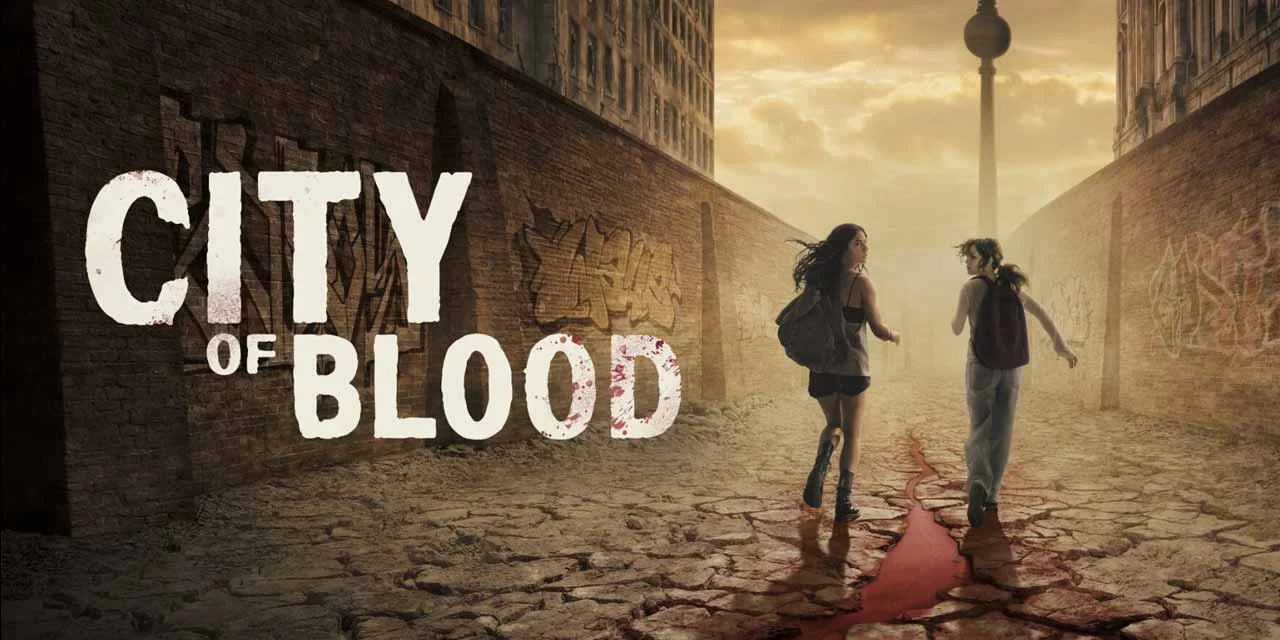

Bea rescues Phoebe. Phoebe rescues Bea. Then somebody gets another turn. City of Blood occasionally structures its central relationship like two sisters passing an emergency back and forth, which would be funny if the surrounding Berlin weren’t busy collapsing from heat, political conflict, organized crime, and a rather serious vampire problem. The repetition creates activity. What it rarely creates is momentum.
That distinction matters across eight episodes that contain enough material for several different shows. Germany has fractured after a catastrophic pandemic. Berlin suffers beneath extreme temperatures while its wealthiest citizens live inside the climate-controlled Klima Dome.
Blood has become contraband. Vampires operate through the criminal underworld and are attempting to turn illicit power into political influence. Estranged sisters Bea and Phoebe reunite after growing up in radically different circumstances. Somewhere nearby, an election is demanding its own drama. Everybody wants screen time.
The series could have made that density an asset. Television is good at parallel pressure, especially when separate plots begin changing the meaning of one another. Here, the political maneuvering, family drama, criminal activity, class conflict, and vampire material spend too much of the early season competing for attention before they start functioning as parts of the same machine. The show moves between them patiently, but patience requires tension to be accumulating somewhere. Too often, City of Blood merely relocates it.
This makes the slow pacing less interesting than it sounds. A slow series can make five minutes feel dangerous because every silence tightens something. City of Blood can spend considerably longer introducing another faction, another relationship, or another piece of Berlin’s political situation, then leave the previous thread cooling on the counter. The problem is not that the series takes its time. It keeps lending that time out.
Its best argument is built directly into Berlin. Outside the Klima Dome, heat, dirt, scarcity, and failing infrastructure define everyday life. Inside, wealth buys comfort and insulation from the crisis consuming everybody else. Blood fits neatly into that system. Once it becomes a valuable commodity controlled through criminal networks, vampirism stops being decorative mythology and starts looking like another form of extraction. The wealthy have climate. The vampires have blood. Everybody else gets the weather.
That should give the supernatural material enormous dramatic force. Strangely, it often does not. The vampires control organized crime and seek greater political power, yet the series spends so much time on electoral maneuvering and human institutions that its monsters can begin to feel interchangeable with any other criminal organization. Swap them for another violent syndicate and several stretches of the season would remain largely intact.
There are details that resist that substitution. Blood smuggling gives the economy an ugly specificity, and creatures unable to tolerate sunlight belong naturally in a city where shelter from an increasingly hostile climate has already become a marker of privilege. Those ideas suggest a version of City of Blood in which vampire mythology and social hierarchy cannot be separated. The series keeps approaching that version, then somebody needs to discuss polling.
Bea and Phoebe are supposed to provide the human spine through all of this. Their separation has placed them on opposite sides of Berlin’s social reality. Bea has grown up with her adoptive mother in relative comfort, although chronic illness has shaped her life. Phoebe has lived closer to the city’s harsher conditions. Their reunion initially carries practical stakes through the possibility of a kidney donation, followed quickly by Phoebe’s disappearance.
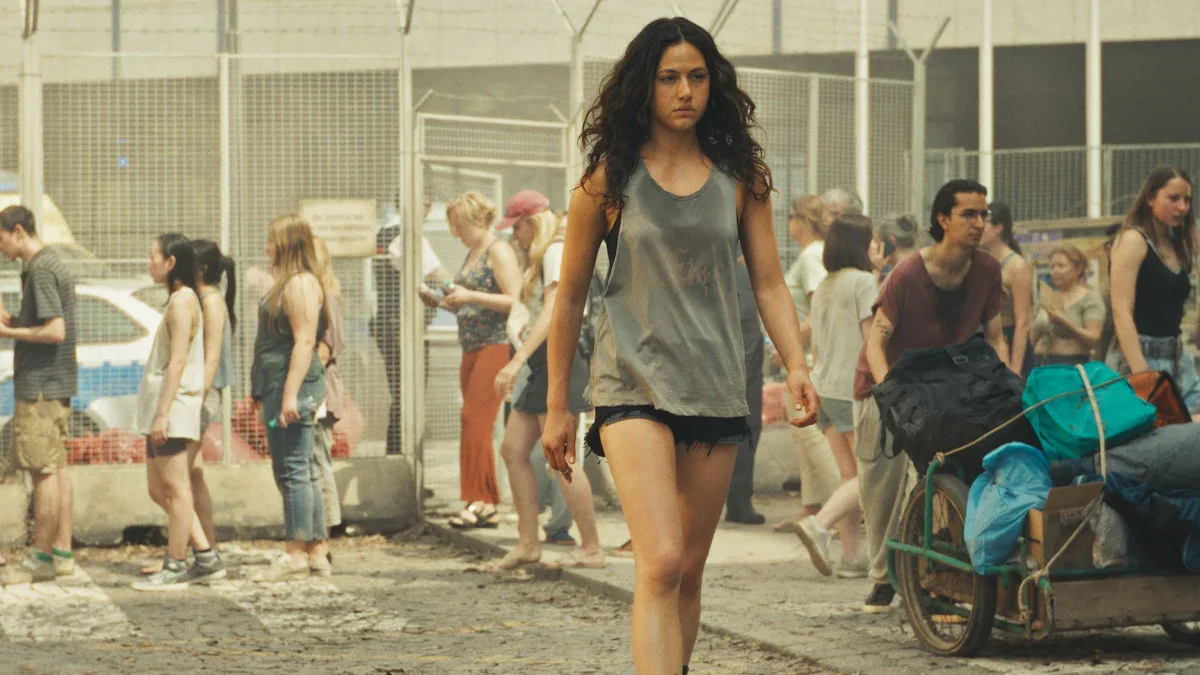
The setup gives the writers a useful way to connect family resentment with the world outside. These sisters did not simply grow apart. They were formed by radically different versions of the same city. Yet the season repeatedly converts their relationship into mechanics of danger and rescue. One sister is endangered, the other intervenes, the positions shift, and the plot gets another shove. It works as episodic propulsion for a while. Character development cannot live indefinitely on emergency services.
Bea is especially difficult to settle around as the central figure. Her work as a journalist should make her a natural bridge between private family history and public political conflict, but an early public outburst establishes her abrasiveness faster than the series establishes the emotional complexity underneath it.
That imbalance matters because City of Blood already asks viewers to divide their attention among so many people. A difficult protagonist can be terrific television. A difficult protagonist surrounded by five competing plots has a tougher sales department.
Phoebe gets the richer material through Johan Moderson. Their connection introduces moral uncertainty into a series that frequently prefers factions and positions. Her choices around him blur the clean division between victim, accomplice, enemy, and ally, allowing personal attachment to complicate the political and supernatural categories around her. For a stretch, this is the sort of drama the rest of the series keeps promising: a character decision that changes how the larger conflict feels.
Then the later episodes lean harder toward action, and some of that ambiguity loses oxygen. It is a familiar streaming-season reflex. Spend hours building a difficult relationship, reach the point where its consequences become genuinely uncomfortable, then remember there is a finale to deliver.
The same unevenness reaches the worldbuilding. Berlin has supposedly endured social collapse severe enough to fracture Germany and turn basic resources into luxuries, yet smartphones, internet access, television news, contemporary clothing, and ordinary grooming survive with surprising confidence.
A dystopia does not need to redesign every toothbrush. The discrepancy stands out because the world is strongest when its changes alter behavior: the Klima Dome changes what comfort means, blood smuggling creates an economy, and extreme heat becomes social pressure. Civilization may be sweating itself apart, but apparently nobody lost their charger.
The late shift toward action exposes the season’s central problem rather than curing it. Escalation can raise the volume, but it cannot decide which relationship, institution, or monster should have been carrying the drama all along. The political story, vampire mythology, and sisters’ relationship each contain enough potential to sustain greater attention. City of Blood gives each possibility enough time to make its case, then calls the next witness.
City of Blood premiered on Disney+ on September 16, 2026. Set in a dystopian Berlin transformed by climate change, the thriller series follows two estranged sisters who reunite and discover that vampires control organized crime and political power, with human blood serving as a high-stakes currency.
Where to Watch City of Blood Online


Full Credits
Title: City of Blood
Distributor: Disney+
Release date: September 16, 2026
Rating: TV-MA
Running time: 50 minutes per episode
Director: Philipp Kadelbach
Writers: Elena Lyubarskaya
Producers and Executive Producers: Philip Peschlow, Nils Landmark, Bernd Schlegel
Cast: Lea Drinda, Soma Pysall, Franz Hartwig, Jördis Triebel, David Schütter, Mouataz Alshaltouh, Lars Eidinger
Editors: Not publicly specified
Composer: Michael Kadelbach
The Review
City of Blood
City of Blood has a terrific setup buried beneath a season that cannot decide which part deserves the spotlight. The divided Berlin, blood economy, and Klima Dome give its dystopia real personality, while Phoebe’s morally uncertain storyline briefly shows how sharp the drama could become. Yet the political plotting, vampire mythology, and sisterly conflict keep competing instead of strengthening one another. Eight episodes create plenty of movement, but surprisingly little momentum. The vampires deserved better billing.
PROS
- Strong dystopian Berlin setting
- Blood economy is a smart genre idea
- Klima Dome sharpens the class divide
- Phoebe and Johan provide moral tension
CONS
- Slow, fragmented pacing
- Too many competing storylines
- Vampires feel strangely secondary
- Bea struggles to anchor the ensemble
- Late action weakens stronger ambiguity