

























![Kingdom Hearts Collection [I-III] Review](https://gazettely.com/wp-content/uploads/2026/10/Kingdom-Hearts-Collection-I-III-1-360x180.webp "Kingdom Hearts Collection [I-III] Review: KHII Holds Steady as Newer Entries Fluctuate 37")



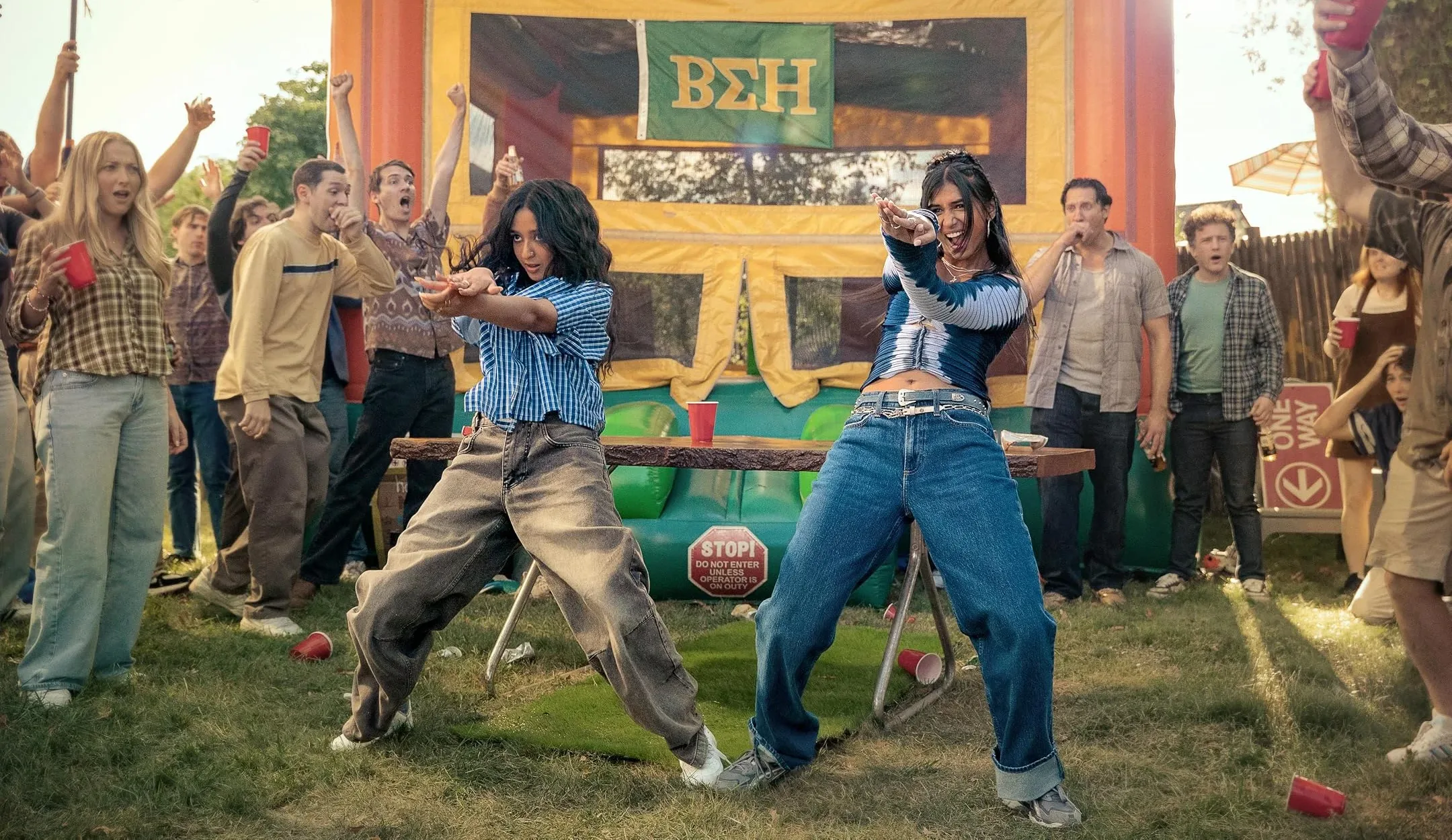

Two young women can watch the same dance and see entirely different futures. When Maya and Anjali encounter UCLA Agni for the first time, Anjali imagines herself opposite team captain Ronak in a moonlit romantic fantasy, dressed in the visual language of an Indian wedding.
Maya sees herself commanding the stage. Director Lena Khan treats both fantasies with the logic Indian popular cinema has used for decades: music releases desires that ordinary reality keeps contained. The distinction between the fantasies matters even more. Anjali wants to enter an existing picture. Maya wants to remake it.
That difference gives Best of the Best its sharpest idea. Hasan Minhaj and Prashanth Venkataramanujam have written a familiar American college competition comedy about lifelong friends who join a dance team, fall out, find romance and chase a championship. Khan makes the formula considerably richer by placing those conflicts inside a question that follows many diaspora art forms: what counts as preserving a tradition, and when does preservation start looking like repetition?
Maya and Anjali arrive at UCLA carrying the embarrassment of a disastrous high-school routine that became a viral spectacle after Maya’s risky choreography went wrong. Maya, played with irrepressible force by Maitreyi Ramakrishnan, responds to humiliation by pushing harder.
Priyanka Kedia’s Anjali operates differently. She is socially easier, romantically inclined and under serious academic pressure from a mother who expects perfect grades. Their friendship has lasted long enough for these differences to seem complementary until Agni turns them into competition.
The team’s choreography becomes the place where personality, culture and ambition collide. Ronak wants to build a routine around the familiar imagery of a Bollywood wedding. Maya laughs at the proposal because she sees familiarity as a creative trap. Her objection is revealing. She has no desire to discard Indian tradition. She wants to resist the narrow slice of that tradition most readily packaged for an audience.
The film supports her argument through its own dancing. Joya Kazi’s choreography moves through Bollywood-inspired spectacle, classical influences, kuthu and contemporary fusion, while the audition sequence’s use of “Ghungroo” connects these American students directly to modern Hindi film music. Another team’s routine uses Labrinth’s “Mount Everest,” making the film’s idea of fusion explicit: Indian identity remains legible even when the soundtrack travels. These dancers are assembling identity from available forms, not guarding a museum exhibit.
That makes Maya’s artistic stubbornness easier to understand even when it becomes difficult to like. She believes invention will protect her from becoming ordinary, and Ramakrishnan gives that belief enough energy to resemble both confidence and panic. When Agni shifts its preference for female lead from Maya to Anjali, Maya sees the vote happen and keeps it from her friend. The wound cuts deeper because it confirms an insecurity the film has been quietly building: people find Anjali easier to embrace.
Kedia plays that ease without turning Anjali into the passive alternative. Anjali’s attraction to Ronak, her vulnerability to other people’s expectations and her anxiety about maintaining her grades gradually expose how often accommodation has substituted for self-definition. Maya asserts herself before somebody else gets the chance to define her. Anjali leaves room for everybody else until very little remains for her. Their conflict works because neither strategy is treated as healthy simply because the other one is worse.
Their dancing repeatedly restores something conversation cannot. Ramakrishnan and Kedia have a physical rapport that makes the friendship convincing before the screenplay asks them to explain it. The pleasure of seeing them move together carries memories of a bond formed long before UCLA, Ronak or competitive rankings arrived. Indian cinema has often allowed song and dance to reveal emotional truths characters cannot state plainly. Khan uses that tradition with considerable intelligence here. Movement becomes another mode of character writing.
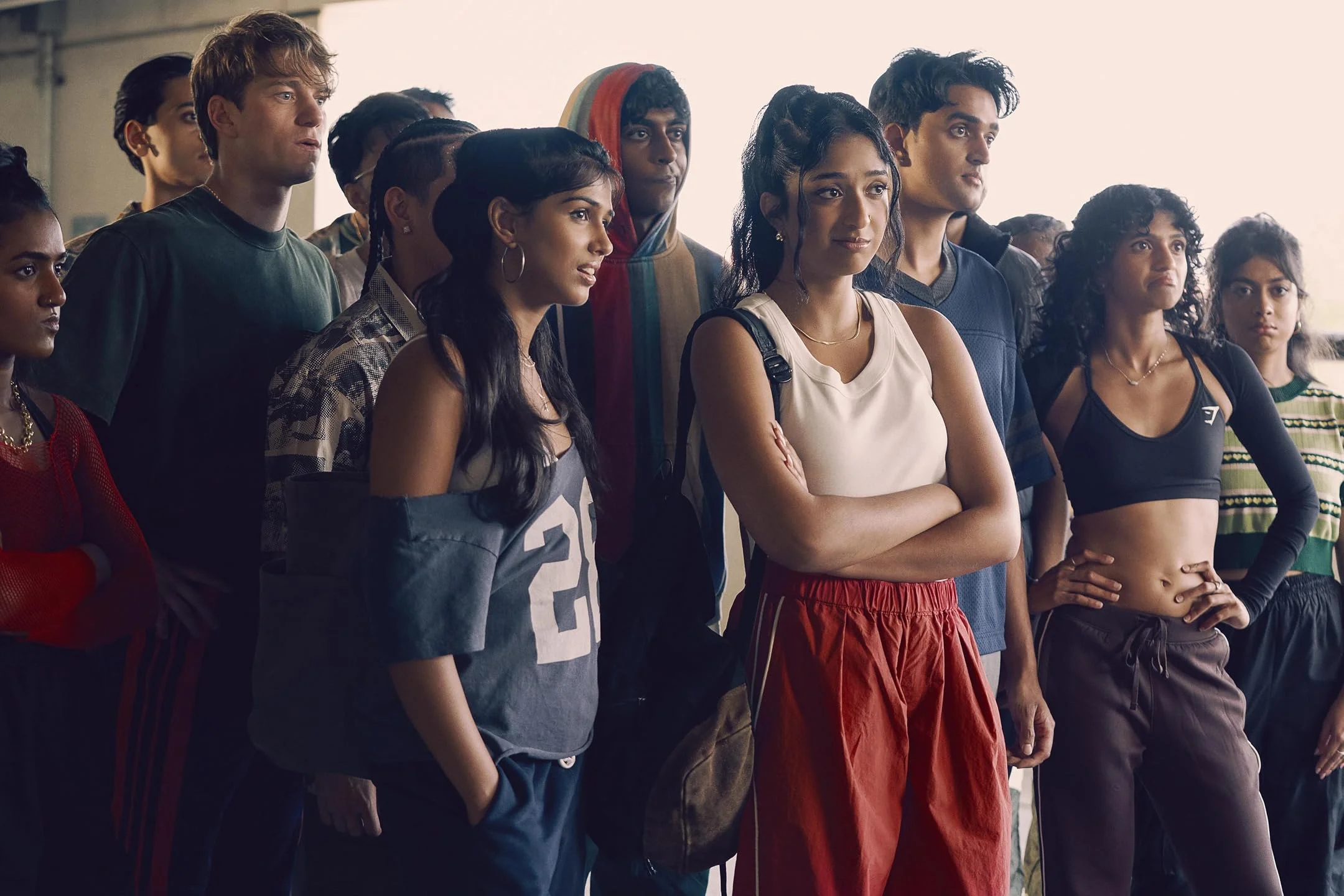
The film is less perceptive when it steps away from the dance floor. Anjali’s mother slaps her during move-in, a startling expression of parental authority that briefly opens a harsher avenue into the pressure surrounding her education. Maya’s mother encourages involvement with the South Asian Student Association. Yet these women recede before either relationship acquires much texture. The film knows parental expectation shapes Maya and Anjali, but seems far less interested in the mothers once campus life takes over.
Its handling of the male characters can feel similarly convenient. Ronak contributes to the fracture between the women and later receives a comparatively painless route back into their lives. Arjun misreads footage involving Maya and Ronak and refuses her explanation, yet Maya still finds herself doing much of the conciliatory work.
A male teammate later helps push Maya toward returning to Agni. None of these choices ruins the friendship drama, though they create an odd imbalance in a story that asks its two women to examine every ugly corner of their behavior while several men pass through conflict with lighter accounting.
The competition itself brings the film back to stronger ground. Agni’s climactic routine turns Indian history, popular cinema and youthful theatricality into the same performance, including a heist built around the Koh-i-Noor. The idea is cheeky, but it carries weight. A diamond now held in the British Crown Jewels becomes material for a group of young South Asian Americans to seize, rearrange and perform on their own terms. Tradition here is neither a sacred object nor an embarrassment. It is material.
A.R. Rahman’s “Aamaasee” should give that climax an even stronger musical spine, though the film interrupts the number with an external mishap before letting the team improvise and continue. The interruption creates a satisfying test of the dancers’ adaptability, yet it also fragments the performance just as music, choreography and cultural argument are finally converging. Earlier, Maya and Anjali’s first Agni fantasies let movement define both women before either can explain herself. Here, narrative urgency briefly wins the argument against musical flow.
Still, the interruption accidentally suits the film’s larger idea. Maya has spent much of the story believing cultural expression must be engineered into something dazzling enough to prove its value. Anjali has been more willing to step into forms already waiting for her.
The final performance gives neither woman complete control, which is precisely why the film’s familiar college-comedy machinery matters less in the end than what happens on the stage. These young dancers are not choosing between tradition and modernity. They are deciding what deserves to survive through them, changing its rhythm as they dance, colliding with circumstances and continuing to move.
Best of the Best debuted on Netflix on September 18, 2026. The comedy-dance film follows two childhood best friends who join UCLA’s competitive Bollywood-fusion dance team in pursuit of a national championship.
Where to Watch Best of the Best (2026) Online


Full Credits
Title: Best of the Best
Distributor: Netflix
Release date: September 18, 2026
Rating: PG-13
Running time: 1 hour 45 minutes (105 minutes)
Director: Lena Khan
Writers: Hasan Minhaj, Prashanth Venkataramanujam
Producers and Executive Producers: Jonathan Erlich, Hasan Minhaj, Prashanth Venkataramanujam, Ryan Halprin, Ellen H. Schwartz
Cast: Maitreyi Ramakrishnan, Priyanka Kedia, Chaneil Kular, Ankur Rathee, Lilly Singh, Janina Gavankar, Hasan Minhaj
Director of Photography (Cinematographer): Carmen Cabana
Editors: John Axelsen
Composer: Siddhartha Khosla
The Review
Best of the Best
Best of the Best finds its strongest voice when dance becomes a negotiation between inheritance and invention. Lena Khan and choreographer Joya Kazi give Maya and Anjali's friendship cultural and emotional texture through movement, while Maitreyi Ramakrishnan and Priyanka Kedia make their fractures credible. The college-comedy framework is familiar, and the mothers and male characters receive thinner treatment than the central friendship deserves. Yet the film's music, choreography and diasporic perspective keep returning it to a richer question: how does a new generation carry tradition without freezing it in place?
PROS
- Ramakrishnan and Kedia's convincing friendship
- Culturally specific dance storytelling
- Strong use of Indian musical-cinema traditions
- Ambitious, expressive choreography
- Smart tension between inheritance and reinvention
CONS
- Familiar college-competition structure
- Underdeveloped mother-daughter relationships
- Uneven accountability for male characters
- Climactic interruption weakens musical flow







