














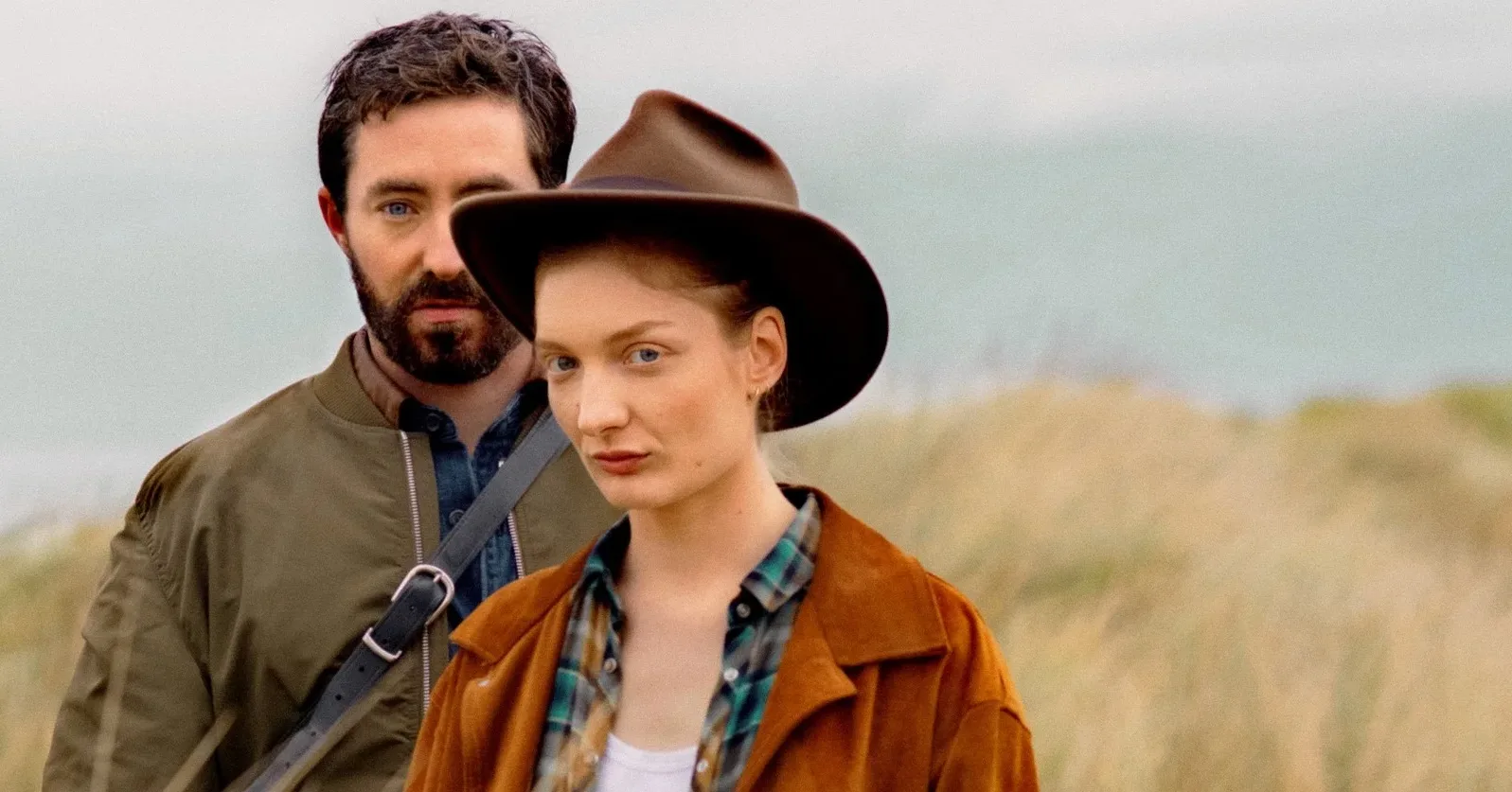

Sexual entitlement becomes almost absurdly visible when Diane reaches orgasm, announces that she is done, and rolls over while the man beside her protests that he has not finished. Her refusal to continue is funny because the expectation she violates is so familiar. Ann Sirot and Raphaël Balboni stage the encounter with blunt physical comedy, then let Diane dismantle the double standard verbally: men have ended encounters on their own satisfaction for generations without treating it as a moral emergency.
Ninon Borsei makes Diane’s certainty abrasive, funny and occasionally exhausting. At 28, she is angry about men, work, her unfinished thesis and the endless social contracts she suspects were written without consulting women. That anger gives Diane in the Loop its initial momentum, then loses its simple target when an argument with her mother exposes a family secret. At 19, three years before Diane was born, her mother was raped.
Diane immediately wants a name. Her mother, played by Sandrine Blancke, wants silence. The disagreement turns a familiar story of sexual violence into a conflict over who possesses trauma once its consequences spread through a family.
The Violence Diane Inherits
Diane appoints herself avenger without receiving permission from the woman she intends to avenge. That distinction matters. Her mother has lived for decades with what happened, abandoned her studies after the assault and now chooses to return to them.
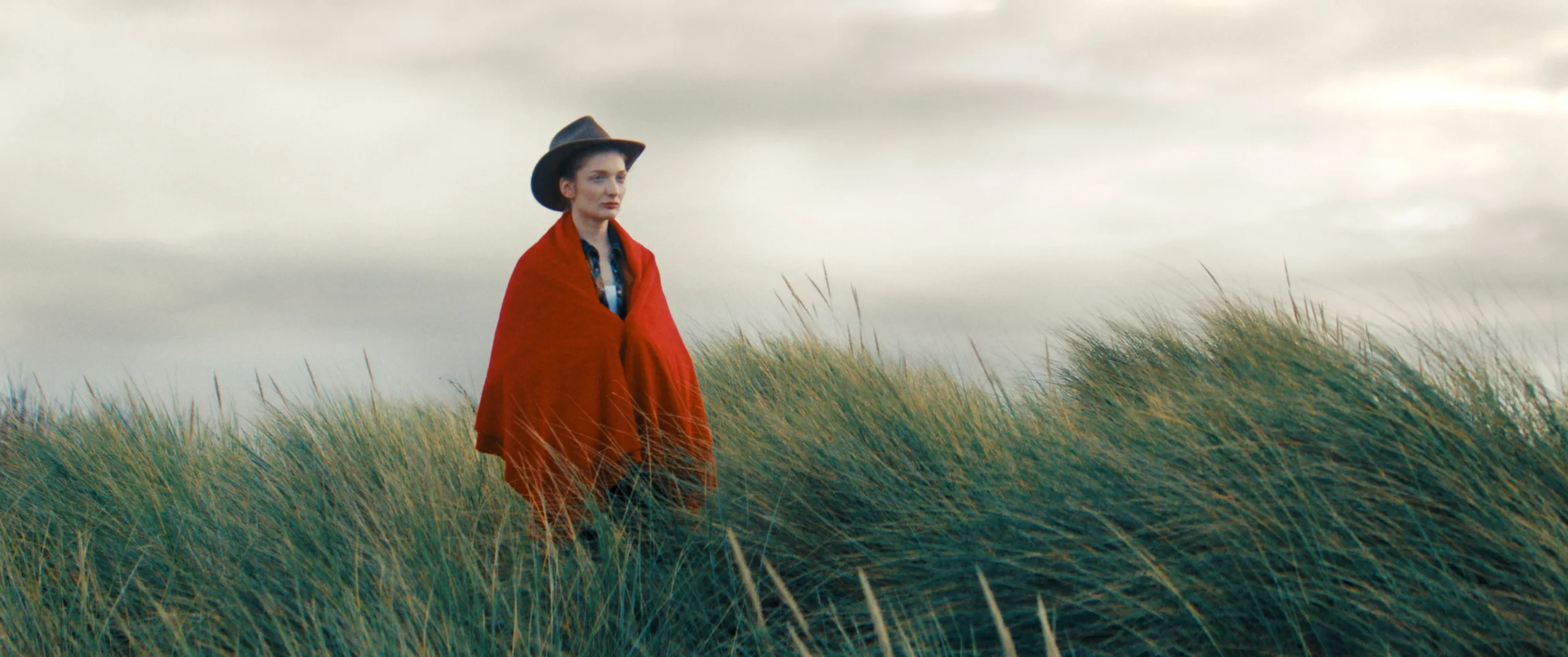
She also reconnects with friends and allows romance back into her life. Blancke plays these choices without converting recovery into a triumphant transformation. A hesitation, a change of expression, the unease that returns when the past intrudes all suggest a woman whose life contains the rape rather than orbiting it.
Diane cannot initially accept that position. Her fury depends on the assumption that action is morally cleaner than accommodation, which sends her searching for the attacker. The film briefly adopts the machinery of a rape-revenge picture, complete with pursuit, a target and the promise of confrontation. Then the man turns out to be dead, killed by lightning.
The detail is almost offensively comic, which is precisely why it works. Diane has built a purpose around confronting someone who has already escaped every earthly consequence available to her. Her disappointment exposes something uncomfortable: vengeance had begun to serve Diane’s needs rather than her mother’s.
This is where Sirot and Balboni make their sharpest cultural argument. Sexual violence rarely ends with the person who commits it or the person who survives it. Families absorb secrecy, anger, shame and distorted loyalties, often without agreeing on what justice should mean.
The Son of the Father
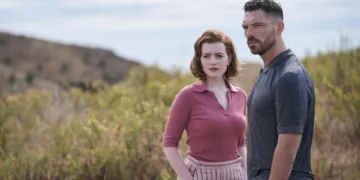
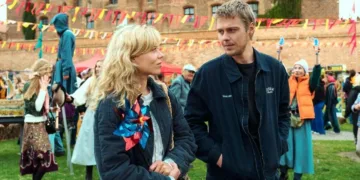
The film complicates that inheritance again when Diane heads toward the North Sea coast and meets a cyclist played by Lucas Meister. He irritates her almost immediately, which for Diane is hardly disqualifying. Attraction develops anyway, until she discovers that he is the son of her mother’s rapist.
A lesser screenplay could turn him into a device for proving that Diane has misjudged men. Instead, his discovery about his father produces disbelief, disgust and betrayal. He has inherited no legal guilt, yet he cannot remain untouched by the knowledge. Diane is carrying pain from her mother; he is carrying moral contamination from his father. Their romance becomes an encounter between two people being asked to answer for histories they did not create.
The parallel with Diane’s mother sharpens when she sees her daughter naked and vulnerable in a setting tied to the earlier assault. Diane’s sex is consensual, her mother’s was not, but trauma does not obey such neat distinctions once memory is triggered. Blancke’s reaction turns a domestic moment into evidence of how the past can misrecognize the present.
The film is strongest here because it refuses the comforting fantasy that political awareness automatically produces emotional clarity. Diane understands patriarchal violence intellectually long before she understands what her mother requires from her.
A Western With Jump Cuts
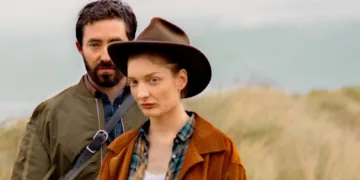
Sirot and Balboni refuse to photograph this material like a conventional trauma drama. Diane’s near-permanent cowboy hat, the North Sea landscapes and several stylised encounters borrow from the western, recasting her revenge mission as a private frontier myth. Instead of riding toward a gunfight, she heads toward the grave of a man she cannot confront.
Their editing is equally conspicuous. Frequent micro jump cuts slice conversations into slightly fractured bursts, creating a restless rhythm that matches Diane’s impatience. The technique can become distracting when Blancke’s quieter scenes seem ready to settle into emotional stillness and another cut arrives. The form occasionally appears more nervous than the characters.
Humour works better when it comes directly from the tangled relationships. Scenes involving Diane’s mother, her father and an old romantic connection, complicated further by past sex with Diane’s father, treat adult desire as messy social history rather than clean biography. Nobody gets the dignity of a simple family tree.
Borsei holds these tonal shifts together because Diane never becomes a spokesperson delivering approved positions. Her cruelty, righteousness, sexual confidence and emotional confusion coexist in the same person. The film grants her the freedom women in issue-driven dramas are often denied: the freedom to be politically perceptive and personally wrong at the same time.
Most importantly, the dead rapist gradually loses narrative space. His violence matters everywhere, yet he does not get to dominate the film built from its consequences. Diane, her mother and his son are left with the harder task of deciding what happens after a monster can no longer be confronted.
Diane In the Loop premiered at the 83rd Venice International Film Festival on September 5, 2026. The Belgian-French comedy-drama follows a young woman who embarks on a quest for vengeance after discovering that her mother was raped years before her birth.
Full Credits
Title: Diane In the Loop
Distributor: Pyramide Films
Release date: September 5, 2026 (Venice International Film Festival)
Running time: 1 hour 32 minutes
Director: Ann Sirot, Raphaël Balboni
Writers: Ann Sirot, Raphaël Balboni
Producers and Executive Producers: Delphine Tomson, Jean-Pierre Dardenne, Luc Dardenne, Alice Bloch
Cast: Ninon Borsei, Sandrine Blancke, Lucas Meister, Naidra Ayadi, Jo Deseure, Peter Van Den Begin
Director of Photography (Cinematographer): Fiona Braillon
Editors: Sophie Vercruysse, Raphaël Balboni
Composer: Julie Roué
The Review
Diane In the Loop
Diane in the Loop turns inherited sexual trauma into a question of ownership: who gets to decide what justice, memory, and recovery should look like? Ann Sirot and Raphaël Balboni keep the rapist himself largely outside the dramatic spotlight, allowing Diane, her mother, and the dead man’s son to carry the moral complications he leaves behind. The micro jump cuts and whimsical western flourishes occasionally create unnecessary distance, yet Ninon Borsei and Sandrine Blancke give the film a firm human centre. Its refusal to confuse vengeance with healing is its sharpest choice.
PROS
- Ninon Borsei’s forceful central performance
- Sandrine Blancke’s nuanced portrayal of survival
- Unusual approach to inherited trauma
- Sharp examination of sexual entitlement
- Inventive western and comic elements
CONS
- Micro jump cuts can become distracting
- Some humour disrupts emotional intimacy
- Stylisation occasionally creates distance