















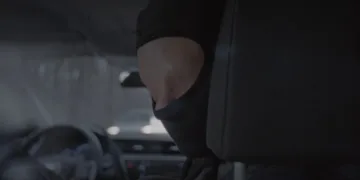








The most upsetting thing in Don’t Move happens before the giant spider has even entered the picture. Megan stands outside an amusement park dark ride waiting for her husband and young son, then watches a fire turn the attraction into a trap. She runs inside, releases other riders, reaches her family, and still cannot save them. She gets close enough to be burned. Close enough to hear them. Close enough for survival to feel possible right until it isn’t.
That scene hurts. It is cruel in a way the rest of the movie rarely allows itself to be, and that becomes Don’t Move’s strangest problem. Director Maclain Nelson gives us an opening built around helplessness, physical danger, and a horrible certainty that something cannot be fixed. Then the film spends much of its remaining time becoming a much safer creature feature.
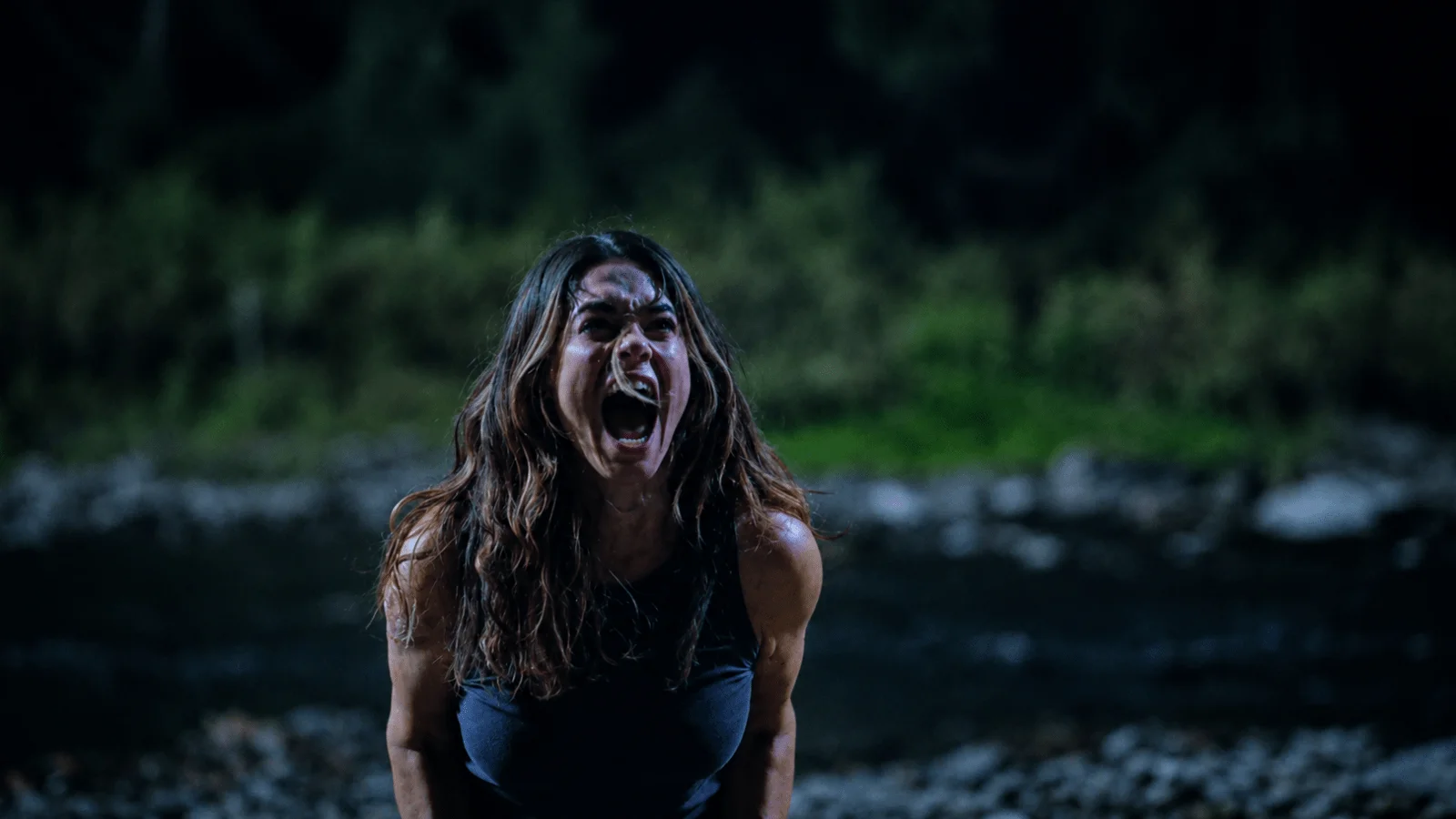
A year later, Megan, played by Lyndsy Fonseca, reluctantly joins a church camping trip into the Missouri Ozarks. Fonseca carries the memory of that opening well. Megan never needs to announce her grief for us to remember what she has lost, and her discomfort around the group’s attempts at kindness gives the early scenes some emotional friction. When she later becomes protective of young Connor, the connection makes sense without requiring a speech to explain it. The problem is everything surrounding her.
Pastor Rizzo leads the retreat. His daughter Emma comes with her boyfriend Ryan. Ricky arrives as the abrasive last-minute addition, immediately creating tension with Ryan. Paul, played by Rob Riggle, drives the bus and carries himself like a seasoned outdoorsman whose résumé might not survive five minutes of questioning. There is romantic friction, suspicion, some drug-related business, and plenty of time spent arranging conflicts that seem ready to matter once the group gets into trouble. Then the spider arrives and most of that material starts feeling like luggage nobody needed to pack.
Creature features can absolutely spend time on character drama. The better ones make those early relationships change how we experience the danger later. Here, several threads mostly slow the trip toward the material the movie handles best. Ricky is useful when disappearances begin because his behavior makes him an easy target for suspicion, but other conflicts lose their purpose once the group understands that the thing stalking them has eight legs.
That makes the middle stretch feel oddly cautious. The cast keeps it watchable, especially Fonseca, and Tom Cavanagh has an easy presence as Pastor Rizzo. Riggle is the more frustrating case because Paul seems designed for the kind of personality that could give this movie extra energy. A confident bus driver discovering that nature does not respect confidence is fertile ground. The film gets some humor from him, but rarely enough to change the rhythm. Then somebody disappears into the trees, and Don’t Move wakes up.
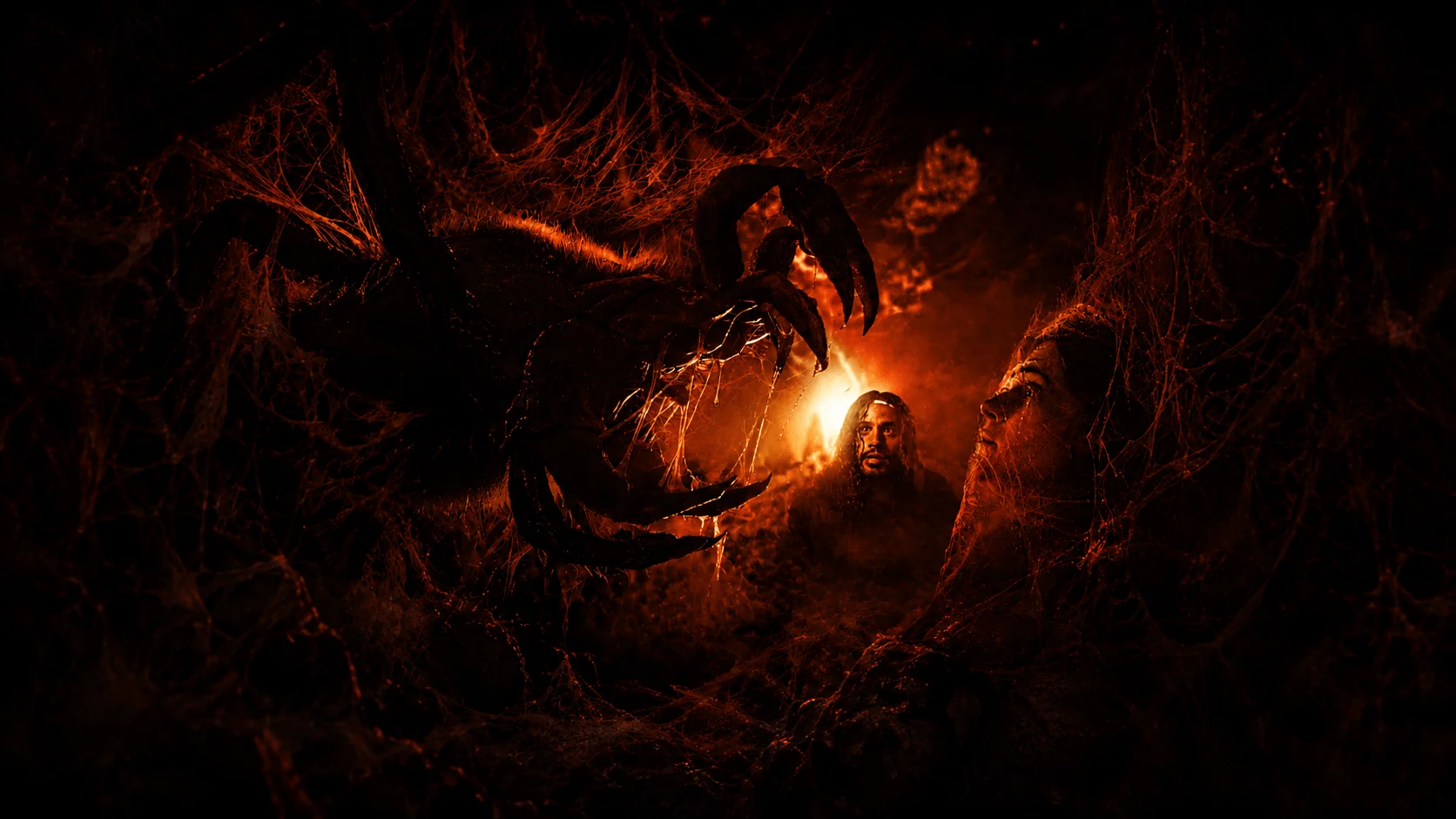
The spider can move frighteningly fast through the forest canopy, webs begin turning the environment itself into a trap, and the survivors eventually reach the kind of situation the title promises: movement carries consequences. That is where the movie becomes fun in the uncomplicated way a giant-spider movie should be fun. A few jump scares genuinely land, partly because the creature can attack from spaces the characters cannot properly watch. Looking forward does not help much when the danger is above you.
The survivors are allowed a few sensible decisions too, which matters. Horror becomes exhausting when characters exist only to ignore obvious danger. Here, attempts at bravery or problem-solving can still end badly because the spider is simply faster, stronger, and better adapted to the environment. That feels fair. The characters are not always losing because the screenplay temporarily lowers their IQ.
The creature itself is less consistent. Some shots give the spider a convincing ugliness and weight, while others reveal the limitations of the digital work. The movie appears to mix practical-looking material with VFX, and the difference can be felt even when it is hard to identify precisely. The strongest moments make the spider seem physically present in the woods. The weaker ones turn it into something occupying the frame rather than the space.
That distinction matters because fear here depends on proximity. The opening works because Megan can almost touch the people she cannot save. The best spider attacks work for a similar reason: branches, webs, cabins, and bodies share the same threatening space. Whenever the creature loses that physical presence, some of the fear leaves with it.
There is another mismatch. After opening with such a brutal death sequence, Don’t Move often handles later casualties with surprising restraint. People disappear. Attacks happen quickly. The aftermath can feel cleaner than the opening taught us to expect. I do not need every creature feature to become a gore showcase, but this one establishes its own level of cruelty and then spends much of the movie backing away from it.
Maybe that is why Megan remains the most effective part of the story. Fonseca is carrying an emotional intensity that the monster plot only occasionally matches. Her grief gives the film something human to protect even when the surrounding subplots fade, and her relationship to Connor lets the movie reconnect survival with the loss that defined her.
I kept wishing Don’t Move trusted the simplicity of that connection earlier. A grieving woman, a frightened child, a stranded group, and a giant spider that hunts through movement already give the movie plenty to work with. It does not need every relationship complication it introduces along the way.
Once the webs tighten and the characters have to think carefully about where they step, the movie finally feels comfortable inside its own skin. The fear becomes physical, the rules become clear, and the giant spider gets to behave like the horrible attraction everyone came to see. Getting there takes longer than it should. The destination is still pretty fun.
Don’t Move was released in theaters on September 11, 2026. Based on the horror novel by James S. Murray and Darren Wearmouth, the survival thriller follows a church group on a retreat in the Ozark wilderness who find themselves hunted by a terrifying prehistoric arachnid.
Where to Watch Don’t Move (2026) Online
Full Credits
Title: Don’t Move
Distributor: Impractical Studios
Release date: September 11, 2026
Running time: 1 hour 34 minutes (94 minutes)
Director: Maclain Nelson
Writers: James Murray, Maclain Nelson, Darren Wearmouth
Producers and Executive Producers: Ethan Jack Berman, David M. Wulf, James Murray
Cast: Lyndsy Fonseca, Russell “Russ” Vitale, Tom Cavanagh, Hunter King, Joseph Lee Anderson, Rob Riggle
The Review
Don’t Move
Don’t Move is at its best when the human drama falls away and the spider turns the woods into a survival puzzle. Lyndsy Fonseca gives Megan enough grief and resolve to keep the movie emotionally grounded, while a handful of sharp jump scares deliver the creature-feature fun. The problem is the gap between the devastating opening and the safer, slower film that follows. Too many subplots stall the momentum, and the spider never feels as frighteningly physical as it should. Still, once the webs tighten, the movie finds its pulse.
PROS
- Lyndsy Fonseca gives Megan real emotional weight
- Several jump scares land well
- The movement-based spider threat creates strong tension
- Characters make some refreshingly sensible survival choices
CONS
- The middle act drags under weak subplots
- Later deaths rarely match the opening’s brutality
- Creature effects vary in physical credibility
- Rob Riggle’s comic potential feels underused