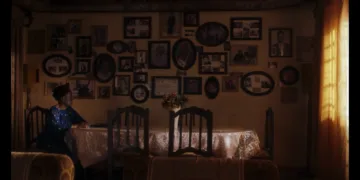











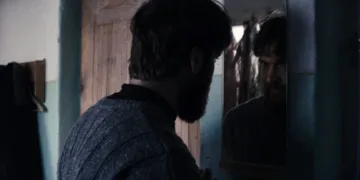




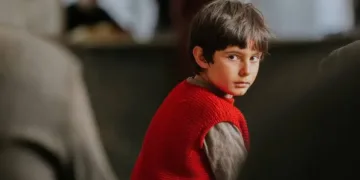
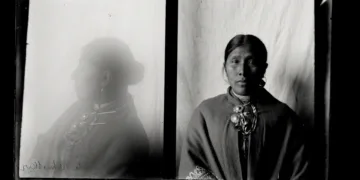









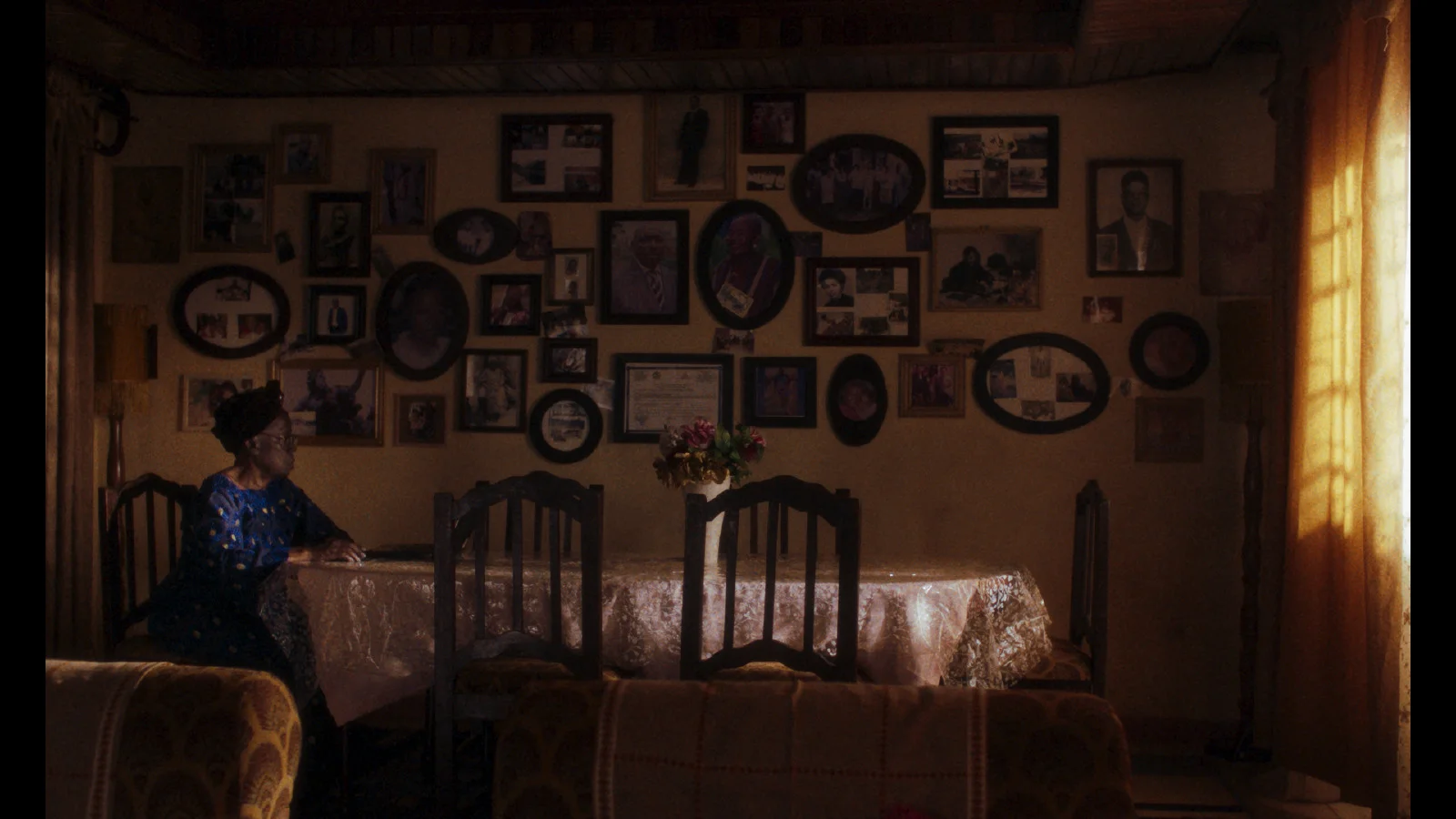

An empty house can become a kind of accusation. Josette Tientcheu lives among photographs of six children who now reside in Europe, and every room seems to hold the shape of people who are still alive yet no longer present. She locks the gate at night, watches television beneath a mosquito net, stands on her balcony, makes video calls, supervises construction, asks about tiles. None of these gestures is dramatic on its own. Together they become the rhythm of a woman trying to keep absence from hardening into fact.
Auguste Bernard Kouemo Yanghu understands that loneliness is rarely a single feeling. It is administration, routine, waiting, maintenance. Josette, played with remarkable dryness and dignity by the director’s mother, Josette Kwanya, refuses to become a figure of soft suffering.
She is stubborn, irritable, proud, occasionally cruel, often funny without appearing to seek a laugh. Her children want her to come to Europe. She refuses. Instead, she pours herself into the construction of a house for her son Benoît, convinced, or perhaps needing to be convinced, that a finished home might call her family back to Yaoundé.
The house is where the film’s emotional logic becomes painfully clear. Josette keeps building as if preparation could defeat distance. She shows the work to her children through screens, waits for firm dates that never seem to arrive, and keeps money moving toward a future that remains hypothetical.
Even the practical obstacles acquire emotional weight. A problem with her identification card complicates access to money. At a women’s mutual-help association, she competes for a loan through an auction built around punishing interest. Hope here has paperwork. Longing has debt.
Yanghu is careful enough to keep Josette’s children from becoming easy villains. They call. They care. They work. Their lives elsewhere have acquired obligations of their own, and the economic pressures that pushed young Cameroonians abroad remain audible through television, radio, and casual conversation.
The wound comes from a quieter contradiction: affection survives while presence disappears. Josette’s children can love her and still fail to return. She can love them and still reject the future they imagine for her in Europe. Everyone has a reasonable explanation. The explanations do not make the rooms less empty.
Sarah arrives through another practical problem. She first helps Josette when the older woman is stuck over her identification, then asks for an extraordinary favor of her own. Sarah’s French fiancé, Adrien, is coming to Cameroon, and her parents disapprove of the relationship.
She wants Josette to pretend to be her mother. The arrangement is absurd enough to feel comic for a moment, yet Yanghu quickly finds the ache inside it. Josette has children who are real and absent. Sarah needs a mother who is false and present.
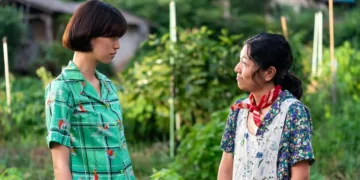
Their relationship develops through friction rather than instant tenderness. Josette dislikes strangers occupying her space. Sarah is sharper, quicker, more opportunistic, and Moudjeu Pouadeu gives her an energy that pushes against Kwanya’s heavier stillness.
They rehearse family history for Adrien, spend time around the construction site, move through the women’s association, and gradually occupy each other’s daily lives. A proposed stay of a few days stretches longer. Josette’s children become suspicious. Sarah may be exploiting her. Josette may also be accepting the arrangement because it gives her something she cannot admit to needing.
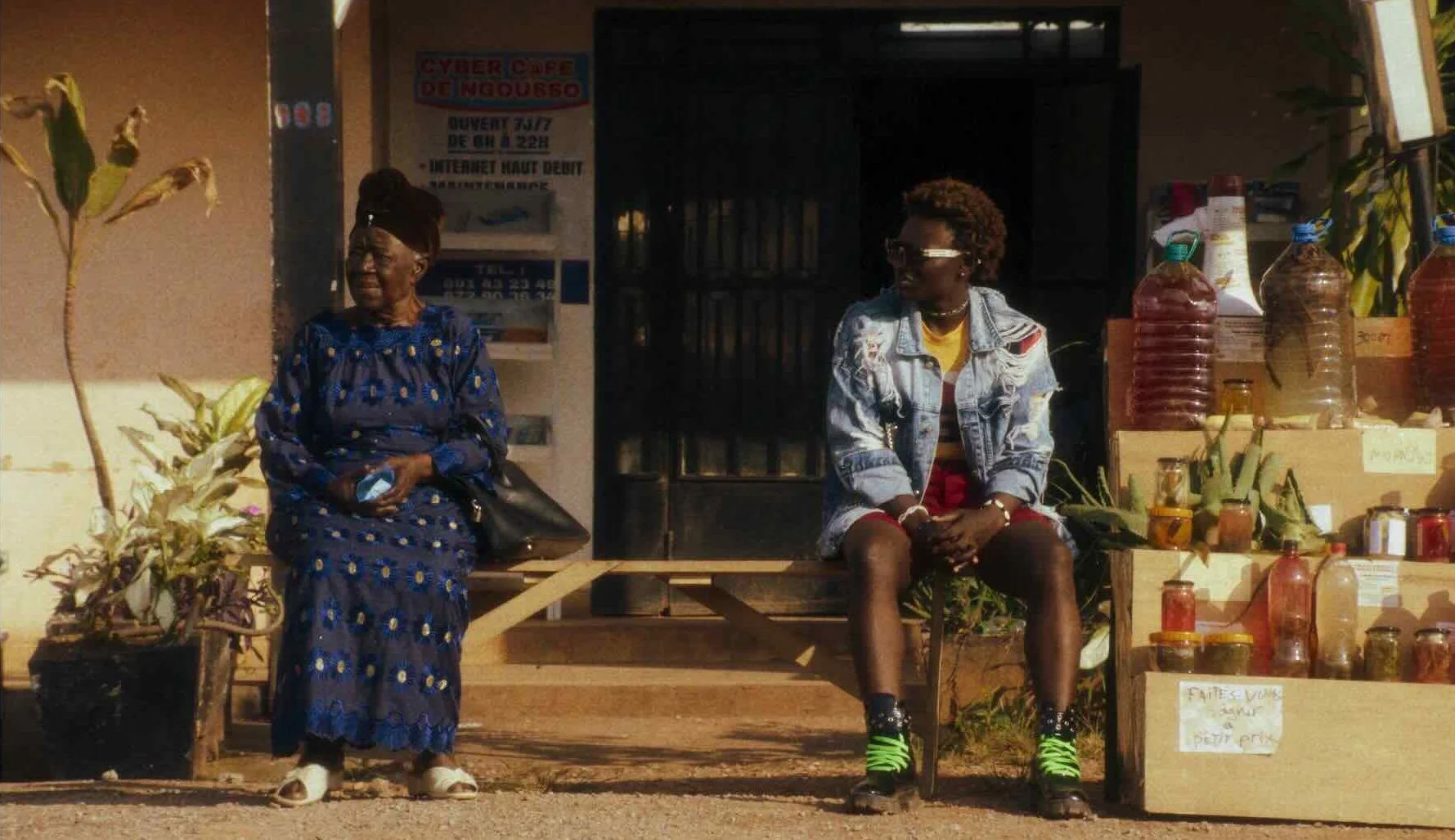
The film is wise to leave that exchange unresolved. Their affection is real even if the circumstances around it are compromised. There is no purity test for loneliness. People meet while wanting something. Sometimes the wanting becomes care.
The karaoke sequence makes that possibility visible with unusual gentleness. Josette and Sarah sing together in an extended take, and for a short while the problems surrounding them lose their power. The scene works because Yanghu does so little to force it. Two women who have spent much of the film performing roles for other people are briefly allowed to occupy the same room without explanation, obligation, or rehearsal. Their happiness is temporary, which is why it matters.
Elsewhere, House Of The Wind is strongest when it permits time to accumulate. Yanghu favors brief scenes, elliptical transitions, and stretches of domestic stillness that would be treated as disposable by a more impatient film. Here, delay is part of the subject. Josette has time in abundance while the people she wants are forever short of it. Her children are working. Sarah has plans. Construction continues. Calls end. Josette remains.
That patience gives one of the film’s darkest moments its force. An elderly man has died alone, unnoticed until the decomposition of his body begins to disturb the neighbors. The image is brutal because it turns Josette’s fear into matter. The terror lies in becoming so peripheral that death can occur without interruption, witnessed only by smell.
This is also where the portrait of Yaoundé gains its sharpest edge. The city is crowded, noisy, mobile, alive. Josette’s isolation exists inside that movement. Political debates and discussions of Cameroon’s economic future float through the film, yet Yanghu’s strongest social observation is domestic: economic survival can scatter a family without destroying its affection, leaving those who remain to live among evidence of love that cannot take physical form.
A few choices distrust the restraint that makes the film so affecting. One passage of lush score leans too heavily on Josette’s sadness, announcing what Kwanya’s face and the surrounding silence have already made clear. The recurring dreamlike image of a pale mansion invaded by creeping vines is beautiful, though less persuasive. Its suggestions of decay, impermanence, and frustrated hope are easy to understand, yet the actual construction site already carries those ideas with greater force because every brick has cost Josette money, labor, and expectation.
The cruelest return waits near the end of all that construction. In a dreamlike late passage, Josette finds herself at an airport awaiting the body of one of her sons. After the calls, the postponed visits, the money transfers and the rooms prepared for people living elsewhere, someone has finally come home.
House of the Wind premiered at the 83rd Venice International Film Festival in September 2026. Set in Yaoundé, the drama feature follows an eighty-year-old lonely woman named Josette as she desperately desires for her emigrated children to return home from Europe.
Full Credits
Title: House of the Wind
Distributor: Independent / Festival Release
Release date: September 2026 (Venice International Film Festival)
Director: Auguste Bernard Kouemo Yanghu
Writers: Auguste Bernard Kouemo Yanghu
Cast: Babetida Sadjo, Tatiana Rojo, Adrien Jolivet
The Review
House Of The Wind
House Of The Wind finds its deepest sorrow in ordinary acts: locking a gate, financing unfinished rooms, waiting for calls to become arrivals. Josette Kwanya gives that solitude stubbornness, humor, and dignity, while Sarah’s temporary place in her life complicates easy ideas about family. Auguste Bernard Kouemo Yanghu occasionally presses too hard through sentimental scoring and conspicuous dream imagery, yet his quieter observations linger with far greater force. This is a tender, patient film about preparing space for people whom time may never return.
PROS
- Josette Kwanya’s restrained, deeply characterful performance
- Patient observation of aging and solitude
- Rich ambiguity in Josette and Sarah’s bond
- Strong use of domestic spaces and everyday routines
- Migration themes grounded in family life
CONS
- Occasional overly sentimental scoring
- Dream-house imagery feels less integrated
- Some symbolism states what the ordinary details already express