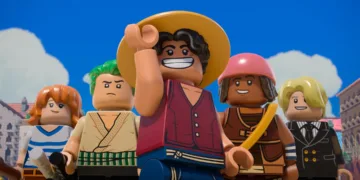













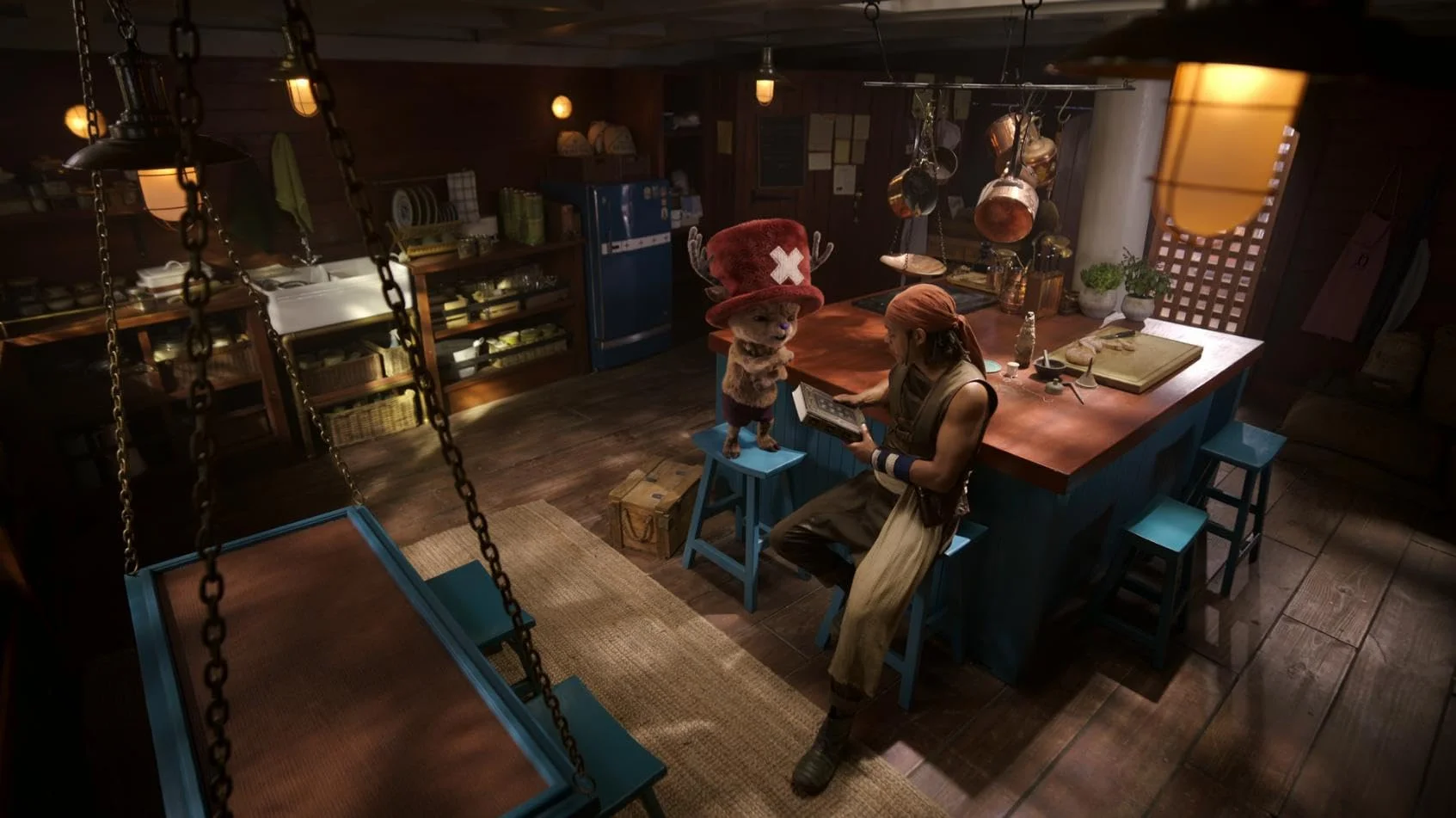
Usopp has found an ideal audience: a crewmate who missed the adventures and is delighted to hear about them. In LEGO One Piece, he tells Chopper how the Straw Hats came together, improving his own contribution along the way. The arrangement gives a recap something it often lacks, a reason for someone inside the story to deliver it. Chopper needs the history; Usopp enjoys the opportunity to edit his reputation. Their exchange makes the act of catching up part of the entertainment.
The interruptions involving the pair also keep the account attached to its teller. Usopp’s inflated heroism tells us how he wants Chopper to see him, so departures from the familiar events have a character purpose. There are effectively two stories running together: the crew’s early adventures and Usopp’s attempt to claim a favorable position within them. Chopper’s enthusiasm supplies the response that encourages the second. This is a useful construction for a special built around material much of its audience already knows, since recognizing the distortion becomes another way of following the story.
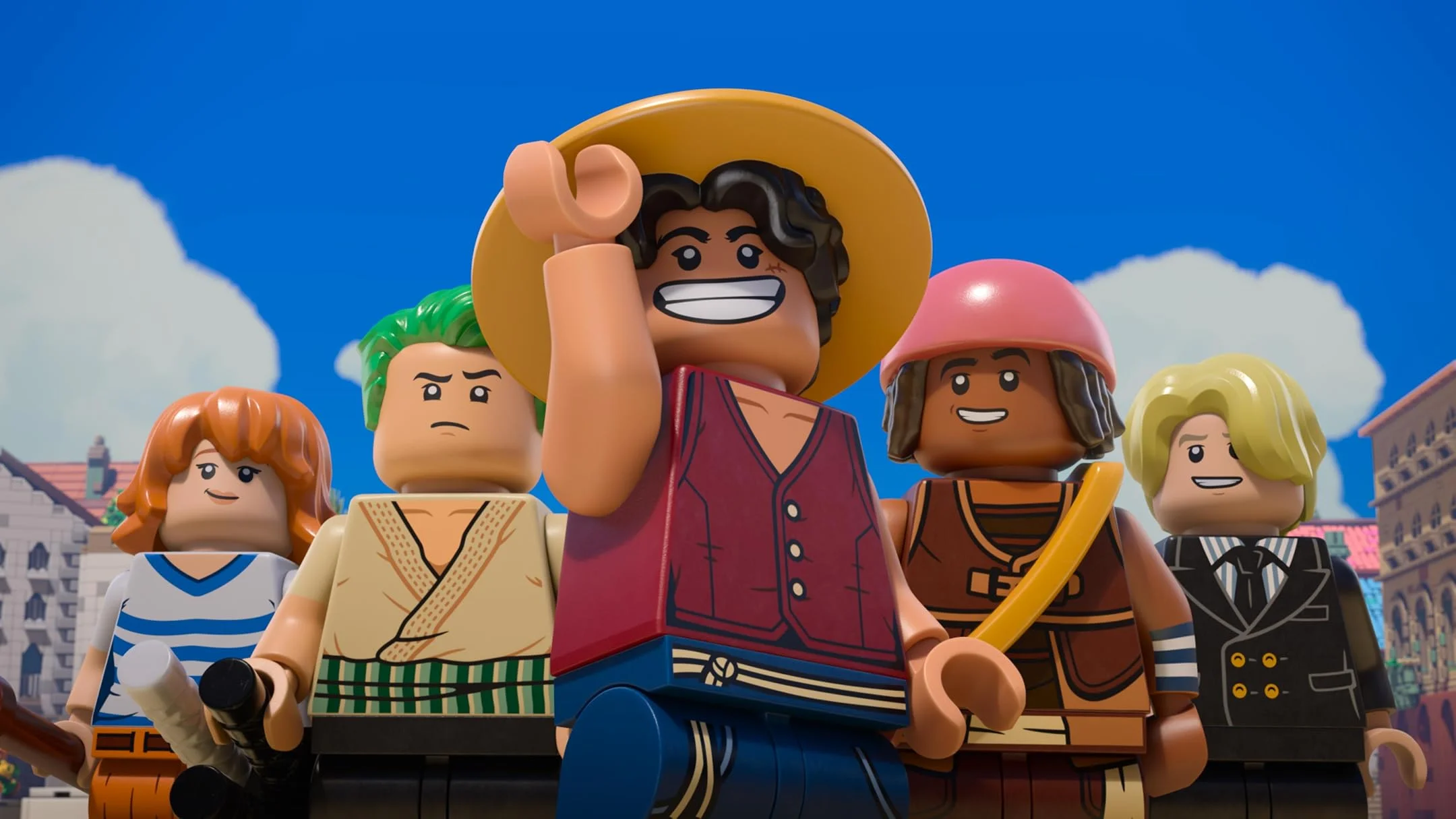
Directed by Chelsea Ker and written by Tom Hyndman, the two-part special compresses the Straw Hats’ East Blue and early Grand Line adventures into approximately 66 minutes. Its narrator provides permission for exaggeration, while LEGO animation supplies the means. Those functions fit together neatly, though they should not be confused. Usopp can account for an embellished version of events. He cannot make the missing buildup cease to matter simply by taking credit for everything that remains.
The returning live-action performers help preserve recognizable personalities through that change in scale. Jacob Romero’s Usopp has the most useful assignment because his storytelling is itself a form of characterization. Mikaela Hoover’s excited Chopper gives him a receptive listener rather than leaving the narration to float over the action. Iñaki Godoy retains Luffy’s eager enthusiasm, which suits the enlarged physical comedy without requiring the character to become a different person. Familiarity is doing some of the work here, but the casting has a clear dramatic function: the voices maintain continuity while the images cheerfully abandon bodily restraint.
Buggy is particularly well suited to that abandonment. His ability to separate his body becomes a joke about separated LEGO pieces, connecting an established character trait to the material of the adaptation. The humor comes from how the body works, rather than from placing a recognizable pirate inside a toy costume. Jeff Ward’s theatrical delivery fits the visual disorder. These are the moments when the crossover feels properly thought through, because the choice of medium changes how an encounter can be staged and enjoyed.
Zoro’s confrontation with Mihawk finds a different balance. The fluid sword action retains the force of Zoro’s effort, while Mihawk’s comically diminutive blade makes the disparity between them immediately visible. Steven John Ward’s dry delivery helps keep Mihawk composed amid the surrounding absurdity.
The joke and the encounter’s dramatic information occupy the same space: Zoro is exerting himself against someone who needs very little exertion. The special does not have to suspend characterization to make the fight funny. Its comedy is less dependable when recognition carries the load, as with fandom references concerning Zoro. Those can reward an informed audience without doing much for someone arriving cold.
That difference matters because the special also offers itself as an accessible route into a substantial fictional world. Two short episodes necessarily remove connective material, and the softened treatment of bloodier and more tragic events keeps the tone suitable for younger viewers.
The pace is sensible for a recap. A fuller reconstruction would defeat the exercise. Still, identifying the major events and establishing their emotional weight are separate tasks. The special is better equipped to show the crew assembling and moving through adventures than to reproduce the gradual attachment those adventures originally encouraged.
Existing viewers can supply some of that attachment themselves. A familiar character or location arrives with remembered significance, allowing the retelling to move quickly without feeling entirely weightless. Newcomers have no such reserve. Usopp and Chopper make the exposition personable, but even an enthusiastic listener cannot replace time spent developing a relationship.
The compression leaves less room for hardship to accumulate before the next comic encounter. That is a real limitation, though it does not make the lighter treatment a mistaken choice. The special succeeds most consistently as an entertaining revisit, with an introduction to the larger story built into it.
Its locations give that introduction useful substance. Baratie’s fish-shaped restaurant, Arlong Park’s pirate hideout, Drum Island’s gothic design, and Little Garden’s dinosaurs establish distinct places quickly. Their differences communicate a world whose attractions extend beyond the next opponent. A newcomer does not need to catch a fandom joke to register the peculiar appeal of a restaurant at sea or an island populated by dinosaurs. Those settings give the brisk itinerary points of interest that survive the loss of surrounding detail.
For that viewer, curiosity may develop unevenly. The jokes that depend on prior knowledge can pass by, while an island or an encounter creates a reason to seek out the longer story. The special leaves limited space to deepen every attachment it introduces, but its varied environments make the omitted space imaginable. After Little Garden or Drum Island, the next question can shift from what happens next to what else happens there.
Lego One Piece premiered on Netflix on October 12, 2026. The animated special reimagines the iconic pirate adventure through the block-based world of Lego as Monkey D. Luffy and his crew set sail for treasure.
Where to Watch Lego One Piece Online


Full Credits
Title: Lego One Piece
Distributor: Netflix, The Lego Group, Toei Animation
Release date: October 12, 2026
Rating: TV-Y7
Running time: 22 minutes per episode
Cast: Colleen Clinkenbeard, Luci Christian, Christopher Sabat, Eric Vale, Sonny Strait, Ian Sinclair, Brina Palencia
The Review
Lego One Piece
Usopp’s self-serving narration gives LEGO One Piece a sound reason to reshape familiar adventures, while Buggy’s detachable body and Mihawk’s tiny blade make the LEGO treatment count. Returning voices preserve the crew’s personalities, and distinctive islands offer newcomers something to explore. The brisk format limits emotional buildup, and some jokes require prior knowledge. It works best as a playful revisit, with enough invention to encourage curiosity about the fuller story.
PROS
- Character-driven narration from Usopp.
- LEGO gags that serve the action.
- Returning voices maintain familiar personalities.
- Distinctive locations invite further exploration.
CONS
- Compression reduces emotional buildup.
- Fandom-dependent jokes limit accessibility.