









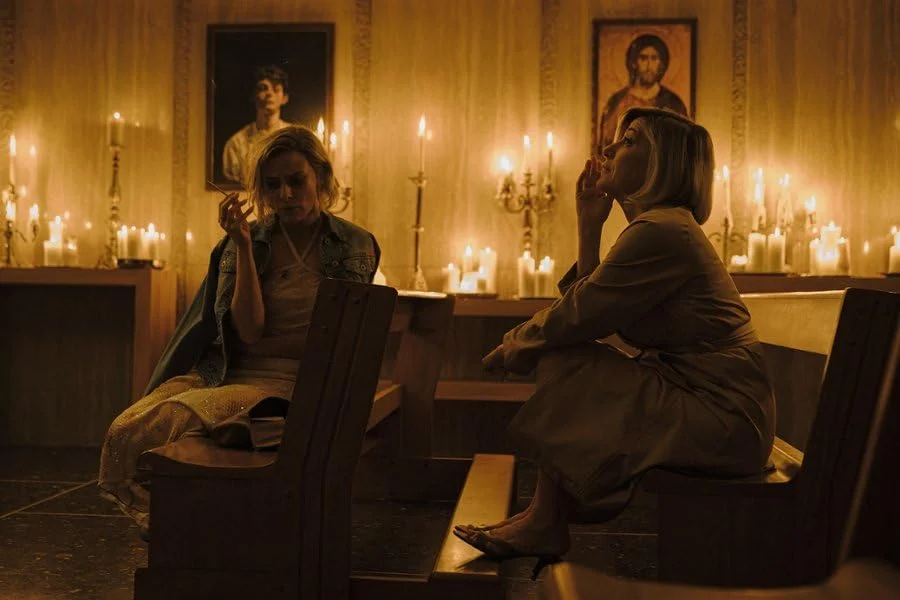
Anna makes her first terrible decision while sitting in a hospital chapel, and Paolo Strippoli understands exactly why the scene hurts. Her seven-year-old daughter Alice has been mauled by the family dog and may lose her leg. Anna is frightened, exhausted, and staring at the collapse of a future she had already planned.
Then a perfectly composed stranger appears and offers to restore that future by damaging someone else’s. That cruel exchange gives The Spiral its strongest emotional idea. Strippoli and co-writer Salvatore De Chirico turn the familiar Faustian bargain into a family system where suffering can be transferred but never erased.
Years later, Anna arrives unexpectedly at the Rome apartment of her adult daughter, Alice, during a violent storm. She claims everything Alice knows about their family is built on a lie. The film then moves through four chapters, “The Daughter,” “The Son,” “The Father,” and “The Mother,” tracing the consequences of choices Anna made across roughly twenty-five years. The structure promises a tightening coil. For a while, it delivers one.
The Price of Perfection
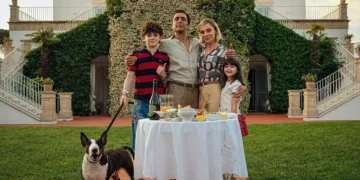
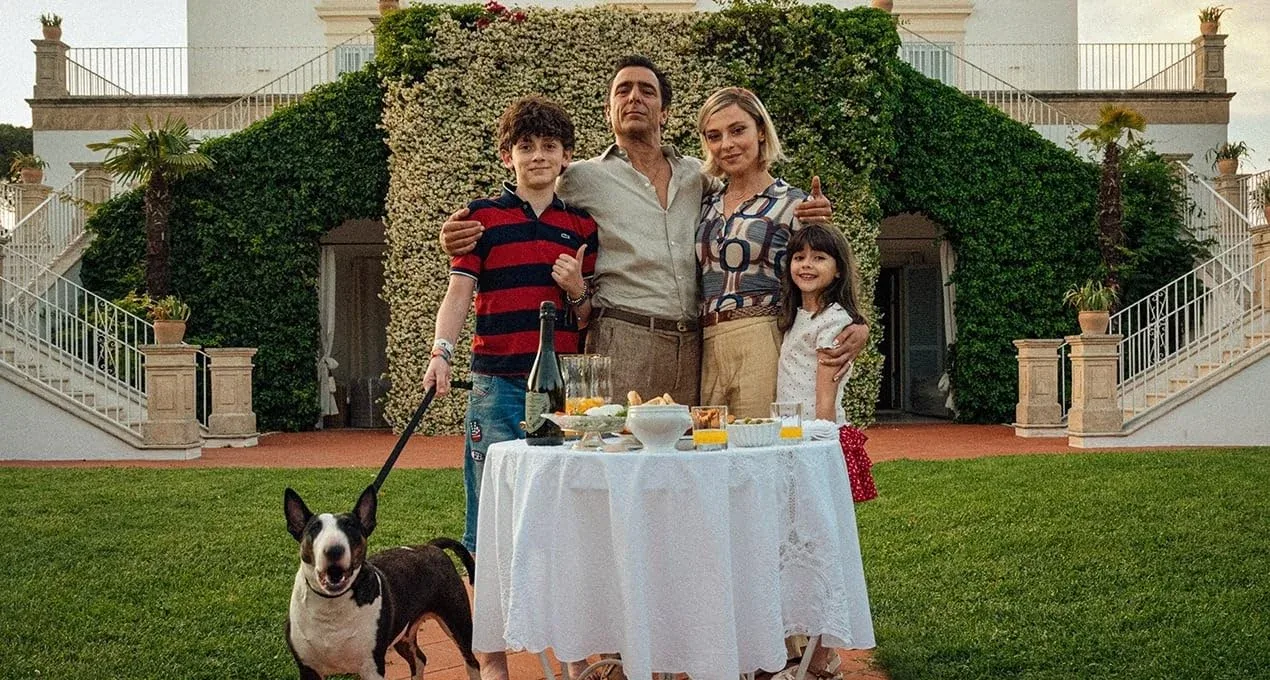
Back in Bari in 1999, the Colonnas appear built for admiration. Walter runs a successful business, the family occupies an enormous villa, young Tobia shows football promise, and Alice has landed a Barilla commercial. Anna watches all of this with the satisfaction of someone who has already decided what happiness should look like. Alice’s dog attack destroys that picture in seconds.
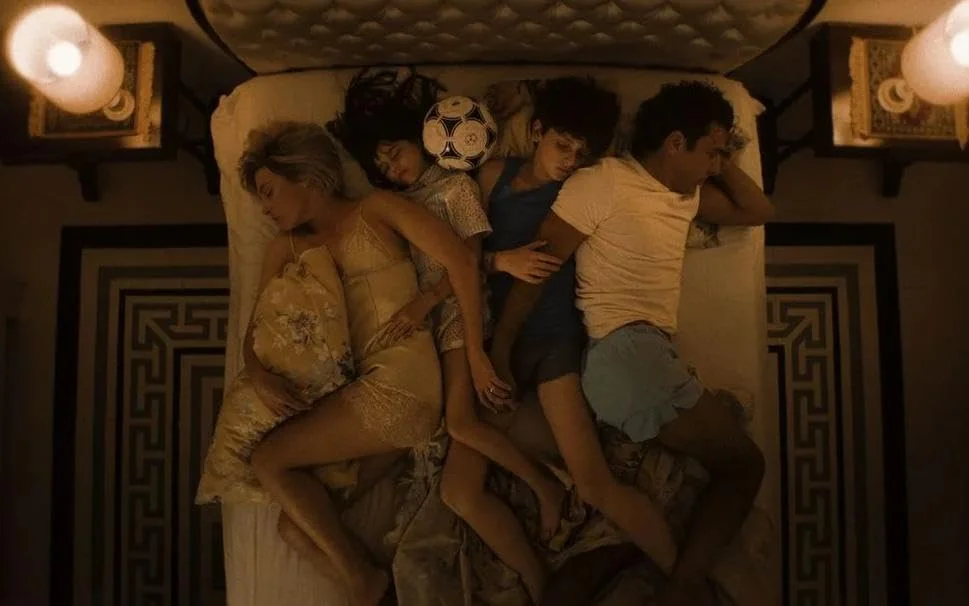
The stranger, played by Valeria Bruni Tedeschi, offers a seemingly absurd trade: Alice keeps her leg, while Tobia will suffer physically. Anna accepts. Alice survives with scars. Soon Tobia begins eating compulsively beneath the Christmas tree and rapidly gains weight, losing both his athletic ability and his father’s approval.
Those scenes reveal the ugliest part of the Colonna household. Walter responds to Tobia’s changing body with anger because football was never simply a hobby. It was part of the family image. Anna’s horror operates similarly. Her desperation to save Alice is tangled with the pasta advertisement and the acting career she imagines for her daughter.
The film becomes harder to sit with once Tobia is bullied, humiliated, and reduced repeatedly to his size. There is a clear satirical target here: a family that values children according to beauty, achievement, and social usefulness. Yet the staging occasionally lingers on Tobia’s body with the same cruelty the story claims to expose. The emotional distance becomes difficult to ignore. When Tobia’s health collapses and he falls into a coma after cerebral hypoxia, the stranger appears again. Anna still listens.
Mother and Mephistopheles
Jasmine Trinca makes that repeated failure believable because Anna never sees herself as selfish. She sees herself as corrective. Every new bargain feels, to her, like another opportunity to put the family back where it belongs. A later admission makes her relationship with Alice especially revealing.
Anna once wanted an acting career herself, and her parents denied her that path. Alice’s commercial work is therefore carrying an old disappointment that was never hers to begin with. Anna calls it opportunity. The film keeps showing the pressure hidden inside that word.
Trinca grows increasingly frantic as Anna tries to negotiate around the stranger’s rules. Bruni Tedeschi moves in the opposite direction. Her immaculate trench coat, slim cigarettes, soft voice, and almost bored expressions turn supernatural evil into customer service from hell.
Their scenes together are easily the film’s most enjoyable. The stranger barely raises her voice while Anna searches for technicalities in agreements she should never have accepted. A faint erotic charge enters their confrontations too, giving the stranger’s control an extra discomfort. Adult Alice provides another necessary resistance. She listens to Anna’s confession with years of resentment already in place, refusing to treat her mother’s suffering as automatic evidence of innocence.
Inside the Spiral
Strippoli attacks the senses whenever the story begins losing momentum. The opening flight is battered by turbulence while a cyclone curls outside the window. Rome disappears beneath apocalyptic rain. Cristiano Di Nicola shoots interiors with shallow focus and distorted wide-angle lenses, making familiar rooms feel slightly unstable. The hospital chapel is especially effective. Its strange modern architecture and Catholic candlelight turn Anna’s meeting with the stranger into something caught between prayer and hallucination.
Quentin Collette’s sound design works at the same volume as Anna’s panic. Engines scream, storms rumble, organ chords crash into scenes, and ROB’s electronic score keeps the film vibrating with threat. At the early garden party, Liquido’s “Narcotic” helps sell the late-1990s fantasy of wealth and confidence seconds before Alice’s attack tears through it.
The problem is that the story itself becomes easier to predict. A family member suffers. Anna seeks relief. The stranger returns. A new bargain creates another disaster. Once that rhythm is established, dread gradually becomes anticipation of the next contractual trick. The spiral images suffer from the same repetition. Cyclones, shapes, camera compositions, and the circular story design keep reminding us of the title without always deepening what the pattern means.
What stays with me is simpler: Anna keeps blaming supernatural interference for a family already trained to treat imperfection as catastrophe. The stranger supplies the curse, but the Colonnas provide plenty of material for her to work with.
The Spiral had its world premiere in competition at the 83rd Venice International Film Festival on September 7, 2026, ahead of an Italian theatrical release. The psychological thriller follows a mother who visits her estranged daughter to reveal a dark bargain struck years ago with a mysterious stranger.
Full Credits
Title: The Spiral
Distributor: 01 Distribution, Le Pacte
Release date: September 7, 2026 (Venice International Film Festival)
Running time: 1 hour 55 minutes
Director: Paolo Strippoli
Writers: Paolo Strippoli, Salvatore De Chirico
Producers and Executive Producers: Marina Marzotto, Mattia Oddone, Jean-Christophe Reymond, Joseph Rouschop, Eva Curia
Cast: Jasmine Trinca, Romana Maggiora Vergano, Adriano Giannini, Valeria Bruni Tedeschi, Andrea Genovese
Director of Photography (Cinematographer): Cristiano Di Nicola
Editors: Federico Palmerini
Composer: Rob
The Review
The Spiral
The Spiral is easiest to enjoy when its Faustian machinery is moving fast: Alice’s mauling, Anna’s first desperate bargain, Tobia’s transformation, then the stranger calmly returning to collect another payment. Valeria Bruni Tedeschi gives those encounters a wicked charge, while Jasmine Trinca makes Anna’s need for control increasingly painful to watch. The repetition eventually dulls the dread, and Tobia’s treatment crosses into queasy territory the satire cannot fully justify. Still, Strippoli’s bruising sound design, warped images, and nasty sense of humor keep the film alive when its story starts circling familiar ground.
PROS
- Bruni Tedeschi’s gleefully sinister stranger
- Trinca’s increasingly frantic performance
- Brutal sound design and warped compositions
- Strong Faustian family premise
- Effective black comedy
CONS
- Repetitive bargain structure
- Uncomfortable treatment of Tobia’s obesity
- Supporting family members lack depth
- Spiral symbolism sometimes feels decorative