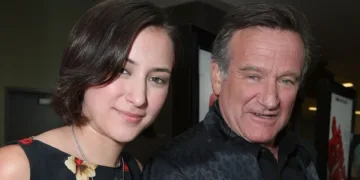







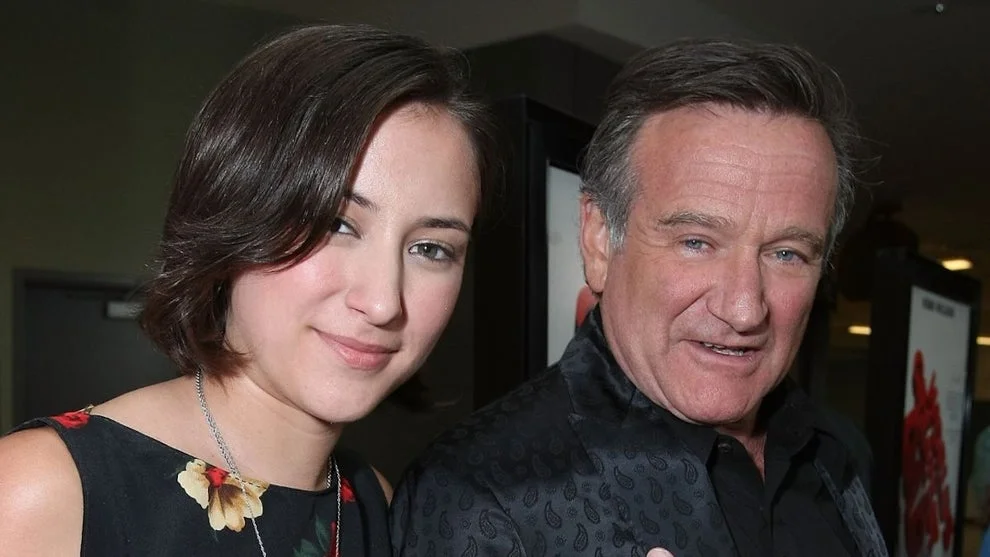
Zelda Williams, daughter of the late actor Robin Williams, took to X on Monday demanding that fans stop circulating a video falsely purporting to capture her father in a private moment discussing conspiracy theories. The clip, she wrote, is “clearly AI, and not even particularly convincing AI,” with a voice she called robotic and unlike the man who built a career on vocal precision.
The director of “Lisa Frankenstein” didn’t stop at debunking the footage. She turned her frustration toward the platform itself, calling it “this cesspool of an app” overrun by bots and users who let themselves be fooled by them. Her closing line cut to the heart of her objection: her father’s death gives no one license to script his opinions for him. “Just because he’s gone does not mean he’s now your puppet,” she wrote. “Have some shame.”
Monday’s post extends a pattern stretching back more than a year. In October 2025, Williams asked followers on Instagram to stop sending her AI-generated clips of her father, writing that such content was “not what he’d want.” Last month, she and her brothers, Zak and Cody, reactivated their father’s dormant Instagram account, describing the move as a direct response to what they called rampant AI abuse of his image and voice, timed to mark what would have been his 75th year.
Robin Williams, an Oscar winner for “Good Will Hunting” who also starred in “Mrs. Doubtfire,” “Dead Poets Society” and “Aladdin,” died by suicide in 2014 at 63. His decades of vocal work and manic improvisational style have made him a frequent target for AI recreation, since voice-cloning tools thrive on large libraries of recorded speech.
The dispute lands amid an unsettled legal landscape. Eight states, including California, Tennessee and Washington, have passed laws restricting unauthorized AI replicas of the deceased, with penalties reaching $10,000 per violation in California. At the federal level, the NO FAKES Act, which would create a nationwide right to control one’s digital likeness even after death, won unanimous approval from the Senate Judiciary Committee in June but has since stalled before reaching the full Senate. Until Congress acts, families like the Williamses are left policing impersonations of their relatives themselves, one social media post at a time.