




























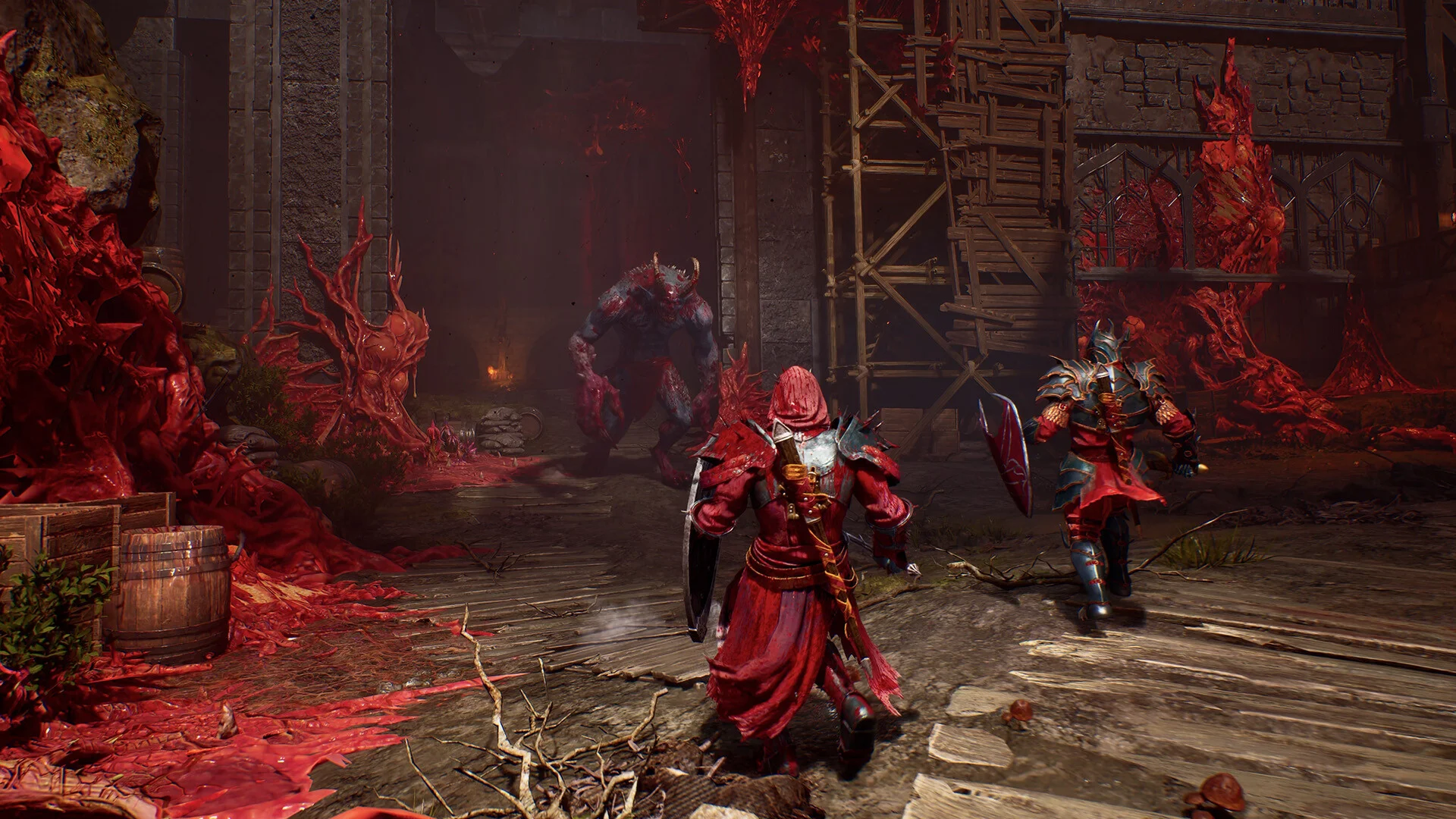

Crimson Moon borrows the hands of a Soulslike and the skeleton of a roguelike, then trims the commitment down to something closer to an evening ritual. ProbablyMonsters sends a Nephilim, a human-angel hybrid serving the Order of the Crimson Moon, into the fallen city of Gildenarch to recover three Abraxas stones containing the souls of dead gods. Runs are short, objectives are clear, and the cathedral hub waits between excursions like a particularly ornate reset button.
Players familiar with Dark Souls will recognize the language of light attacks, heavy attacks, dodges, blocks, parries, backstabs, and stamina management. The structure points elsewhere. Gildenarch is divided into repeatable missions built around clearing groups, hunting relics, killing elites, and reaching a boss, closer to the compact pressure of Elden Ring: Nightreign than a traditional interconnected Souls map.
The story rarely competes for attention. NPCs such as the Historian explain pieces of the Church, the Nephilim, and the demonic occupation, while manuscripts fill in extra lore. Major questions about the Church and the dead gods remain thinly dramatized. The premise is enough to push the player back through the gates, but combat is clearly expected to do the heavier lifting.
Loot That Changes the Fight
The best runs are the ones that force a build away from its starting plan. One combination pairs a frost sword and shield with a burning spear. Parry a large enemy, apply frost with several sword strikes, roll away, swap weapons, then begin stacking fire damage with the spear.
That sequence captures what Crimson Moon does better than its familiar combat vocabulary might suggest. Weapons are not simple numerical upgrades. Elemental effects, conditional bonuses, and skills can alter how a player approaches the next encounter.
Other drops push in similarly specific directions. One shield can provide another healing flask after enough successful hits. Another fires a projectile that lets a defensive player chip away from range. A sword can send rays of light through enemies. Gear perks can trigger through heavy attacks, sprint attacks, dodge rolls, or particular status effects, so checking a new item after a fight often becomes a meaningful tactical decision.
The roguelike structure sharpens those decisions. A newly found weapon can be equipped immediately or stored for purification. Finish the run and that gear returns to the cathedral, where it can join the permanent collection and receive upgrades from the blacksmith. Fail, and the items collected during the expedition disappear while the equipment brought into the mission remains safe.
That loop sits somewhere between Diablo’s appetite for replacement gear and extraction games’ anxiety about carrying valuable loot home. It works because most pickups can change something tangible. The tension arrives once a player finds a combination that already works. At that point, the game’s constant invitation to experiment can turn into repeated comparisons against a loadout you would rather keep.
After each stage, one of three randomized boons adds another variable. Several synergistic choices can turn a modest build into something much nastier by the boss. Crimson Moon’s strongest progression therefore happens during the run itself, not through a sprawling skill tree.
Two Nephilim, One Shared Supply of Lives
Death carries less punishment here than in the games Crimson Moon mechanically resembles. Players receive several lives before a run is truly lost, and further progression can increase that allowance. The change suits missions that can be finished in roughly thirty minutes. Losing near the final boss still hurts, especially with unpurified gear waiting to disappear, but starting again does not mean replaying hours of exploration.
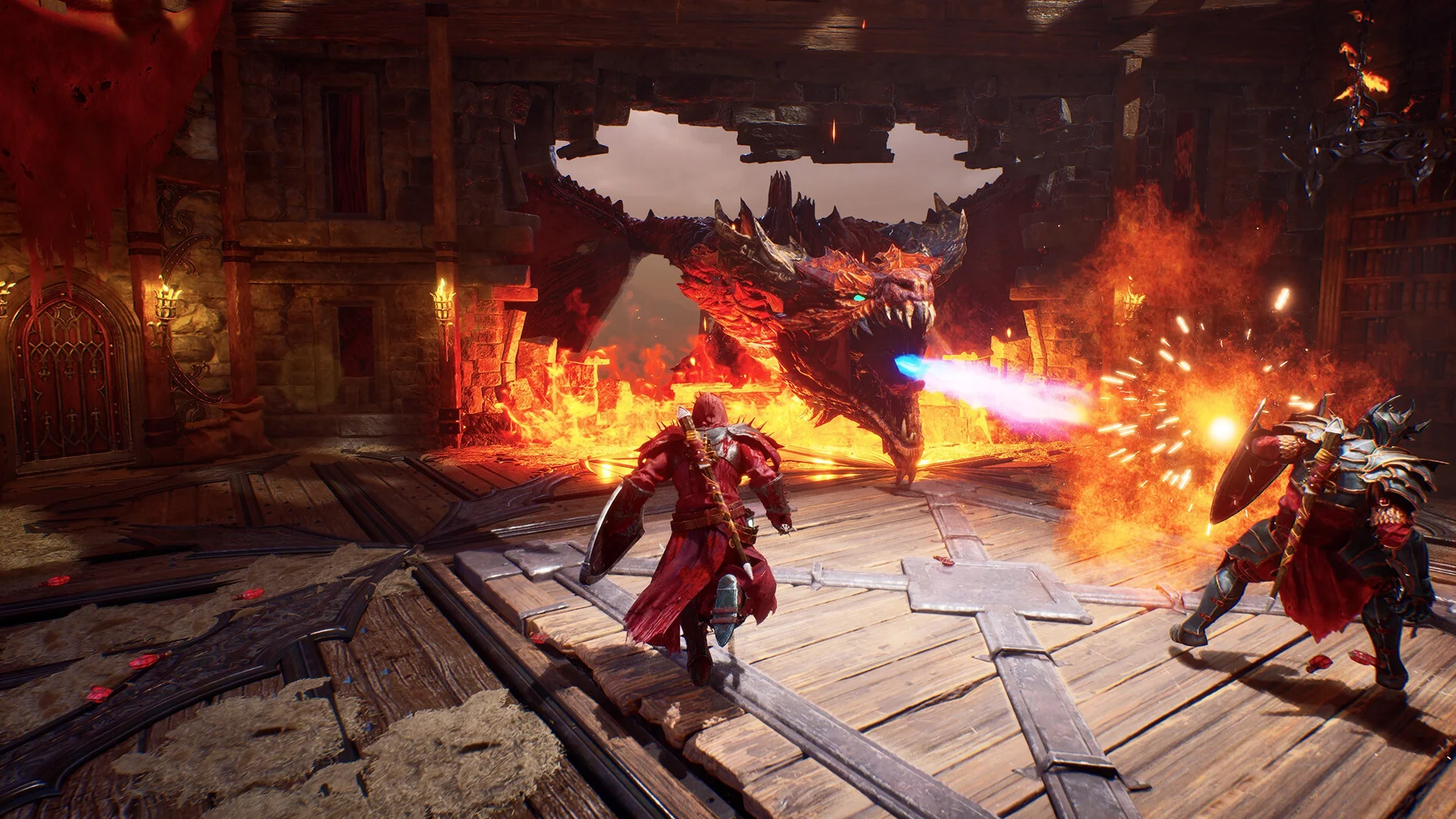
Higher difficulty settings provide a better test of the system. Enemies become more aggressive, hit harder, and can arrive with enchanted weapons, while increased rewards give experienced players a practical reason to move upward. That is a better solution than simply inflating enemy health.
Two-player co-op fits the format neatly. Enemy numbers and aggression adjust when another Nephilim joins, partners can resurrect each other, and both players draw from a shared pool of lives. Elemental builds become especially useful here because one player can create status opportunities for the other. The two-player ceiling feels conservative when the systems seem capable of supporting a larger party.
Crimson Moon has rougher inheritances from the genre too. The camera can lose its composure against large enemies, particularly beside walls, turning precise parries into guesses. Frame-rate drops can create similar trouble during timing-heavy encounters. Jumping is worse. An early descent built around basic platforming exposes how little confidence the movement system has away from combat, and the absence of fall damage feels suspiciously merciful.
Control limitations add smaller frustrations. Keyboard remapping is restricted, while sprinting shares the dodge input rather than using a more conventional stick click. None of these problems dismantles the combat loop, but each one becomes harder to ignore as the difficulty climbs.
Gothic Excess, Familiar Streets
The cathedral hub has the visual confidence the rest of Gildenarch only reaches intermittently. Its towering architecture, dense decoration, vendors, blacksmith, Historian, and devotional imagery make it resemble a gothic sanctuary redesigned by someone with questionable access to a casino budget. It is excessive, busy, and immediately recognizable.
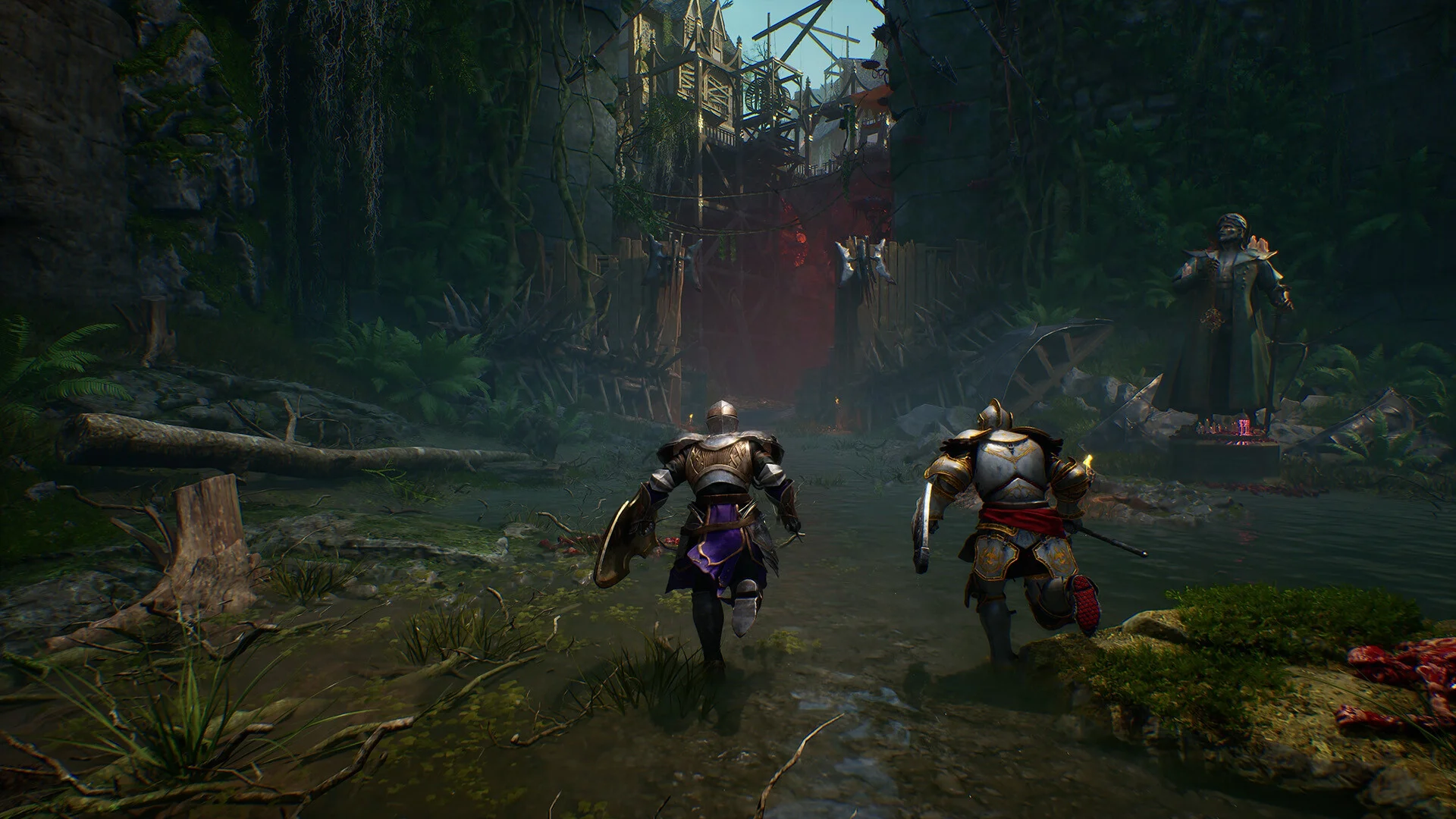
The surrounding districts are attractive, though far safer. Graveyards, ruined streets, libraries, churches, massive weapons, heavily armored demons, and exaggerated character proportions place Crimson Moon near the visual lineage of Darksiders and Battle Chasers. Brutal finishers strengthen that connection. Watching the Nephilim take an exhausted enemy’s enormous mace and use it to crush its former owner has the same comic-book violence those games turned into a signature.
Christopher Wilson’s score follows a similar mixture of familiar parts: choirs and orchestral textures layered with metal guitars and drums. The heavier sections match large encounters well, particularly once Angelic Form turns the Nephilim temporarily invulnerable and the screen fills with effects. Smaller fights expose thinner audio detail, including repeated weapon impact sounds that make very different blades and hammers feel oddly related.
Crimson Moon has enough identity in its hub, loot system, and compact run structure to separate itself from the Soulslikes it initially resembles. The further it moves from imitation and trusts those systems, the stronger Gildenarch becomes.
The Review
Crimson Moon
Crimson Moon works best when its roguelike structure forces the player to adapt rather than simply perfect one loadout. A frost sword paired with a burning spear can reshape a run, while purification makes surviving with rare gear matter beyond the immediate fight. The comparison to larger Souls-style RPGs is less flattering around its erratic camera, awkward jumping, and thin narrative, yet the shorter campaign and thirty-minute runs give it a cleaner purpose. ProbablyMonsters has built a solid foundation whose combat and loot systems carry its familiar gothic setting.
PROS
- Meaningful mid-run gear decisions
- Satisfying parries and finishers
- Strong weapon and boon synergies
- Easy two-player co-op
- Striking cathedral hub
CONS
- Unreliable combat camera
- Awkward jumping sections
- Sparse, underdeveloped story
- Familiar gothic environments
- Limited control remapping