



























A dragon deciding that sixes no longer count can ruin an entire agricultural economy. That particular punishment captures the appeal of Feed the Scorchpot, a roguelike strategy game developed by Moravian and published by Indieformer and WhisperGames. Your job is to manage a small hexagonal island for twenty years while satisfying the steadily increasing appetite of the dragon looming beside it. Miss the annual target and the administrator joins the menu.
The setup gives Feed the Scorchpot the appearance of a compact digital board game. Its hex placement recalls Settlers of Catan, while its obsession with stacking multipliers and turning modest numbers into ridiculous totals belongs to the post-Balatro school of roguelike design. Moravian finds enough mechanical personality between those reference points to keep the comparison useful without letting either define the game.
Story barely extends beyond the contract, yet descriptions attached to buildings, recipes, and items give the island some character. Baron, the tutorial dragon, provides the clearest personality through smug instructions and threats. He teaches multiplication while reminding you that incompetence is edible.
Building the Feast
Every island is generated from hexes containing resources such as dairy, grain, meat, fruit, fish, and spices. Numbers from 2 through 12 sit on those tiles. Placing a homestead at the intersection of three hexes creates access to each neighboring resource, provided the required numbers can later be activated.
That activation system gives the game its first layer of strategy. Dice are rolled and selectively kept between rerolls. Pairing two results creates a mark corresponding to their sum. A 4, 5, and 6, for example, can activate tiles marked 9, 10, or 11. Multiple tiles carrying the same number trigger together, so the value of a roll depends heavily on where buildings were placed several turns earlier. The comparison with Catan largely ends there. Harvesting is only the beginning.
Food entering the Scorchpot is transformed through flavor, essence, recipes, prosperity, buildings, and assorted bonuses. Recipes might reward particular ingredients or number combinations. Trading posts can improve flavor. Shrines help expand rerolls. Other structures increase dice counts or recipe capacity. Later upgrades alter those relationships again, forcing decisions such as keeping a reliable market bonus or replacing it with a cooking school that supports a different multiplier strategy.
Feeding the dragon early can increase prosperity, encouraging efficient engines rather than desperate final-season recoveries. Shops between years offer new buildings, recipes, tools, and unusual dice, with one-use tools capable of upgrading a recipe or repeating an effect at exactly the right moment. This is where Feed the Scorchpot separates itself from simpler dice roguelikes. You are rarely chasing one lucky roll. You are constructing a machine that makes several different kinds of luck useful.
When the Machine Breaks
The problem is that the machine does not always receive compatible parts. Consider a run centered on a Weiner recipe requiring a combined value of eleven. If the dragon introduces a rule making sixes ineffective, one of the easiest routes to eleven disappears immediately. A shop offering Cheese Spread built around low-value rolls might then clash with homesteads positioned beside higher-numbered dairy and meat tiles. A fish recipe is equally useless if the island has spent several years becoming an efficient butcher shop.
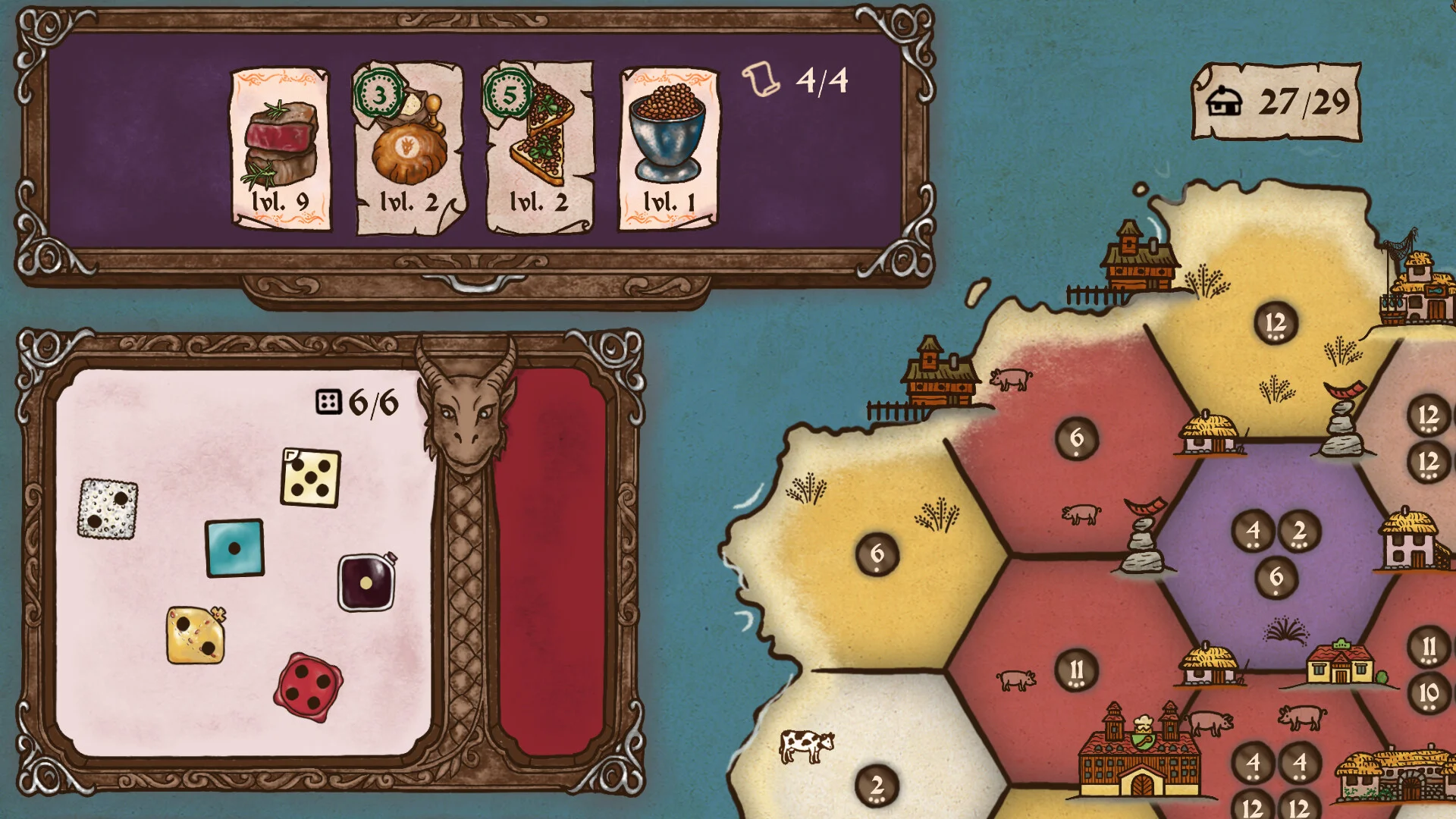
Those failures expose the tension inside the roguelike structure. Smart placement, rerolls, cairns, specialized dice, tools, and building upgrades provide plenty of ways to manage randomness. The game still permits combinations of shop inventory, dice results, island layout, and dragon penalties that leave a run limping long before year twenty.
Fortunately, losing usually reveals something useful. A failed dairy strategy teaches which recipe requirements are too narrow. A shortage of rerolls makes the value of additional shrines obvious. Reaching a hunger threshold with one season remaining suggests that the same engine might produce prosperity next time if built earlier.
Different dragons further reshape familiar systems. Baron provides the baseline game, while options such as Count increase hunger while providing stronger yields. Empress demands extra food in exchange for additional deckbuilding points. Higher difficulty settings pile further restrictions onto those identities.
This places Feed the Scorchpot closer to roguelikes built around learning systems than those centered on permanent statistical upgrades. The strongest progression happens in the player’s understanding of which combinations deserve investment and which shops are quietly announcing disaster.
Illuminated Arithmetic
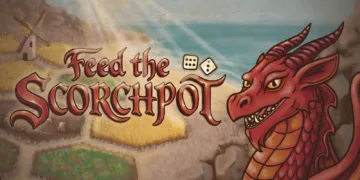
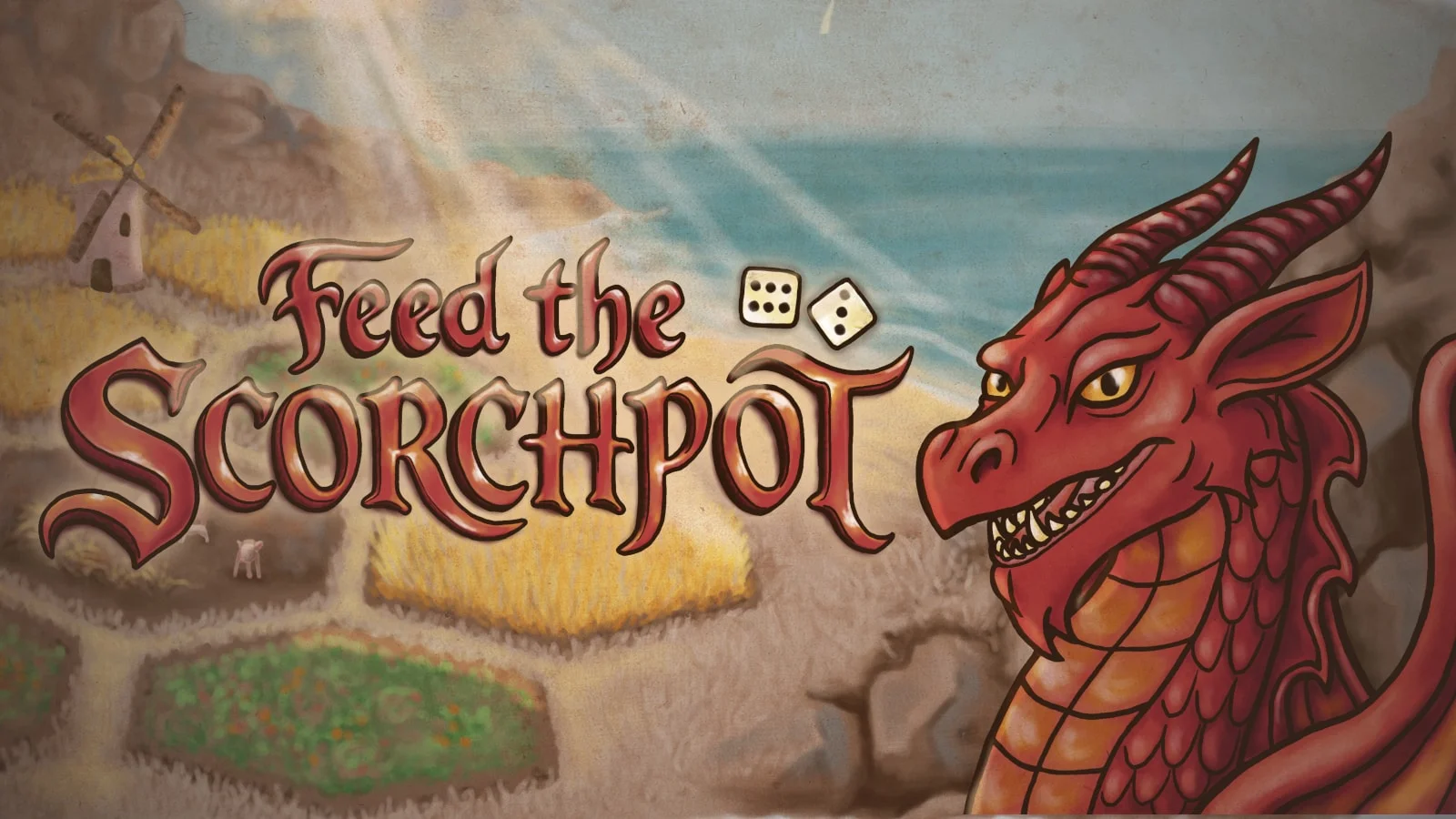
Moravian wraps all that calculation in artwork inspired by medieval illuminated manuscripts. The island resembles a board placed across a table, filling gradually with houses, ports, shrines, markets, and upgraded structures as the years pass.
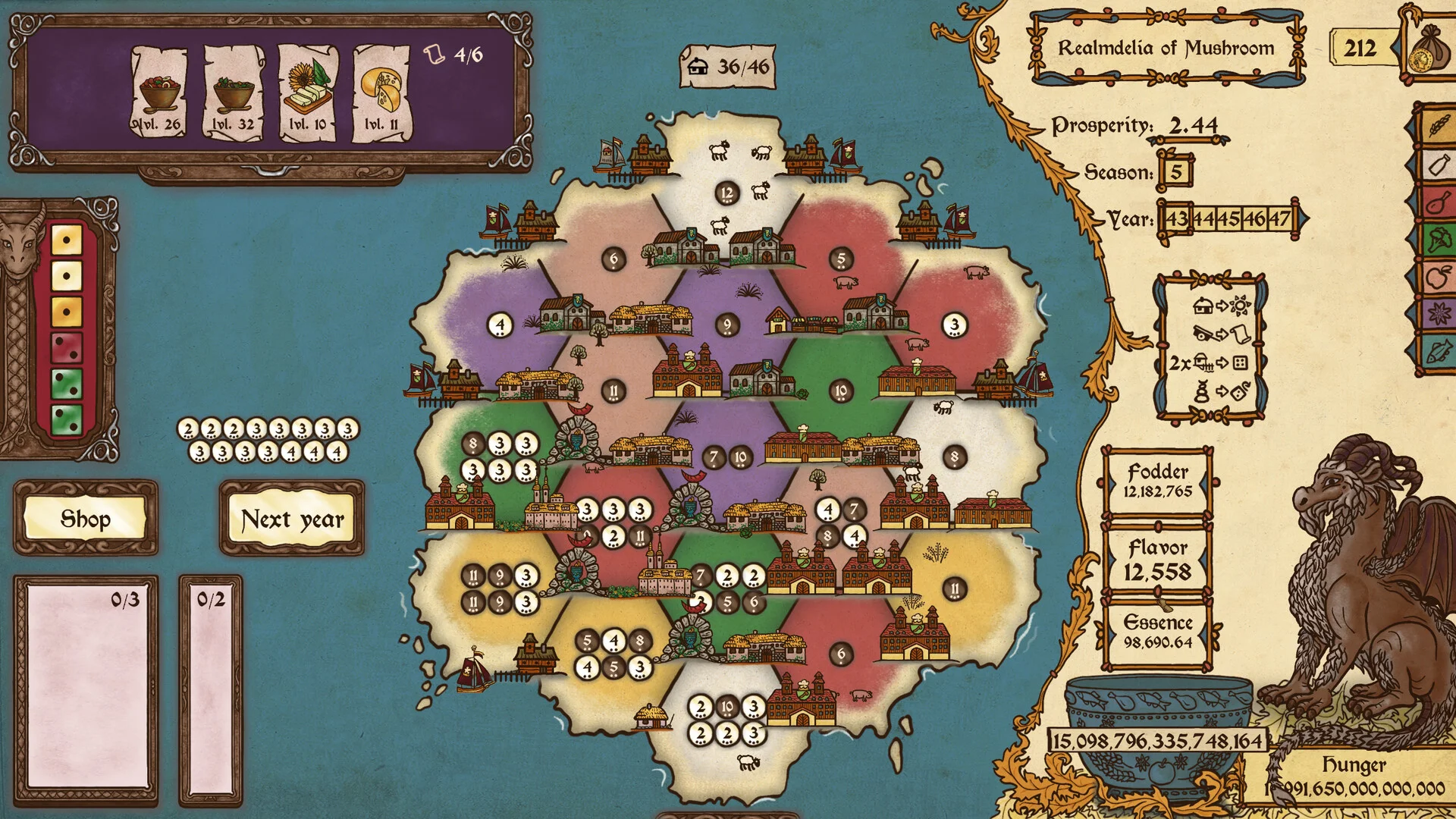
The dragons benefit most from the style. Their limited animation barely matters because their exaggerated shapes and illustrated expressions already sell their personalities. Recipe artwork receives the same care, though some shop icons and board elements could stand to be larger once the settlement becomes crowded.
Small animations reinforce the tabletop character. Dice hit the tray with a satisfying thud. Tools briefly animate when activated. Buildings accumulate around the hexes until the sparse opening island resembles a miniature kingdom assembled during play.
The interface deserves similar credit. Marks, recipes, hunger requirements, ingredients, and several multiplier systems could have produced a wall of arithmetic, yet the tutorial turns them into understandable steps quickly. Baron deserves partial credit. Threatening to roast the student apparently improves lesson retention.
His tutorial dialogue is voiced, which makes the absence of spoken lines later particularly noticeable. The other passive-aggressive dragon remarks have the writing to support performances of their own. Music fares better, maintaining the manuscript-and-tabletop atmosphere without distracting from the constant calculation.
By year ten, the island may look like something copied from a monk’s marginalia, while the player is effectively running an increasingly unstable spreadsheet beneath it. Feed the Scorchpot somehow makes those two identities belong on the same table.
The Review
Feed the Scorchpot
Feed the Scorchpot takes the familiar roguelike habit of building a run from random pieces and gives it the logic of a tabletop engine-builder. Its dice marks, hex placement, recipes, and escalating multipliers leave plenty of room for clever planning, especially once specialized dragons and unusual dice enter play. Some runs can sour early through hostile shop inventories or badly aligned modifiers, yet failure stays brisk enough to encourage another attempt. Medieval manuscript artwork gives the whole experiment a personality few Balatro-inspired games can match.
PROS
- Excellent dice-and-hex strategy
- Deep recipe and building synergies
- Distinct medieval manuscript art
- Strong dragon variety
- Accessible tutorial and interface
CONS
- Shop randomness can derail runs
- Some dragon penalties feel harsh
- Board elements could be larger
- Limited voice acting