




























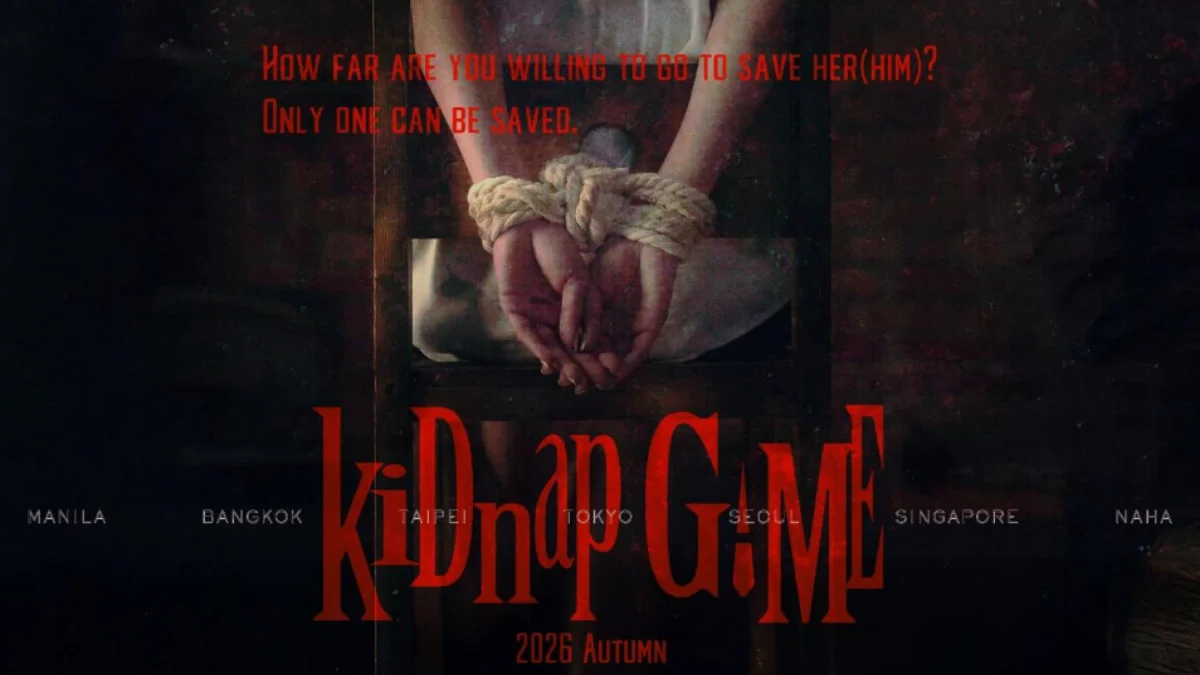

The kidnappings are already news before the premiere turns back the clock. Reports from seven Asian cities establish the scale of the crime, then KiDnap GAME returns to Tokyo 36 hours before it happens. That decision removes uncertainty about the approaching disaster and puts pressure on everything preceding it. A promise to come home, a professional interruption, a stranger’s question: each acquires a second function because the audience knows these ordinary routines are about to be broken.
Toshiro Niide’s anniversary plans give that countdown something specific to disrupt. He has promised his wife, Saori, dinner and fireworks, but a promotion, drinks with colleagues, and festival duties keep moving his arrival home further away. Her excitement about his career coexists with a conversation about having children that she postpones. The episode builds suspense through the gradual separation of their schedules. Each delay is understandable on its own; together, they leave a husband racing toward a meeting the audience knows he will miss under circumstances far worse than another late shift.
Niide’s introduction also establishes the difficulty that will follow him into the investigation. Childhood memories of his father abusing his mother inform his determination to protect vulnerable people, while his anger threatens to outrun his judgment. The carrot toy Saori gave him offers a small, concrete means of keeping that anger in check.
When a stranger on the train presents a trolley dilemma involving his wife, the question strikes a weakness the episode has already prepared. His commitment to doing right becomes unstable once protecting Saori might require harming someone else. The stranger states the coming moral problem very plainly, but the groundwork keeps it from feeling entirely pasted onto the character.
The Seoul strand gives responsibility a different route into the trap. Han Ki-joo has withdrawn from surgery and carries guilt connected to his daughter Rian’s blindness. Lee Joon-gi’s hand tremors make that distress visible before the kidnapping supplies an immediate crisis.
At Rian’s recital, her statement that she remembers his smile briefly draws him out of his strained composure. The fabricated hospital emergency then redirects his attention toward the professional life he has struggled to leave behind. It is an effective piece of plotting because the distraction belongs to this particular father. The kidnappers exploit an obligation already embedded in his characterization.
These two strands provide the premiere’s strongest emotional continuity. Lee’s movement from tremors to tears at the recital and then public panic gives Ki-joo’s distress distinct stages. Kentaro Sakaguchi’s Niide approaches the catastrophe with investigative authority, yet becomes overwhelmed as the police begin examining what happened to Saori. His superior’s warning against recklessness brings an established character problem directly into the rescue attempt. The men share desperation, but the writing gives them different practical difficulties: one must contain the impulses accompanying his competence, while the other enters the crisis with his confidence in his own abilities already damaged.
Across the other cities, characterization is brisker and often built around a single exposed vulnerability. Singapore flight attendant Janice Lau expects a proposal before her partner is taken. Taipei’s Christina Lin has a lover who secretly records their intimate encounters, while her husband becomes the kidnapping victim.
Manila taxi driver Miguel Garcia is his granddaughter’s sole guardian. Bangkok’s Am Thanawan conceals continued involvement with drugs, and Naha’s Higa Kuranosuke treats his mother harshly before losing her to the same operation. These introductions establish different attachments, but several function as dossiers beside the developed sequences in Tokyo and Seoul.
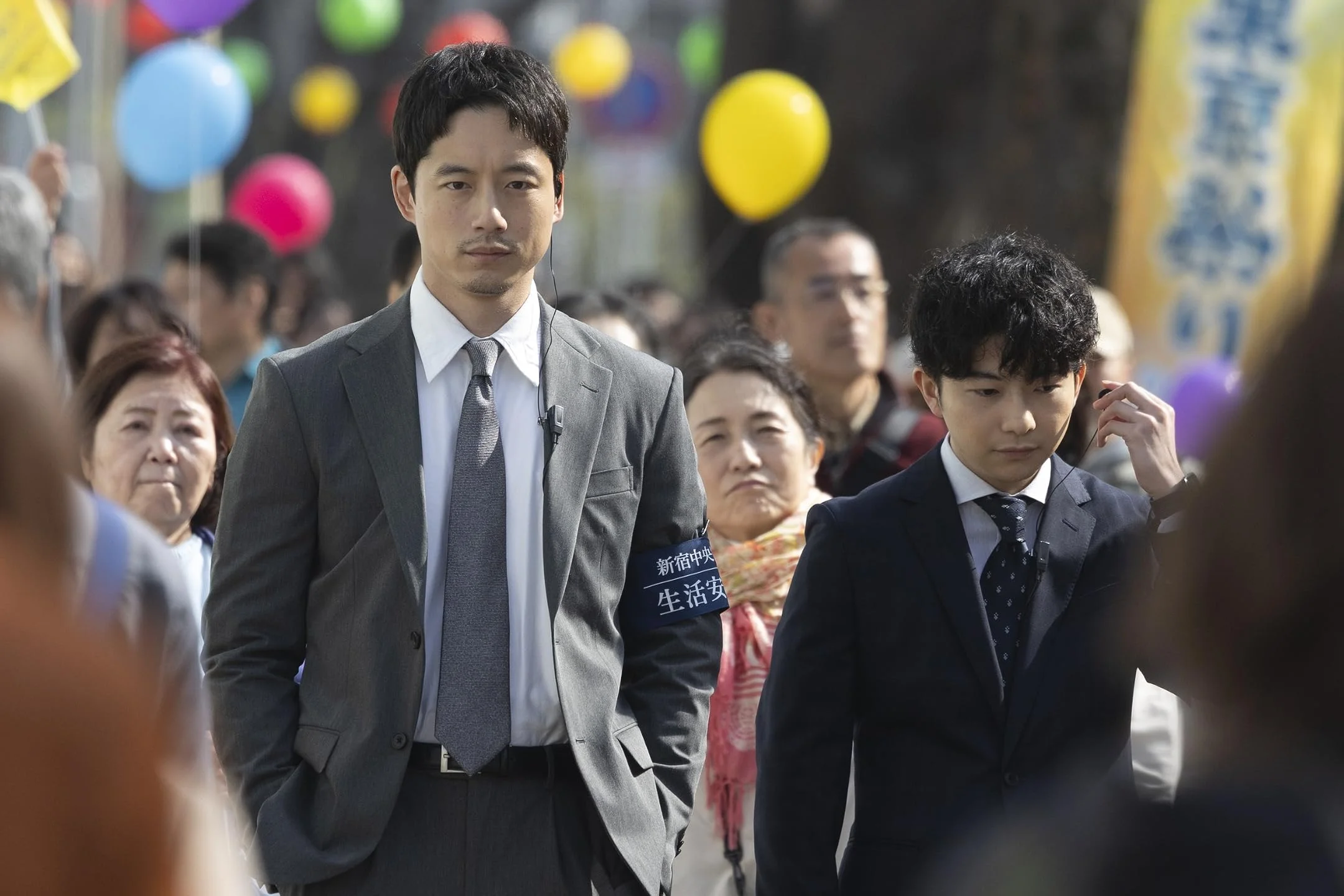
That imbalance is useful for orientation and limiting for investment. Seven equally elaborate introductions could have buried the approaching crime under exposition; choosing two anchors gives the episode a stable emotional route through its geographical spread.
Still, knowing a participant’s secret or family connection does not provide the same involvement as watching Niide’s anniversary unravel or Ki-joo become distracted at the recital. The synchronized abductions unite all seven stories as an event, without making all seven losses equally affecting. The premiere has assembled its ensemble, but only part of it has acquired substantial dramatic weight.
The recurring Atra van and red roses help keep those separate locations connected. Their function is clearest as evidence of coordination: the repeated details let the audience recognize one operation before the characters understand its reach. Other encounters demonstrate a more intimate degree of control.
A funeral-service employee knows about Ki-joo’s circumstances; a woman warns him that the game will begin in five hours; the false hospital message occupies him while another woman approaches Rian with a rose. The unease comes from how thoroughly the organizers have entered familiar routines. Their access is already frightening even while their identities remain concealed.
The warnings are sometimes so explicit that they weaken the preparation’s subtlety. A stranger specifying the time until a “game” begins is doing considerably less concealing than the flower van. The characters’ limited responses keep the plot moving toward its scheduled disaster, but the episode repeatedly asks the audience to remain alarmed while its protagonists carry on. That gap creates suspense; repetition also makes the arrangement visible. The false hospital message is the stronger device because it produces a believable action, rather than simply announcing that danger is approaching.
Once the abductions occur, the ten-day deadline replaces the countdown to the crime. Separate missions and the threat that only one loved one can be saved establish competition, though the premiere leaves the actual contest largely untested. Its most immediate complication is the prohibition on seeking help from authorities.
Niide has already begun responding as a police officer, examining footage and receiving guidance from his superior. The organizers now demand that he surrender precisely the professional resources that could help him find Saori, leaving his next investigative choice entangled with the threat against her.
KiDnap GAME premiered on October 6, 2026, airing on Japan’s Fuji TV and South Korea’s Channel A, as well as select pan-Asian broadcasting platforms. The eleven-episode multinational crime thriller follows seven strangers across seven Asian cities who are thrust into a high-stakes survival game after their loved ones are simultaneously kidnapped by a mysterious mastermind.
Full Credits
Title: KiDnap GAME
Distributor: Fuji TV, Channel A, MakerVille
Release date: October 6, 2026
Rating: TV-MA
Running time: 50–60 minutes per episode
Director: Yusuke Kato
Writers: Yusuke Kato, Ken Tate, Kaoru Yoshikawa
Producers and Executive Producers: Kentaro Shibuya, Janice Lee, Song Seon-eui, Yusuke Kato, Kenichiro Hobara, Yasuyuki Azuma, Kenneth Kam, Junha Kim
Cast: Kentaro Sakaguchi, Lee Joon-gi, Alice Ke, Jeremy Tsui, Chantalle Ng, Joel Torre, Narupornkamol Chaisang, Yuki Sakurai, Sae Okazaki, Shinnosuke Mitsushima, Sho Kasamatsu, Machiko Ono
- Composer: Face 2 fAKE
The Review
KiDnap GAME
KiDnap GAME’s premiere makes its seven-city setup readable and gives its strongest suspense a personal cause. Niide’s interrupted anniversary and Ki-joo’s professional distraction turn ordinary obligations into openings for the kidnappers. The remaining participants receive thinner introductions, and some warnings explain their own menace too insistently. The contest itself remains largely untested, but the preparation establishes credible emotional stakes and a sharp conflict between Niide’s police authority and the organizers’ rules.
PROS
- Effective countdown structure across seven cities.
- Character-specific preparation for the kidnappings.
- Strong emotional progression in Lee Joon-gi’s performance.
- Recurring clues establish a coordinated threat.
CONS
- Several participants receive only sketch-level characterization.
- Overexplicit warnings make the suspense machinery conspicuous.