




















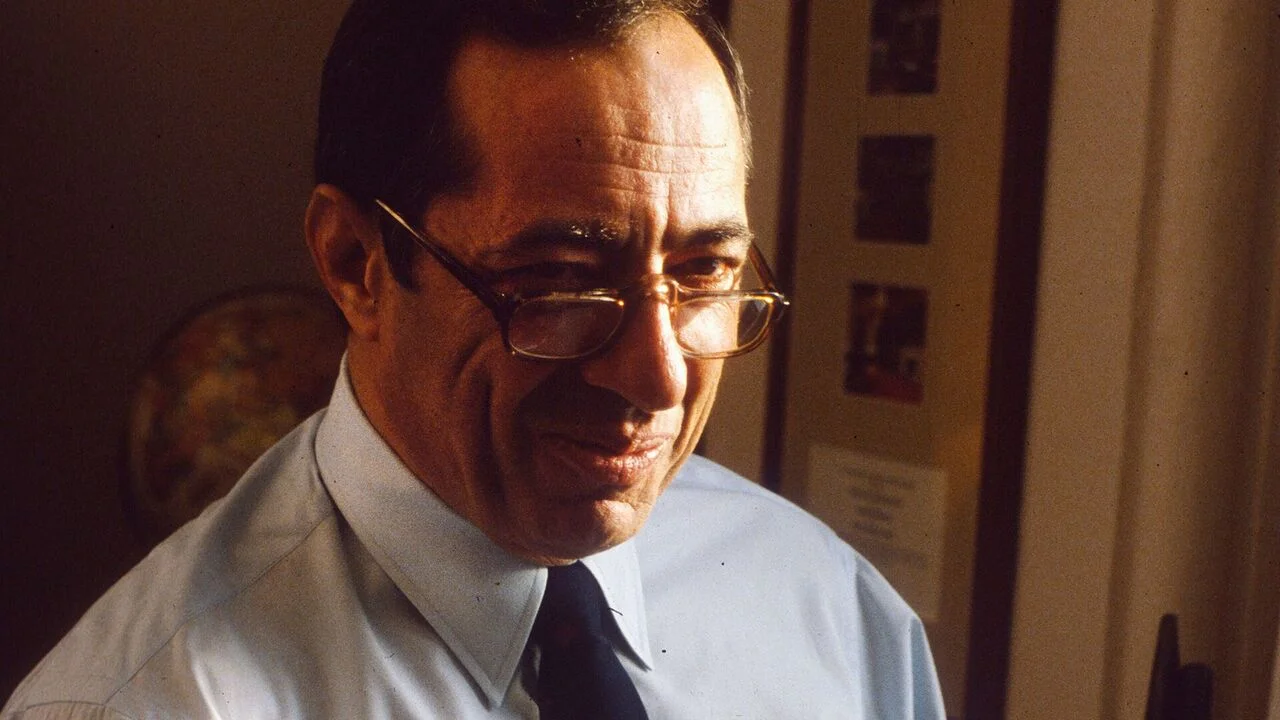

Mario Cuomo’s defense of abortion rights placed an obligation on his Catholic faith that political tributes can easily overlook: he had to accept the freedom of people whose choices his religion condemned. Mario finds substantial moral interest in that position. His dispute with Archbishop John J. O’Connor, and the calls for his excommunication, give the documentary’s admiration something resistant to work against. The Notre Dame speech explaining his stance concerns the limits of a governor’s authority over other people’s consciences. Cuomo’s convictions remain intact, but they cannot become everyone else’s instructions.
That distinction gives substance to the film’s language of compassion. Sympathy costs little until it requires the defense of an unpopular right or expenditure on a contested public service. Cuomo’s efforts to sustain New York’s social provision amid Reagan-era federal cuts belong to this practical understanding of obligation.
The documentary traces its origins through his Italian immigrant parents, Depression childhood, and experience of the New Deal. Here, family history becomes an account of how security is made possible. His parents’ struggles supply a reason to value public institutions, resisting the familiar political use of immigrant hardship as proof that everyone should succeed unaided.
Directors Peter, George, and Teddy Kunhardt reconstruct that outlook through archival footage, interviews, and Cuomo’s personal diaries. Across 87 minutes, the three-term governor emerges within a dense circle of remembrance, including his wife, Matilda, all five children, friends, and colleagues. Their affection is often informative.
Stories about his competitiveness during basketball games with his children introduce an appetite for winning that sits awkwardly beside the image of the reluctant candidate. The account of an adviser’s death during the early AIDS epidemic brings loss into the political biography. These details allow private attachments to interrupt the public record, though the film moves through them too quickly to develop their implications.
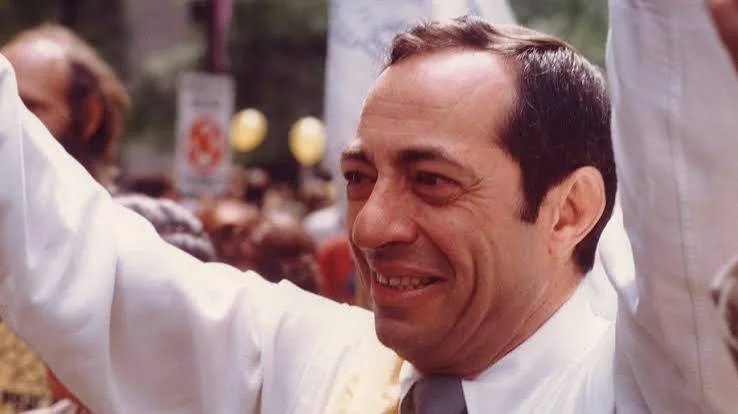
Andrew Cuomo makes a particularly useful contribution when describing the writing and rewriting of his father’s 1984 Democratic National Convention keynote. His account restores labor to an event remembered as an eruption of eloquence.
Political speech involves revision, calculation, and decisions about whom a speaker hopes to reach. This is a productive use of family access because the testimony explains how something was made. It also gives the documentary a route beyond the reassuring idea that admirable language simply flows from an admirable man. The speech becomes a piece of political work, shaped before it can shape an audience.
The diaries promise a less managed encounter, but their presentation seldom makes that promise tangible. Read by Cuomo’s children and accompanied by fading text and staged images of an empty, book-filled office, they acquire the solemnity of a family archive.
The office establishes a familiar image of intellectual seriousness without revealing much about the thinking preserved on the page. Having his children voice the entries brings tenderness, yet it also keeps his private words within the same affectionate circle that interprets his public life. The visual treatment does little to distinguish a diary’s uncertainty from the confidence of retrospective testimony.
Several tensions remain available for investigation. Cuomo could seek agreement while conveying a sense of intellectual superiority; he enjoyed contact with people while disliking the demands of campaigning. Such contradictions could explain the friction between his political gifts and the career others imagined for him. The documentary tends to identify them and move along.
Its lack of sustained opposing testimony matters here because disagreement might expose how those traits operated beyond the household. An adversary would be useful for the resistance a particular account could supply. The religious dispute demonstrates the value of that resistance, giving his reasoning pressure and stakes that the more protective passages lack.
The convention address receives the film’s greatest dramatic weight, and its force survives the respectful packaging. Cuomo articulates a defense of collective responsibility against Reagan’s political vision, making commitments that can sound bloodless in policy language feel urgent and intelligible.
Yet the election that followed delivered a crushing Democratic defeat. The speech’s enduring appeal and its limited electoral effect belong together. The documentary is much more comfortable preserving the former. Its arrangement encourages longing for the president Cuomo might have become, leaving less room to consider the difficulty of turning this language into a winning national coalition.
Writer Ken Auletta argues for the importance of remembering political figures who never reached the presidency. The film’s attention keeps pulling against that proposition. Considerable space goes to Cuomo’s refusal to run in 1988, while his later presidential deliberations in 1992 disappear.
The omission narrows the inquiry into a hesitation that recurred. Neither family loyalty nor principled restraint can, on its own, explain the full relationship between ambition and withdrawal, and declining to seek an office offers no automatic certificate of virtue. The documentary supplies the disappointment surrounding his decision more fully than the competing demands that produced it.
This presidential emphasis also changes the meaning of the governorship. Three terms become vulnerable to being read as the waiting period before a national campaign, with the convention speech furnishing the high point. His 1994 defeat by George Pataki then carries an unresolved burden: it ends the career the film has documented while leaving the imagined career untouched.
Closer attention to the governing record could make that defeat part of an examination of political limits, accountability, and changing public consent. Instead, the unrealized presidency remains available for admiration without the compromises, decisions, and eventual judgment that an actual term in office would have required.
Mario premiered at the Tribeca Festival on June 8, 2026, and is distributed by Life Stories and PBS. Directed by Peter, Teddy, and George Kunhardt, the political documentary chronicles the life and legacy of former New York Governor Mario Cuomo, tracing his rise as the son of Italian immigrants to his defining 1984 DNC address and enduring impact on American progressive politics.
Full Credits
Title: Mario
Distributor: Life Stories, PBS
Release date: June 8, 2026
Running time: 1 hour 27 minutes (87 minutes)
Director: Peter Kunhardt, Teddy Kunhardt, George Kunhardt
Producers and Executive Producers: Peter Kunhardt, Teddy Kunhardt, George Kunhardt, Matthew Henderson, Emma Sassoon, Jill Cowan, Aleks Gezentsvey, Margaret Munzer Loeb, David Bender
Cast: Mario Cuomo, Andrew Cuomo, Chris Cuomo, Matilda Cuomo, Maria Cuomo Cole, Margaret Cuomo, Madeline Cuomo
Director of Photography (Cinematographer): Bill Winters
Editors: Aleks Gezentsvey, Raven Dahlin
Composer: Saul Simon MacWilliams
The Review
Mario
Mario makes Cuomo’s defense of public responsibility worth hearing again, particularly where religious conviction meets the freedoms of others. The Kunhardts’ admiration yields useful family testimony but leaves too many contradictions undisturbed. Their restrained treatment of the diaries and fascination with an unrealized presidency favor remembrance over investigation, giving the imagined national leader attention that his actual governorship needs.
PROS
- Substantive examination of faith and abortion rights.
- Insightful account of the convention speech’s revisions.
- Family anecdotes that complicate Cuomo’s public image.
CONS
- Limited investigation of personal and political contradictions.
- Static presentation of diary material.
- Presidential speculation overshadows the governing record.