

















Tokunbo’s narrative structure feels like a puzzle that doesn’t quite fit together but begs you to linger on its jagged edges. The time jump—”18 MONTHS LATER”—comes early and almost suddenly, severing the thread of Tokunbo’s previous life of smuggling foreign automobiles into Nigeria. This bold choice feels almost like a dare to the audience: can they keep up?
Can we bridge the emotional gaps left behind? I initially fought it. The leap forward appeared to remove the emotional weight of Tokunbo’s decision to leave his illegal life behind, a moment that needed more breathing room. However, as the story progressed, I recognized that resistance was a part of the experience. We shouldn’t settle into comfort, the film says. It propels us onward, much like Tokunbo himself—running, scrambling, and always a step behind.
The essential plot points, however, ground the film in something raw and fundamental. Tokunbo’s escape from the life of crime is more than a cliché; it’s a silent act of defiance against a system that keeps pulling him back. However, the film does not romanticize his commitment. The instant Gaza releases him, machete in hand, lingers like a warning—freedom in this world is never clean.
The narrative’s turning point is the kidnapping of Nike, the governor’s daughter, but it also serves as a mirror. Her confinement mirrors Tokunbo’s entrapment by circumstance, family, and the insatiable will to survive. The stakes are great, but they are also deeply human.
The pacing attracted me the most and may have also frustrated me. The film’s three-hour time limit for Tokunbo to deliver Nike should have been a ticking time bomb coiled with tension. Instead, it feels strangely elastic—stretched in some areas, stiff in others.
There are moments of true suspense, like Tokunbo’s mute dread as he considers his choices, but they are undermined by sequences that linger too long or fail to heighten the pressure. I found myself questioning whether the film was purposefully violating standard thriller beats or whether it was simply trying to keep its rhythm. The uneven pacing left me restless and intrigued—a peculiar, appealing tension in and of itself.
Sweat, Smoke, and Survival: The Nigerian Context in Tokunbo
Watching Tokunbo, I couldn’t help but feel the weight of a city full of contradictions—a Lagos that breathes chaos into every frame. The film shows Nigeria with visceral intensity, not as a polished backdrop to the action, but as a restless, pulsing figure in its own right. The streets are thick with the hum of desperation and resilience, the kind of energy that makes you feel both suffocated and alive.
The worldbuilding is unwavering, based on the economic and social pressures that shape the lives of its characters. The city’s heat waves reflect the ubiquitous corruption, the murky tendrils of power, and the never-ending struggle for survival. Then there’s the issue of Bitcoin regulation, a modest gesture to modernity sneaking into the gaps of our world. I wanted to like this aspect more—it seemed current, even daring—but the film doesn’t know what to do with it, leaving the concept as a faint outline rather than a completely formed stroke.
Folashade, the governor of the Central Bank, is possibly the film’s most sharply focused lens on these societal divisions. She is a powerful lady who navigates a complex system with a mix of idealism and practicality. However, her dual role as a mother and a political person feels like a balancing act that the film does not commit to. Her initiatives, which seek to change a corrupt system, are set against the backdrop of her daughter’s kidnapping.
This tragic irony emphasizes the futility of moral ambition in a damaged world. But here’s where I start to worry: does the film succeed in weaving these strands into a coherent commentary? Or does it stumble under the weight of its own ambition? I am not sure. There are moments when the film’s condemnation of corruption and survival cuts deep. Still, there are also moments when it feels like a surface-level indictment, too caught up in its genre trappings to adequately investigate the complexities it alluded to.
Still, I couldn’t ignore the impression of familiarity—not dismissively, but genuinely intimate. Tokunbo’s world reminded me of stories I’d heard, headlines I’d read, and conversations about survival under systems designed to crush you. It’s a world where morality bends and sometimes cracks under the weight of need. Perhaps this is why I found myself pulling for characters I didn’t understand or tolerating the film’s occasional awkwardness. It felt real, albeit messy and uncomfortably real.
The Many Masks of Tokunbo: A Character Study
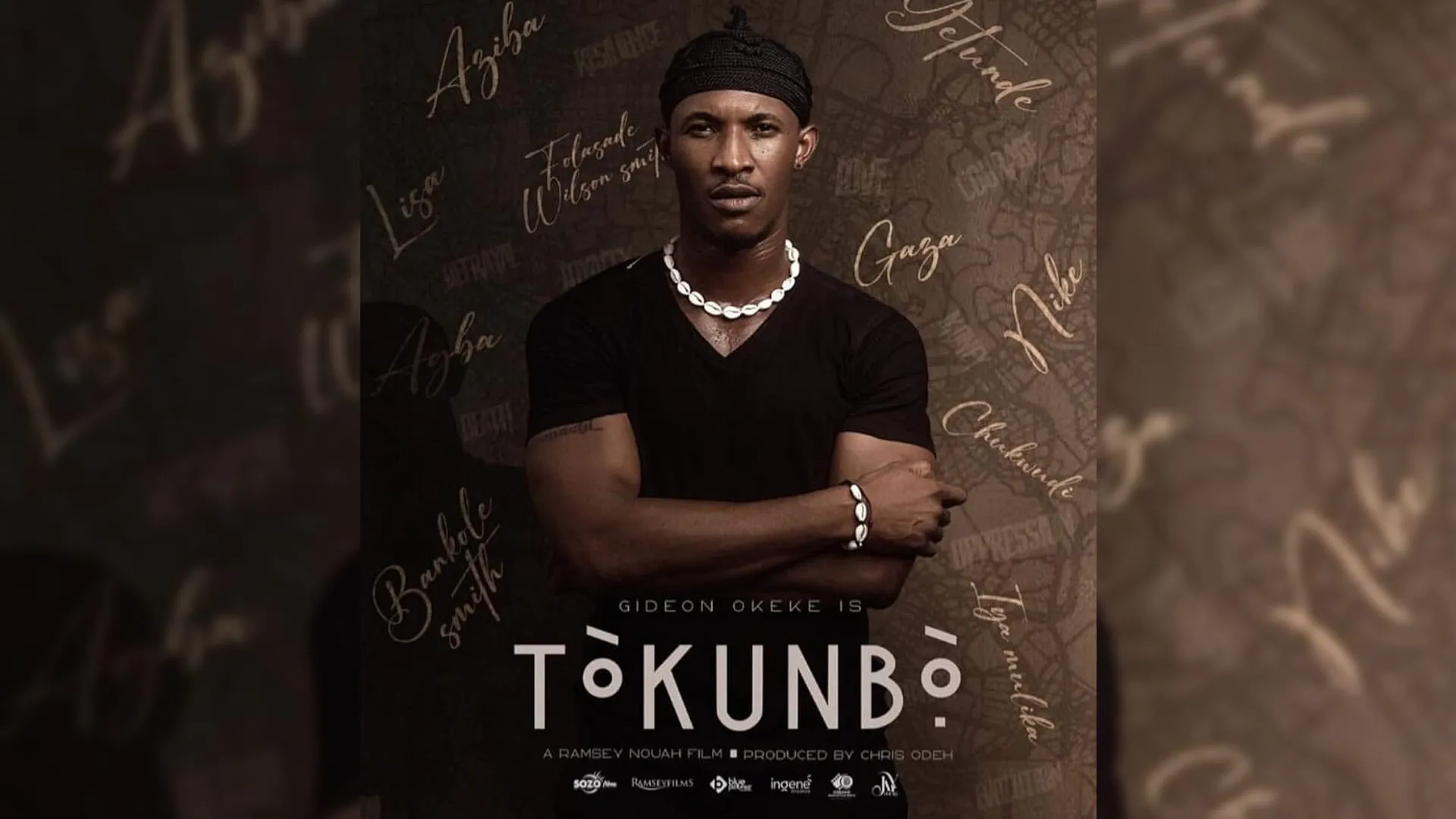
Tokunbo as a protagonist has a somewhat eerie quality, not because he’s particularly enigmatic, but because he feels like someone you’d meet on any given day—a man whose desperation is so quiet that it’s almost invisible. Gideon Okeke’s portrayal conveys the subtle turmoil with honesty that lingers in the mind. Tokunbo is a man who is suffocating under economic insecurity and moral ambiguity, yet he does not show his agony.
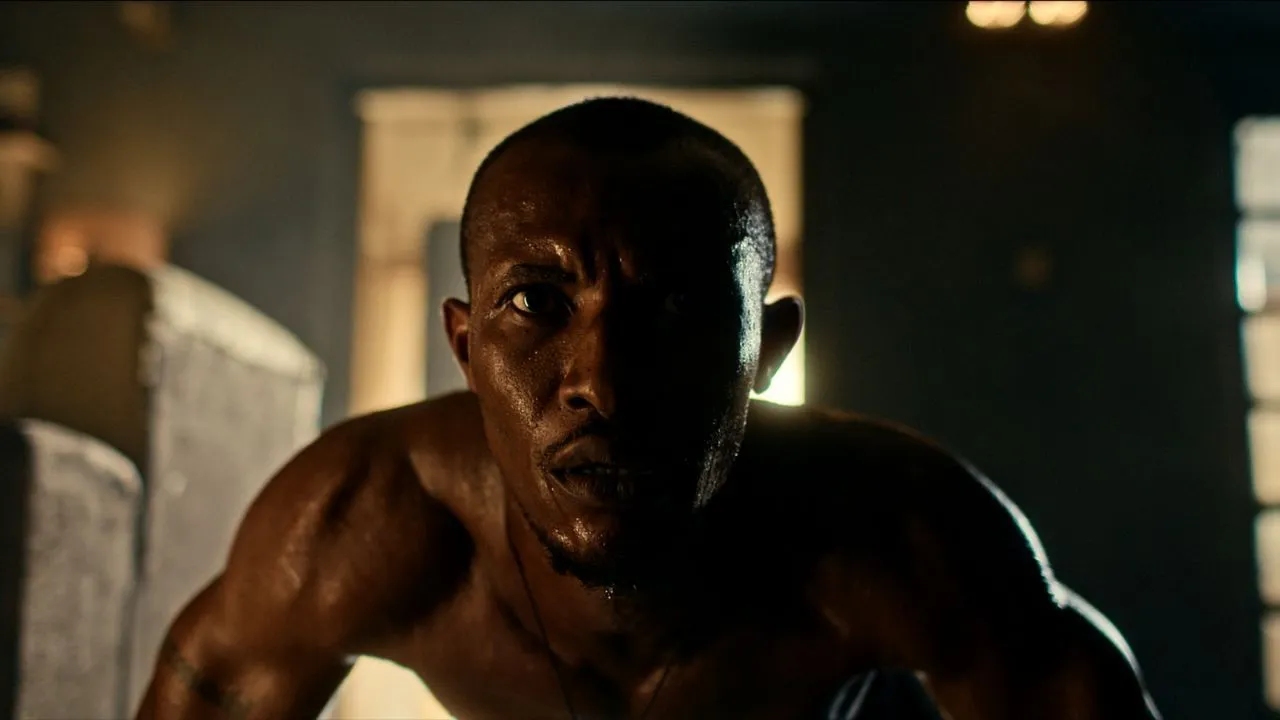
Instead, it seeps through in stillness-filled moments: how his shoulders slump beneath the weight of his choices or how his voice falters when he speaks about his son. And yet, I found myself doubtful of my faith in him. There’s a disconnect between his alleged desperation—his eagerness to re-enter the dark world of crime—and his strangely muted emotional reactions.
I wanted more fire from him, more indication of his emotional struggle, but that could be my own bias, my desire for the kind of larger-than-life protagonist I’ve come to anticipate. Perhaps Tokunbo’s restraint is the point—a reflection of how survival frequently necessitates quiet, inconspicuous endurance.
However, the supporting cast appears in a different emotional range. Folashade, played with cool precision by Funlola Aofiyebi-Rami, provides an intriguing contrast to Tokunbo. Her demeanor exudes a controlled intensity and composure that masks a storm beneath the surface. She is both a mother and a political figure. She’s a character who feels like she belongs in a different, sharper film—a version of Tokunbo that is more focused on its sociopolitical satire.
In contrast, Gaza is complete chaos: a snarling personification of violence and power, played with alarming menace by Chidi Mokeme. In any other story, he could feel like a parody. Still, in this one, his savagery feels uncomfortably plausible, a crucial reminder of how systems of control frequently take on human shape.
Darasimi Nadi delivers Nike, the kidnapped girl, with remarkable depth, and her wide-eyed fragility is captivating. She’s more than just a victim or a story device; she’s a mirror, reflecting Tokunbo’s entrapment and compelling him—and us—to confront the cost of survival in a world with so little room for good.
Here’s where I stumble: I’m unsure whether these characters work well together. They feel like fragments of different stories woven together to form a singular narrative that never quite comes together. And yet, perhaps this is what makes Tokunbo so disturbing—it refuses to allow us to settle into simple consistency, forcing us to confront the jagged, conflicting lives it depicts.
Shadows of Survival: Themes and Messages in Tokunbo
Tokunbo has a rawness about him that lingers, the kind that demands acknowledgment rather than sympathy. The film’s central conflict is between desperation and morality, a complicated relationship as complex as the streets of Lagos. Tokunbo’s choices—returning to the shadows of crime, carrying parcels without question, and eventually becoming an involuntary participant in a kidnapping—are not portrayed as heroic or tragic.

They feel unavoidable, like the gradual destruction of a shoreline under relentless waves. As I saw Tokunbo evaluate the cost of his son’s life against the cost of another, I found myself questioning his morals and my own. What would I do if survival meant sacrificing someone else’s innocence? The film never addresses this question, which may be for the best. Instead, it lingers in the silences, Tokunbo’s haunted stares at Nike, and the quiet desperation permeates every scene.
Desperation does not exist in isolation; it thrives in institutions based on corruption. Tokunbo probes into this, pulling out threads of a society where survival frequently entails involvement. Gaza’s harsh dominance over the streets, Folashade’s complicated attempts to achieve serious reform, and even the threat of cryptocurrency restrictions all point to a world in which power is used to crush rather than empower. The film does not romanticize the fight or provide easy solutions. There’s no soaring speech, no huge moral victory, just steely determination.
Nonetheless, I couldn’t help but feel the criticism stumbled at moments, relying too much on common tropes without thoroughly exploring their origins. Is corruption only an external force in this story, or is it something deeper ingrained in the characters’ choices? I’m not sure the film knows, but perhaps that doubt is the most honest response.
The Uneven Pulse of Danger: Thrills and Spills in Tokunbo
Tokunbo’s action feels like it’s holding its breath, hovering on the edge of tension but never quite falling into chaos. The battle choreography has a raw, almost unfinished quality—it isn’t smooth or even imaginative, but it exudes a ragged realism. For example, the ultimate battle between Tokunbo and Gaza should have been the culmination of all the simmering danger.
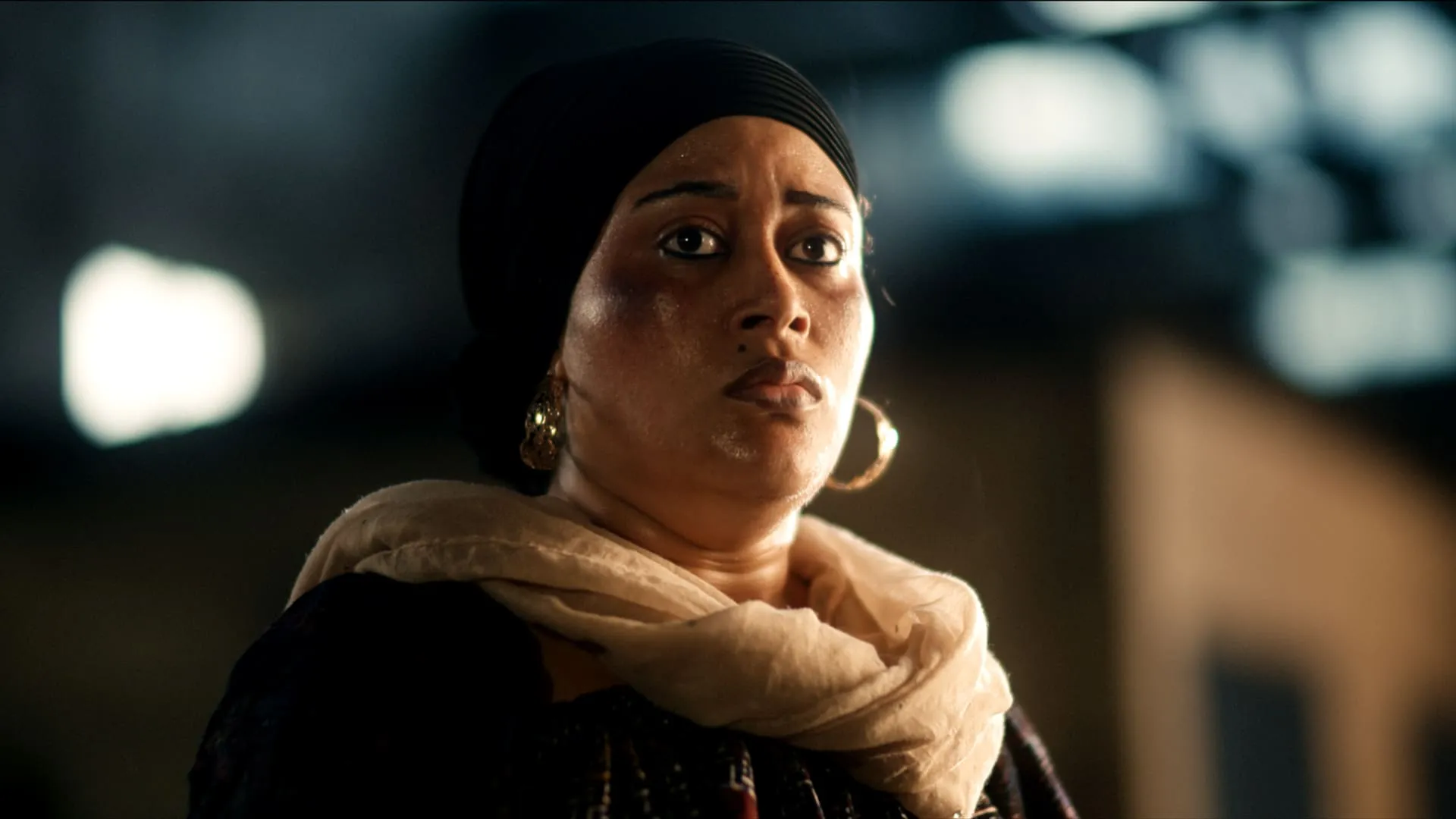
Still, it instead falls somewhere between fractured and exhausted. The editing doesn’t help; it cuts too rapidly, as if afraid to linger on each punch and grapple’s imperfections. I craved the visceral, unwavering rhythm that makes you feel every blow and scrape. Instead, the action feels like it is attempting to be presentable and polished when it may have been better served by embracing the messiness of violence.
But thrillers are defined not just by their fists but also by the tension they create—and Tokunbo offers true disquiet. The three-hour ticking clock is a creative gimmick. Still, it doesn’t always result in the kind of relentless pacing you’d anticipate. Instead, the suspense lingers in quieter moments: Tokunbo’s moral compromises, Nike’s confinement, and the eerie calm.
The plot twists, however uneven, occasionally fall with a satisfying thud, propelling the narrative onward. However, I can’t help but wonder if the film trusted its tension enough. Or was it too eager to wrap itself in traditional thriller beats, sacrificing genuine suspense for the comfort of predictability? Perhaps that’s just my impatience, but I wanted to feel more breathless, on edge, and less like I was waiting for the inevitable.
Fragments of Vision: Technical Merit in Tokunbo
Tokunbo’s cinematography has a sweat-soaked, sun-scorched quality that almost feels tactile as if you could run your fingers across the screen and leave with smudges of Lagos dust. The lighting is unwavering, drenching the characters in harsh, merciless colors—neon bouncing off crumbling walls, headlights cutting through the shadows of dark streets.

It’s a world where light rarely softens, and even the small flicker of optimism feels transient. Despite its graphic ambition, the camera work occasionally feels hesitant. The framing frequently skirts the limits of intimacy without committing, as if afraid to linger too long on the characters’ faces. The editing sometimes falters, cutting away from moments demanding calm and breath. I’m unsure if it was a lack of confidence or a need to keep the plot moving. Still, it left the film disconnected, like a series of dazzling pictures that never fit together.
Then there’s the sound—a quiet, relentless presence contributing more to the film’s tension than the pictures ever could. The soundtrack is subdued, even tentative, a subtle hum of disquiet that seeps into the background without garnering too much attention.
The film’s rhythm, however, is found in its sound effects: the metallic clang of a car door, the menacing buzz of a burner phone, and the muffled cries of desperation. Tokunbo’s most immersive moments come from these subtleties, which create an environment that feels alive even when the narrative falters. However, I couldn’t get the sense that, while brilliant, the music lacked a certain boldness—as if it were afraid to stand up and demand to be heard.
A Story Stuck in the Shadows: Verdict and Recommendations
Tokunbo is a film that struggles with its ambition, like a runner burdened by shoes two sizes too big. It offers flashes of brilliance—a sweaty, lived-in depiction of Lagos, a protagonist caught in the moral quicksand of survival, and a world in which corruption is not just a theme but the air everyone breathes.
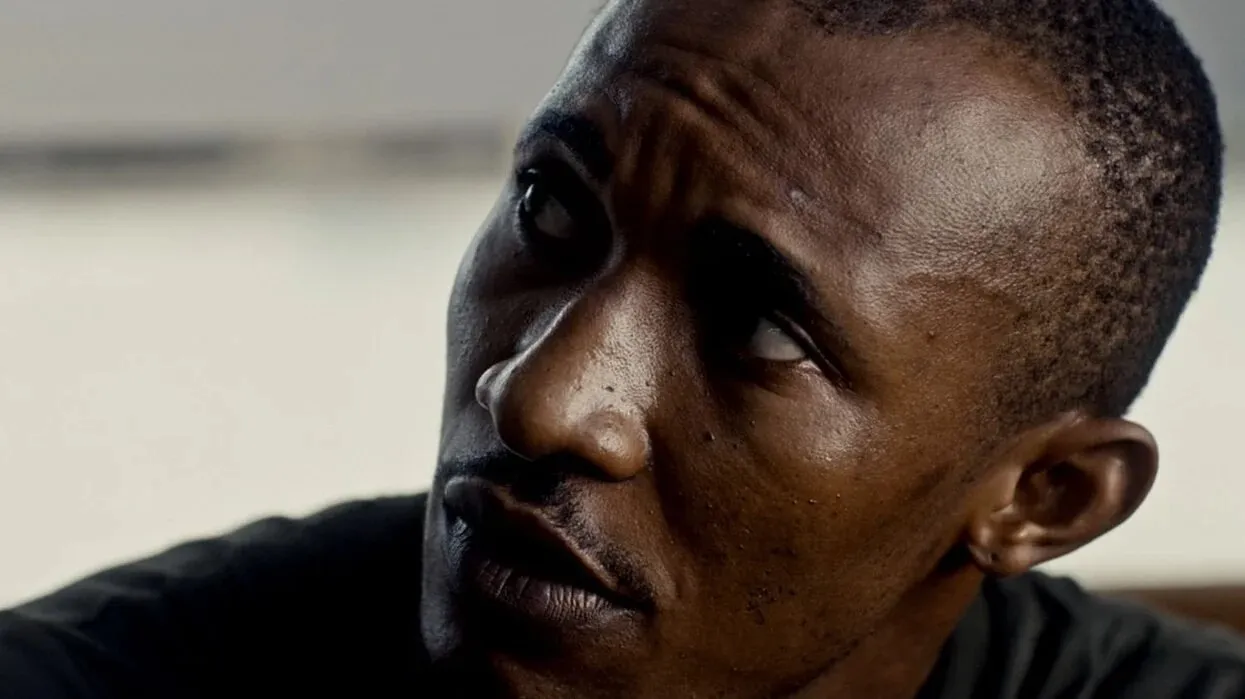
However, these moments feel disjointed, like puzzle pieces that never fit together to form a complete picture. Its action struggles to land, its pacing varies, and its most audacious ideas—cryptocurrency reform, systemic decay—are frequently left floating and untethered.
Tokunbo is recommended for individuals who value imperfection or are drawn to stories that represent the harshness of daily experience, particularly fans of socially conscious thrillers. However, for those expecting taut thrills or professional storytelling, it may feel like a broken promise.
The Review
Tòkunbò
Tokunbo is a film of contradictions—ambitious yet uneven, evocative but flawed. Its depiction of desperation, survival, and corruption is raw and powerful. Still, its execution frequently collapses under the weight of its complexities. It offers moments of true intrigue with compelling performances and a gritty sense of place. Still, its pacing, action, and thematic depth leave much to be desired. Tokunbo offers a thought-provoking, albeit inconsistent, experience for those ready to accept its imperfections.
PROS
- Gritty, immersive depiction of Lagos and its socio-economic struggles.
- Strong performances, particularly from Gideon Okeke and Funlola Aofiyebi-Rami.
- Compelling themes of survival, morality, and systemic corruption.
CONS
- Uneven pacing that undercuts the urgency of the narrative.
- Action sequences feel poorly choreographed and lack impact.
- Thematic elements like cryptocurrency reform remain underdeveloped.
- Over-reliance on familiar thriller tropes.
- Disjointed editing that disrupts narrative flow.