









Kraven the Hunter appears as an unusual relic within Sony’s Spider-Man Universe (SSU) amid the chaotic realm of superhero cinema. This film, released amid the failed efforts of Madame Web and Venom: The Last Dance, addresses the essence of its eponymous character, converting him from a deadly antagonist to a morally ambiguous anti-hero.
Kraven, aka Sergei Kravinoff (Aaron Taylor-Johnson), navigates a maze of personal pain and toxic masculinity. His origin, which was preserved by lion blood and mystical medicines, serves as a symbol for the duality of human nature. This shift raises problems about identity and redemption, such as what strength means when it is based on violence and familial dysfunction.
The film’s locations, from Siberia to London, represent Kraven’s emotional struggle, reflecting historical myths about foreigners struggling with identity. Nikolai (Russell Crowe) embodies the overbearing father, reminiscent of paternal legacies that shape future pathways.
In a culture obsessed with anti-heroes, Kraven the Hunter provides a meditation on power, identity, and the hideous nature of ambition. It pushes us to ponder whether true strength is in embracing or overcoming our fundamental tendencies.
The Lion’s Share: Kraven’s Transformation and Character Dynamics
Kraven Hunter’s Genesis story is complicated and unfolds with the weight of epic tragedy. Sergei Kravinoff, often known as Kraven, goes through a personal change about accepting basic instincts. We first see him as a young guy on a hunting expedition with his overbearing father, Nikolai (Russell Crowe), whose toxic masculinity hangs over their relationship like a dark cloud.
The film’s main moment happens when Sergei gets mauled by a lion. This symbolic act not only commemorates his near-death experience but also catalyzes his transformation. The lion can be interpreted as a mirror to Sergei’s latent aggressiveness, awakening his duality (a classic example of “kill or be killed”).
The interactions between father and son are striking. Nikolai, a caricature of patriarchal oppression, embodies the principles Sergei opposes. Their relationship is reminiscent of historical figures such as King Lear, in which the father’s misplaced expectations ultimately lead to strife and tragedy. Sergei rebels against his father and against the whole notion of what it means to be a “man” since Nikolai believes that strength is synonymous with dominance, which produces a toxic environment.
As the narrative progresses, Kraven transforms from a villain to a more complicated antihero. In a world where the distinctions between good and evil are blurred, this evolution poses important concerns about morality. Supporting characters, particularly Dmitri (Fred Hechinger) and Calypso (Ariana DeBose), provide crucial counterpoint.
Dmitri, the timid half-brother, embodies the consequences of paternal negligence, but Calypso provides mysticism and emotional depth, implying that redemption might be found via connection rather than violence.
Finally, their roles contribute to the narrative by forcing Kraven to confront his identity. This interplay of connections encourages viewers to reflect on bigger societal themes, such as how familial obligations mold us and the frequently conflicting path to self-actualization. Kraven the Hunter pushes us to reconsider the fundamental fabric of identity and moral choice in a world concerned with distinguishing heroes and villains.
Visual Feasts and Fractured Realities: Aesthetic Choices in Kraven the Hunter
In Kraven the Hunter, J.C. Chandor’s direction is an odd blend of ambition and haphazard execution, conveying a sense of grandeur and disorder. Chandor, known for his work in more grounded dramas such as Margin Call and A Most Violent Year, appears to approach this superhero narrative with a visual flair that occasionally borders on the bizarre.
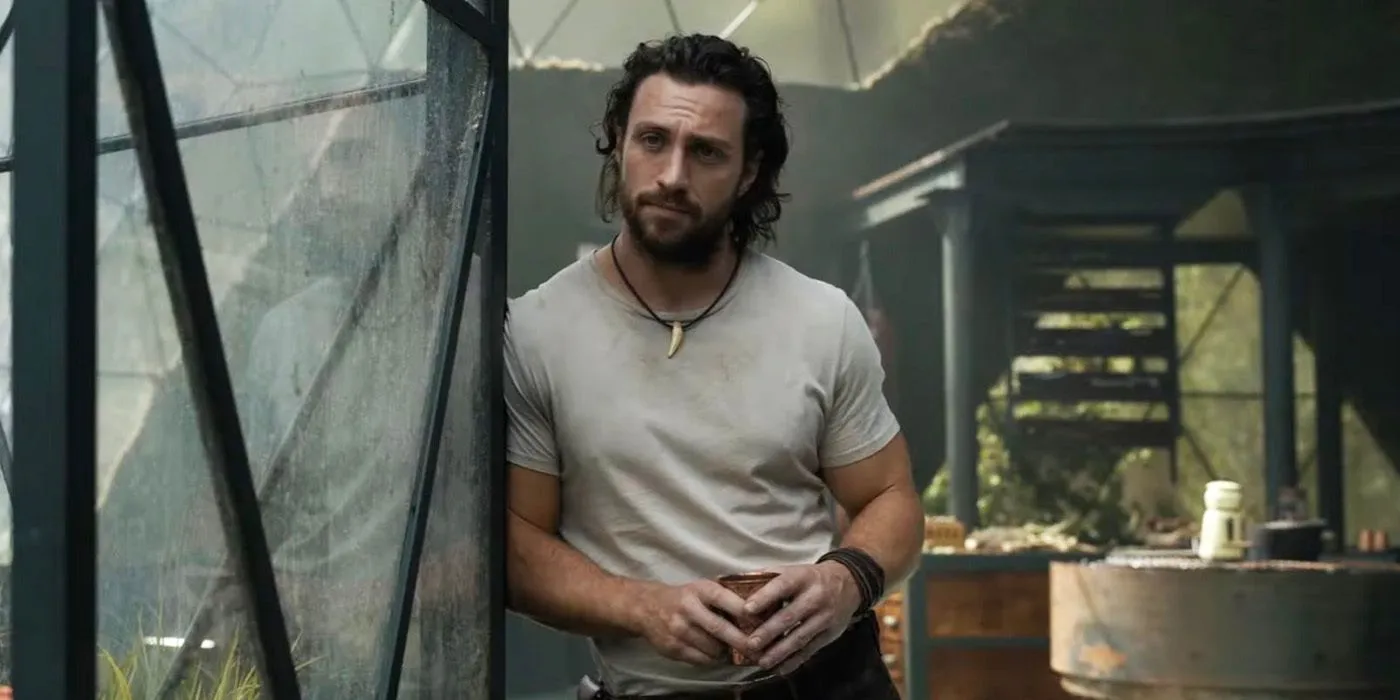
His visual aesthetics frequently reflect a hyper-stylized reality; scenes alternate between brutal urban environs and expansive landscapes, creating a juxtaposition that represents Kraven’s psychological strife. While visually appealing, the cinematography occasionally feels indulgent—as if a painter is torn between simplicity and baroque excess.
The film’s use of color is particularly noteworthy, with a muted palette emphasizing the bleakness of Kraven’s world (think noir film covered in a superhero cape). This visual choice is consistent with the film’s themes of violence and moral ambiguity, encouraging spectators to grapple with the darker consequences of Kraven’s deeds. The graphics serve as a canvas for analyzing man’s duality, a theme that resonates well in modern discussions about toxic masculinity and the nature of heroism.
Furthermore, the R-rating greatly impacts the film’s tone, giving it a rawness that many superhero films avoid. This rating allows for a more graphic depiction of violence, making Kraven a ruthless force of nature.
The bloodshed is not gratuitous; rather, it serves to show Kraven’s cruel reality, in which moral lines are blurred and the consequences of violence are severe. The R-rating feels like a double-edged sword: it raises the film’s stakes but also risks alienating a larger audience used to more sanitized versions of superhero lore.
In this light, Kraven the Hunter becomes more than just a film about an antihero; it also reflects society’s infatuation with violence and the glorification of the antihero. The stylistic choices and the film’s raw tone establish it as a thought-provoking entry in the superhero genre, albeit one that leaves audiences wondering about the very nature of the narratives we consume.
The Body and the Performance: A Study of Characterization in Kraven the Hunter
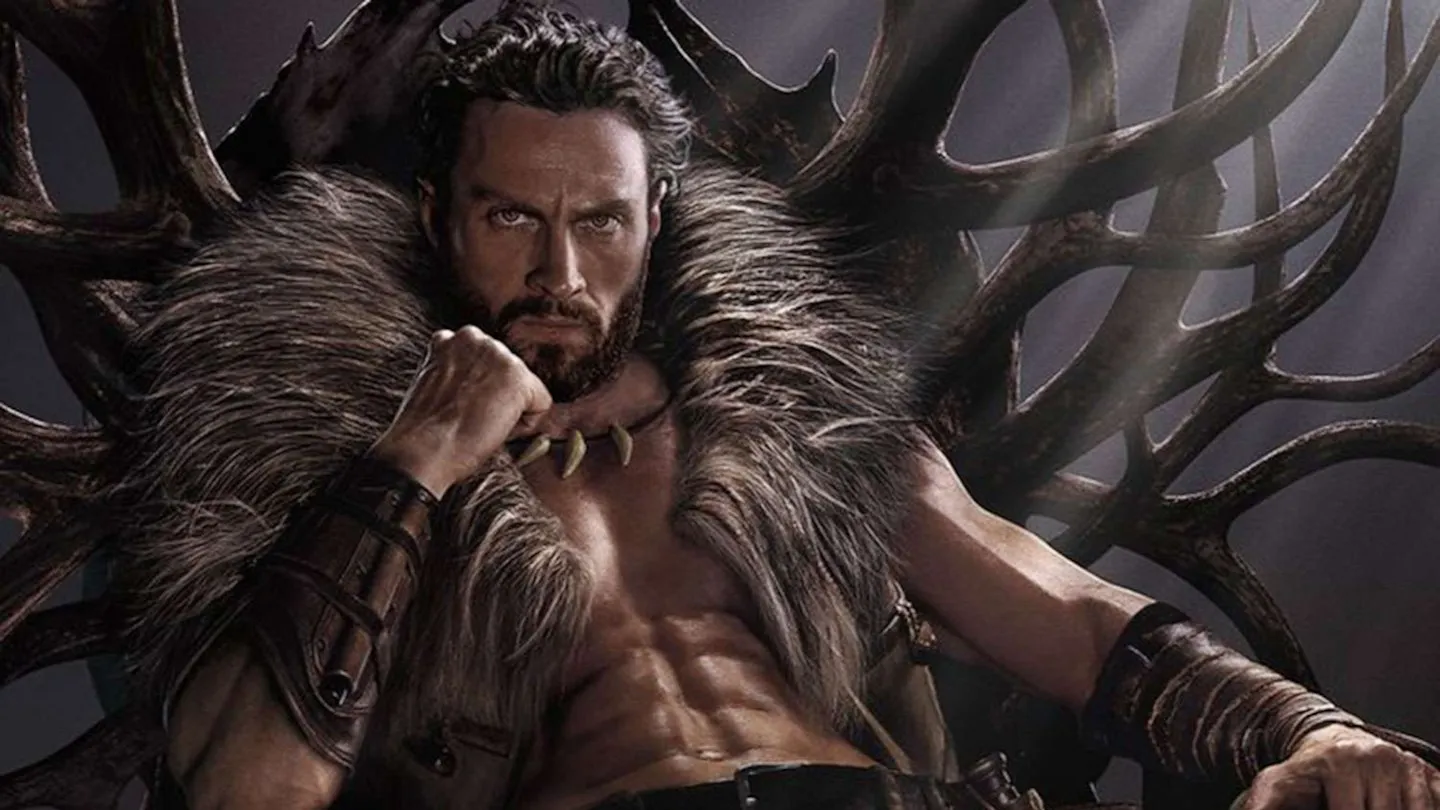
Aaron Taylor-Johnson plays Kraven in a strange mix of brutality and reflection, a duality that captures the film’s main themes of identity and violence. Taylor-Johnson, with a physique that appears chiseled from a mix of granite and pure resolve, embodies the paradigm of the modern antihero—muscular, gloomy, and always at odds with his own demons.
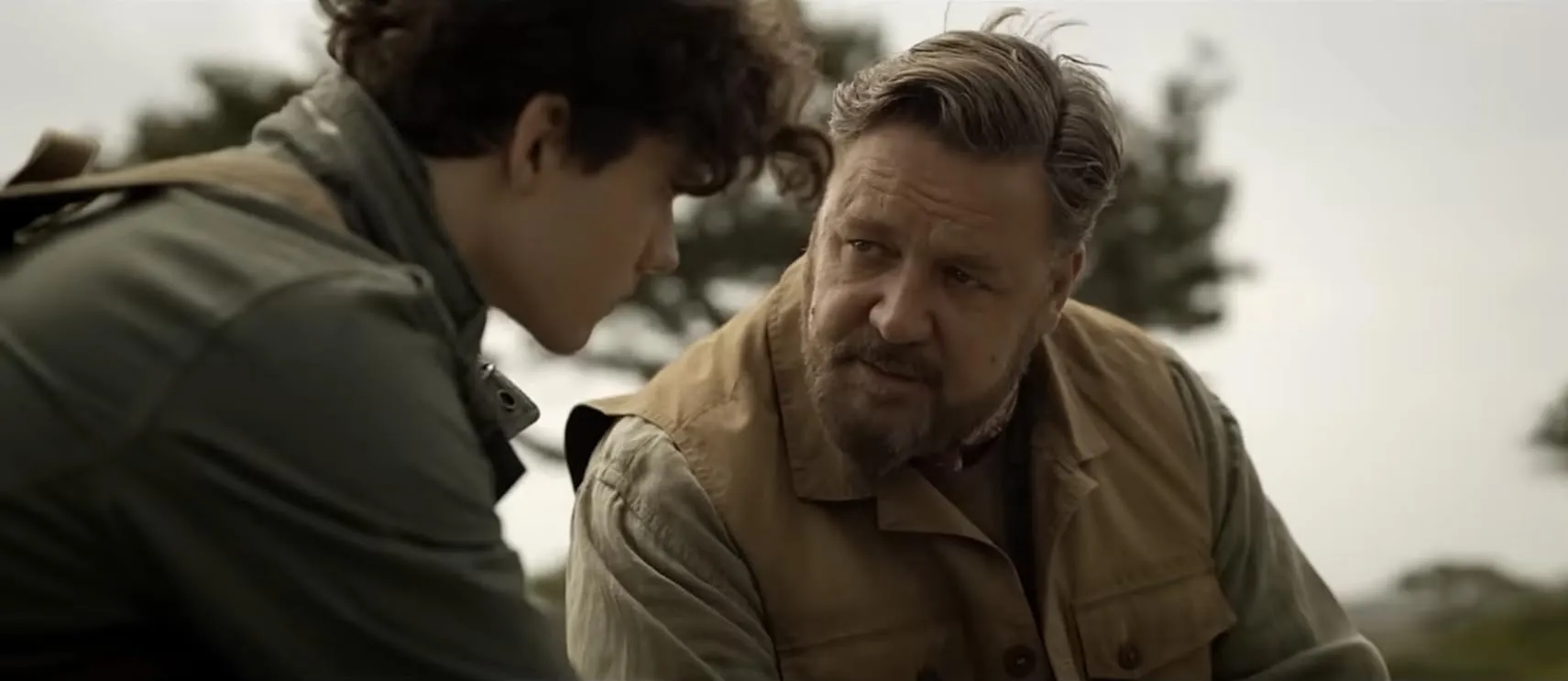
His performance oscillates between momentary sensitivity and brutal anger, a juxtaposition that enables spectators to explore the depths of a character formed by toxic masculinity and familial expectations.
Despite his physical strength, Taylor-Johnson’s performance occasionally feels constrained, as if he is battling with the script’s constraints rather than fully unleashing the character’s potential. This friction between muscle and method (which I’ll refer to as “psychophysical conflict”) highlights the film’s larger struggle: reconciling Kraven’s aggressive instincts with a desire for redemption.
Even the most sculpted hero must grapple with the absurdities of his narrative, and this performance occasionally veers into self-parody, especially when the dialogue becomes overly dramatic.
In contrast to Taylor-Johnson’s Kraven, Russell Crowe’s Nikolai is a tough foil. Crowe plays the dictatorial father with a zeal that is both scary and fascinating. His thickly accented bluster and over-the-top machismo represent a caricature of toxic masculinity reminiscent of historical individuals whose power relations are based on fear and dominance. While occasionally bordering on the absurd, Crowe’s performance adds crucial gravitas to Kraven’s internal conflict.
However, Ariana DeBose’s portrayal of Calypso is divided. She carries the weight of a character with great promise, bringing magical qualities that could enhance the narrative. However, her performance frequently appears undercooked, as if she is left floundering in a sea of clichés. The character, while initially promising as a source of empowerment, is undone by the film’s inconsistent pacing and lack of depth.
Alessandro Nivola’s performance as Aleksei, the Rhino, provides another layer of intricacy (and a bit of black humor). His performance alternates between threatening and ridiculous, portraying a villain as much a product of his surroundings as Kraven. Nivola’s commitment to the character, which includes a weird physical transformation, underscores the film’s thematic investigation of identity and the cost of ambition.
These performances weave a tapestry of characters that challenge and strengthen the film’s reflection on violence, power, and the search for oneself. In a world where the anti-hero is frequently glorified, Kraven the Hunter provides a provocative view into the human condition despite its flaws in execution.
The Masculine Paradox: Themes of Family and Morality in Kraven the Hunter
At its foundation, Kraven the Hunter explores the complex themes of masculinity, familial loyalty, and the murky waters of toxic paternalism. Nikolai Kravinoff (Russell Crowe) embodies the classic overbearing father whose distorted notions of strength smother his sons.
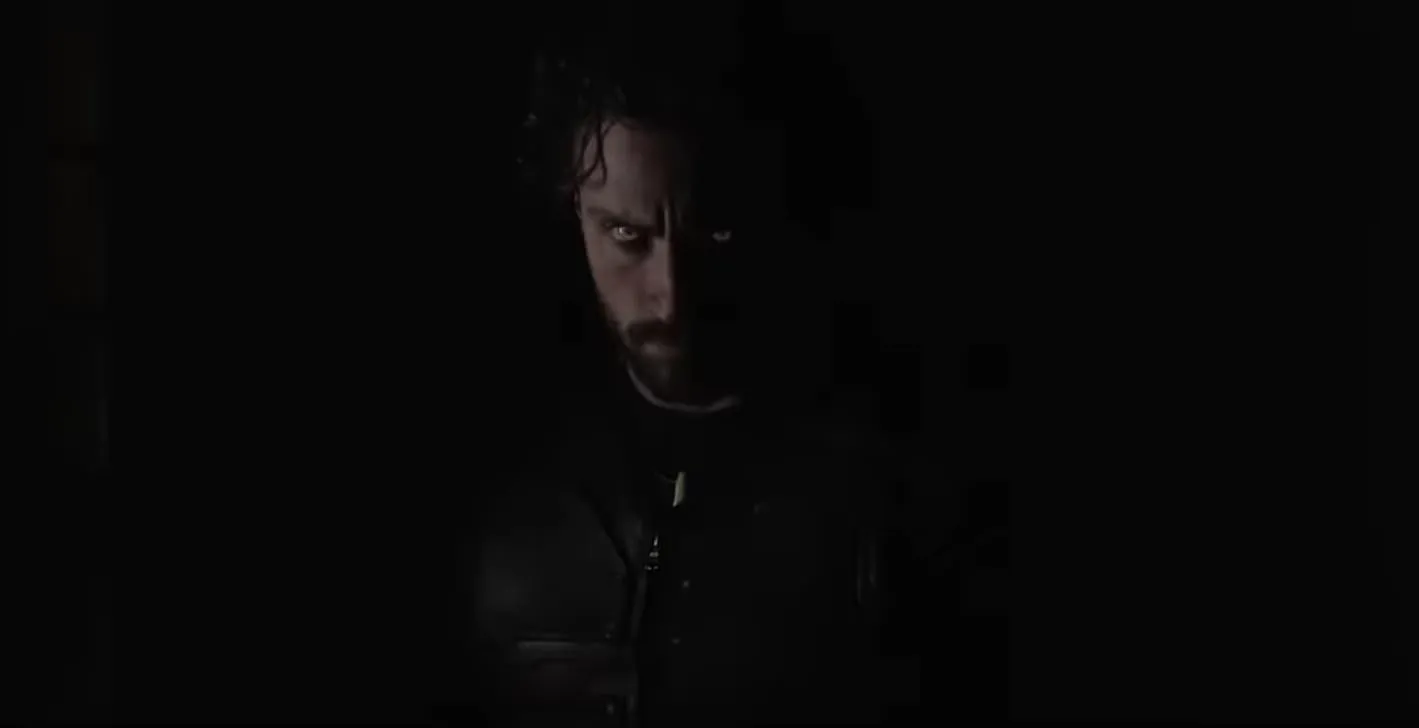
This relationship reflects a larger societal issue: the belief that masculinity must be synonymous with aggression and power. The film depicts Sergei’s effort to grapple with the weight of his father’s legacy—an unsettling reminder of how familial relationships can nourish and suffocate.
Similar to this is the notion of loyalty. While Kraven’s trip is motivated by a desire to be free of his father’s repressive hold, it is also laced with guilt and duty to his half-brother, Dmitri. This conflict exemplifies the often contradictory nature of familial relationships, in which love and resentment live in delicate balance.
The film’s examination of heroism vs. villainy is equally intriguing. Kraven’s transformation from a conventional villain to a morally ambiguous anti-hero challenges viewers to reconsider what it means to be “good” or “evil.”
The film pushes us to question the basic fabric of morality, implying that the line between hero and villain is not only blurred but frequently determined by viewpoint. The glorification of anti-heroes distorts our notion of justice and redemption in today’s cultural milieu, where this ambiguity resonates with power.
The Dance of Violence: Action and Aesthetics in Kraven the Hunter
Kraven Hunter’s action sequences are an odd blend of choreography and chaos, frequently echoing the film’s inherent conflict between visceral thrills and a cohesive plot. Early scenes showcase Kraven’s agility and strength, as he scales walls and leaps through urban settings with the elegance of a predator (possibly a tribute to his lion-inspired skills).
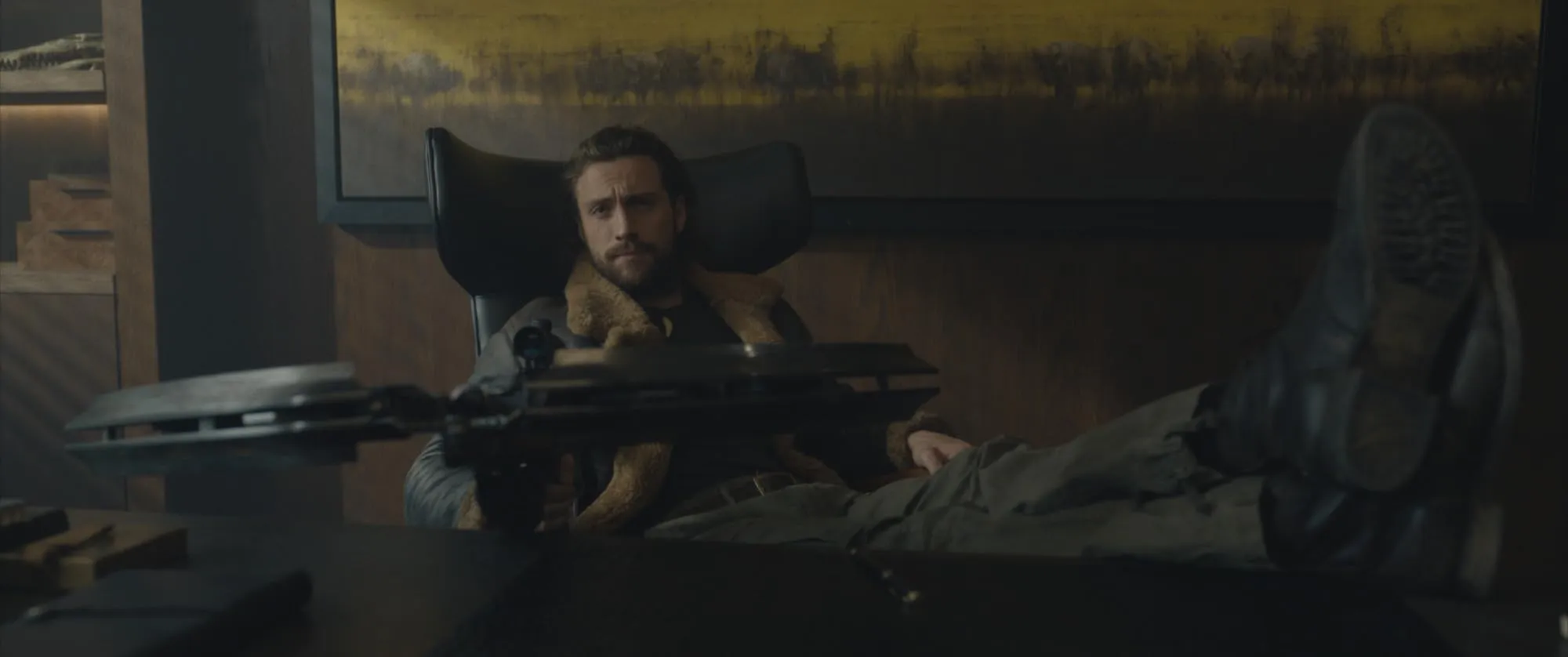
The overall execution occasionally falls short, leaving viewers uncertain, despite a few notable moments, such as an exciting chase through London. The pacing can be inconsistent as if the film is frantically trying to balance spectacle and narrative coherence.
Kraven the Hunter exhibits both accomplishments and failures in this dance of violence. While ambitious, the CGI frequently enters the realm of the ludicrous, undermining the film’s darker themes and foundation. In scenes where Kraven wrestles with large synthetic cats, one can’t help but be reminded of early 2000s CGI—nostalgic, perhaps, but also a little cringe-worthy.
In contrast, real effects provide a rawness to the film’s R-rated grit. The visceral nature of these scenes heightens the harsh reality of Kraven’s world. This juxtaposition emphasizes a bigger societal commentary: in an era where realism frequently collides with digital fabrication, Kraven the Hunter must navigate the perilous hero seas of spectacle vs. substance.
The Jester in the Dark: Tone and Humor in Kraven the Hunter
Kraven the Hunter walks a fine line between gravitas and levity, producing results that are as perplexing as they are amusing. The film attempts to explore serious themes, such as toxic masculinity and moral uncertainty. Still, it regularly punctuates its darker parts with humorous elements that can be disorienting (or, dare I say, like a misplaced punchline).
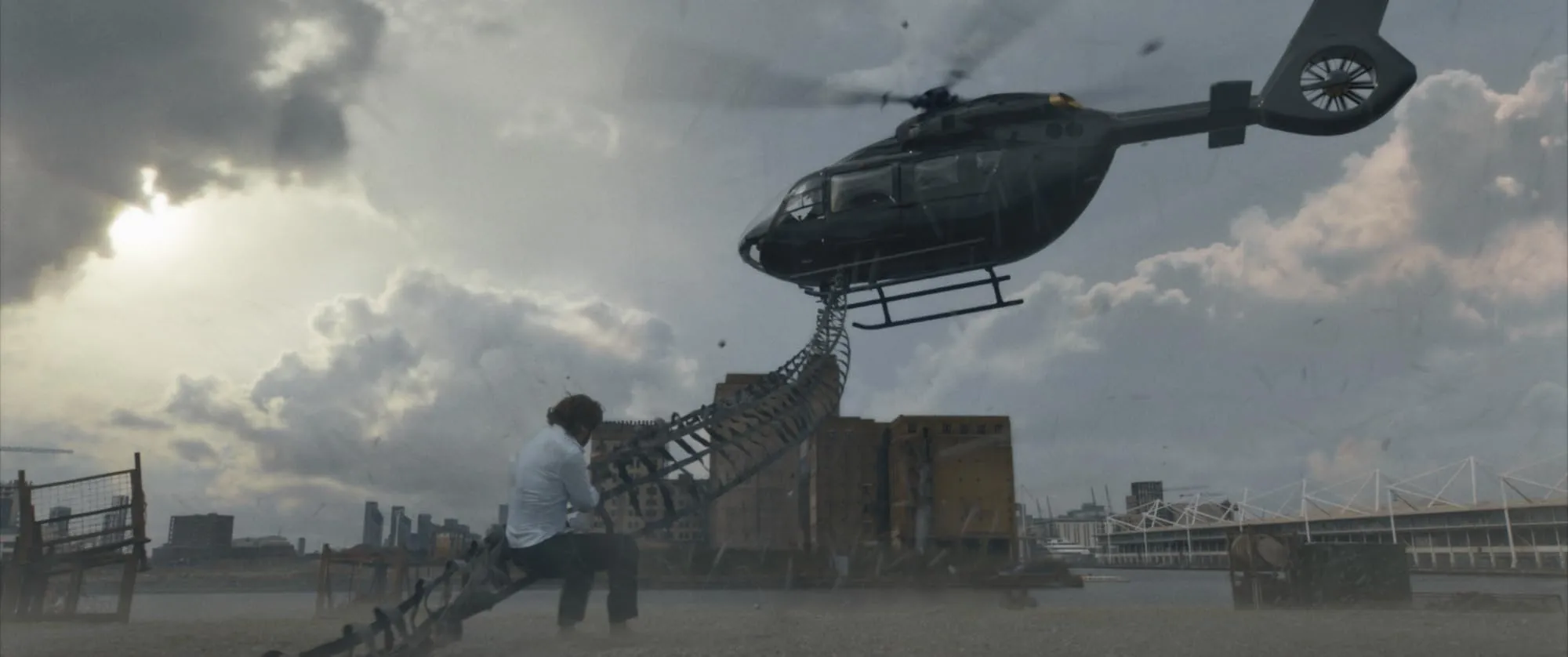
For example, Kraven’s bombastic braggadocio frequently results in unintentional hilarity. His cocky claims about beating karma may elicit eye rolls rather than admiration, serving as a reminder that even the most somber anti-heroes can come across as self-parodying.
Furthermore, certain scenes, particularly those involving supporting characters such as Calypso, border on the ludicrous realm. Her clumsily delivered lines, which at times like a sincere attempt at drama, frequently land as inadvertent humor, leaving viewers wondering if they’re watching a superhero film or an avant-garde comedy play.
This tonal blend mirrors a larger cultural phenomenon in which the absurdities of life are frequently paired with serious matters, creating an environment in which laughter and discomfort coexist. In this sense, Kraven the Hunter may simply be the cinematic equivalent of a darkly comedic fable, albeit one that occasionally stumbles over its punchlines.
A Fractured Reflection: Overall Impression of Kraven the Hunter
Kraven the Hunter is a strange blend of ambition and chaos, with strengths and serious flaws. On the one hand, the film’s investigation of toxic masculinity and familial loyalty is refreshingly deep, enabling spectators to ponder the nuances of identity and morality inside a superhero narrative.
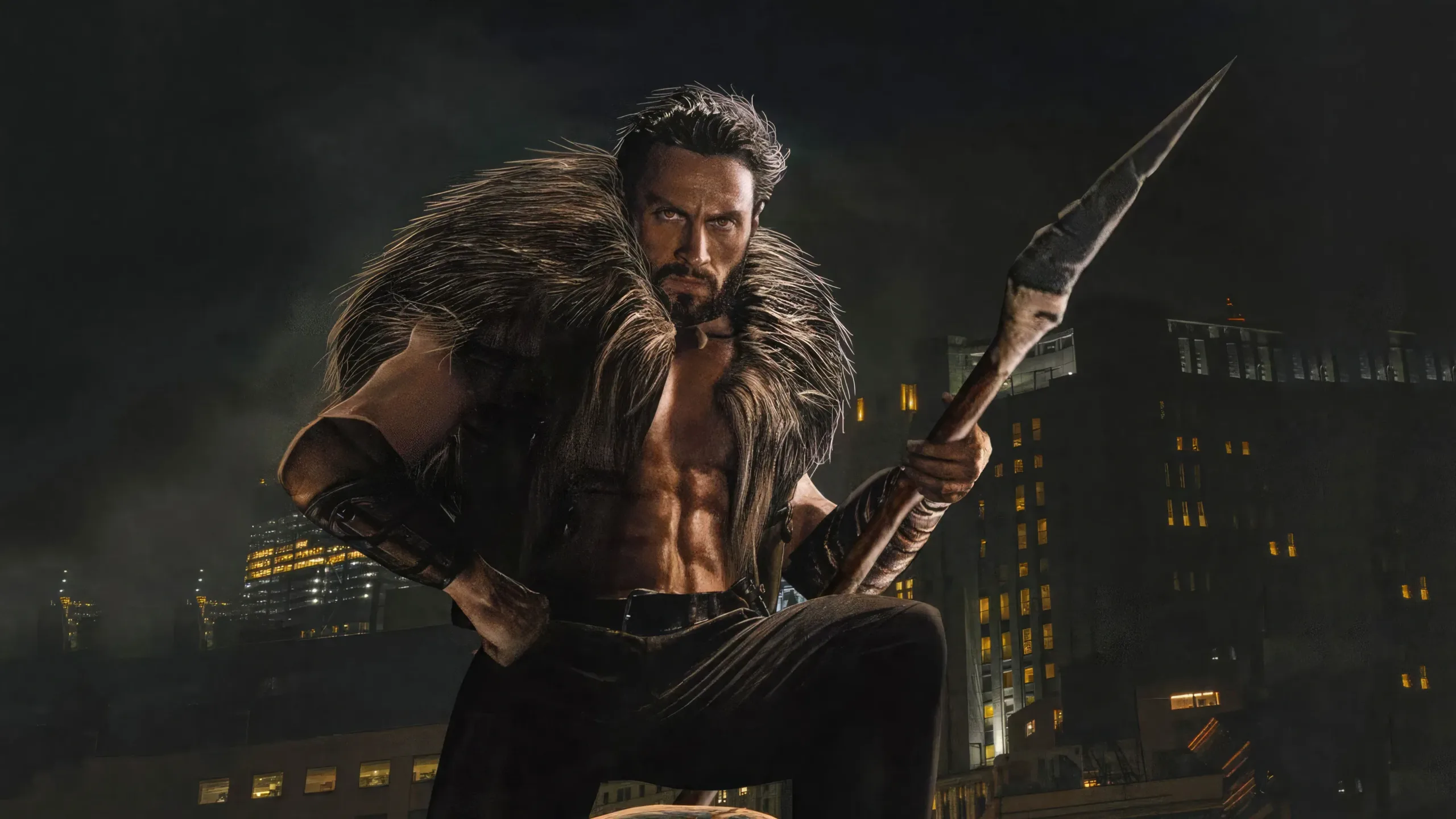
Aaron Taylor-Johnson’s physical portrayal of Kraven exudes raw intensity, capturing the character’s psychological conflict, while Russell Crowe performs as the archetypal authoritarian father.
However, these strengths are sometimes overshadowed by erratic pacing and tone. The film’s attempts at humor can sometimes be misplaced, taking away from its more serious themes. The impact of action sequences is also diminished by the reliance on CGI, which occasionally crosses into the realm of the ludicrous.
Kraven the Hunter may fit into a unique niche inside the Sony Spider-Man Universe. It straddles the line between a standard superhero film and a darker, more philosophical investigation of anti-heroism, ultimately leading spectators to question the franchise’s future direction, which appears to relish in its chaotic identity.
The Review
Kraven the Hunter
Kraven the Hunter is an ambitious yet messy investigation of toxic masculinity and identity through the eyes of a reimagined antihero. Aaron Taylor-Johnson gives a physically impressive performance, and the film grapples with serious themes, but its shifting tone and reliance on CGI diminish the overall impact. The blend of humor and darkness creates an interesting, albeit flawed, cinematic experience. Finally, it occupies an unusual location inside the Sony Spider-Man Universe, prompting viewers to question its cohesion and future direction.
PROS
- Engaging exploration of themes like toxic masculinity and identity.
- Aaron Taylor-Johnson delivers a physically compelling performance.
- Russell Crowe's portrayal of Nikolai adds depth and intensity.
CONS
- Uneven tone that sometimes undermines serious themes.
- Over-reliance on CGI, leading to moments of absurdity.
- Inconsistent pacing and storytelling coherence.
- Humor often feels misplaced or unintentional.