





















Edward, a young adult novelist whose life is a tapestry of the threads of obligation and desire, is presented to us in “Four Mothers.” As he takes care of his elderly mother, Alma, whose quiet says a lot about the silence that often fills the spaces between love and resentment, he embodies the weight of familial duty.
He is not just a caretaker of the fragility that comes with aging. The setting of this narrative is loosely based on Gianni Di Gregorio’s “Mid-August Lunch,” but it takes place in rainy suburban Ireland instead of the sunny streets of Rome. The rainy weather represents Edward’s life’s sad undertones.
The film skitters between comedy and drama, creating a duality reflecting the absurdity of life’s burdens and the deep sadness inherent in life. The book takes us to a world where laughter comes out of sad places, making us think that humor might be the only thing that keeps us afloat in the rough sea of experiencing life.
This change in tone sets the stage for an emotional journey that takes us to the heart of philosophical questions: How do we balance our responsibilities with our desires? We are left to ponder the delicate balance between self-fulfillment and the never-ending demands of caring for those who have cared for us as Edward struggles with the call to accept his life and the weight of some of those he loves.
Echoes of Care: A Character Study in “Four Mothers”
James McArdle’s Edward emerges as a complex figure on the verge of self-discovery thanks to his tender, complex portrayal. As he navigates the rough seas of familial obligation, his caring nature is both a comfort and a burden woven into the fabric of his identity. But behind his sincere exterior is deep self-doubt, an inner conversation questioning his worth and ability to experience joy.
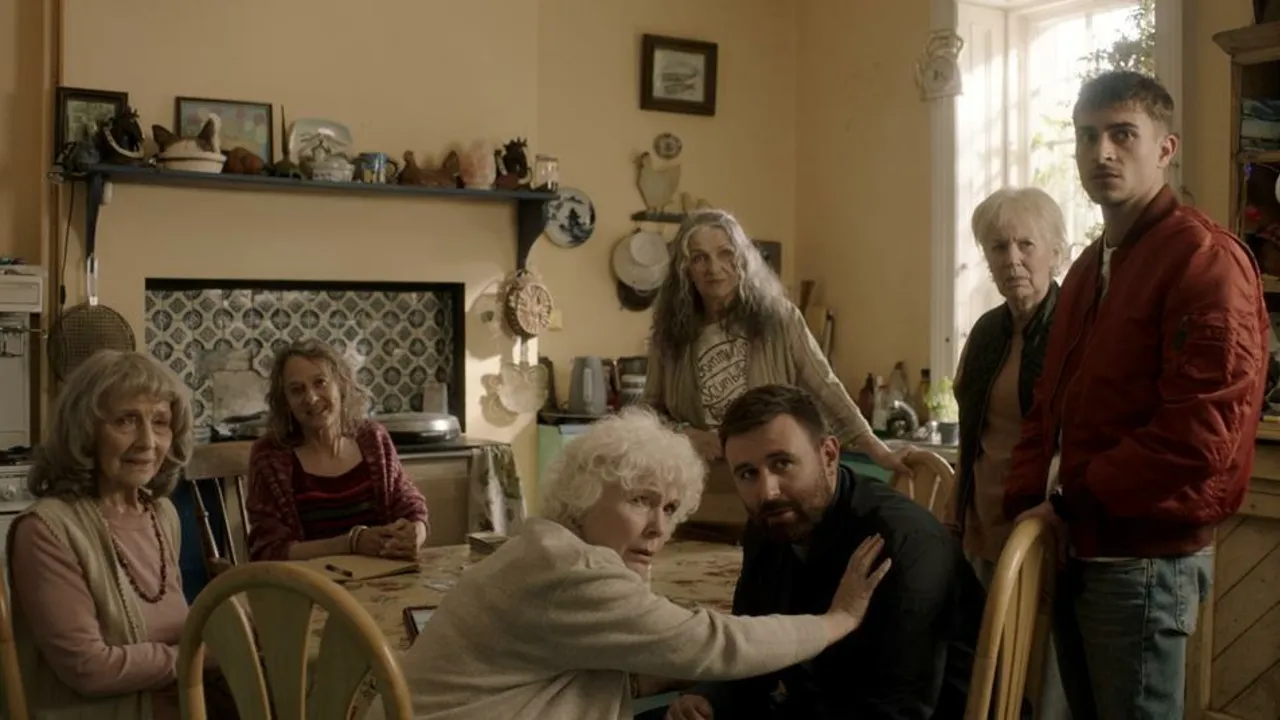
His funny interactions show a defense mechanism, a way for him to avoid dealing with the weight of his responsibilities while showing a vulnerability that hits home with the audience. Edward’s relationships with his friends, who represent both camaraderie and abandonment, reflect his fears of being alone and not being good enough, especially when they dump their motherly responsibilities on him without warning.
Alma, played by the fearsome Fionnula Flanagan, is still a strong presence even though she can’t speak. After having a stroke, she lost her voice and now speaks through an iPad. Her thoughts are turned into robotic tones that make her more human. Alma isn’t just a dependent; she’s the matriarch, the silent leader of the family who can change things with a look or a motion. Her character is full of contradictions; she is both the fragility of old age and the unwavering strength of maternal love, necessitating care while also evoking pity.
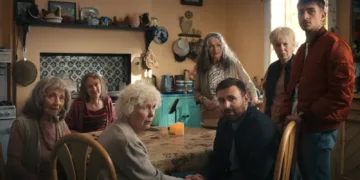
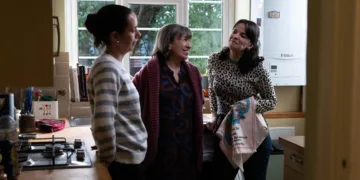
Each of Edward’s four mothers—Jean, Maude, Rosie, and Dorothy—brings a different energy to the narrative, and together, they create a kaleidoscope of personalities that mold his life. Jean, the sarcastic realist, acts as a stabilizing force, revealing the darker aspects of aging. Rosie, the free spirit, adds fun and unpredictability, while Maude, the religious and caring mother, shows a kinder side of motherly care.
Their interactions with one another shed light on the complexities of love, loss, and the quest for autonomy in a world that can feel limiting. Together, they push Edward to confront his limitations and desires. With all of them around, Edward better understands himself as he negotiates the complicated web of relationships that make up family and company while time keeps moving forward.
The Tapestry of Care: Themes and Motifs in “Four Mothers”
The intricate dance of duty and caregiving is at the heart of “Four Mothers,” and it is a burden that Edward must carry alone. The duality of this experience is beautifully depicted in the film, where moments of joy, like a shared laugh or a sweet memory, are frequently overshadowed by feelings of tiredness and resentment.
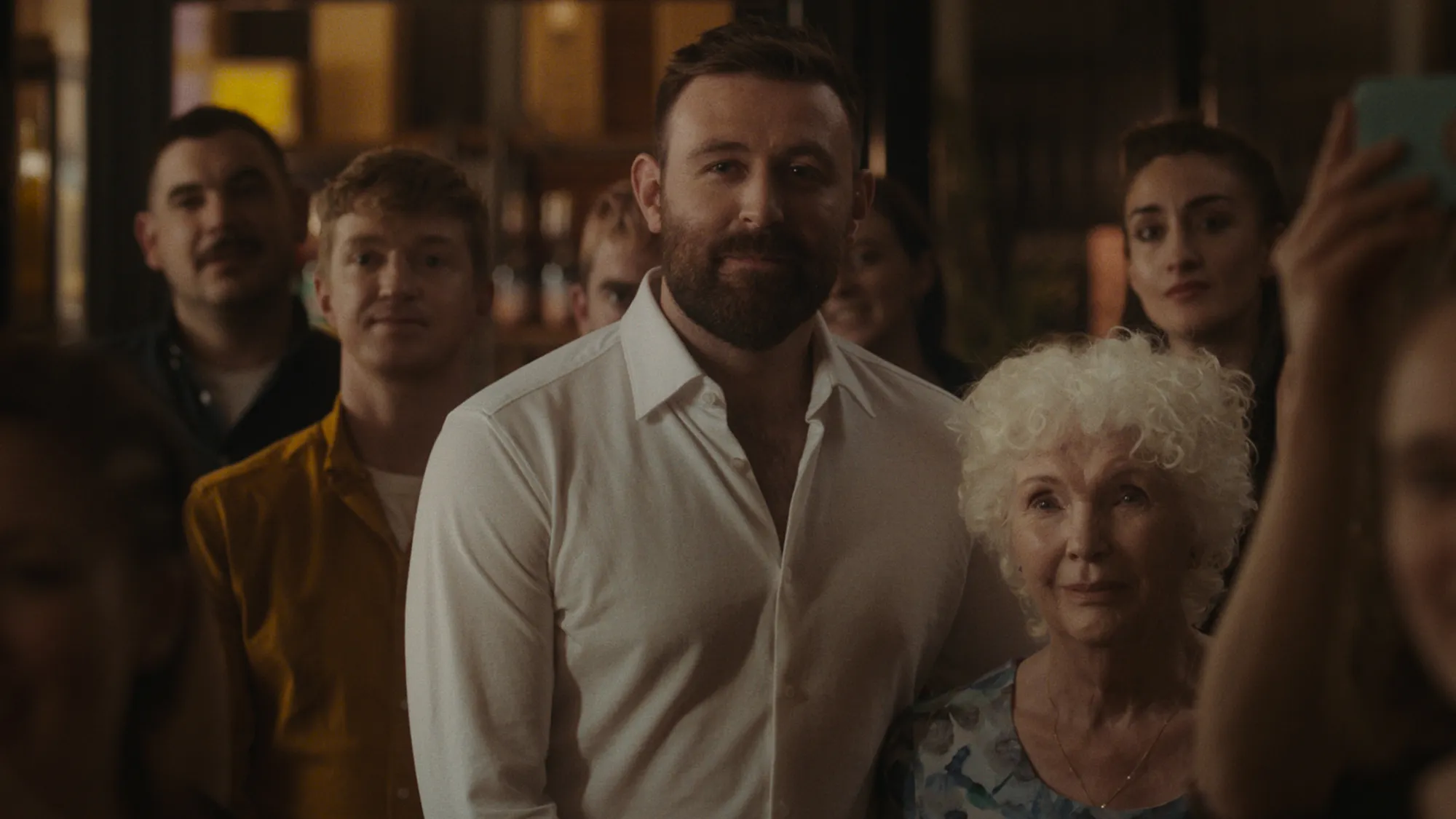
Edward’s struggle for independence becomes a silent war, a desire to become his best self constantly thwarted by obligation. How does one make room for one’s desires amidst the never-ending demands of family duty? This is the question that begs to be answered. This existential question strikes a chord deep within me, reflecting the common conflict between wanting to help others and wanting to find your own identity.
A narrative with depth and camaraderie is woven throughout the film as it explores the representation of queer identities. As gay men, Edward and his friends must negotiate their complexities. Their relationships with their mothers create a tapestry of acceptance and understanding that crosses generational boundaries.
The mothers, each with unique personalities, reflect a range of reactions to their sons’ identities. Some embrace them with warmth, while others struggle with the lingering effects of societal expectations. This relationship helps build a sense of community and shows how shared experiences can bring people together in both freeing and limiting ways.
The film expertly uses humor to balance out the weight of these serious topics. The characters confront their realities through comedic elements, which don’t just serve as relief. Even in the most difficult parts of life, levity can provide a brief moment of relief, as evidenced by the laughter that results from absurd situations. The human experience is a complex mixture of joy and sadness, a constant dance between laughter and tears that defines our existence, “Four Mothers” reveals its most profound truth in these moments.
The Rhythm of Life: Narrative Structure and Pacing in “Four Mothers”
The narrative in “Four Mothers” moves along with a slow but steady pace, reflecting the ups and downs of everyday life infused with love and obligation. When his friends leave their old mothers in his care, Edward’s world is turned upside down, leading to a weekend full of funny mishaps.
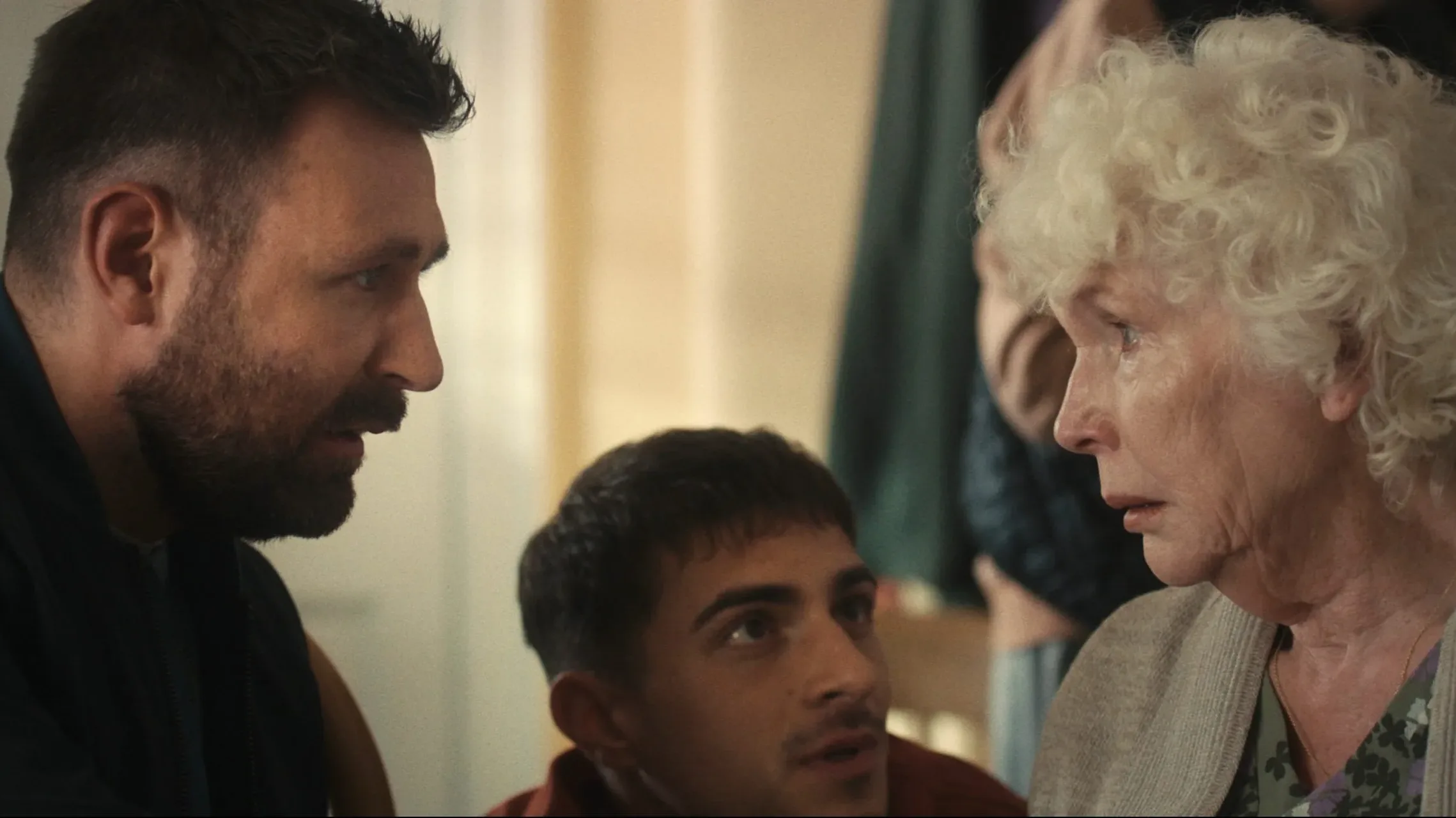
Edward’s desires clash with his responsibilities as he balances the needs of four distinct personalities, each representing a different aspect of aging. The film’s emotional journey is centered on this main conflict, which is rooted in the quest for autonomy amid the weight of family duty.
Pacing is done so well in “Four Mothers” that humor and drama fit together perfectly. The absurdity of life is repeatedly brought to light in powerful scenes, such as Edward’s terrible phone interviews and the mothers’ strange behavior.
The laughter deepens our understanding of the characters’ struggles evoked in these moments, highlighting the fragile balance between joy and sadness. While moments of levity break up the seriousness, reminding us that within the tapestry of life, humor often emerges as a lifeline in the face of existential uncertainty, the film’s timing allows for periods of introspection, giving the audience space to ponder the darker implications of caregiving.
Visual Echoes: Cinematography and Direction in “Four Mothers”
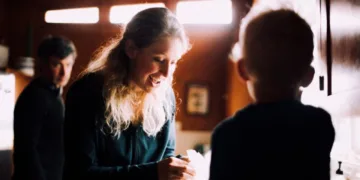
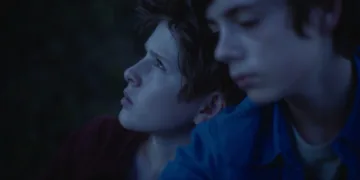
A soft color scheme that reflects the depressing facts of caregiving and aging permeates “Four Mothers”‘ visual style. The cinematography is dominated by soft grays and warm earth tones, evoking a sense of nostalgia while also giving the narrative a real sense of the weight of life’s transience.

The cinematographic choices, characterized by close-ups and long shots of the characters’ interactions, raise the emotional stakes and draw the audience into the delicate dance of dependence and autonomy. Each frame is like a thought, inviting us to think about the unspoken bonds between mothers and boys and how those bonds will inevitably weaken over time.
There is a subtlety to Darren Thornton’s direction that lets the subtleties of character growth happen naturally. His skill as a storyteller is evident in his ability to mix moments of levity with the film’s deeper existential themes. Thornton does a great job of navigating the emotional terrain, capturing the complicated mix of humor and sadness that makes up Edward’s trip.
Aging viewers are encouraged to connect with the characters’ internal problems by the direction, which creates an atmosphere of intimacy. The film’s essence emerges from this chiaroscuro of light and shadow, revealing how love and care exist in a precarious equilibrium frequently broken by moments of doubt and quiet reflection.
The Art of Presence: Performances in “Four Mothers”
Edward, played by James McArdle, is a masterclass in emotional subtlety. He moves effortlessly between funny and sad. His performance shows the essence of a man who is torn between obligation and desire, revealing a wide emotional range that is deeply felt. Moments of absurdity, where McArdle’s frustration turns into real laughter, highlight his comic timing.
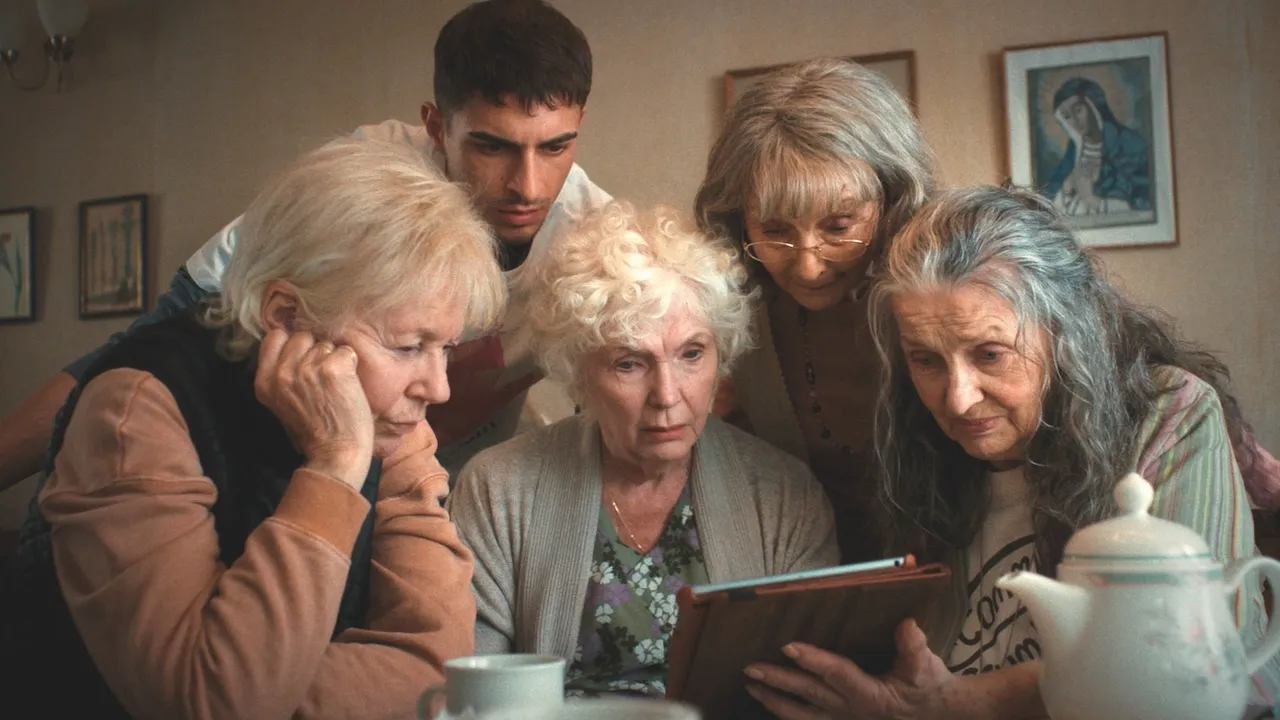
His talent, however, really emerges in the quieter scenes, which are filled with inner turmoil and self-doubt. These scenes let viewers see the vulnerable ability that lies beneath the surface. Edward’s journey is one of self-discovery laced with existential doubt, and McArdle portrays this struggle with a sincerity that makes the reader want to connect with him.
Fionnula Flanagan, who plays Alma, goes beyond the limitations of her character’s inability to speak by using subtle physicality and expressive gestures to portray a rich tapestry of emotions. She has a remarkable ability to show depth without saying a word.
Every look and movement she makes shows a matriarch struggling with fragility and strong love. Even though the situation muffles her voice, Alma’s presence is felt and reflects the strong bond between mother and son. Flanagan’s performance captures dependence’s complexity, evoking sympathy and resentment in equal measure.
The supporting cast, which includes Edward’s friends and a variety of mothers, makes the narrative even richer. There is a lot of variety in how the actresses play their parts. Jean’s biting wit, Maude’s caring personality, and Rosie’s lively personality all work well together to make the film’s exploration of aging and identity more interesting.
The fact that they are all together makes Edward’s character more complex and shows how different people react to the shared experience of caregiving. Their interactions serve as a microcosm of life’s complexities, where humor and heartache coexist, inviting us to reflect on our complexities and the legacy we leave behind.
The Resonance of Care: Emotional Impact and Legacy of “Four Mothers”
narrative that is both painfully personal and widely relatable. Its exploration of caregiving, identity, and the tumultuous nature of family love hit home hard, inspiring viewers to confront the complexities of their relationships.
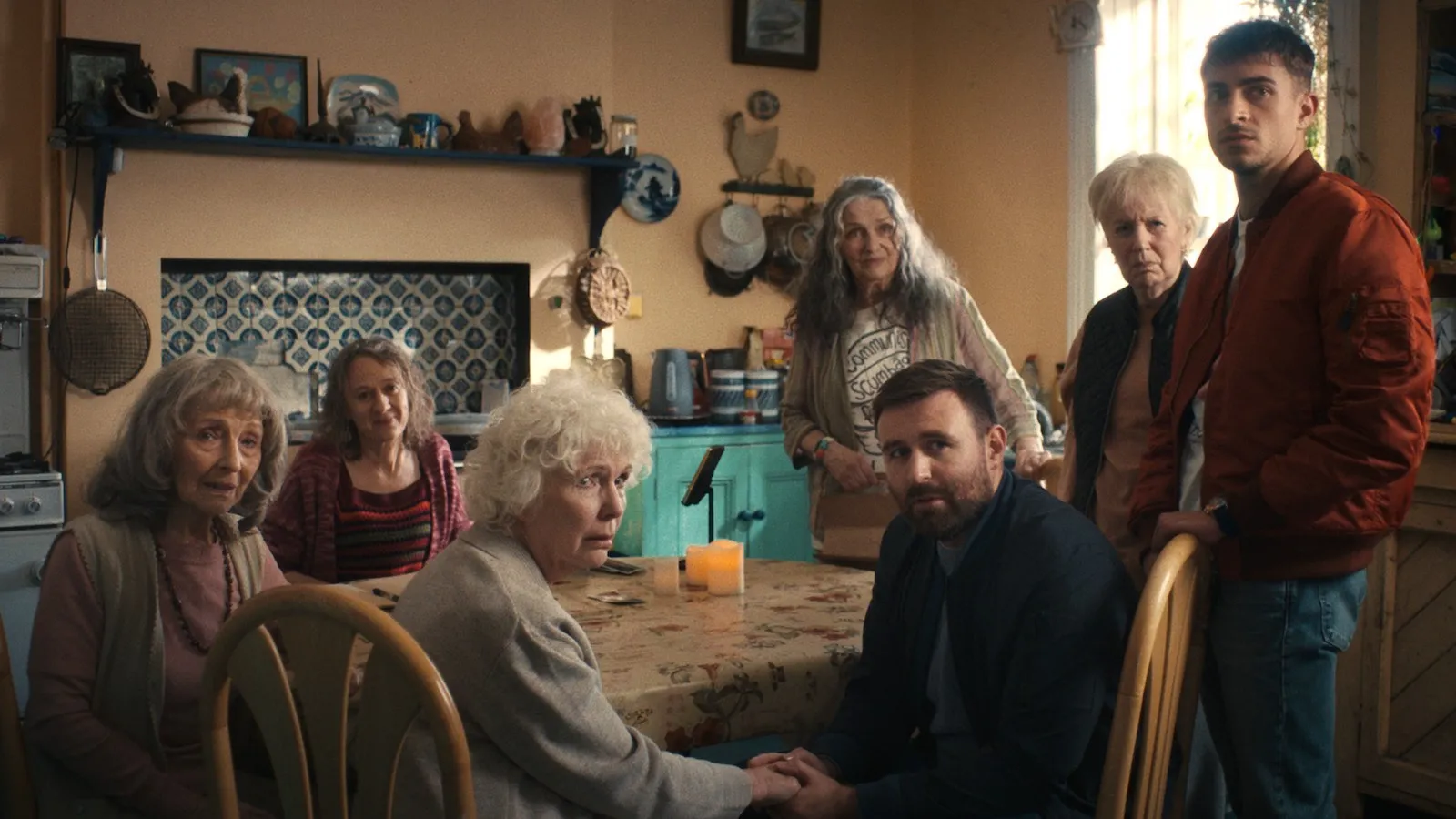
This film stands out in the tapestry of Irish cinema, reflecting the cultural differences in caregiving while exploring larger existential themes that cut across national boundaries.
Its touching mix of humor and heartache encourages audience members to find comfort in other people’s problems, solidifying its status as a deep reflection on the human condition.
The Review
Four Mothers
"Four Mothers" leaves an indelible mark on its audience, weaving a With a delicate balance of humor and melancholy, "Four Mothers" explores the tangled web of caregiving and identity. The film explores the complexities of love and obligation, with great performances from James McArdle and Fionnula Flanagan in particular, leaving the audience reflecting on their family ties. Its deep emotional landscape and careful direction make it an important addition to Irish film, and its themes of loss and connection are global.
PROS
- James McArdle and Fionnula Flanagan deliver emotionally resonant performances.
- The film skillfully navigates the complexities of caregiving and family dynamics.
- A deft mix of humor and drama enhances the storytelling.
- The visual style effectively complements the themes of aging and identity.
- Offers insight into Irish familial relationships, enriching the broader cinematic landscape.
CONS
- Some may find the pacing uneven, with certain scenes lingering too long.
- While main characters are well-developed, some supporting roles feel underexplored.
- The weighty existential themes may not appeal to all audiences seeking lighter fare.