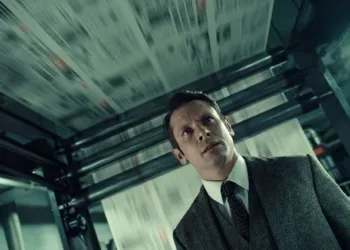
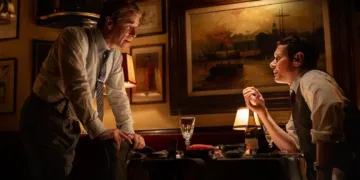












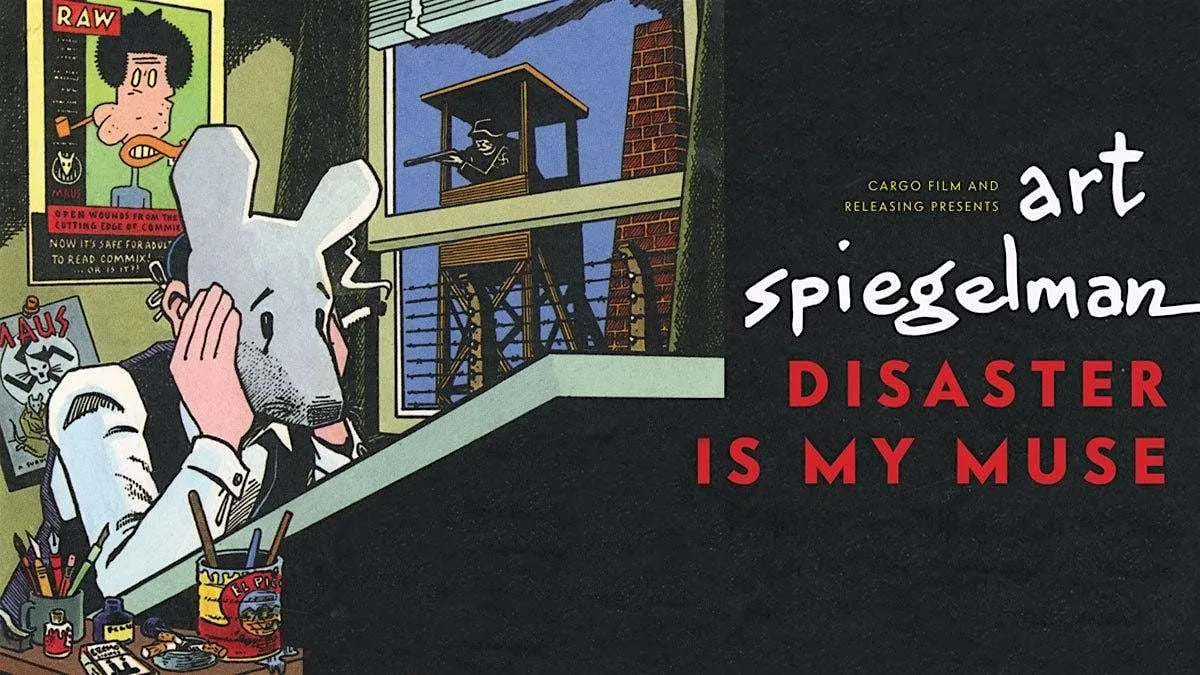

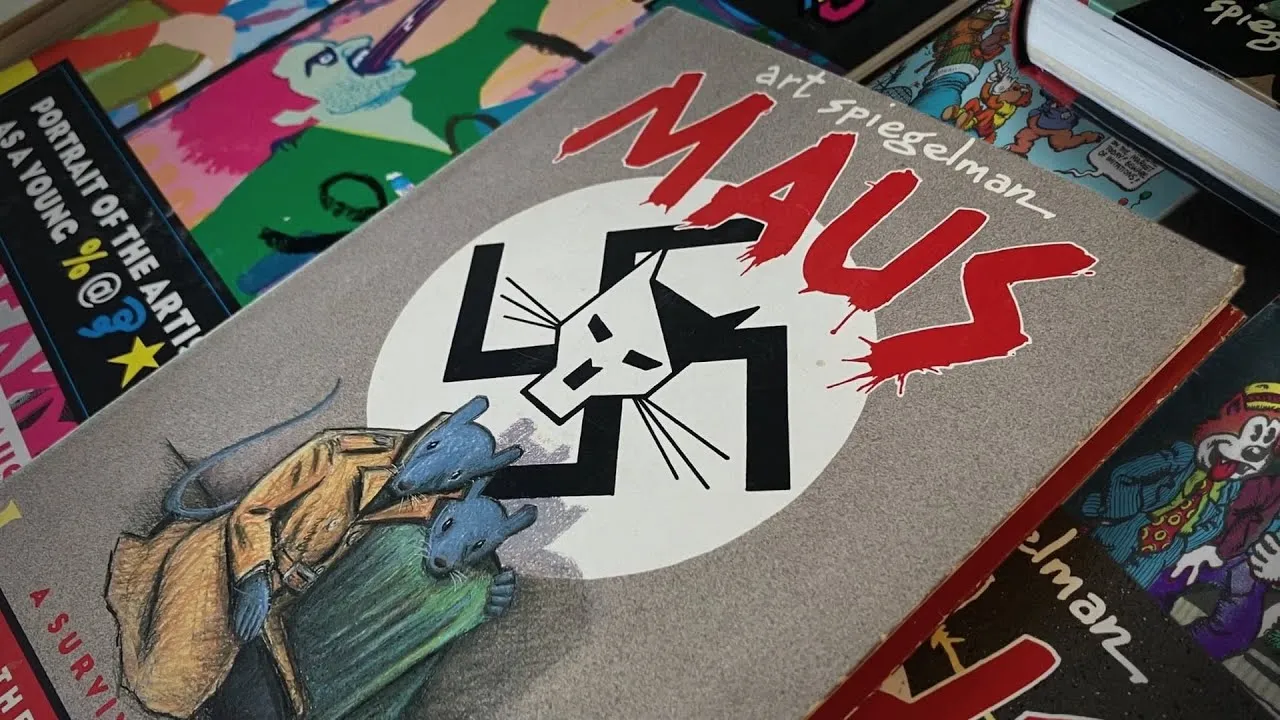
Art Spiegelman: Disaster Is My Muse opens with an intimate portrait of its subject—Spiegelman himself—narrating early Breakdowns comics that foreshadow Maus (his Pulitzer-winning graphic account of the Shoah, in which mice stand in for Jews and cats for Nazis). Premiered at DOC NYC before joining PBS’s American Masters roster, the film stakes its claim on both festival prestige and public-television gravitas.
At its core, the documentary investigates how personal calamities (a mother’s suicide, a brother’s death) and collective cataclysms (the Holocaust, 9/11) have been transmuted into Spiegelman’s visual lexicon.
Seated across from peers like Robert Crumb, he revisits those early xeroxed comix days in San Francisco—a world of anarchic panels and Tiny Nemo-sized rebellions. Yet the focus remains on Maus’s long shadow, which Spiegelman can neither outrun nor entirely embrace.
Here, disaster functions as muse (hence the title), shaping stories with brutal candor and occasional levity (hello, Garbage Pail Kids). The film’s immediacy lies in that tension: an artist both defined by and refracted through trauma. It lingers. (And we sense—despite the weighty subject matter—a sly humor in Spiegelman’s self-deprecating asides, reminding us that even the darkest panels can carry a spark of wit.)
Forged by Trauma and Ink
Art Spiegelman’s artistic identity begins with a lineage marked by survival and loss. His parents, Holocaust refugees, carried memories that seeped into family life—an inheritance of silence and shadow. Spiegelman’s brother, who died before Art’s birth, exists as an absent presence, a phantom panel in his personal narrative. Then came his mother’s suicide during his college years—a rupture that spawned Prisoner on the Hell Planet, a raw, autobiographical comic strip that snapped open the usual boundaries of genre (and good taste).
In the early ’70s, Spiegelman plugged into San Francisco’s underground comix scene, where DIY xeroxed pamphlets and smoke-filled reading rooms formed a countercultural crucible. He swapped pencils with peers who would become legends—Robert Crumb chief among them—and inhaled absurdist humor via Mad Magazine (that gleeful guide to adult immaturity). These collaborations weren’t tidy co-productions but anarchic exchanges that birthed what one might call “comix kinetics,” a kinetic energy of form and message.
His marriage to Françoise Mouly led to the launch of Raw, a magazine that treated the comic page as an avant-garde gallery wall. There, Spiegelman experimented with page architecture and woodcut aesthetics—techniques that would later underpin Maus’s formal rigor.
Commercial prospects beckoned when he designed Topps Bubblegum cards and devised Wacky Packages—a parody of consumer culture that paid the bills and sharpened his satirical edge. It’s ironic: the very raccoon-eyed humor that skewered kitsch products would fund more serious work.
By the time he began illustrating for The New Yorker, Spiegelman had straddled two worlds: the anti-establishment ethos of underground comix and the polished corridors of mainstream publishing. That tension—outsider insider—remains palpable on-screen, as if every panel carries both a protest banner and a subway ad.
Disaster as Design
Maus functions as Spiegelman’s self-portrait in ink, where Jews skulk as anxious mice and Nazis prowl as predatory cats. This animal allegory is more than whimsy—it translates untranslatable horrors into stark, accessible iconography. Panels pulse with dual narratives: Vladek’s Holocaust recollections and Art’s struggle to channel inherited trauma. That tight interweaving feels almost choreographed—pain driving the pen.

Humor surfaces in unexpected cracks. A mouse with bulging eyes gorges on cheese even as doom looms overhead. This is what one might call “traumatographic” expression—where levity and grief collide on the same page. Pain can tickle the absurd.
Disaster propels creation here. Personal losses (a mother’s suicide, a brother never met) fuel an obsessive rigor. Then came 9/11, which birthed In the Shadow of No Towers: a visceral chronicle of urban apocalypse (Spiegelman and his daughter nearly wiped out by dust and debris). Terror becomes art. Terror becomes witness.
More recently, the film highlights fights over Maus bans—a grim echo of past book-burning. Spiegelman wears his anti-fascist stance like a badge. He splices historical memory with present-day censorship, asking: do we really learn?
And don’t overlook the playfulness. Garbage Pail Kids and Wacky Packages lurk in the background—acidic parodies of corporate culture that underwrite his more serious work. Money from bubblegum cards paid the studio lights for Raw magazine. This economy of the ironic (“guffaw funding gravitas,” if you will) gives his oeuvre a self-aware wink.
At times, one craves new revelations. And yet the film’s repetition of Maus discussions underscores an unsettling truth: trauma resists neat resolution. Spiegelman’s creative engine runs on personal and collective disasters. That’s heavy lifting.
Short sentence. Heavy resonance. In these thematic layers—autobiography, catastrophe, satire—Spiegelman emerges as both survivor and storyteller, forging art from ashes.
Frames of Reference
The film resists a simple timeline, opting instead for a “memoir montage” that weaves chronological anchors into thematic threads. It begins with Spiegelman voicing an early Breakdowns comic—an intimate invocation of origin—before skipping across decades. We see young Art sketching in 1970s San Francisco, then cut to his New Yorker workbench in modern-day Manhattan.
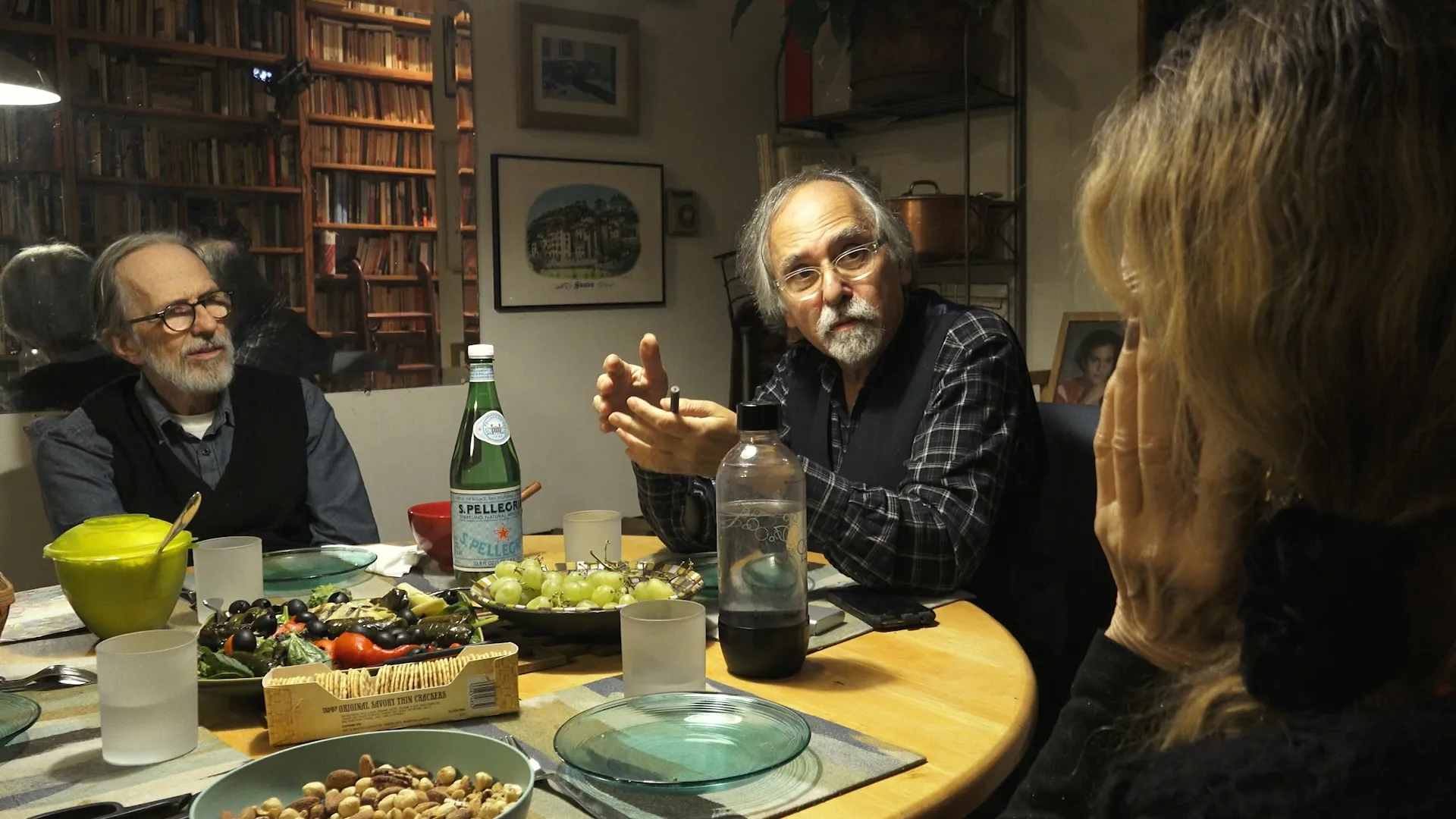
This interplay of eras—what one might call “chronocomic” editing—creates a layered narrative: history informs personal memory, which in turn reframes history. Pivotal scenes punctuate the flow. The dinner-table exchange with Robert Crumb and Aline Kominsky-Crumb serves as a living museum exhibit: peers undoing decades of subterranean comix lore over roast chicken. Then we pivot to interviews with Françoise Mouly, offering insights on editorial design, or Nadja Spiegelman, whose youthful voice refracts 9/11 trauma through filial eyes.
Rhythm matters here. Intimate anecdotes—Spiegelman recalling his mother’s last words—linger just long enough to sting. Then the pace snaps back as a scholar (say, Hillary Chute) enumerates panel-by-panel techniques. Visually, the doc stitches together archival photographs, original comic panels, and brief animations of Maus pages. These “artifacts in motion” underscore the medium’s hybridity: still art propelled by cinematic dynamism.
Short pause. That alternation—quiet reflection, academic dissection, visual flourish—keeps us alert. It mirrors Spiegelman’s own practice: disciplined structure loaded with unexpected turns. Sometimes the jumps jar; other times they feel like cognitive leaps, guiding us through trauma and creativity in equal measure. This narrative design turns the documentary itself into a graphic schema, mapping trauma onto form.
Frame by Frame in Flux
The documentary collapses static drawings into living sequences—what one might dub “panimation.” Close-ups of original Maus panels drift across the screen, each scratchboard line magnified until every groove seems to pulse with memory. Split-screen montages juxtapose early Funny Aminals strips alongside final Maus pages, suggesting a through-line from underground comix revolt to global cultural reckoning.
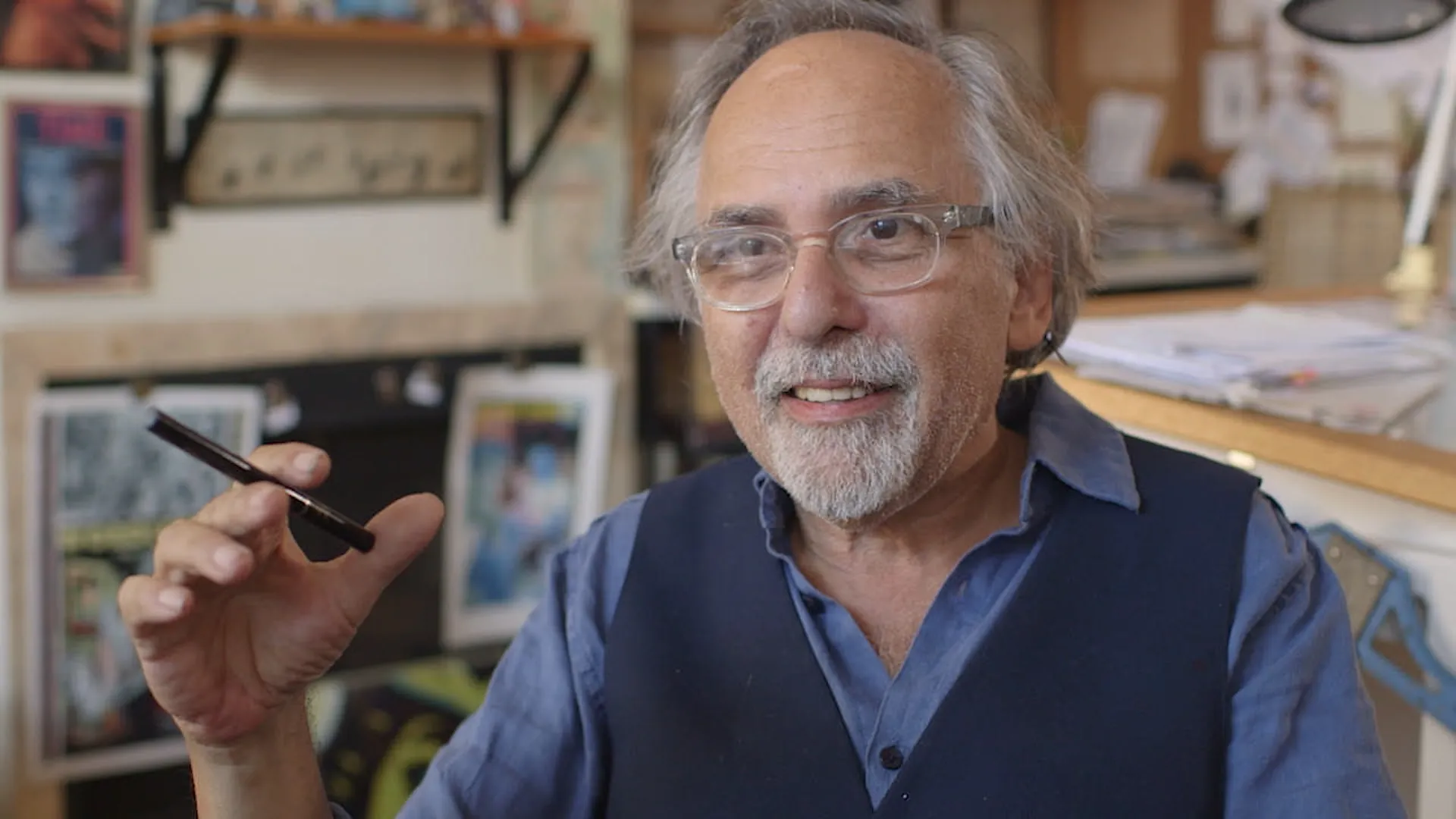
Cinematography favors a neutral, observational lens. Interview subjects (Spiegelman, Mouly, Chute) sit against unadorned backdrops, their words given weight by stillness. Yet transitions between past and present visuals—archival photographs dissolving into modern-day footage—create a temporal ripple. It’s as if time itself were animated.
Editing rhythms echo the artist’s process: slow pans over pencil sketches segue into rapid-fire cuts of published pages. These “cut-and-paste edits” (a cheeky nod to comix collaging) underscore how memory is assembled—fragment by fragment.
Sound design remains lean. Ambient noise—a page turning, a graphite pencil dragging—inserts tactile intimacy. Sparse musical cues (a distant violin or low-register hum) underscore moments of political urgency (book bans, anti-fascist rallies). The absence of an intrusive score allows Spiegelman’s own voice-over to register more purely, while supplementary experts punctuate with academic gravitas. Short sentence. Powerful resonance.
At times, the film’s visual flair feels self-conscious—too eager to celebrate the graphic medium in motion. But more often, these techniques illuminate the symbiosis between comic art and documentary cinema, showing how both forms can distill historical trauma into sharable, visceral experience. Ink meets image. Memory meets medium.
Voicing the Unspoken
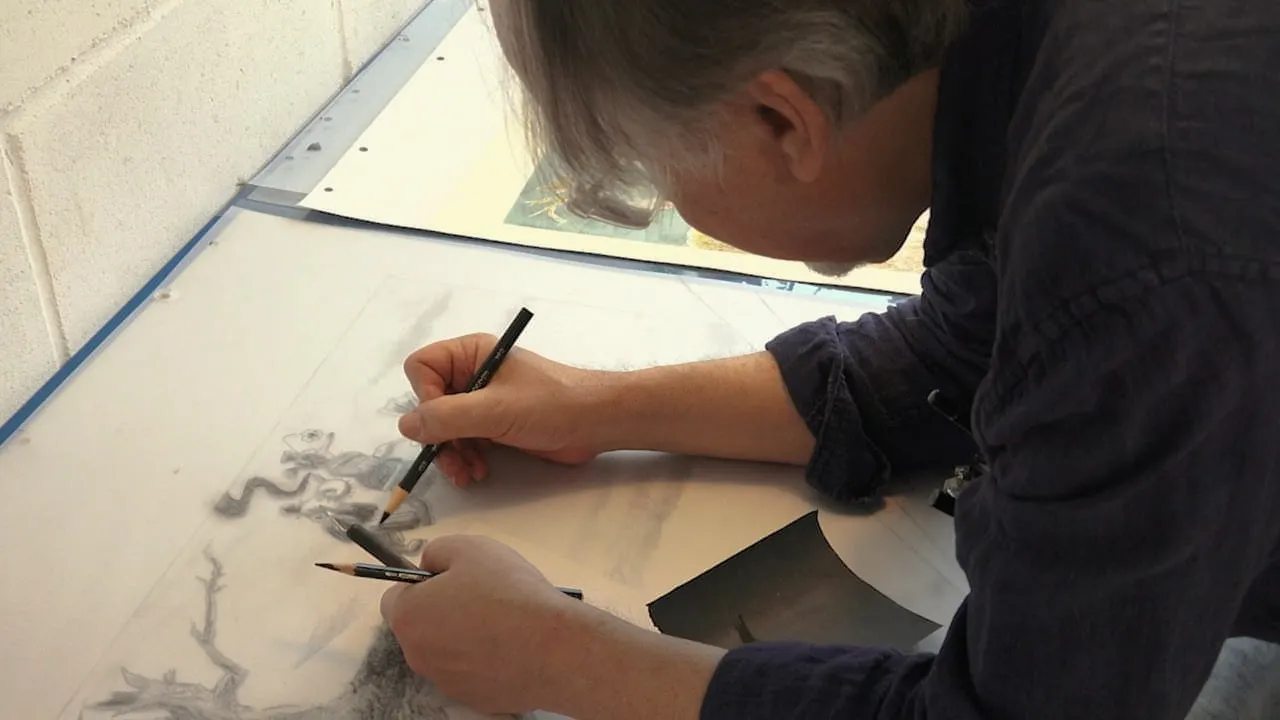
Spiegelman’s own reflections carry equal parts technical rigor and raw feeling. He demonstrates his scratchboard method with the precision of a surgeon (woodcuts by another name), then pauses to describe the knot in his chest when recounting his mother’s final days.
Françoise Mouly offers a crash course in editorial alchemy, detailing how she shaped Raw’s eclectic layout into a coherent gallery of subversion. Her calm delivery belies the revolutionary impulse behind each flip of the page.
Hillary Chute unpacks Maus panel by panel—what might be dubbed “deep-comix criticism”—illuminating how spatial arrangement amplifies emotional gravity. J. Hoberman situates Spiegelman in the pantheon of cultural icons: a graphic witness whose influence stretches beyond comics into the very definition of narrative art.
Neil Gaiman, sounding improbably chipper, traces Funny Aminals back to his own early fascination with anthropomorphism—a neat reminder that even groundbreaking work can begin as a curious three-page skit. Nadja Spiegelman steps into the frame, recounting how dust and sirens became ink on a page during 9/11’s chaos. Her youthful voice lends the project an urgent, living pulse.
A closing montage of emerging graphic novelists—each signing a book for Spiegelman—feels equal parts homage and promise: his trauma-driven muse spawning fresh voices. Short observation. Legacy in motion.
Cultural Aftershocks
Spiegelman didn’t merely popularize a narrative form; he held up a mirror to history’s darkest chapters, demanding that comics earn a seat at the intellectual table. His fusion of graphic realism and memoir sparked a quiet revolution in storytelling, prompting successors to tackle weighty subjects with pen and panel.
Countless graphic novelists trace a direct line to Maus, crediting its unflinching portrayal of survival as the moment they saw comics could carry moral gravity. This documentary arrives amid renewed battles over banned books and fading historical memory. On public television, it challenges viewers to confront censorship’s echoes of the past.
One wonders how unfolding crises—climate upheaval, rising authoritarianism—will fuel Spiegelman’s future projects. Will he chronicle new disasters with the same blend of wit and rigor? Maus remains an anti-fascist icon, a vivid rallying cry against erasure. Its pages still pulse with urgency, reminding us that memory survives through art.
Full Credits
Directors: Molly Bernstein, Philip Dolin
Producers: Molly Bernstein, Philip Dolin, Sam Jinishian, Alicia Sams
Editor: Molly Bernstein
Composer: Michael Leonhart
Cast: Art Spiegelman (as himself), Françoise Mouly, Robert Crumb, Aline Kominsky-Crumb, Marjane Satrapi, Joe Sacco, Hillary Chute, Emil Ferris, Bill Griffith, Jerry Craft, Gary Panter, Charles Burns, Dash Spiegelman, Nadja Spiegelman
The Review
Art Spiegelman: Disaster Is My Muse
Art Spiegelman: Disaster Is My Muse offers a compelling, if occasionally familiar, look at a living legend. It animates his graphic work with quiet rigor and humor, reminding us why Maus endures as a cultural milestone. Its pacing sometimes lingers on repeated reflections, yet the blend of technical insight and emotional honesty powers the film.
PROS
- Engaging fusion of animated panels and candid interviews
- Illuminates Spiegelman’s artistic methods with clarity
- Dry humor offers relief amid heavy subject matter
- Timely interrogation of censorship and historical memory
CONS
- Repeated discussions of Maus can feel familiar
- Pacing occasionally stalls on biographical detail
- Limited exploration of later works beyond Maus