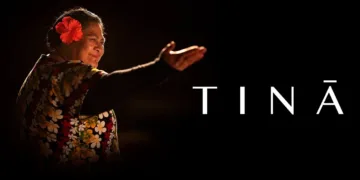




















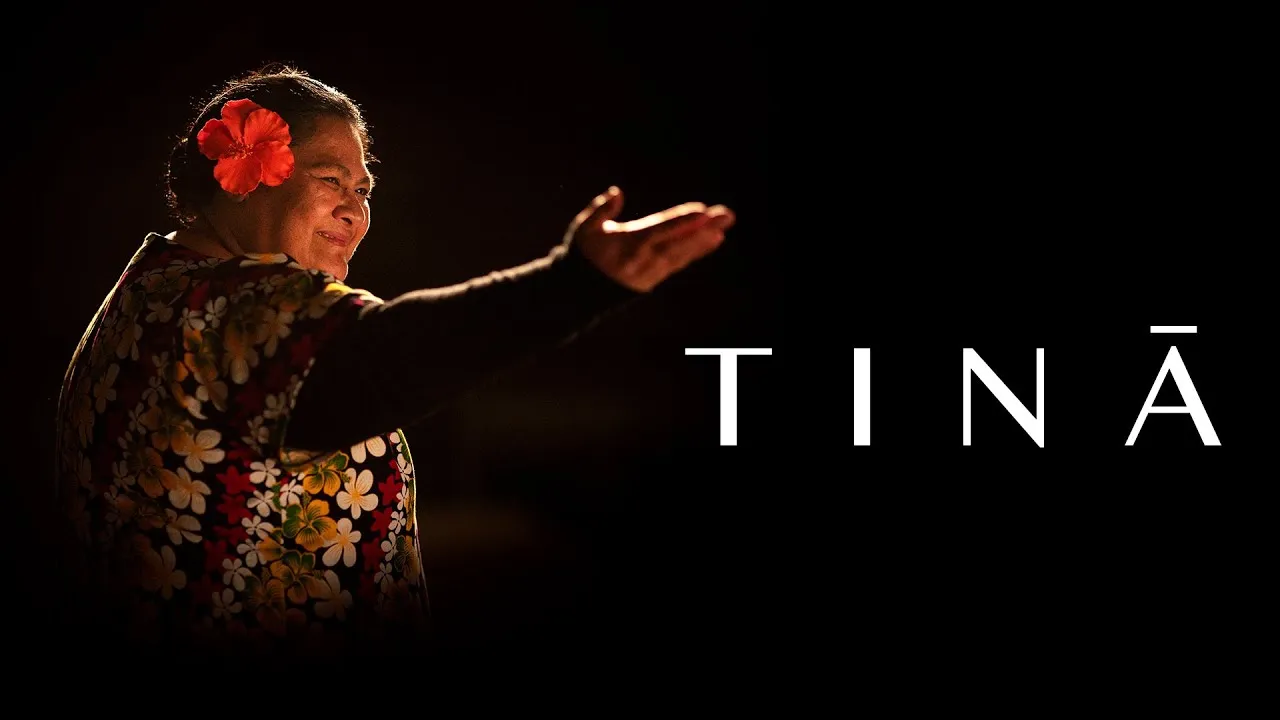

Tinā, the 2025 drama–music debut from writer-director Miki Magasiva, arrives as both elegy and anthem. Set in the bruised aftermath of the February 22, 2011 Christchurch earthquake, it follows Mareta Percival, a Samoan New Zealander whose daughter’s death has left her life suspended between silence and memory. Three years on, Mareta tentatively steps back into the classroom of an elite private school, her grief masked by stern resolve and the wary glint of someone who has learned to carry sorrow like a sacred weight.
From this fragile reopening emerges the film’s central tension: the collision of a sceptical institution with Mareta’s conviction that music can tether fractured souls. Her proposal to form a choir is more than pedagogical innovation; it is an act of defiance against the void that threatens to swallow her whole. Magasiva’s camera favors human-scale moments—warm, unpolished frames that let ambient light settle on worn faces—while humour surfaces in brief, almost accidental flickers of relief.
Music in Tinā pulses like a lifeline. It becomes at once communal ritual and personal reckoning, a bridge between cultures and a means to reclaim hope one note at a time.
Weaving Cathedrals of Sound
From the very first tremor of the Christchurch quake, Mareta Percival’s world splinters and we are thrown into her last moments with Lanita—an elegy in dust and anguish. A cut then propels us three years forward: Mareta, adrift and relying on social benefits, has exchanged the warmth of her previous classroom for a mute existence. Time, in Magasiva’s design, is both healer and saboteur, folding past into present with uneasy grace.
Enter Sio, her pragmatic nephew, bearing an invitation wrapped in hope: a substitute post at St Francis. In that sterile interview room, her Samoan cadence collides with curator-like administrators, their clipped politeness laced with scepticism.
In the heartbeat that follows, Mareta proposes a choir. At first her suggestion is treated like a ghost song—heard but invisible—yet gradually, like a seed cracking through concrete, approval sprouts. Rehearsals become rites: initial dissonance gives way to fragile harmony, though undercurrents persist—Sophie’s silent sorrow, Rona’s gentle tug back to familiar territory, and a deputy principal’s low-grade antagonism.
When the final performance arrives, stakes are measured by breath and broken hearts rather than trophies. Mareta stands before voices she has nurtured, grief colliding with communal resonance. In the aftermath, her pupils’ faces catch the light of possibility, and though neither grief nor hope is fully resolved, both endure. Grief’s echo lingers in empty corridors, yet the choir’s rising chord suggests that broken spirits can learn to breathe again.
Echoes of the Self in Song
Anapela Polata’ivao’s Mareta Percival moves through every frame like a ghost seeking form. At first, she is a widow whose speech carries the weight of unanswered questions—each pause a quiet chamber where grief reverberates. By the time she stands before her fledgling choir, an ember of defiance glows in her eyes.
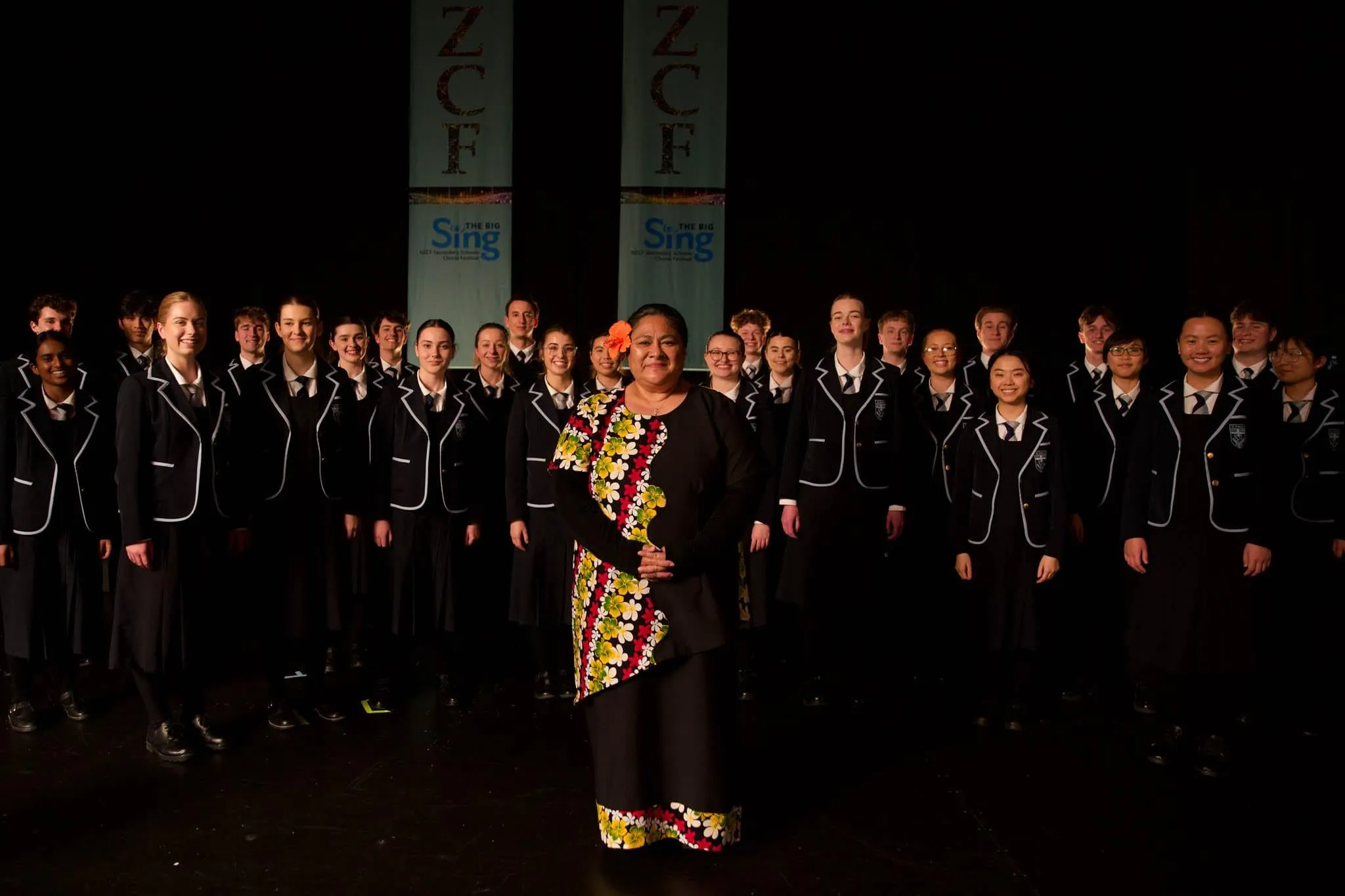
That transformation—from shell-shocked mourner to guiding flame—feels both inevitable and uncanny, as if she has discovered purpose in the very wound that threatened to consume her. In moments of stillness, Polata’ivao lets silence speak; in moments of fire, she channels every breath into a resolve that is almost brutal in its beauty. Her protest against “proper” attire, delivered with a single line, becomes a philosophical statement on identity: formality need not mask authenticity.
Antonia Robinson’s Sophie is Mareta’s mirror-image in miniature: wounded pride concealed beneath rebellion. She greets each rehearsal with skepticism that slowly unravels into revelation. When Sophie finally surrenders to a note, her tears are not mere sentiment; they are the tangible proof that vulnerability can be a radical act. Their uneasy alliance shifts, cracks, and then solidifies—teacher and student bound by shared rupture.
Beulah Koale’s Sio offers pragmatic tenderness, a kind of moral compass that never insists on easy answers. Nicole Whippy’s Rona embodies longing for the familiar, the tug between safety and growth. Jamie Irvine’s deputy principal stands as institutional inertia, a stark foil whose rigidity accentuates Mareta’s fluid humanity.
Among the students, Mei-Ling’s shy curiosity about Samoan phrases and Anthony’s ironic humor provide fleeting glimmers of individuality. Yet it is the church choir—those unseen voices offscreen—that serve as spiritual ballast: a reminder that community can bear the weight of loss with a hymn. The headmaster and parents hover on the periphery, their polite doubts reflecting society’s hesitation to embrace the unknown.
In this ensemble, each performer becomes an existential note seeking harmony. Their interactions pose questions no competition can answer: Can we find ourselves in the spaces between sounds? Does grief demand isolation, or can it be shared, transfigured by voice? Here, every refrain carries its own shadow, and in that interplay, Tinā sings its most haunting truth.
Melodies of Mourning and Belonging
Tinā treats grief as a silent companion, its weight hidden in Mareta’s deliberate stillness. Early scenes sketch the ache of long-term trauma: a gaze lingering on empty pews, a choir rehearsal trembling with unspoken sorrow. The act of song-making becomes a ritual of repair, an alchemy that transmutes loss into resonance. Collective mourning pulses through harmonies; personal wounds find space within a communal heartbeat.
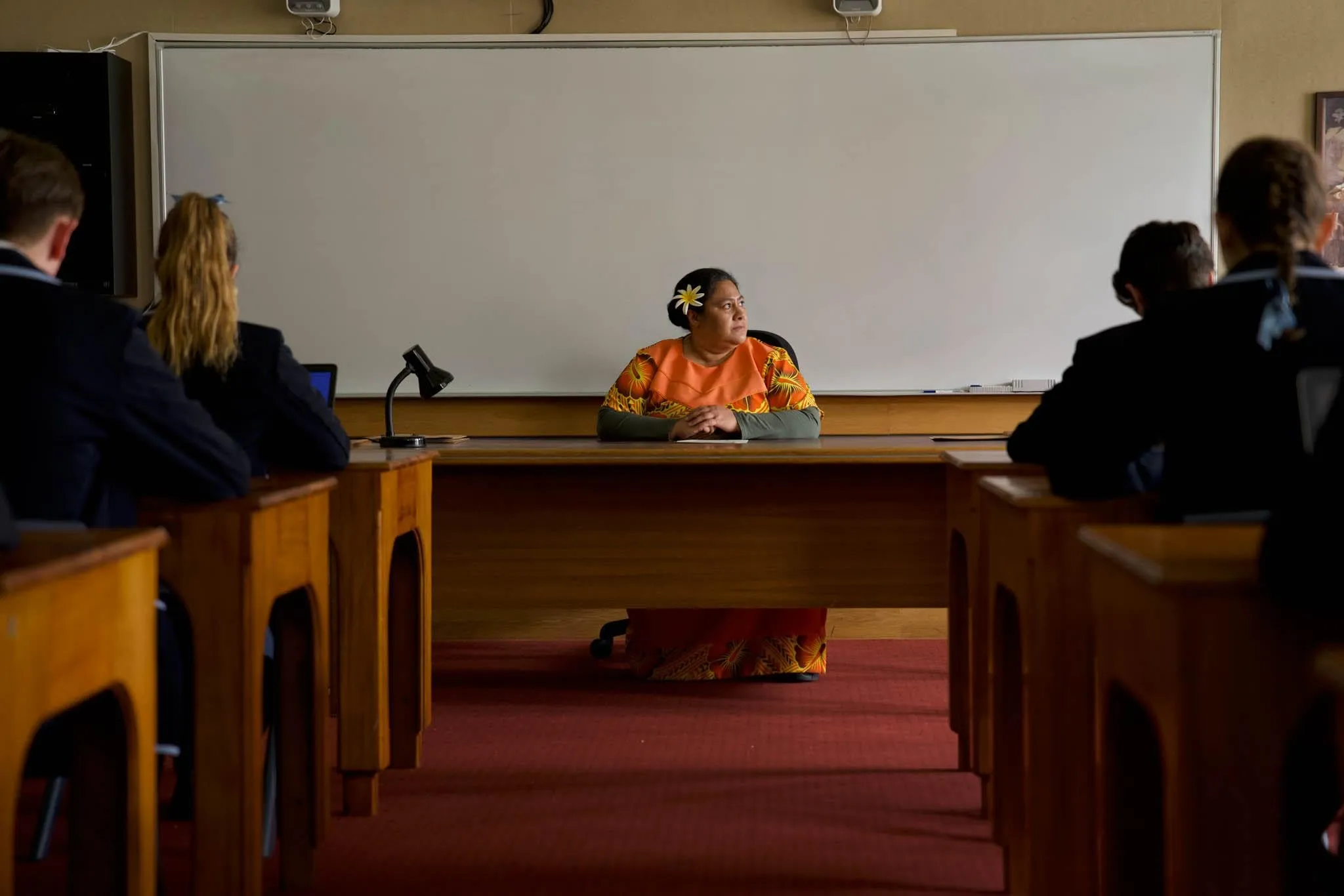
Music in this film speaks an untranslatable tongue—notes become syllables of shared existence. When voices rise in unison, they form a fragile citadel against isolation. Each rehearsal enacts solidarity, each chord threads individuals into a living whole. In these moments, the choir stands as a microcosm where vulnerability transforms into boldness.
Quiet Samoan traditions weave through the narrative. Church hymns echo ancestral faith, Pasifika melodies surface like memories carried across oceans. Mareta’s refusal to adopt Western formalwear—“This is formal,” she says—cracks the veneer of privilege. It asserts identity’s right to resist erasure. There is no token use of culture here; these elements feel embedded in the story’s marrow, grounding every scene in authentic diasporic tensions.
Beyond the rehearsal room’s door, social hierarchies linger. St. Francis’s polished corridors hint at privilege, yet Mareta’s methods reveal education’s potential to awaken rather than hollow the spirit. Fleeting clashes—policy versus intuition—suggest that schooling can either sustain or suffocate human curiosity. In that charged space between order and chaos, Tinā asks us to consider whether art alone can mend the fissures carved by loss and class alike.
Frames of Light and Shadow
In his first feature, Miki Magasiva wears his sincerity like a prayer shawl—every choice seems an homage to maternal sacrifice. He threads moments of levity through the weight of loss, allowing laughter to flicker briefly before sorrow gathers again. This delicate balance suggests an understanding that grief and joy inhabit the same breath.
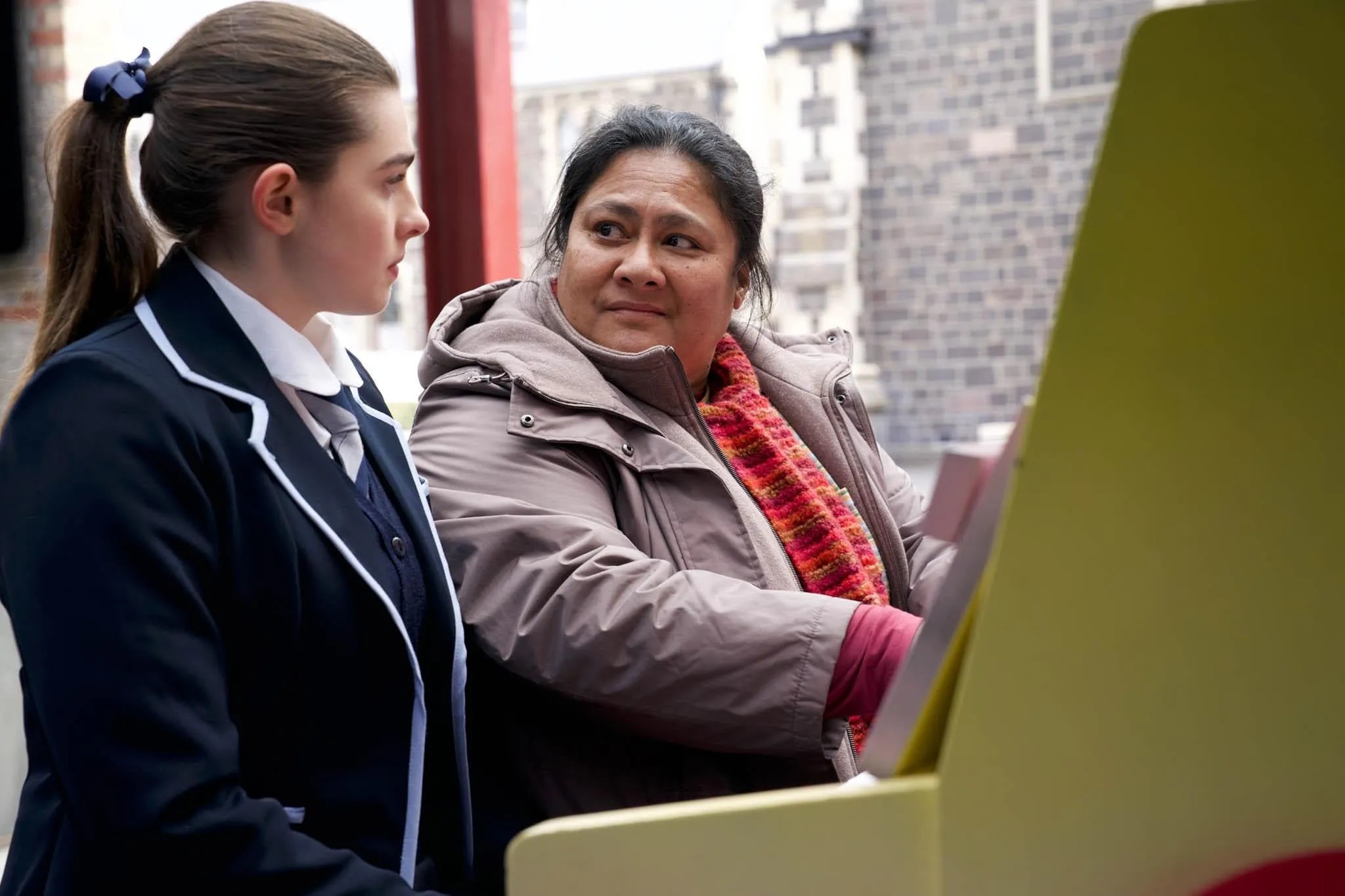
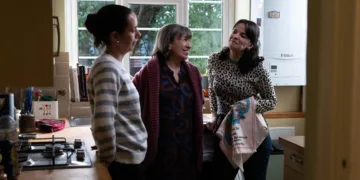
Andrew McGeorge’s lens bathes the world in a warm, golden glow. Classrooms feel lived-in, corridors hum with whispered memories, and close-ups linger on faces as though each wrinkle or tear might reveal an unspoken truth. The camera doesn’t soar; it hovers at human height, inviting us into Mareta’s quiet orbit.
Montages of choir rehearsal unfold like a ritual, each cut a step toward collective harmony. When voices coalesce, editing pulses with the rhythm of breath. Yet, in the film’s second act, certain narrative tributaries stall—a subplot here, a scene there—reminding us that even the most earnest journey can falter under its own weight.
Despite these uneven currents, Magasiva maintains an intimate scale, resisting the temptation of sweeping melodrama. Scenes shift from church pews to suburban homes with a natural ease, as if guided by the choir’s own unspoken score. Occasionally, one senses the film hesitating—wondering whether to press forward or simply hold its silence.
Sonic Cathedrals of Grief and Grace
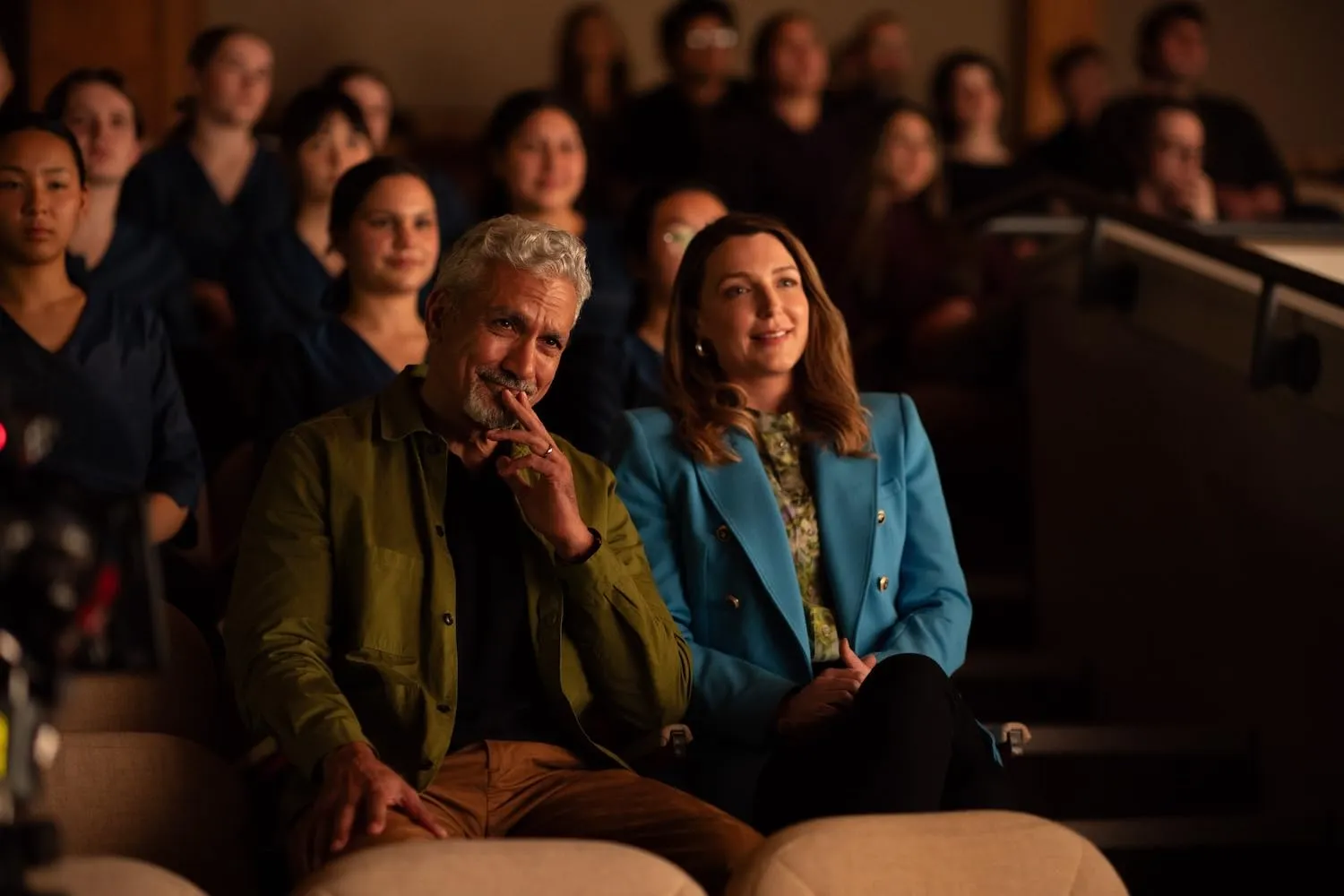
Live-recorded choir scenes in Tinā feel less like polished performances and more like ritual exorcisms—raw voices rising from fragile throats, each unsteady note an act of bearing witness to loss. The mid-film church service, with its choral swell, drapes the screen in a fugue of collective mourning; the final school performance, by contrast, shatters the hush with an urgency that almost startles the ear.
Here, traditional Samoan percussion and log drums intertwine with European choral harmonies. It’s a convergence of worldly architectures—ancestral rhythms carving out space within formal Western structures, each melody confessing its own diaspora of longing. The selection of familiar Samoan songs acts as an existential compass for displaced souls, pointing ever back to the home they carry within.
Ambient sounds—corridor footsteps, the hush of hymnals closing—anchor the diegetic world in subtle realism. Magasiva’s original underscore is nearly absent, surfacing only to cradle emotional cadences, like a heartbeat emerging from silence. And then silence itself becomes a tool: a pregnant pause when grief lingers too close, when every breath feels like an aftershock.
Crescendos align with moments of revelation, but it is in the interstices—the spaces between notes—where Tinā’s true resonance lives. In those quiet margins, we confront the ontological question: Can art restore what absence has claimed?
Resonant Reverberations
Tinā’s emotional core strikes without artifice—tears emerge as an echo of genuine loss rather than a forced crescendo. The film earns its moments of release through careful buildup, allowing grief to breathe before a single note breaks the silence.

Anapela Polata’ivao anchors the piece with a presence that feels both fragile and indomitable, while Samoan hymns and choral arrangements root the narrative in authentic cultural soil. Music here is more than accompaniment; it propels character and theme with an almost mystical force.
Yet there are stretches where the momentum falters: subsidiary storylines drift without full shape, and the deputy principal remains a flat shadow against Mareta’s vividness. Still, these missteps scarcely dim the overall glow.
As a rare Pasifika gaze within New Zealand cinema, Tinā honors the sacrifice of migrant parents and the continuing quest for belonging. For those drawn to dramas woven from cultural threads and human vulnerability, this film offers a haunting echo of hope amid sorrow.
Full Credits
Director: Miki Magasiva
Writers: Miki Magasiva, Mario Gaoa
Producers: Miki Magasiva, Dan Higgins, Mario Gaoa
Executive Producers: Jamie Hilton, Victoria Dabbs
Cast: Anapela Polataivao, Antonia Robinson, Beulah Koale, Nicole Whippy, Dalip Sondhi, Jamie Irvine, Alison Bruce, Tania Nolan, Matthew Chamberlain, Zac O’Meagher, Talia Pua, Caleb Nazzer
Director of Photography (Cinematographer): Andrew McGeorge
Editor: Luke Haigh
Composer: Sebastien Pan
The Review
Tinā
Ultimately, Tinā is a quietly powerful testament to resilience, where music becomes both balm and crucible for grief. Anchored by Polata’ivao’s fiercely human performance and steeped in genuine Samoan tradition, it transcends familiar underdog tropes—despite occasional narrative lulls—to deliver an affecting portrait of loss, community, and the fragile hope that binds us.
PROS
- Anapela Polata’ivao’s deeply felt lead performance
- Authentic integration of Samoan culture and music
- Music-driven narrative that conveys emotion organically
- Warm, intimate cinematography that captures subtle moments
- Choir scenes that feel alive and unpolished
CONS
- Occasional pacing lulls in the second act
- Secondary characters receive limited development
- Antagonist remains somewhat one-dimensional