















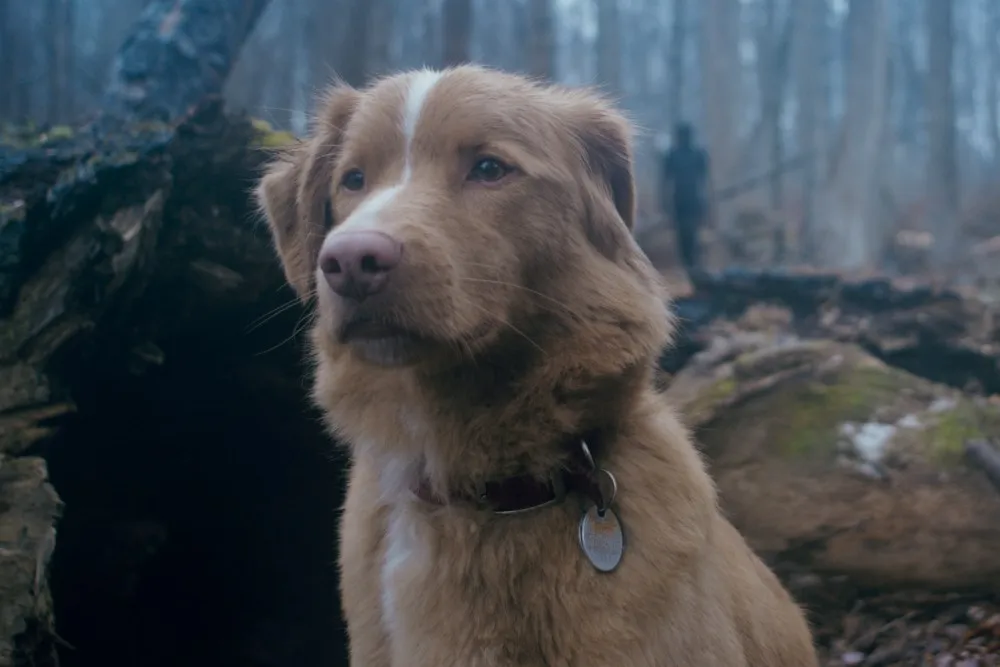

Good Boy marks the feature debut of Ben Leonberg, who stages a classic haunted‑house scare through the unblinking gaze of Indy, a well‑trained retriever with star power rivaling any human lead. The premise is deliciously simple: a secluded country cabin, an abandoned family home steeped in whispered rumors, and a spectral presence that only a dog can perceive.
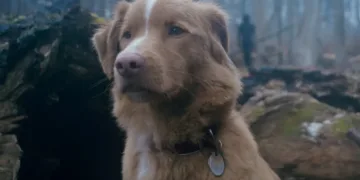
Indy (playing himself) shoulders the film’s emotional weight, his expressive dark eyes and subtle whimpers guiding us into that liminal space between loyalty and fear. Shane Jensen portrays Todd, the ailing owner fleeing to his grandfather’s dusty retreat in search of peace (or at least a change of scenery). Arielle Friedman’s Vera supplies cautious human foil, while genre veteran Larry Fessenden appears as Grandpa in fleeting flashbacks and old home movies.
Premiered in SXSW’s Midnighter program in March 2025, Good Boy clocks in at a brisk 73 minutes—just enough time to ratchet tension without overstaying its welcome. Leonberg’s choice to film at ground level (what one might cheekily call “pov‑paw cinema”) traps us in Indy’s senses, where every shadow and creak carries urgent meaning. The result is an eerie blend of classical horror and tender portraiture of the bond between human and hound.
Tethered to Fear: Narrative Mechanics and Character Bonds
Todd’s sudden collapse (a medical crisis that haunts him more persistently than any ghost) propels him and Indy to a crumbling family cabin. His decision feels like a classic retreat into seclusion—think post‑industrial exiles fleeing city decay—yet this isolation courts dread rather than solace. Vera’s urgent pleas ring with ancestral memory: she warns of tragedies etched into these weather‑worn walls. Todd ignores her.

Those opening moments frame the cabin as a relic of generational secrets, its silent corridors pregnant with bygone sorrow. By filtering every event through Indy’s senses, the film obliges us to question human exceptionalism. Indy’s head tilts become interpretive gestures, barking punctuates tension (and yes, a well‑timed woof can eclipse many a jump‑scare). Early in the film, his stiff posture at the threshold signals uncanny disturbance. From this vantage, we grasp how much of horror hinges on perception—and on what we choose to ignore.
Also Read




Spectral glimpses—a ghost dog weaving between trees, indistinct shadows brushing against broken windowpanes—emerge with increasing frequency. Indy’s solitary vigil contrasts sharply with Todd’s rationalizations; he mutters “Probably the wind,” even as the air grows impossibly still. These sequences invoke modern anxieties: our tendency to dismiss warnings until catastrophe is unavoidable.
In the final confrontation, Indy squares off against an unseen terror—a climactic moment that transforms canine courage into allegory. Todd’s faltering grip on reality heightens the stakes: his illness and the haunting merge into a single, unnameable force. In the aftermath, Indy’s loyalty endures, a silent vow etched into the film’s fading frames. The unsaid resonates.
Through the Hound’s Lens: Cinematic Techniques & Visual Perspective
Leonberg immerses us in “paw’s‑eye realness,” placing the camera at Indy’s shoulder height so that every wooden beam and scuttling shadow becomes a potential threat. These eye‑level shots invert the usual human gaze, challenging the anthropocentric illusion of control (an echo of Foucault’s panopticon, if you squint). When a human appears, they loom awkwardly at the fringes—an effect both unsettling and slyly humorous, as if humanity itself is intruding on canine territory.

Empty doorways and cavernous hallways are framed like silent invitations to phantom horrors. Warm lamplight in the living room offers false comfort, while slit‑thin shafts of moonlight carve icy patterns across floorboards. This chiaroscuro interplay recalls German Expressionism’s moral shadows—suggesting that fear isn’t just in the dark, but in the spaces we willingly leave unlit.
A languid tracking shot follows Indy’s ear‑flicks and head tilts, granting agency to canine curiosity. Then, without warning, the frame snaps to absolute blackness—what might be called a “blink cut”—leaving viewers momentarily adrift in visual void. It’s a clever reversal of jump‑scare fatigue: scarce yet devastating when deployed.
Todd and Vera are often glimpsed at waist‑level or through half‑closed doors, their faces hidden. This technique transforms humans into abstract shapes, reinforcing the film’s thesis: we’re not always the protagonists of our own stories. By minimizing human visibility, Good Boy elevates Indy’s perspective from novelty to necessity.
Echoes of the Unseen: Sound Design & Atmosphere
Rain hammers the roof in staccato patterns, each drop a reminder of isolation (think rural homesteads under siege by nature and memory). Floorboards groan like old guilt, wind whistles through broken panes as if laughing at human fragility. Distant echoes—whiffs of a phantom footstep—suggest presences lurking just out of sight, evoking wartime bunker paranoia where every creak could spell disaster.
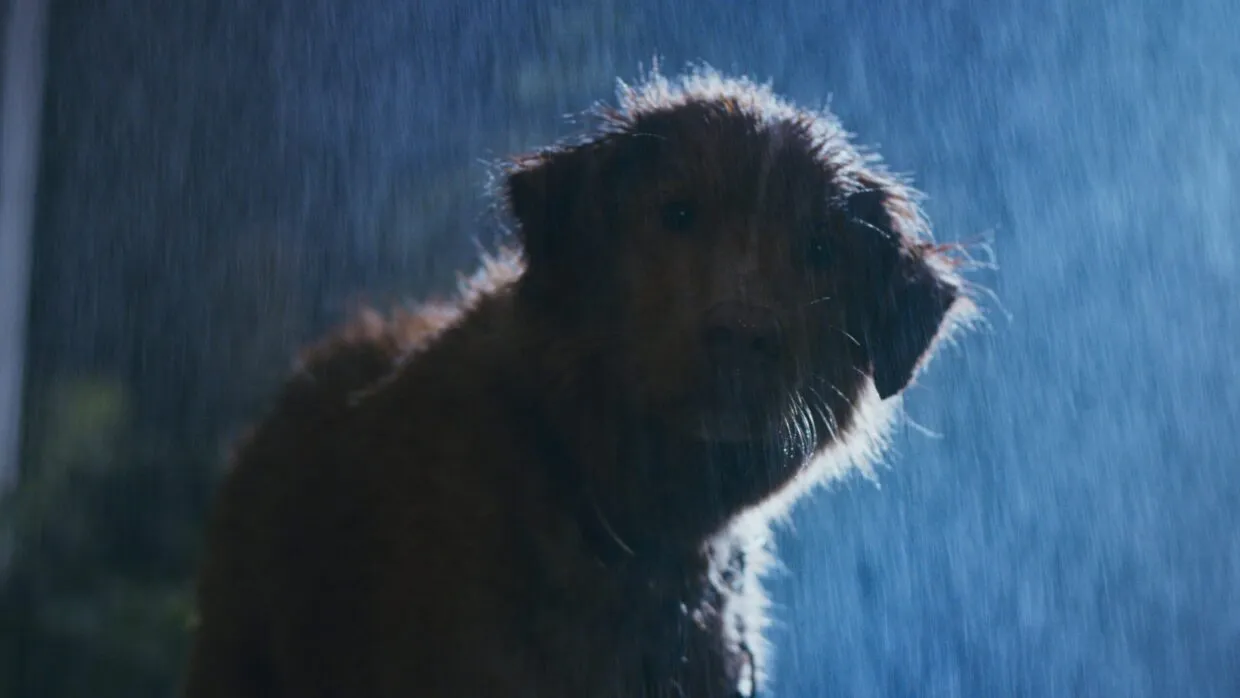
Indy’s whimpers and sharp barks function as emotional barometers. A single, panicked yelp carries more narrative weight than any line of dialogue. Growls resonate in the hollow of our chest, literally echoing our own fight‑or‑flight impulses.
Music appears sparingly, like a cautious whisper in a cathedral. Sparse piano notes underscore key moments, neither imposing nor intrusive, granting authenticity to the unfolding dread. When music vanishes altogether, realism spikes—no soundtrack can mask the raw terror of unseen threats.
Jump scares arrive with surgical precision: a sudden orchestral crescendo aligned perfectly with a visual slash to black. Subterranean layers of hushed, ghostly murmurs—what we might call “spectral undertones”—sustain tension between shocks, turning each silence into a potential cage.
Through sonic chiaroscuro, Good Boy transforms its soundtrack into a character in its own right—one that speaks volumes in the language of fear.
Performing Loyalty: Canine & Human Collaborations
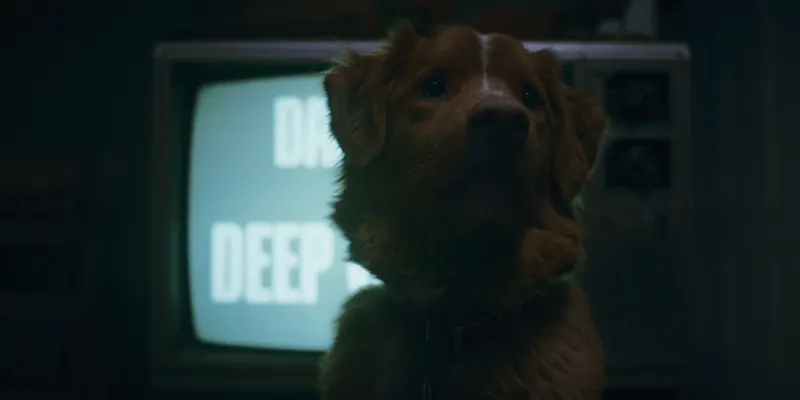
Leonberg and Fischer’s three‑year training project resembles a secret society of animal whisperers. Through positive reinforcement and finely tuned gestures, Indy learns to express terror without barking into cliché. A subtle ear pivot becomes alarm; a slow step backward, dread. These micro‑movements forge what one might dub “ethodrama”—drama derived from instinctual animal behavior—lending authenticity that transcends novelty.
Jensen inhabits frailty with disciplined restraint. His hunched posture and halting gait mirror chronic illness, as if medical history were stamped into muscle memory. Dialogue is minimal, his voice low‑key—an intentional choice that amplifies Indy’s vocal counterpoints. In scenes of panic, Jensen doesn’t overplay anguish; he offers a quiet foil to canine urgency.
Friedman’s Vera serves as the human moral compass, her off‑screen pleas grounding the film’s speculative leaps. Her concern reminds viewers that bonds extend beyond pack instinct. Fessenden’s cameo—mere seconds of screen time—carries hefty genre gravitas, like inviting a gothic ancestor to dinner. His presence nods to horror traditions (veteran blessing, if you will) without stealing light from Indy’s spotlight.
By largely obscuring human faces, Leonberg challenges hierarchical storytelling: the dog’s gaze dictates our empathy. Coaching methods—reward‑driven framing of authentic startle responses—risk appearing manipulative, yet yield moments of genuine horror. In a twist, the very artifice of training becomes part of the film’s fabric, prompting reflection on how humans craft narratives around non‑human subjects.
Sentinel of the Soul: Themes, Allegory & Emotional Resonance
Indy’s steadfast vigilance turns each haunting moment into an act of devotion. When spectral eyes glint in the dark, his bark feels like an oath—an unspoken promise to protect. This “pawlagory” of faith reminds us that true courage often emerges from love rather than logic.
A dog’s acute senses become a mirror for human anxieties about unseen threats—pandemics, social unrest, ecological collapse. Indy’s refusal to ignore distant creaks parallels communities that raise alarms before institutions catch on. In that sense, his growls echo historical sentinels: trench‑dogs in World War I, trained to detect poison gas before equipment could.
The cabin serves as refuge and prison. Its boarded windows shelter health‑scarred Todd, yet walls close in on both man and mutt. This duo’s dependency on one another speaks to modern loneliness—senior citizens isolated by illness, urbanites atomized by screens. Within these walls, companionship becomes survival.
By relegating humans to peripheral silhouettes, the film invites us into an animal’s emotional interior. We feel vulnerability in every hesitant pawstep. Such perspective‑shifting has cultural impact: it challenges cinematic hierarchies and may spur new works that privilege nonhuman voices in narratives of fear and hope.
Rhythm of Fear: Pacing, Tension & Genre Engagement
At a lean 73 minutes, Good Boy trims any excess narrative fat. Scenes unfurl with brisk efficiency—there’s no time for meandering subplots—so tension remains taut from first frame to final cut.
Moments of near‑silence (a distant drip, Indy’s cautious sniff) are interspersed with jolts of frantic motion. One instant, the camera lingers on an empty doorway; the next, a sudden shuffle in darkness. This ebb and flow mirrors our own breathing under threat—slow draws of anticipation, then quick gasps of surprise.
Ghostly silhouettes, toy squeaks that echo like banshee cries, faux exits that lure Indy (and us) into false security: these devices feel well‑worn yet fresh when filtered through a dog’s perspective. What could be a predictable scare gains new resonance because Indy refuses to obey a script he cannot read.
Emotional stakes anchor each scare. Indy’s loyalty transforms whatever lurks in the shadows into something personal—a betrayal of trust, rather than a cheap thrill. The result is horror infused with genuine pathos, reminding us that terror carries weight only when we care who faces it.
Full Credits
Director: Ben Leonberg
Writers: Ben Leonberg, Alex Cannon
Producers: Ben Leonberg, Kari Fischer
Cast: Indy (as himself), Shane Jensen (Todd), Arielle Friedman (Vera), Larry Fessenden (Grandfather), Stuart Rudin (Mr. Downs), Anya Krawcheck
Director of Photography (Cinematographer): Wade Grebnoel
Editor: Curtis Roberts
Composer: Sam Boase-Miller
The Review
Good Boy
Good Boy transforms a simple haunted‑house premise into an affecting exploration of loyalty and fear. Indy’s perspective revitalizes familiar tropes, marrying authentic canine emotion with atmospheric dread. Leonberg’s tight pacing and inventive framing grant new urgency to the genre. While human figures remain peripheral, this focus sharpens the film’s emotional core. At 73 minutes, it never lingers unnecessarily. Good Boy proves that horror can thrive when told through nonhuman eyes, delivering both chills and heartfelt resonance.
PROS
- Immersive canine POV heightens suspense
- Lean 73‑minute runtime sustains momentum
- Indy’s expressive performance anchors emotion
- Atmospheric lighting casts potent shadows
- Sound design turns silence into dread
CONS
- Human characters remain somewhat underdefined
- Supernatural rules feel ambiguous at times
- Limited human viewpoint narrows narrative scope
- Third act pacing can feel abrupt