































The survival reality genre, ever searching for fresh structural variations, presents “Extracted.” On the surface, it offers familiar terrain: individuals deposited into a demanding wilderness, tasked with weathering the elements and outlasting their competitors. Contestants, designated “survivalists,” face the anticipated trials of securing shelter, sustenance, and warmth against a challenging natural backdrop. The objective appears straightforward – endure longer than anyone else to claim a $250,000 prize.
However, “Extracted” introduces a significant deviation from the standard template. The contestants are not entirely alone in their struggle. Their family members or friends are gathered in a separate, comfortable “Headquarters,” observing the wilderness ordeal via live feeds. This isn’t passive viewership; the HQ cohort actively participates. They make critical choices regarding supply drops for the survivalists.
More pointedly, they hold the power to unilaterally remove their loved one from the game using an “extract” button. This structural conceit sets up a compelling, if potentially volatile, storytelling experiment, splitting the narrative focus between raw environmental challenge and the complex interpersonal strategies playing out miles away. The core tension shifts from pure human vs. nature to a more intricate game dictated by remote control.
The Divided Stage: Wilderness Trials, Remote Controls
The narrative architecture of “Extracted” rests upon two starkly contrasting settings. First, there is the wilderness – presented as a remote, potentially damp and chilly expanse seemingly styled after the Pacific Northwest. This arena holds the promise of traditional survival storytelling, pitting individuals against the raw elements.
Yet, the depiction often emphasizes a curious passivity; contestants are frequently shown within rudimentary shelters, appearing less engaged in active resource gathering or Cunning survival techniques and more reliant on external aid. The potential for gripping human-versus-nature conflict feels present but often muted by the contestants’ apparent inactivity or the show’s editing choices.
Juxtaposed against this is the Headquarters, a space defined by physical comfort – warmth, seating, readily available sustenance. Here, the participants’ families and friends reside, insulated from the wilderness’s bite but subjected to a different kind of pressure cooker. They are tasked with watching their loved ones’ struggles on screens, a constant surveillance that fuels anxiety and strategic calculation.
Also Read






The comfort of the room is therefore deceptive, masking the intense emotional and ethical weight of the decisions made within its walls. This contrast is the show’s central engine: one group endures physical hardship, the other, psychological stress, mediated entirely by technology and the carefully constructed rules of the game.
The decisions made in the warmth of HQ – sending aid, withholding it, or triggering an extraction – ripple directly into the cold wilderness, creating a feedback loop of action and reaction across a manufactured divide. The tension lies not just in the physical challenge, but in this geographical and informational separation.
Uneven Footing: The Wilderness Subjects
The effectiveness of any survival narrative hinges significantly on its participants. In “Extracted,” the casting approach appears deliberately skewed towards generating friction rather than showcasing expertise. While the roster includes individuals presented as possessing some degree of outdoor knowledge or physical capability (a figure like Jake is mentioned), a notable portion of the wilderness contestants seem selected precisely for their lack of preparedness.
The show frequently emphasizes their struggles with fundamental tasks – making fire, constructing weatherproof shelters, identifying resources beyond rudimentary fishing. This focus suggests a production choice prioritizing interpersonal drama and the spectacle of ineptitude over a convincing demonstration of survival craft. The early, noisy exit of an entitled younger contestant serves as an early indicator of this casting philosophy.
Consequently, the “survival” aspect often feels underdeveloped. The narrative frequently depicts contestants passively waiting for supply drops, the programmatic lifeline, rather than actively engaging with their environment. Instances of questionable decision-making, such as prioritizing a can of beans over essential fire-starting tools, are presented not as learning moments but as confirmations of unpreparedness.
Compared to benchmarks in the genre where self-reliance is the central pillar, the skills on display here often seem rudimentary. This narrative decision weakens the stakes of the wilderness plotline; if survival depends less on ingenuity and endurance and more on external provisions dictated by HQ, the core conflict feels diluted.
The contestants’ attitudes provide another layer to their portrayal. Resilience is depicted in some, like Haley, noted for maintaining composure under duress. However, many others are characterized by emotional fragility, frequent complaints, or a tendency towards interpersonal conflict rather than focusing on the environmental challenge.
This variance shapes their individual arcs within the game, but the prevalence of characters seemingly ill-equipped mentally or physically for the ordeal reinforces the sense that the “survival” premise serves primarily as a backdrop for testing personalities under manufactured stress.
The Control Room: Strategy and Sentiment
While the wilderness provides the physical stage for “Extracted,” much of the narrative momentum and core conflict originates within the controlled environment of the Headquarters. This space functions as a nerve center where family members and friends, ostensibly support crews, become active players wielding considerable power.

Their mandate extends beyond emotional backing; they control the flow of essential supplies, participate directly in challenges that can hinder or help contestants, and hold the decisive ‘extract’ button – a tool allowing them to unilaterally end their loved one’s participation. This setup places the HQ cohort in a complex dual role: concerned relatives tethered emotionally to the screens displaying hardship, and competing strategists with a significant financial incentive ($250,000) coloring their calculations.
The resulting dynamic transforms the HQ into an arena for strategic maneuvering. Alliances form and fray, tactics shift, and decisions about resource allocation often appear driven by competitive logic rather than purely compassionate support. Observations suggest a pattern where stronger survivalists might be targeted by denial of supplies, while weaker contestants receive aid – a leveling mechanism common in competition formats, yet one that risks undermining the credibility of the survival premise. Accusations of “backstabbing” or “dirty” play between teams become frequent plot points, shifting the focus from wilderness endurance to interpersonal gamesmanship within the HQ bubble.
This strategic layer is interwoven with intense emotional display, making the HQ the primary locus of the show’s drama. Arguments erupt, tears flow (their authenticity occasionally questioned within the narrative context), and the atmosphere is often charged with what could be described as a form of producer-encouraged psychological sparring.
Specific incidents, such as a wife extracting her seemingly capable husband reportedly due to dissatisfaction with rival teams’ tactics, or a participant seemingly distracted from monitoring their contestant by social interactions with another team, highlight how HQ dynamics directly dictate outcomes in the wilderness. The structure leverages deep personal relationships for competitive stakes, creating moments of high drama but also raising questions about the exploitation of familial bonds as a core storytelling device.
Intervention and Inconsistency: The Game’s Machinery
Beyond the foundational premise, the specific mechanics governing “Extracted” significantly shape its narrative trajectory and, at times, strain its internal logic. The acquisition of resources, for instance, deviates sharply from self-sufficient survival models. Contestants rely heavily on supply drops, orchestrated primarily by HQ decisions. This system is portrayed as inconsistent and occasionally punitive, with reports of deliberately empty crates or challenges requiring contestants to surrender previously acquired gear.
While ostensibly adding unpredictability, these interventions can feel like heavy-handed producer manipulations, particularly when perceived as attempts to artificially balance the competition by aiding struggling participants while penalizing the proficient. The nature of supplies itself—ranging from essential tools to items like bows provided to novices—further underscores a sometimes baffling approach to the ‘survival’ element.
Challenges often serve less as direct tests of the survivalists and more as mechanisms to generate HQ conflict. Frequently, they compel HQ teams to make decisions that negatively impact other contestants, fostering antagonism within the control room. Criticisms labelling these challenges “lackluster” or “unimaginative” point towards a potential failure to create compelling competitive scenarios that organically advance the wilderness narrative.
The ‘extract’ button functions as the most potent, and controversial, game mechanic. It grants HQ teams absolute power to remove their contestant, bypassing the survivalist’s own endurance or will. This creates undeniable dramatic potential but also narrative friction, as demonstrated when a seemingly strong contestant was pulled due to HQ politics, abruptly terminating their storyline based on factors external to their own performance in the wild.
This tendency towards external manipulation arguably culminates in the show’s finale. Reports describe an abrupt pivot from the established endurance format to a timed race involving puzzles, notably a word lock.
Accusations of the finale being ‘engineered’ stem from several observations: the winner reportedly being close to medical removal shortly before, challenge elements seemingly tailored to her skills (rafting), and a crucial password conveniently matching her team’s nickname. This sudden shift felt, to many, like a betrayal of the season’s premise, invalidating the preceding survival efforts and resolving the competition through a mechanism disconnected from the core narrative established over weeks.
Narrative Fault Lines: Themes and Tensions
Beyond the immediate gameplay, “Extracted” prompts reflection on several recurring themes and inherent structural tensions. A central question revolves around its identity within the survival genre. Does the wilderness serve as a genuine testing ground for resilience and skill, or is it primarily a backdrop for a competition largely orchestrated from the comfort of Headquarters? Unlike programs championing unaided endurance, the constant potential for HQ intervention here fundamentally alters the survival narrative, shifting emphasis from self-reliance towards dependence on external factors and strategic alliances miles away.
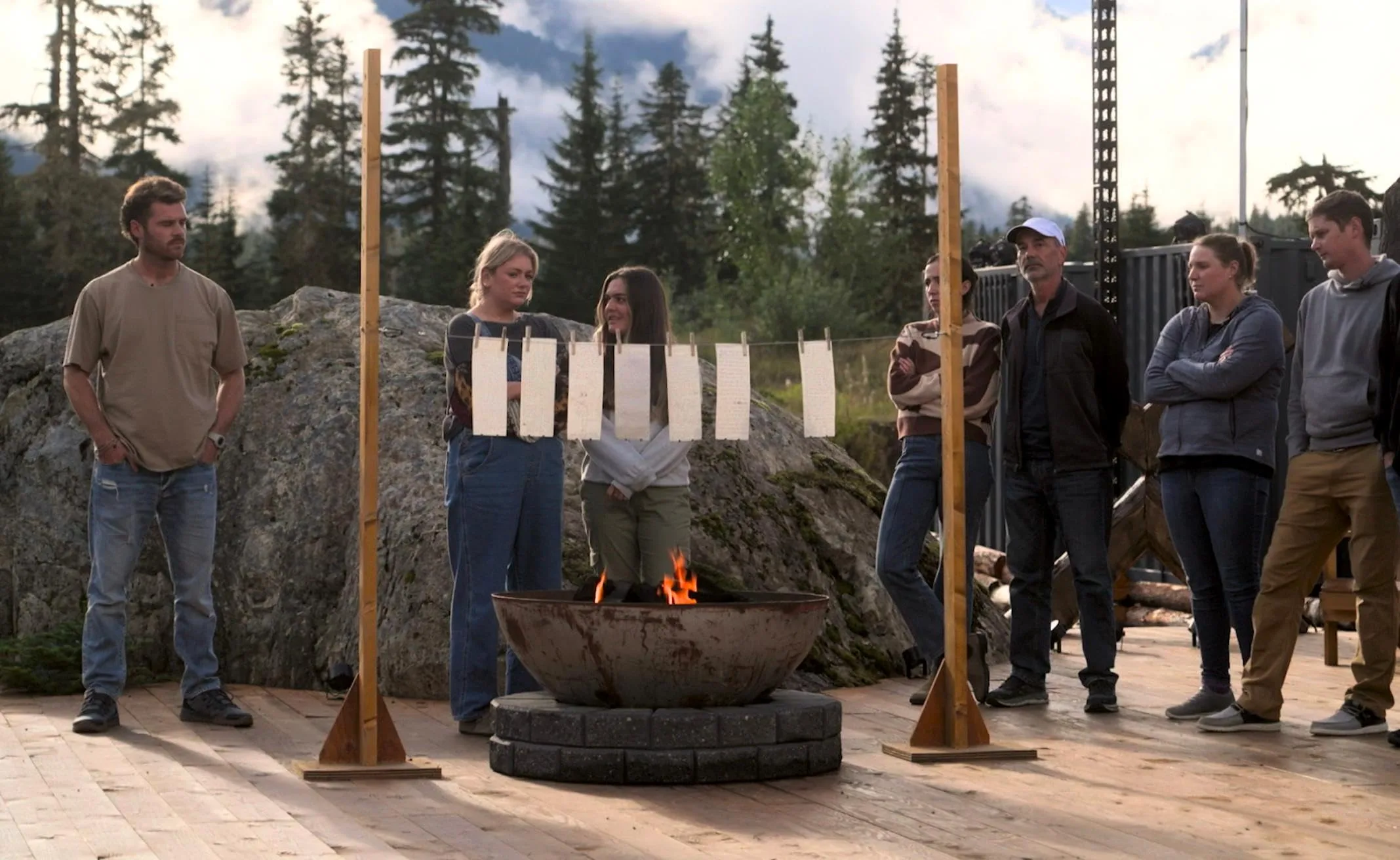
This leads directly into persistent questions about fairness and manipulated outcomes. The show’s mechanics frequently give rise to the perception that the playing field is deliberately tilted, with interventions seemingly designed to equalize competitors by hindering the strong and aiding the weak. While such balancing acts are familiar tactics in reality competition formats aimed at maintaining suspense, their heavy-handed application here risks undermining the audience’s investment in contestant effort and capability. The narrative seems less interested in crowning the most competent survivor and more focused on engineering parity, sometimes clumsily.
The structure also puts human relationships under a specific, intense pressure. It becomes an examination of family dynamics strained by competition, surveillance, and the lure of a cash prize. Loyalty clashes with strategic advantage, revealing both supportive instincts and calculated self-interest among the HQ participants. The show actively leverages these deep personal bonds, foregrounding moments of potential betrayal and emotional conflict.
Naturally, this premise invites scrutiny regarding its ethical underpinning. Criticisms arise concerning the spectacle derived from contestant suffering and the emotional distress amplified within the families at HQ. Comparisons to dystopian narratives like The Hunger Games (though often qualified as less honorable) and descriptions of contestants treated like “lab rats” reflect unease with the show’s core conceit. The format appears structured to incite and capture negative emotional displays – described by some as “psychological warfare” – raising questions about the line between compelling human drama and the intentional fostering of conflict for entertainment purposes.
The Extracted Experiment: An Uneven Outcome
“Extracted,” then, stands as a notable entry in the ongoing evolution of reality television formats, attempting to graft a layer of remote strategic control onto the familiar stock of wilderness survival. Its core structural conceit – pitting survivalists against nature while their loved ones maneuver from a distant Headquarters – certainly offers a novel premise on paper.
However, as executed, this premise generated considerable narrative friction. The casting choices often seemed to prioritize dramatic potential over demonstrable survival skill, frequently undermining the stakes of the wilderness challenges. The intense focus on the Headquarters B-plot, with its attendant strategies and emotional conflicts, tended to overshadow the supposed A-plot of survival.
Furthermore, the specific game mechanics – particularly the inconsistent supply system, the power of the ‘extract’ button, and a finale structure perceived by many as contrived – often felt less like organic developments and more like arbitrary interventions disrupting narrative coherence and fairness.
The result was a program that clearly provoked strong reactions, indicative of both the inherent interest in its unique HQ dynamic and the significant frustrations surrounding its execution, authenticity, and resolution. “Extracted” ultimately presents as a reality format whose intriguing central idea struggled under the weight of its implementation. The attempt to simultaneously be a harsh survival show and a game of remote manipulation led to a fractured identity, leaving the impression of an experiment whose components never quite cohered into a satisfying whole.
Full Credits
Director: Quinn Saunders, Harbinder Singh
Producers and Executive Producers: Ross Radcliffe, David Storrs, Richie Carr, Dan Bree, Robert Buchta, Sylvester Stallone, Kourosh Taj, Braden Aftergood, Rhett Bachner, Brien Meagher
Cast: Woody Kaminer, Haley Lindell, Megan Hine, Collin Hodson, Ryan Heavner, Blake Kaminer, Natalie Michaels, Karly Sauve, Laura Foster, Scott Metheny, Ashley Metheny, Austin Metheny, Rose Hyak, Anthony Banks, Tony Banks, Yolanda Banks
Editors: Sean Hubbert, Eric Kenehan, Michael Burke
Composer: Tammy Ari, Alex Shenkman, Adonis Aletras
The Review
Extracted
"Extracted" experiments with narrative structure by linking wilderness hardship to remote family strategy, but the connection proves unstable. The focus shifts too heavily towards manufactured HQ drama, while arbitrary game mechanics and a discordant finale undermine the survival premise. The show's interesting structural concept cannot overcome its flawed execution, leaving a sense of a narrative experiment gone adrift.
PROS
- Structurally novel premise combining survival and remote strategy.
- Generates inherent drama through the HQ family/friend dynamic.
- Provides fertile ground for examining interpersonal relationships under pressure.
CONS
- Narrative often feels unbalanced, prioritizing HQ drama over survival elements.
- Casting choices frequently undermine the credibility of the survival aspect.
- Game mechanics can appear arbitrary, inconsistent, or manipulative.
- The finale deviates significantly from the season's established premise.
- Raises questions about the ethical use of family relationships for entertainment.