






















• Latest
  • Trending
Ashwood Valley Review

Ashwood Valley Review: Pretty Pixels, Poor Play

The Hunger Games Sunrise on the Reaping

“Hunger Games” Prequel Rules Thanksgiving as “Hexed” and “Focker-In-Law” Stumble

4 hours ago
Dig

“Dig” Finale Reveals Hugh Laurie’s Neville Stole the Statue

4 hours ago
Danny Boyle

Danny Boyle Says Jack O’Connell “Would Have Been a Great Bond”

4 hours ago
Let's Have Kids! Review

Let’s Have Kids! Review: A Friendship Pact With Uncomfortable Consequences

The Day After Sunday Review

The Day After Sunday Review: Haru Kuroki Shines in a Restrained Marital Drama

The Fissure Review

The Fissure Review: Branching Paths Through a Troubled Past

Brotherhood: A Cinematic Musical Review

Brotherhood: A Cinematic Musical Review: Compassion Cannot Carry Every Chorus

The Florist Review

The Florist Review: Dennis Quaid Deserves a Better Thriller

The Sixty-Year Mission Review

The Sixty-Year Mission Review: The Enterprise Returns to Its Political Roots

Grandmasters Review

Grandmasters Review: Magnus Carlsen Challenges the Chess Establishment

Avatar Legends: The Fighting Game Review

Avatar Legends: The Fighting Game Review: Exceptional Combat Meets Frustrating Limitations

Long Long Night Review

Long Long Night Review: The Tenderness and Tragedy of an Unlikely Family

  • Home
  • Privacy Policy
  • Terms and Conditions
  • Gazettely Review Guidelines
Friday, November 27, 2026
GAZETTELY
  • Home
  • Movie and TV News
    The Hunger Games Sunrise on the Reaping

    “Hunger Games” Prequel Rules Thanksgiving as “Hexed” and “Focker-In-Law” Stumble

    Dig

    “Dig” Finale Reveals Hugh Laurie’s Neville Stole the Statue

    Danny Boyle

    Danny Boyle Says Jack O’Connell “Would Have Been a Great Bond”

    Adam Sandler

    Adam Sandler Congratulates Ezra Frech After “Dancing With the Stars” Win

    Amanda Seyfried 1

    Amanda Seyfried Admits She “Told a Lot of People” About Her Secret Holmes Doc Role

    Brad Pitt and Angelina Jolie

    Brad Pitt and Angelina Jolie Settle Château Miraval Dispute After Four Years

    Twilight

    “Twilight” Director on Pattinson’s Bond Casting: “I Almost Fell Out of My Bed”

    Dancing With the Stars

    “Dancing With the Stars” Finale Draws 9.2 Million as Ezra Frech Takes the Trophy

    The Hawk

    Netflix Cancels Will Ferrell’s Golf Comedy “The Hawk” After One Season

  • Movie and TV Reviews
    Let's Have Kids! Review

    Let’s Have Kids! Review: A Friendship Pact With Uncomfortable Consequences

    The Day After Sunday Review

    The Day After Sunday Review: Haru Kuroki Shines in a Restrained Marital Drama

    Brotherhood: A Cinematic Musical Review

    Brotherhood: A Cinematic Musical Review: Compassion Cannot Carry Every Chorus

    The Florist Review

    The Florist Review: Dennis Quaid Deserves a Better Thriller

    The Sixty-Year Mission Review

    The Sixty-Year Mission Review: The Enterprise Returns to Its Political Roots

    Grandmasters Review

    Grandmasters Review: Magnus Carlsen Challenges the Chess Establishment

    Long Long Night Review

    Long Long Night Review: The Tenderness and Tragedy of an Unlikely Family

    Etched in Pavement Review

    Etched in Pavement Review: Fighting for a Future Beyond the Streets

    Situations Review

    Situations Review: Greg Vrotsos Finds Comedy in Emotional Cowardice

  • Game Reviews
    The Fissure Review

    The Fissure Review: Branching Paths Through a Troubled Past

    Avatar Legends: The Fighting Game Review

    Avatar Legends: The Fighting Game Review: Exceptional Combat Meets Frustrating Limitations

    Nocturne Review

    Nocturne Review: Rhythm Combat Has Rarely Felt This Inventive

    Soccer Kid Collection Review

    Soccer Kid Collection Review: A Forgotten Platformer Worth Remembering

    The Gate Must Stand Review

    The Gate Must Stand Review: Building Defenses Is the Easy Part

    Nomori Review

    Nomori Review: Thinking With Portals Gets Complicated

    Hell Let Loose: Vietnam Review

    Hell Let Loose: Vietnam Review: Two Armies, Two Ways to Fight

    Denshattack! Review

    Denshattack! Review: Reinventing the Art of the Perfect Combo

    Road to Empress II Review

    Road to Empress II Review: The Illusion of Political Freedom

  • The Bests
No Result
View All Result
GAZETTELY
No Result
View All Result
Ashwood Valley Review

Foundation Season 3 Review: Streaming's Most Ambitious Spectacle

Newly Rich, Newly Poor Review: Charm, Class, and Comedy

Home Games Reviews Games

Ashwood Valley Review: Pretty Pixels, Poor Play

Enzo Barese by Enzo Barese
1 year ago
in Games, Nintendo, Reviews Games
Reading Time: 4 mins read
A A
0
Share on FacebookShare on TwitterShare on PinterestShare on WhatsAppShare on TelegramSummarize with ChatGPTSummarize with Perplexity

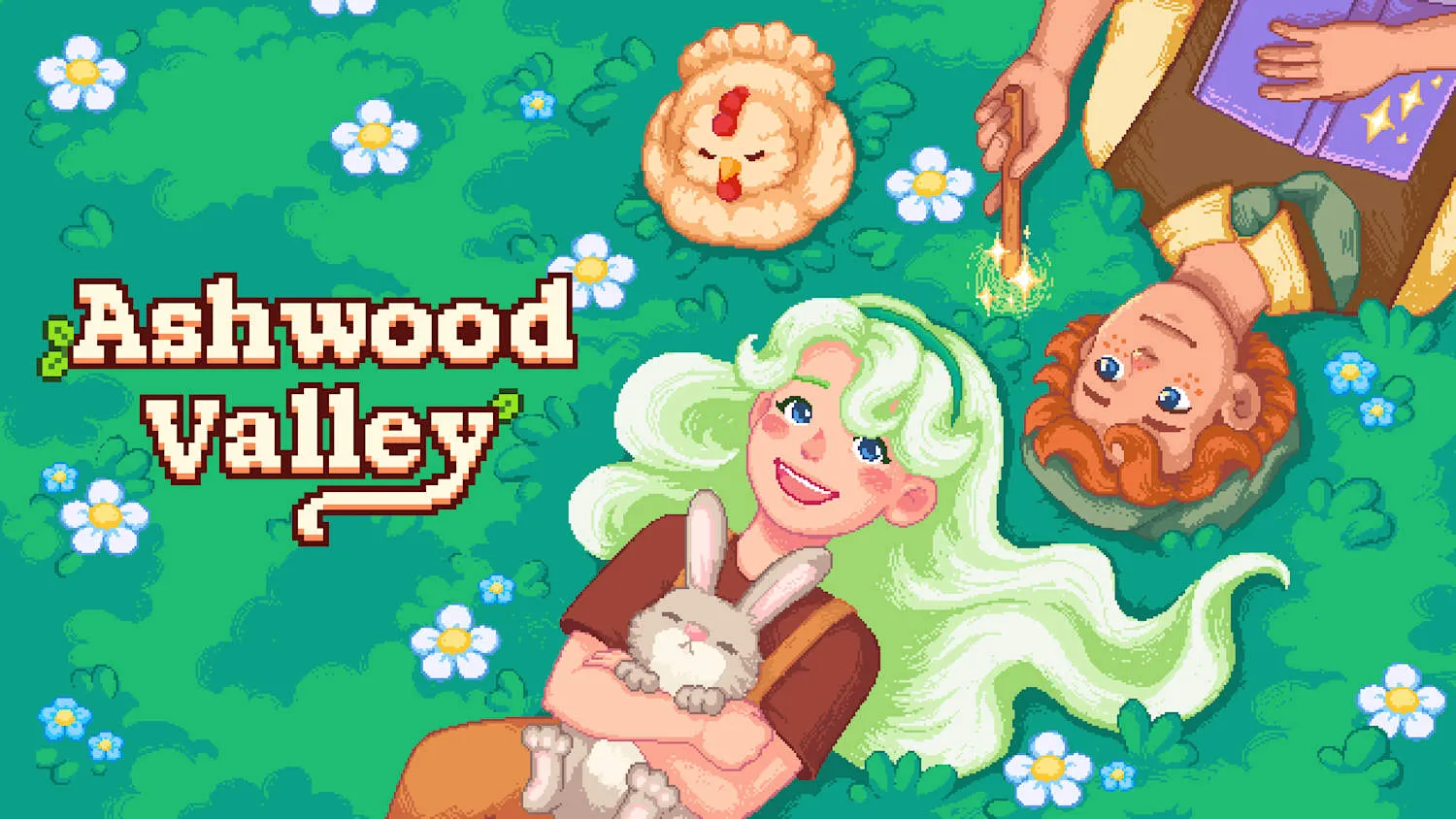
Ashwood Valley begins not with an original narrative stroke, but with a premise that feels as worn as a beloved storybook: the “isekai,” or “transported to another world,” trope. A magical experiment involving two siblings, a wand, and a mirror goes predictably awry, shattering the glass and pulling them into a new dimension.

This narrative device, a cornerstone of modern Japanese fantasy that has been globalized through anime and manga, functions as an immediate, low-friction entry point for players. It promises a fresh start, a world of possibility. One sibling is transformed into a cat, a touch of folkloric whimsy that sets a gentle, low-stakes tone.

The world itself is rendered in a pixel-art style, another globalized aesthetic that leverages a collective nostalgia for the 8-bit and 16-bit eras to evoke a sense of comfort and simplicity. Upon arrival, the player is given the familiar genre trappings—a small house, a patch of land—and the implicit task of cultivating a life from scratch. The opening act effectively establishes the game as a cozy, pastoral fantasy, a quiet digital space designed for serene discovery and gentle effort.

Labor Without Reward

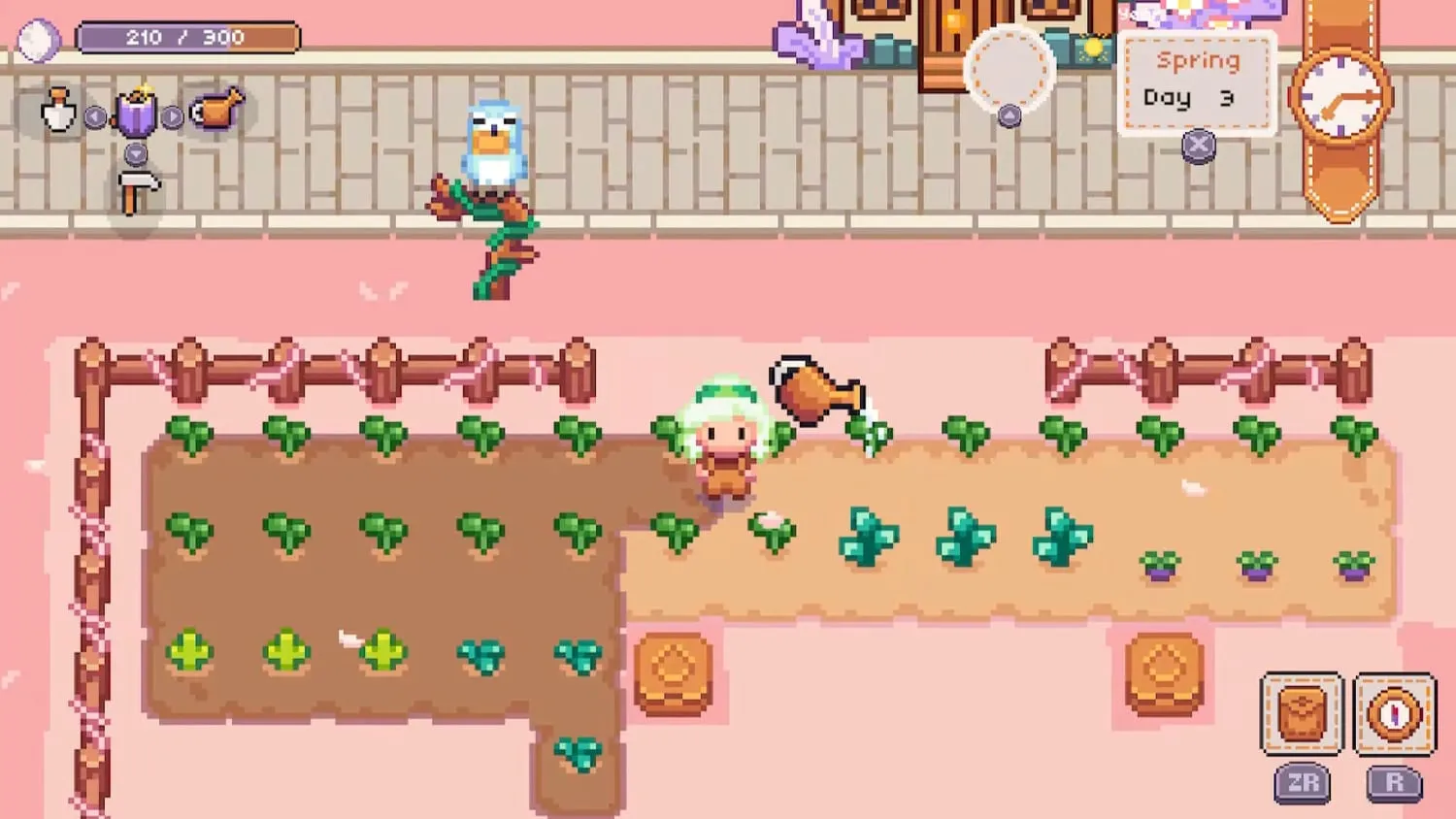
The core of daily existence in Ashwood Valley is the physical act of farming. This ritualistic loop of hoeing soil, sowing seeds, and watering fledgling crops should, by genre conventions, provide a grounding rhythm and a tangible sense of progress.

A stamina bar governs this labor, draining with each action and turning the dream of a large, thriving farm into a significant logistical challenge. However, the game fundamentally disconnects this effort from any meaningful outcome by completely removing a market economy. In a striking departure from its peers like Stardew Valley, where economic activity is the primary engine of player advancement, the crops in this valley have no monetary value.

They cannot be sold. This design choice creates a peculiar vacuum at the heart of the game. The player’s labor, the central activity, is rendered economically impotent. Seeds are not purchased but acquired through chance, either as a random drop from clearing wild grass or as a weekly offering from a visitor, Maya.

Her charity is unreliable; she often provides seeds for the wrong season, making long-term planning impossible and replacing strategic cultivation with a reliance on luck. The convenient, unlimited inventory feels less like a player-friendly feature and more like a symptom of this broken economy—when nothing has value, nothing needs to be discarded.

The Transactional Nature of Friendship

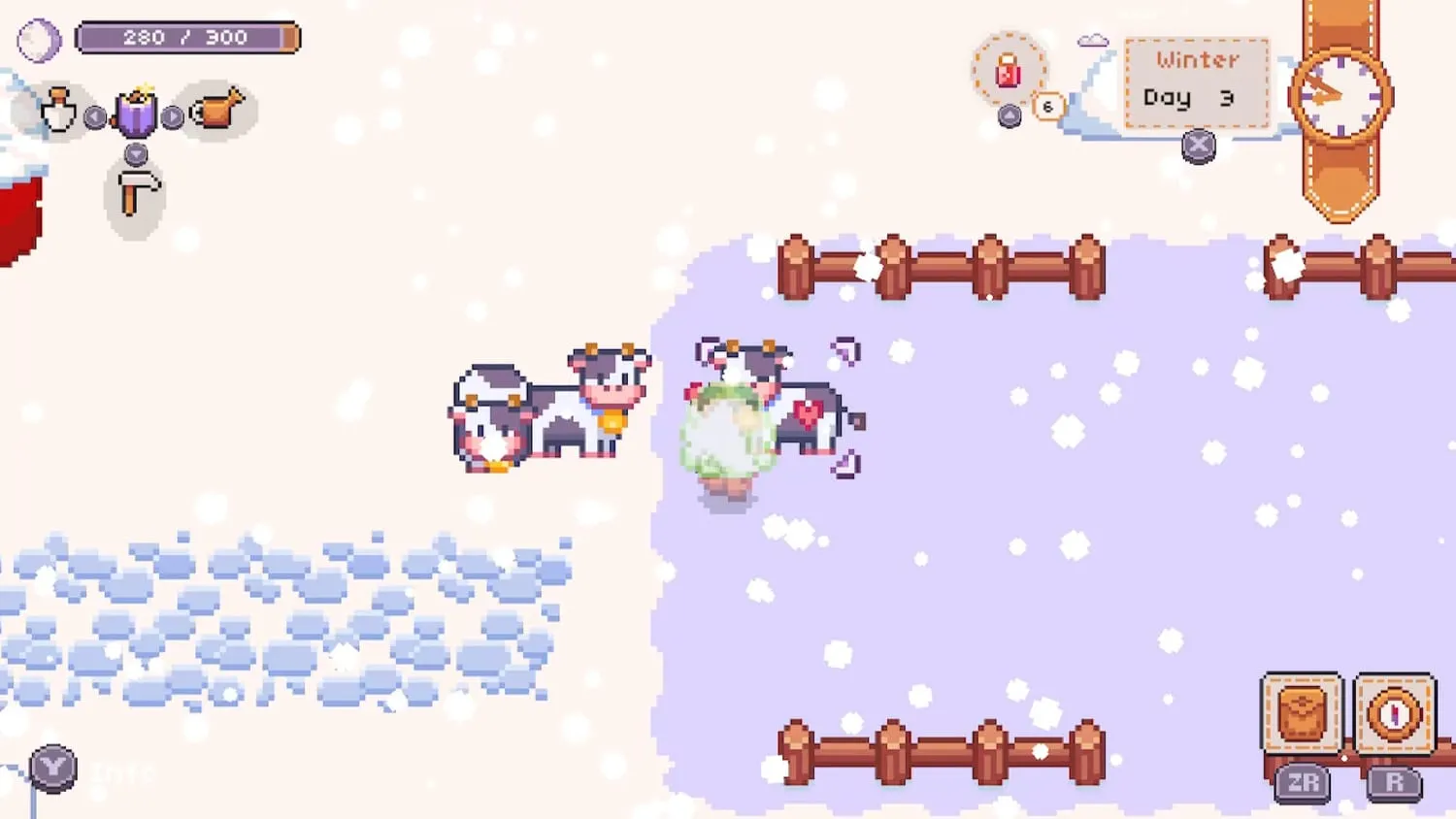
With economic progression removed, the game’s narrative momentum is redirected entirely toward animal husbandry. The central quest, the only path to restoring the player’s feline sibling, requires methodically befriending all fourteen of the valley’s wild animals.
Ashwood Valley Review

This process is starkly mechanical. Friendship is not earned through emergent interaction but through a rigid daily checklist of petting and feeding. The system is brittle and demanding; neglecting an animal for just a few days causes its affection meter to plummet, eventually leading it to abandon the farm and return to the wild.

This design frames relationships as a form of high-maintenance currency. The motivation is not the joy of companionship but the avoidance of loss, reducing these charming creatures to objectives in a long-form fetch quest. While some animals like chickens and cows provide tangible resources, many others serve no purpose beyond fulfilling their part of the quest checklist.

They become living decorations, a collection to be completed. The ability to alter an animal’s color by feeding it specific foods—creating pistachio-colored cows or mango-hued chickens—is a shallow, purely cosmetic reward that underscores the superficiality of the entire system. It is interaction reduced to a simple input-output formula.

The Aesthetics of Emptiness

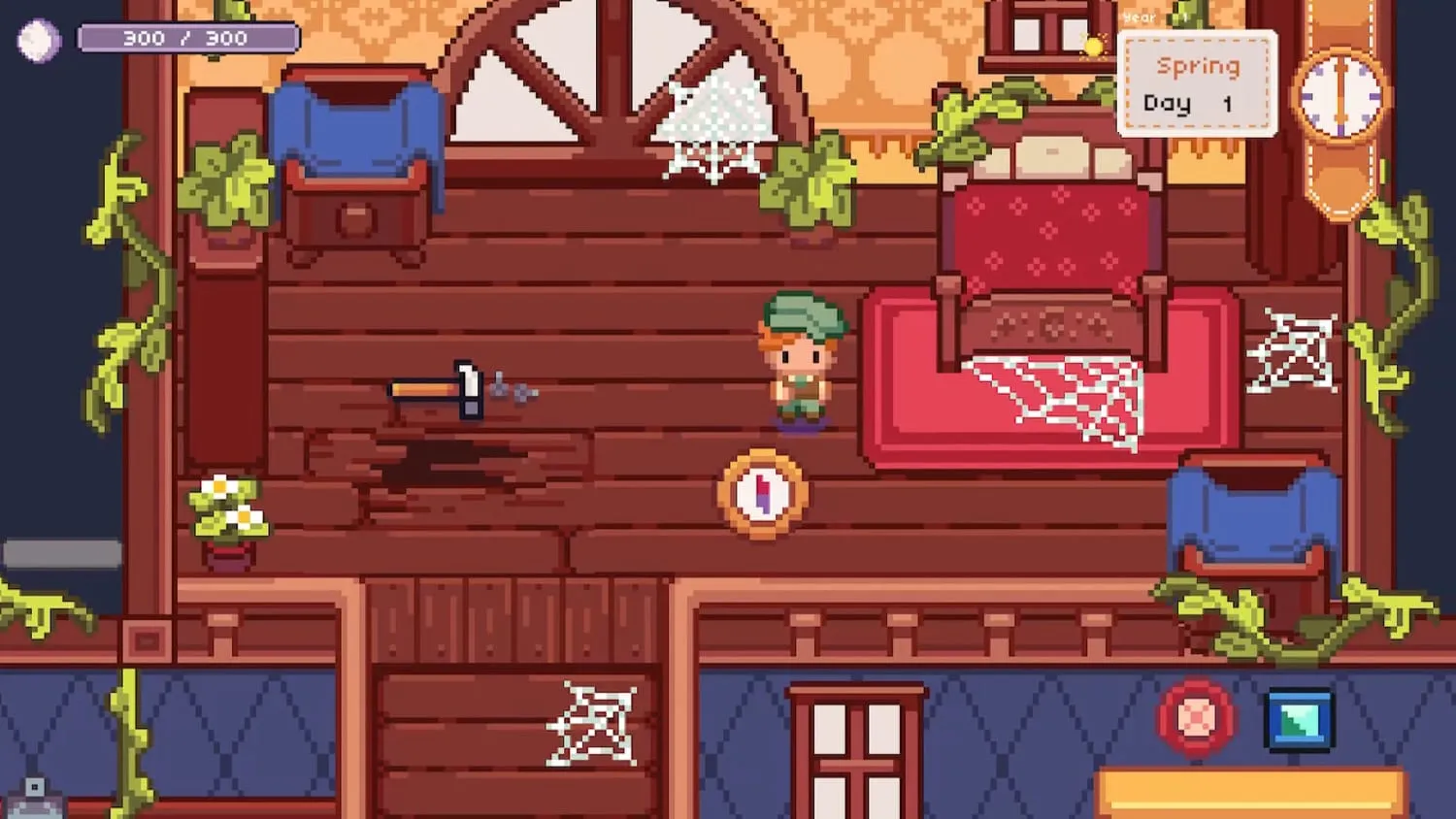
There is an undeniable surface-level charm to the game’s world. The colorful pixel art environments shift beautifully with the passing of the four seasons, creating the illusion of a vibrant, living place. This aesthetic appeal, however, is a thin veneer over a hollow core.
Ashwood Valley Review

The world itself feels curiously empty and difficult to inhabit. Navigation becomes a frequent frustration, as the repetitive landscape makes landmarks difficult to distinguish, and the in-menu map cruelly offers no icon to show the player’s current position. This creates a sense of being perpetually adrift. The valley’s few inhabitants do little to alleviate this feeling of isolation.

They are static NPCs, rooted to their designated spots like statues, offering only a few lines of dialogue and a handful of simplistic quests. They don’t have lives; they are simply interactive set dressing. This pervasive emptiness finds its ultimate expression in the game’s narrative conclusion.

After the significant effort of befriending every animal, the main story resolves with a shocking abruptness. The sibling is restored, but the event is marked by nothing—no final cutscene, no celebratory dialogue, not even a simple “thank you.” The climax is an emotional void, a silence that retroactively drains the player’s actions of their intended meaning.

When the Medium Betrays the Message

A game’s success, particularly in a genre built on immersion, often rests on the seamlessness of its interface. Ashwood Valley, however, constantly reminds the player of its own artifice through clumsy execution. The controls are a persistent source of friction, feeling imprecise and unresponsive.
Ashwood Valley Review

Attempting to water a single plant can easily result in soaking the empty tile next to it, a small but endlessly repeating frustration that creates a barrier between player intent and in-game action. The camera is another antagonist to immersion.

The character moves quickly, but upon stopping, the camera jerks aggressively to re-center them on the screen. This jarring motion is not just visually unpleasant; it can be physically disorienting. The sound design completes this trifecta of technical missteps.

The world is unnervingly quiet, with a general absence of music that makes the valley feel sterile rather than peaceful. This quiet is then violently interrupted by a loud, jarringly upbeat tune that plays only when the inventory menu is open. It is a constant, non-diegetic intrusion that shatters any fragile sense of place the game might have managed to build, a final confirmation that the medium itself is working against its own message of cozy escapism.

The Review

Ashwood Valley

3 Score

Ashwood Valley presents the familiar promise of a cozy farming retreat but delivers an experience that is disappointingly hollow. Its charming pixel-art style is a thin veneer over a world devoid of life, gameplay loops stripped of purpose, and frustrating technical flaws. What begins as a gentle fantasy quickly devolves into a repetitive chore, feeling less like a finished game and more like a skeletal proof of concept. It is a beautiful but empty vessel with little to offer beyond its initial premise.

PROS

  • Charming pixel-art graphics and visual seasonal changes.
  • The convenience of an unlimited inventory system.
  • A simple, accessible premise for a relaxing game.

CONS

  • Unresponsive controls and jarring camera movement.
  • The world feels empty, with static NPCs and little to discover.
  • Gameplay lacks depth due to the absence of an economy.
  • The main story is extremely short and concludes abruptly.
  • The friendship system feels like a transactional, high-maintenance chore.
  • Poor audio design, with pervasive silence broken by jarring menu music.

Review Breakdown

  • Overall 0
Tags: Ashwood ValleyFeaturedRedDeer.GamesSimulation
Previous Post

Foundation Season 3 Review: Streaming’s Most Ambitious Spectacle

Next Post

Newly Rich, Newly Poor Review: Charm, Class, and Comedy

This Week's Top Reads

  • Is This Seat Taken? Review

    Is This Seat Taken? Review: A Satisfying Mental Workout

    1460 shares
    Share 0 Tweet 0
  • Paapa Essiedu Defends Snape Casting: “A Lot of Feelings” Over Harry Potter

    0 shares
    Share 0 Tweet 0
  • Blade Runner 2099 Review: Beautiful Dystopia, Unfulfilled Ambition

    1 shares
    Share 0 Tweet 0
  • Dig Review: A Greek Setting With Too Little Interest in Greece

    0 shares
    Share 0 Tweet 0
  • Melania: The Series Review: A Documentary That Goes Nowhere

    0 shares
    Share 0 Tweet 0
  • Trust Review: Squandered Potential and an Incoherent Plot

    6 shares
    Share 0 Tweet 0
  • The Law of Beasts Review: Two Friends and the Cost of a Promised Outcome

    0 shares
    Share 0 Tweet 0

Must Read Articles

The Hunting Wives Season 2 Review
TV Shows

The Hunting Wives Season 2 Review: Sophie and Margo Are Still Deliciously Dangerous

12 hours ago
Hexed Review
Movies

Hexed Review: Disney’s Witches Have a Motherhood Problem

2 days ago
A living room TV showing an 18 rating badge, with a hand hovering over the remote's pause button.
Movies

Movies to Keep Off Family Night: 16 Films With Taboo Themes, Sorted by How Hard They Hit

by Arash Nahandian
2 days ago
Focker In-Law Review
Movies

Focker In-Law Review: The Exhaustion of Familiar Family Rituals

3 days ago
Way of the Warrior Kid Review
Movies

Way of the Warrior Kid Review: Jude Hill Gives a Familiar Formula Its Fighting Spirit

3 days ago

Gazettely is your go-to destination for all things gaming, movies, and TV. With fresh reviews, trending articles, and editor picks, we help you stay informed and entertained.

© 2021-2026 All Rights Reserved for Gazettely

What’s Inside

  • Movie & TV Reviews
  • Game Reviews
  • Featured Articles
  • Latest News
  • Editorial Picks

Quick Links

  • Home
  • About US
  • Contact Us
  • Advertise with Us
  • Review Guidelines

Follow Us

Facebook X-twitter Youtube Instagram
No Result
View All Result
  • Gazettely | Movie, TV & Game Reviews, News, and Rankings
  • Movies
  • Entertainment News
  • Movie and TV Reviews
  • TV Shows
  • Game News
  • Game Reviews
  • Contact Us

© 2024 All Rights Reserved for Gazettely