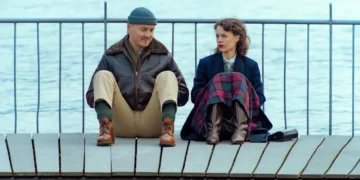



























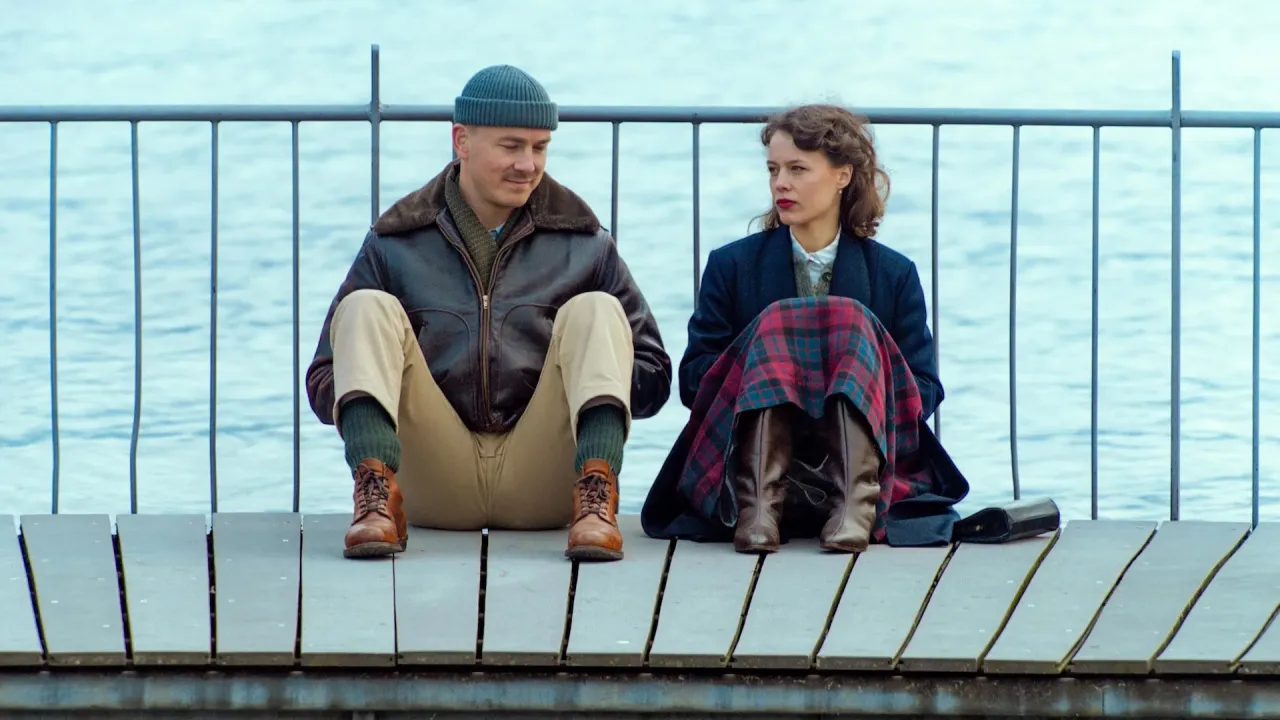

A man sits on a train bound for Zurich in the 1950s. Upon arrival, he is apprehended. His American passport reads James Larkin White, but the authorities are certain he is Anatol Stiller, a gifted Swiss sculptor who vanished seven years earlier under a cloud of suspicion.
This sets up the film’s central, haunting question: How can a person prove they are not who everyone insists they are? I’m Not Stiller is not a conventional mystery; it is a cerebral, atmospheric journey into an existential puzzle. Set against a post-war European landscape of shifting certainties, the story is a direct confrontation with a past the protagonist claims is not his own.
The narrative forces the viewer to question the very foundations of identity and truth. The man’s simple, persistent declaration, “I am not Stiller,” becomes a mantra that opens a deep exploration of the self, reminiscent of the identity quests found in global art cinema, including the introspective works of Indian parallel cinema.
A Labyrinth of Memory
The film’s structure mirrors its protagonist’s contested identity through a deliberately fragmented narrative. Director Stefan Haupt eschews a linear path, instead piecing together the life of Anatol Stiller through a disorienting collection of non-chronological flashbacks.
This technique, while challenging, is essential to the film’s purpose, demanding the audience’s active participation. The visual style of these memory fragments shifts constantly. A brightly colored flashback to a masked ball, full of life and deception, might be abruptly cut short by the stark, monochrome reality of the present-day interrogation cell, jarring the viewer and reinforcing the protagonist’s psychological dislocation.
The use of different color palettes—faded sepia for some memories, vibrant color for others, and austere black-and-white for the present—prevents the audience from ever feeling settled, making it difficult to know whose version of the past is being shown or if any of it is reliable.
The pacing is a measured, sober-minded study of a man’s psyche, creating a mood of quiet intellectual tension. It shares a spirit with the pioneers of Indian parallel cinema like Mani Kaul or Kumar Shahani, who likewise rejected conventional plots to explore subjective states. They believed a story’s truth lay not in its events but in its telling, a philosophy this film fully embraces.
The sound design contributes to this unsettling atmosphere; the musical score is at times insistent, attempting to guide emotion in a film that otherwise prizes ambiguity, creating a fascinating friction between what is seen and what is felt. The structure ultimately forces the viewer to become an investigator, sifting through conflicting evidence and questioning every certainty.
The Anatomy of a Marriage
The emotional core of the story is found in its tangled relationships, primarily the difficult marriage between Anatol Stiller and his wife, Julika. A former prima ballerina whose own artistic ambitions were curtailed by tuberculosis, her bond with Stiller is a portrait of two artists in a painful spiral.
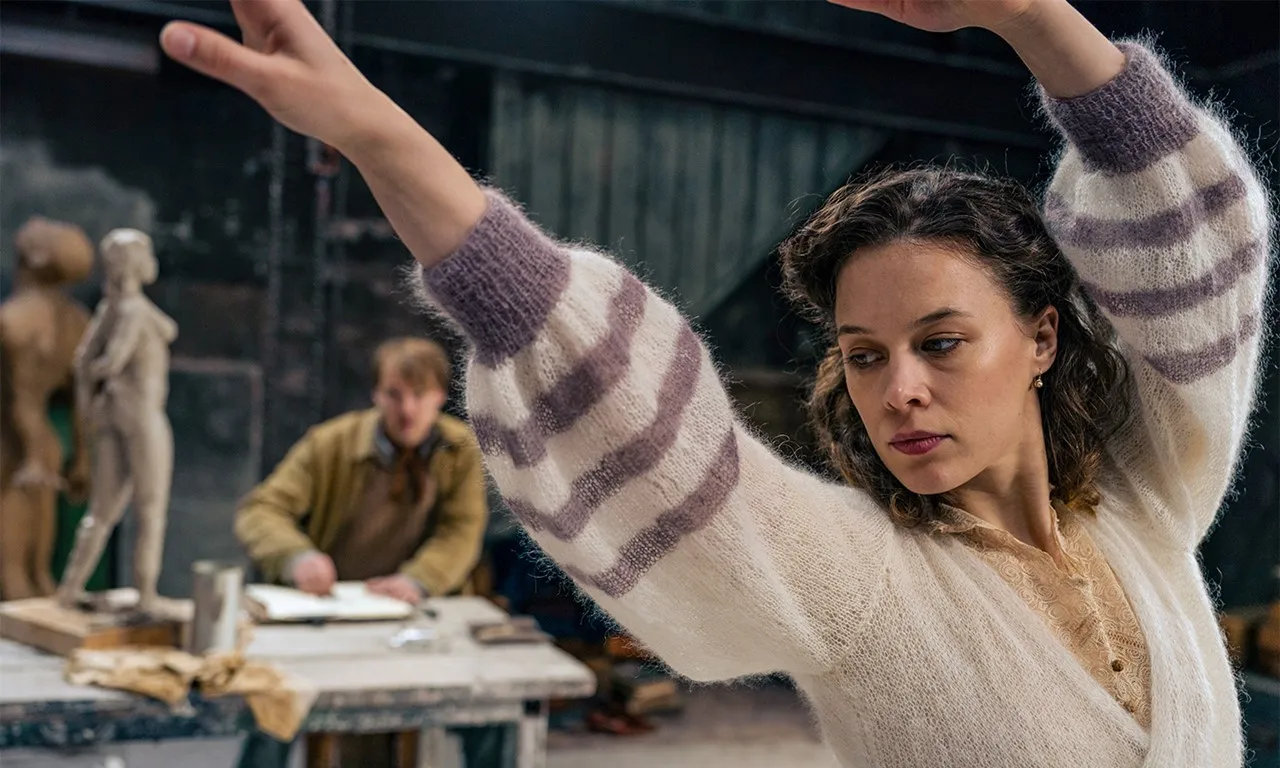
Flashbacks reveal not just love but his deep-seated professional frustrations and acidic envy of her earlier success. His failure to complete his sculptures transforms him into an irascible nihilist who belittles her achievements, a dynamic that calls to mind the tormented artist narratives of Indian cinema, especially Guru Dutt’s masterpiece Kaagaz Ke Phool.
In that film, a director’s life disintegrates under the weight of creative despair and a fraught relationship, a theme that echoes powerfully here. Stiller’s self-destruction feels part of a larger tradition of artists alienated by the world they seek to capture.
This adaptation smartly gives Julika a significant, independent voice. Her past as a dancer informs her character; she possesses a discipline and control that stands in sharp contrast to Stiller’s artistic and emotional chaos. Her recognition of the imprisoned man is therefore not just the word of a spurned wife but a calculated statement from a formidable woman.
The complication of Stiller’s affair with Sibylle, whose husband is now the prosecutor, tightens this web of past sins and present consequences. This leads to the film’s most poignant sequences: the prison conversations between “White” and Julika. Framed through glass and bars, they engage in a strange, sorrowful courtship, two people getting to know each other—or perhaps re-know each other—under the most impossible of circumstances.
Embodying the Abstract
The film rests on the shoulders of its lead actors, who give tangible form to its philosophical questions. Albrecht Schuch delivers a masterful performance as the man who is either an innocent American or the troubled artist performing the role of a lifetime. His physicality is key; as White, he adopts a confident, almost cocky American swagger, complete with a leather jacket and a cropped haircut.

This persona is a world away from the flashbacks of the younger Stiller, who is shown as a man of boyish energy and nervous intensity. Schuch’s portrayal is a study in calculated action, balancing stubborn denial with flashes of a deep, melancholic soul that seems internally fractured.
Opposite him, Paula Beer portrays Julika with a potent mix of elegance, intelligence, and profound vulnerability. She uses a remarkable stillness and subtle facial expressions to convey a deep well of conflicting emotions—pain from her illness and her husband’s abandonment, residual loyalty, and growing suspicion.
Her understated style prevents the character from becoming a mere melodrama figure. This approach—grounding high-minded ideas in believable, naturalistic human behavior—is reminiscent of the neorealist tradition championed by Indian director Satyajit Ray.
Just as in Ray’s work, the actors here ensure the film never becomes a cold, intellectual exercise. Supported by a skilled ensemble, including the conflicted prosecutor and the loyal lawyer who serve as foils to the protagonist, Schuch and Beer provide the human emotion required to make a complex puzzle feel deeply personal and profoundly moving.
The German drama film “I’m Not Stiller” premiered on July 1, 2025, at the Munich International Film Festival.
Full Credits
Director: Stefan Haupt
Writers: Alexander Buresch, Stefan Haupt
Producers & Executive Producers: Anne Walser, Tobias Walker, Philipp Worm
Cast: Albrecht Schuch, Sven Schelker, Paula Beer, Maximilian Simonischek, Marie Leuenberger, Stefan Kurt
The Review
I'm Not Stiller
A challenging and intellectually rewarding film, I'm Not Stiller is a masterclass in atmospheric storytelling, anchored by two powerful lead performances. While its deliberately fragmented narrative and sober pacing demand patience, the result is a haunting exploration of identity, memory, and the fictions we construct for ourselves. It is a deeply felt cinematic puzzle that lingers long after the credits roll.
PROS
- Exceptional lead performances from Albrecht Schuch and Paula Beer.
- An intellectually engaging and thought-provoking script.
- A strong, atmospheric direction that creates a palpable sense of tension and mystery.
- The fragmented narrative structure effectively mirrors the protagonist's psychological state.
CONS
- The measured, deliberate pace may feel slow for some viewers.
- Its complex, non-linear storytelling could be confusing.
- The musical score occasionally feels intrusive, undermining the film's otherwise subtle tone.