





























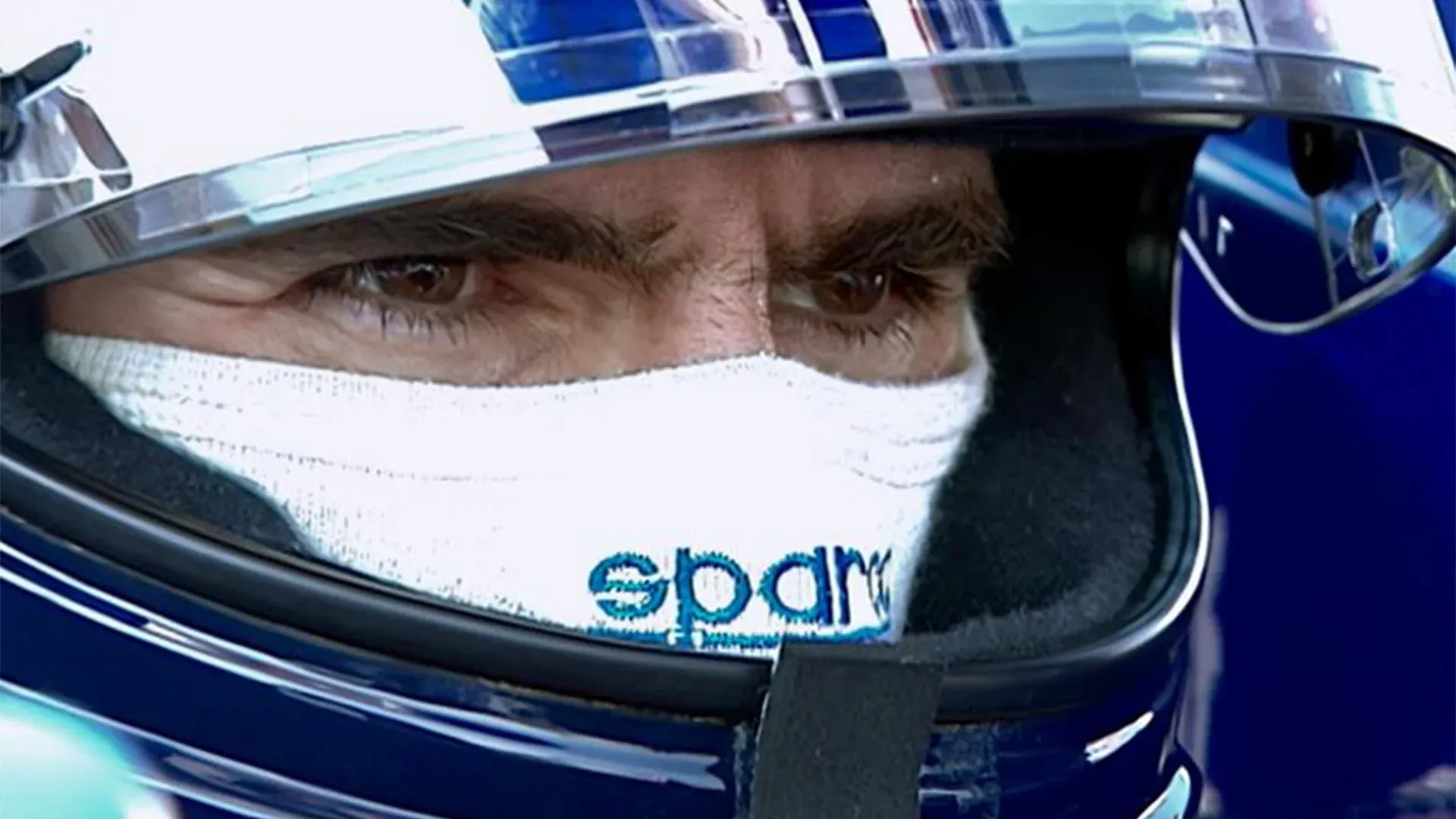

To be the son of a legend is to be born a ghost. Alex Holmes’s documentary, Hill, understands this existential bind, framing the life of Formula 1 driver Damon Hill not as a sports biography but as a quiet, psychological thriller.
The subject is less the 1996 World Champion and more the man perpetually navigating the shadow cast by his father, Graham, himself a two-time champion and an icon of a more cavalier era. This is not a film about racing so much as it is a study of inheritance—the weight of a name, the specter of a legacy, and the fight for an identity that is one’s own.
Holmes sets a reflective, almost melancholy tone from the start. The narrative structure discards the simple chronology of victory for a deeper probe into the architecture of a psyche shaped by profound loss and a quiet, relentless determination.
The film poses a question that haunts every frame: how does one steer toward the future when the past is a constant presence in the rearview mirror? It is a search for a personal peace that a championship trophy can’t grant.
Architecture of a Wound
Every noir protagonist has an origin wound; for Damon Hill, it was delivered via a television newsflash. The film reconstructs the 1975 plane crash that killed his father with a chilling intimacy, focusing on the sudden, banal horror of the moment.
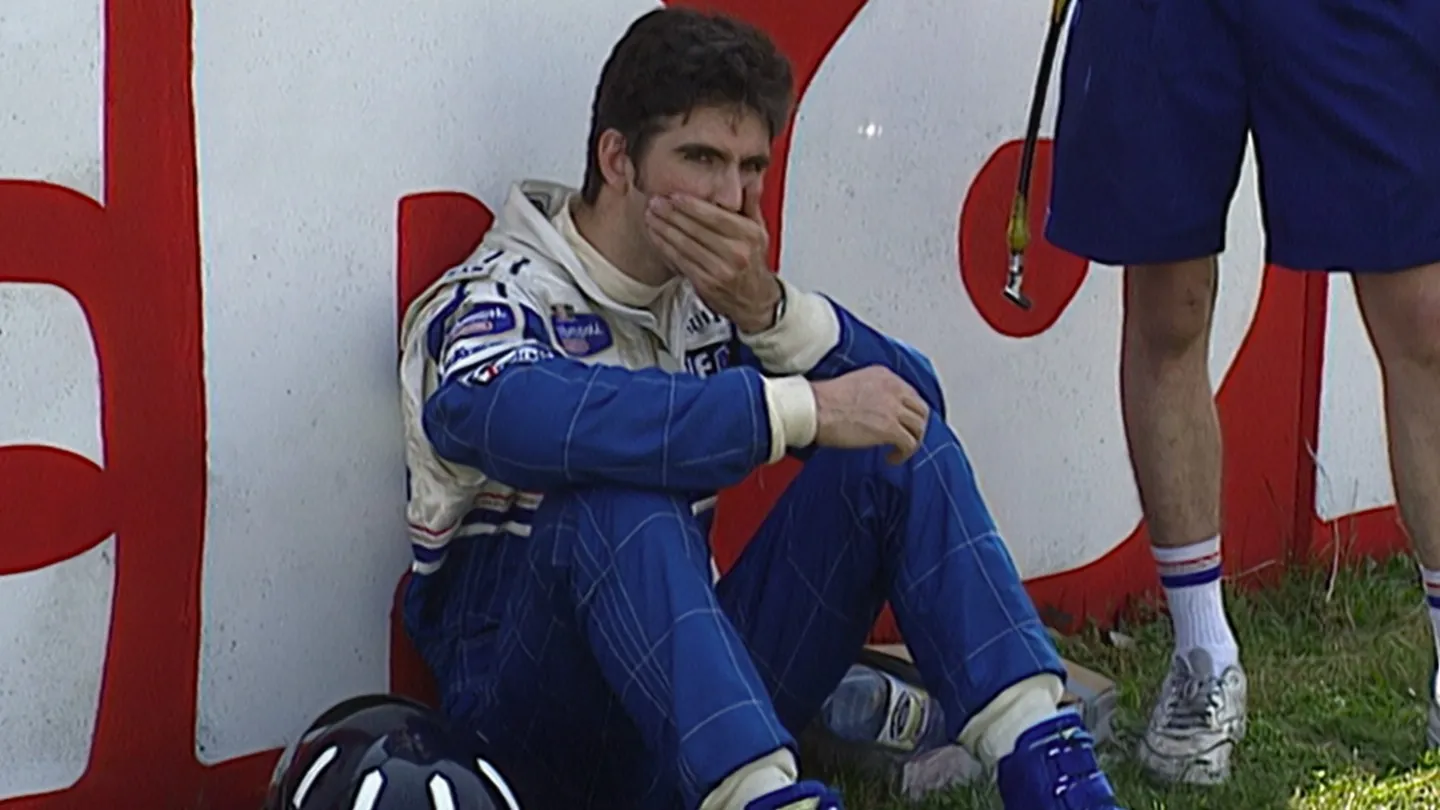
This trauma is presented as a twofold catastrophe: an emotional void that swallows a 15-year-old’s world and a financial collapse that grounds the family in a harsh new reality. This practical ruin is a key narrative point, stripping away privilege and forcing a path. From this wreckage, the film introduces its most vital narrator: Hill’s wife, Georgie.
Her observation that Damon was “one of the saddest people” she had ever met lands with the force of a diagnosis. It is the film’s emotional anchor, a line that unlocks the subject’s interiority. Holmes masterfully uses grainy home video footage not as nostalgic filler but as forensic evidence of a lost world.
We see a family’s life before the fracture, a visual counterpoint that deepens the sense of a man assembled from broken pieces. His subsequent entry into motorsport feels less like ambition and more like a form of reckoning, a reluctant pilgrimage back to the site of his family’s glory and grief.
Chiaroscuro at 200 MPH
The Formula 1 grid of the 1990s is rendered here as a hostile landscape, a perfect setting for a noir protagonist. Damon Hill, the late-arriving underdog, is surrounded by antagonists, none more formidable than the “imperious” Michael Schumacher.
Their rivalry is the film’s central conflict, a ballet of violent grace and psychological warfare that climaxes with the 1994 collision in Adelaide—a moment of exquisite moral ambiguity, a crime scene investigated at speed.
The death of teammate Ayrton Senna adds another layer of memento mori, a ghost whose presence reinforces the sport’s lethal stakes and creates a grim, cyclical parallel to his own father’s history with loss. Visually, the racing sequences are a lesson in controlled chaos. Holmes uses the claustrophobic confines of the on-board camera to create expressionistic blurs of color and motion.
He employs slow motion not for spectacle but for psychological dissection, freezing moments to capture the flicker of anger in Schumacher’s eyes or the grim focus on Hill’s face. The stark visual contrast between the sun-bleached asphalt and the dark, enclosed cockpit becomes a kind of natural chiaroscuro, turning each race into a theater of light and shadow where the stakes are absolute.
The Exorcism of Victory
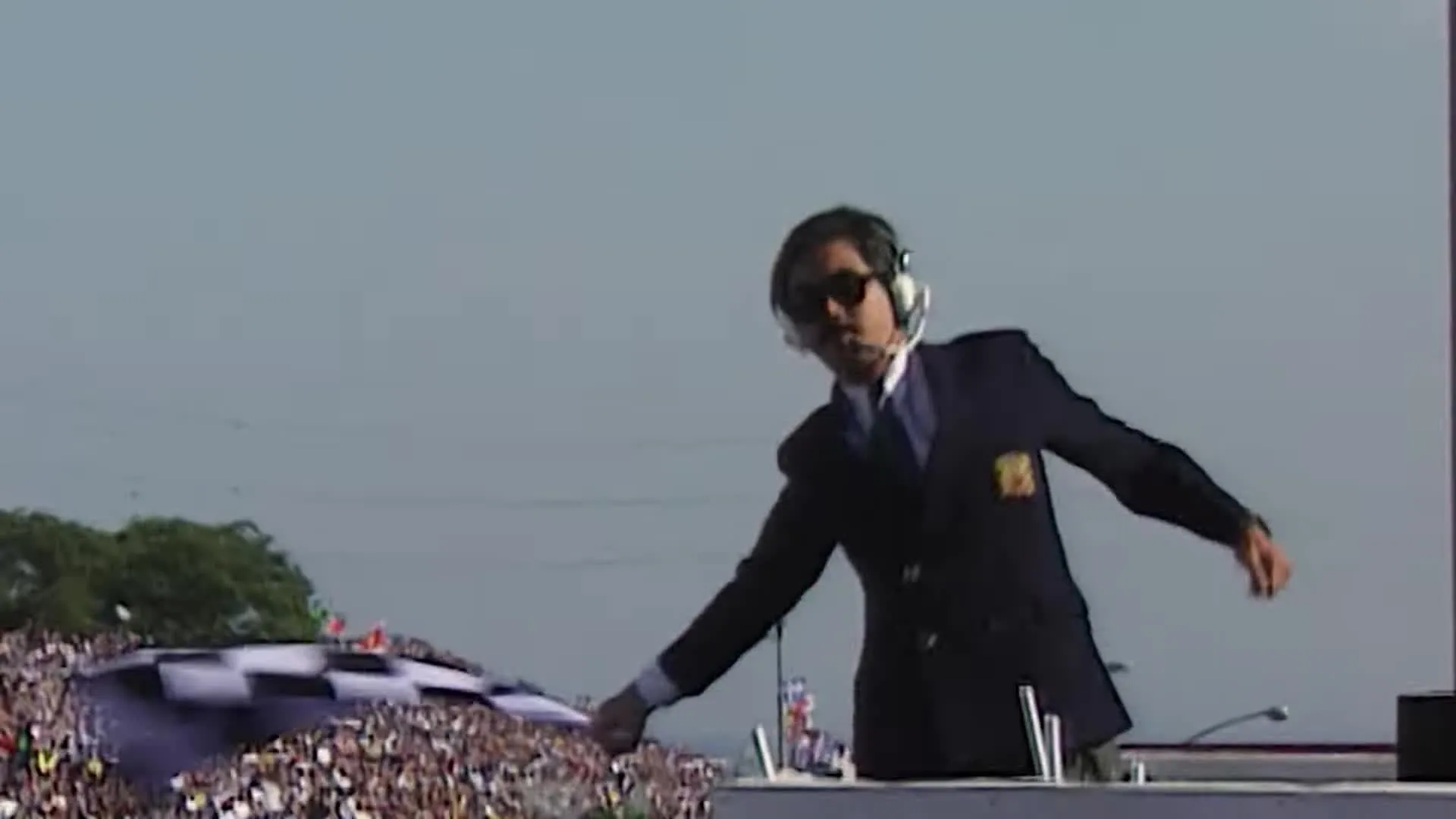
The film’s narrative structure intelligently subverts the traditional sports documentary arc. The 1996 World Championship is not the climax but the consequence, a final punctuation mark on a much longer, more arduous sentence.
The true resolution occurs away from the cheering crowds, inside the driver’s helmet during a rain-swept Japanese Grand Prix. Hill’s description of this race—feeling as if a “spirit” had taken control of the car—is treated not as a supernatural event but as a moment of profound psychological release. It is a surrender of the ego, an escape from the obsessive, self-conscious control that defined his struggle.
The director visualizes this internal shift with a potent, if direct, cinematic gesture: the faint superimposition of Graham’s face over Damon’s visor. The specter is not banished; it is integrated. This is the film’s central argument: the real checkered flag was for a race against the past.
Hill’s victory was an act of catharsis, a quiet exorcism achieved not through brute force but through a hard-won peace. The documentary uses the visceral, high-octane world of professional racing as an unlikely stage for a quiet human drama about setting oneself free.
“Hill” is a Sky exclusive documentary film that premiered in the UK on July 2, 2025, and is also available for streaming on NOW.
Full Credits
Director: Alex Holmes
Producers & Executive Producers: Simon Lazenby, Victoria Barrell, Luc Roeg, Cora Palfrey, Paddy Kelly
Cast: Damon Hill, Georgie Hill
Director of Photography (Cinematographer): Sashi Kissoon
Editors: Cinzia Baldessari
Composer: Fragmented Music (including Lorne Balfe, Taran Mitchell, Jeremy Earnest, Jamal Green, and Will Prime)
The Review
Hill
Hill transcends the sports documentary, functioning instead as a finely tuned psychological portrait. Director Alex Holmes uses the violent poetry of Formula 1 not merely to celebrate victory, but to map the internal landscape of a man haunted by legacy. It is a quiet, intelligent, and visually textured film about the slow, difficult exorcism of the past. A masterful study in grief and grace under pressure, it places the soul of its subject in pole position, leaving the race itself a distant second.
PROS
- A deep and intimate psychological focus that elevates it beyond the typical sports biography.
- Intelligent and seamless integration of archival footage with personal home videos.
- The narrative’s human core makes it accessible even to those with no interest in Formula 1.
- Thoughtful direction that visually links the pressures of racing to the subject's inner turmoil.
CONS
- Its measured, reflective pace may feel slow for viewers expecting a high-octane racing chronicle.
- The tight focus on just two main interview subjects (Damon and Georgie Hill) offers a limited perspective.
- Some of its visual metaphors, while effective, can verge on being overly direct.