





























Some horrors aren’t about monsters in the closet; they’re about the monsters in our heads. They live in the quiet moments of a day that refuses to end. This is the space Luto inhabits. You are Samuel, a man waking up in his house. You follow your morning routine, but when you try to leave, you find yourself right back where you started, staring into a shattered mirror.
The house, once a place of safety, becomes a prison of looping moments and shifting corridors. This is a first-person psychological horror game, but its true subject is an internal one. It’s an unsettling exploration of profound grief and mental anguish, where the twisting architecture of your home is a direct reflection of a mind fracturing under the weight of loss. The central question isn’t just how to escape the house, but what you are trying to escape from within yourself.
The Architecture of Anxiety
The DNA of modern first-person horror is deeply encoded with the phantom limb of P.T., Hideo Kojima’s legendary playable teaser. Many have tried to replicate its singular, claustrophobic loop, but few have understood its core principle: the weaponization of familiarity.
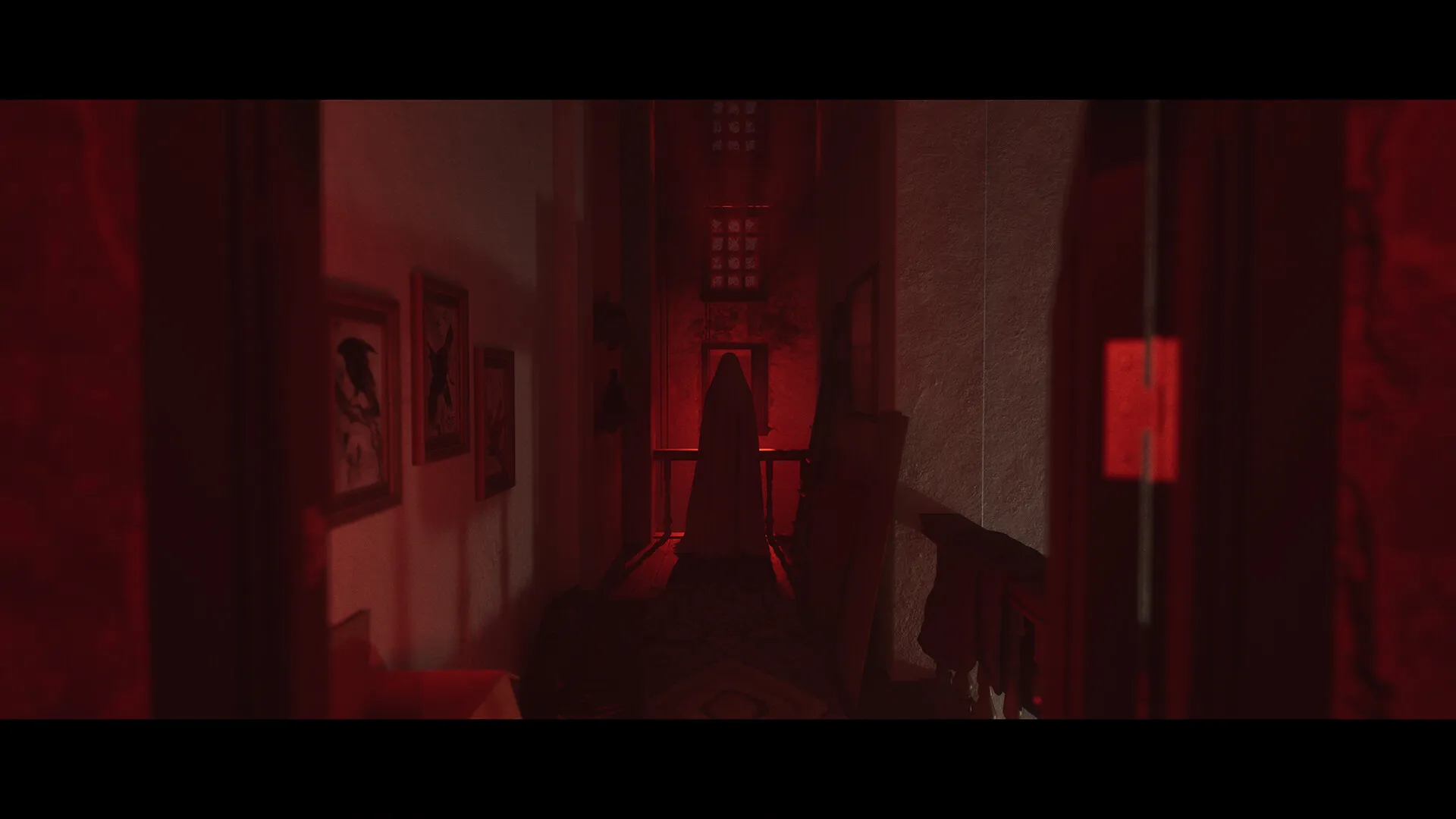
Luto not only understands this principle but expands upon it, taking the concept from a single hallway and applying it to an entire home. The result is a more insidious and unpredictable form of disorientation. It’s one thing for a single corridor to defy logic; it’s another for your entire sense of domestic space to collapse.
This transforms the horror from a directed set piece into a pervasive atmospheric condition. The game masterfully cultivates a profound sense of “jamais vu,” the unsettling feeling that a familiar place is suddenly foreign and wrong. Your living room, your kitchen, your basement—these are no longer safe havens but sets in a play of psychological torment, constantly being rearranged when you’re not looking.
Also Read






The dread here is not built on a foundation of constant threat but on the anticipation of it. The game is patient, allowing long stretches of quiet exploration to work on your nerves. This slow-burn tension is far more effective than a constant barrage of jump scares.
The fear comes from the possibilities, from the certainty that something must be wrong. The design preys on your ingrained knowledge of video games. You creep around a corner expecting a monster, but find only an empty room. This repeated subversion of expectation doesn’t make you relax; it makes you more paranoid.
You begin to mistrust your own instincts. One of the game’s most brilliant sequences involves sitting in front of a television to watch a VHS tape. The setup is simple: the TV is to your right, and a locked door you need to open is to your left. Your attention is forcibly divided. You must watch the tape for clues, but every instinct screams that something will appear in the empty space by the door.
The sound of guttural breathing just behind you completes the scene, creating a masterful moment of multi-sensory anxiety without a single visual attack. The game’s other inhabitants, simple sheeted ghosts, are used with similar restraint. They are less like aggressive entities and more like mournful fixtures of the environment, silent witnesses to the tragedy unfolding. Their stillness is their most terrifying quality.
Fragments of a Life
Luto’s narrative is a mosaic, shattered into countless pieces and scattered throughout the labyrinthine halls of Samuel’s home. The game rejects conventional exposition, instead casting the player as a reluctant archaeologist of personal tragedy. You uncover the story not by watching cutscenes, but by sifting through the debris of a life. A child’s drawing taped to a wall, a sorrowful note left on a kitchen counter, a page torn from a sketchbook—each object is a piece of the puzzle.

This method of environmental storytelling demands engagement. It forces you to slow down, to look closer, and to think about the meaning behind the placement of every object. It’s a technique reminiscent of great cinematic set design, where the environment itself tells a story richer than any dialogue could. You are not a passive observer but an active participant in the reconstruction of a memory.
This process is guided, or perhaps manipulated, by an unreliable narrator. His calm, almost clinical monologues accompany you through the madness, his tone shifting unsettlingly between helpful guide and cruel tormentor. His presence adds a layer of metafiction to the experience, making you question not just the reality of the house but the very nature of the story being told. Is he a separate entity, or is he a manifestation of Samuel’s own fractured psyche?
The ambiguity is the point. The story he helps to reveal is one of profound depression and loss, handled with a maturity and respect that is rare in the genre. The game never sensationalizes its subject matter. Instead, it uses its mechanics and atmosphere to create an empathetic projection of what it feels like to live with such a condition: the repetition, the isolation, the feeling of being a ghost in your own life.
The game’s pacing, for the most part, serves this narrative beautifully. The slow, methodical burn of the first few hours allows the oppressive atmosphere and deep sense of melancholy to seep into your bones. It gives you time to absorb the small details and to become invested in the central mystery. However, this deliberate build-up makes the final act feel like a sprint to the finish line.
After hours of patient discovery, the story accelerates dramatically, delivering revelations in a rapid-fire sequence that feels somewhat compressed. The emotional weight of the conclusion is still present, but one gets the sense that these final, crucial beats could have benefited from the same breathing room that made the game’s opening so effective.
An Interactive Requiem
In an industry often obsessed with complex mechanics and skill-based challenges, Luto makes a bold choice: its gameplay is almost entirely introspective. This is a game you experience more than you “play” in a traditional sense. There is no combat, no inventory management beyond key items, and no enemies to outsmart. To label it a “walking simulator” would be accurate in description but dismissive in spirit.
The genre is used here not as a limitation, but as the perfect vehicle for the story being told. By stripping away conventional mechanics, the game focuses your attention completely on the narrative and the environment. Your primary actions are to move, to observe, and to absorb. This creates a direct, unfiltered connection between the player’s experience and the character’s psychological state.
The puzzles are a perfect extension of this design philosophy. They are minimalist, often requiring you to notice a subtle environmental detail or connect a piece of information from a note to an object in a room. Their purpose is not to stump you, but to compel you to engage more deeply with your surroundings.
In one instance, you might need to find a specific photograph, forcing you to sift through a collection of family pictures, each one a small, painful reminder of a happier time. The act of solving the puzzle becomes intertwined with the act of confronting a difficult memory.
The gameplay loop itself is a metaphor. You are trapped, walking in circles, searching for a way out, which mirrors the cyclical nature of grief and depression. The player’s agency is in constant tension with Samuel’s profound helplessness. You can physically move through the world and interact with it, yet you are fundamentally powerless to escape the loop.
This is most apparent in how the game treats its “ghosts.” In another horror game, these figures would be threats to be avoided or banished. Here, they are narrative devices. A ghost might block a doorway, not attacking you, but simply standing in your way.
It will not move until you have solved a related puzzle and uncovered a piece of the story it represents. They are not physical antagonists; they are psychological barriers made manifest. They are memories that must be understood before you can move past them. The game isn’t about surviving a haunting; it’s about understanding the source of the pain that fuels it.
A Portrait in Static
The aesthetic of Luto is a carefully constructed collision of the real and the surreal. It leverages the power of modern game engines to create photorealistic environments that feel grounded and relatable. The wood grain on a door, the reflection in a window, the dust motes dancing in a sunbeam—these details create a believable foundation.
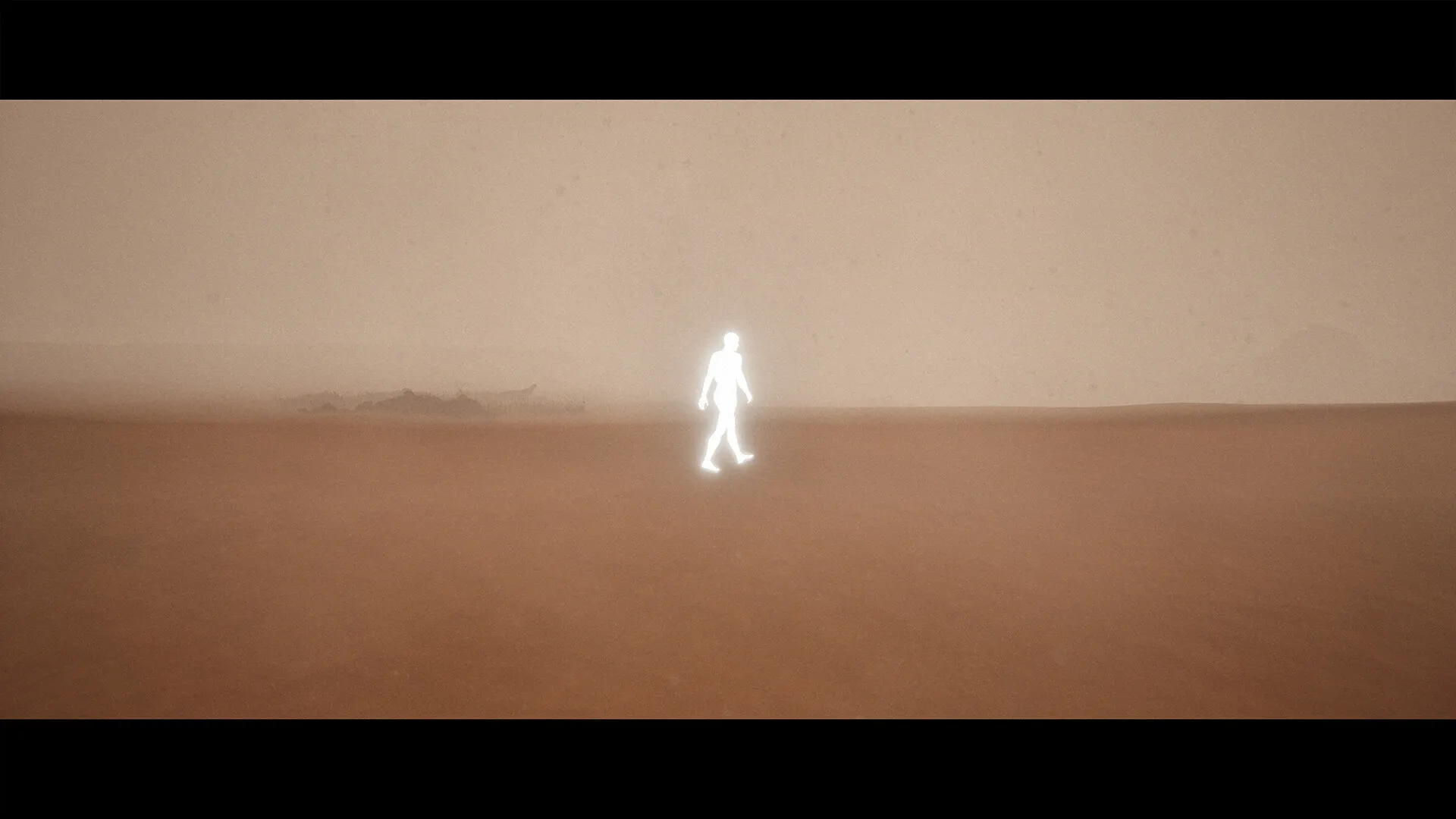
Then, the game systematically shatters that reality. The mundane décor of the house is frequently interrupted by nightmarish visions: a hallway might suddenly stretch into an impossible length, a room might fill with desert sand, or furniture might hang in the air as if frozen in the moment of an explosion.
This visual approach creates a constant, low-level dissonance, making the entire experience feel like a waking dream. The heavy use of a film grain filter and stark, contrasting lighting further enhances this effect, wrapping the world in a hazy, dream-like shroud where shadows seem to move on their own.
The audiovisual presentation is truly cinematic, and I mean that in a technical sense. The game is presented with black bars at the top and bottom, locking the aspect ratio. While this might initially seem like a frustrating technical limitation, it is a deliberate artistic choice. In film, aspect ratios are used to evoke specific psychological responses.
The tight, letterboxed frame in Luto creates a sense of claustrophobia, focusing your view and enhancing the feeling of being trapped. It’s a narrative tool disguised as a presentation choice, and its full meaning becomes clear in a powerful reveal late in the game.
Sound design is arguably the most critical pillar of the experience. The house is a symphony of unsettling noises. Every sound is rendered with pristine clarity, making each one feel immediate and significant. The gentle creak of a floorboard above you, the faint whisper that seems to come from just behind your ear, the distorted static of a telephone—these sounds are the lifeblood of the game’s tension.
Silence is used just as effectively. The game will often quiet down completely, leaving you alone with the sound of your own footsteps, a technique that builds a potent sense of isolation and vulnerability. The voice performances are central to the mystery, particularly the narrator.
His delivery is unnervingly calm, a steady, almost soothing voice chronicling the surrounding madness, which makes his occasional shifts in tone all the more jarring. He is the anchor in this sea of chaos, but it’s an anchor that feels deeply untrustworthy.
The Review
Luto
Luto is a masterwork of psychological horror, using its shifting, impossible architecture as a powerful metaphor for the labyrinth of grief. It forgoes cheap scares for a deep, slow-burning dread that seeps into your bones. While its minimalist gameplay and a rushed final act may not be for everyone, its profound, mature narrative and masterful atmospheric design make it an unforgettable and important experience. This is a game that doesn't just frighten you; it stays with you, a haunting and beautiful exploration of loss that solidifies itself as a standout title in its genre.
PROS
- An incredibly dense and masterfully crafted atmosphere.
- A mature and profound narrative exploring grief and mental illness.
- Brilliant environmental design that turns a familiar home into a source of dread.
- Exceptional sound design that is critical to building tension.
CONS
- The narrative pacing feels rushed in the game’s final act.
- Its minimalist gameplay loop might not engage all players.
- The heavy subject matter can be emotionally taxing.