























The return of director Chuck Russell to horror feels like an event. Decades after he defined a certain brand of spectacular, practical-effects-driven horror with classics like A Nightmare on Elm Street 3: Dream Warriors and his gooey remake of The Blob, he steps back into the genre with Witchboard.
This is not a direct continuation but a complete reimagining of the 1980s slumber party staple. Russell swaps the familiar for a grander, stranger mythology. The film sets its stage in the atmospheric French Quarter of New Orleans, where we meet Emily (Madison Iseman) and Christian (Aaron Dominguez), an ambitious young couple pouring their life savings into opening a new Creole restaurant.
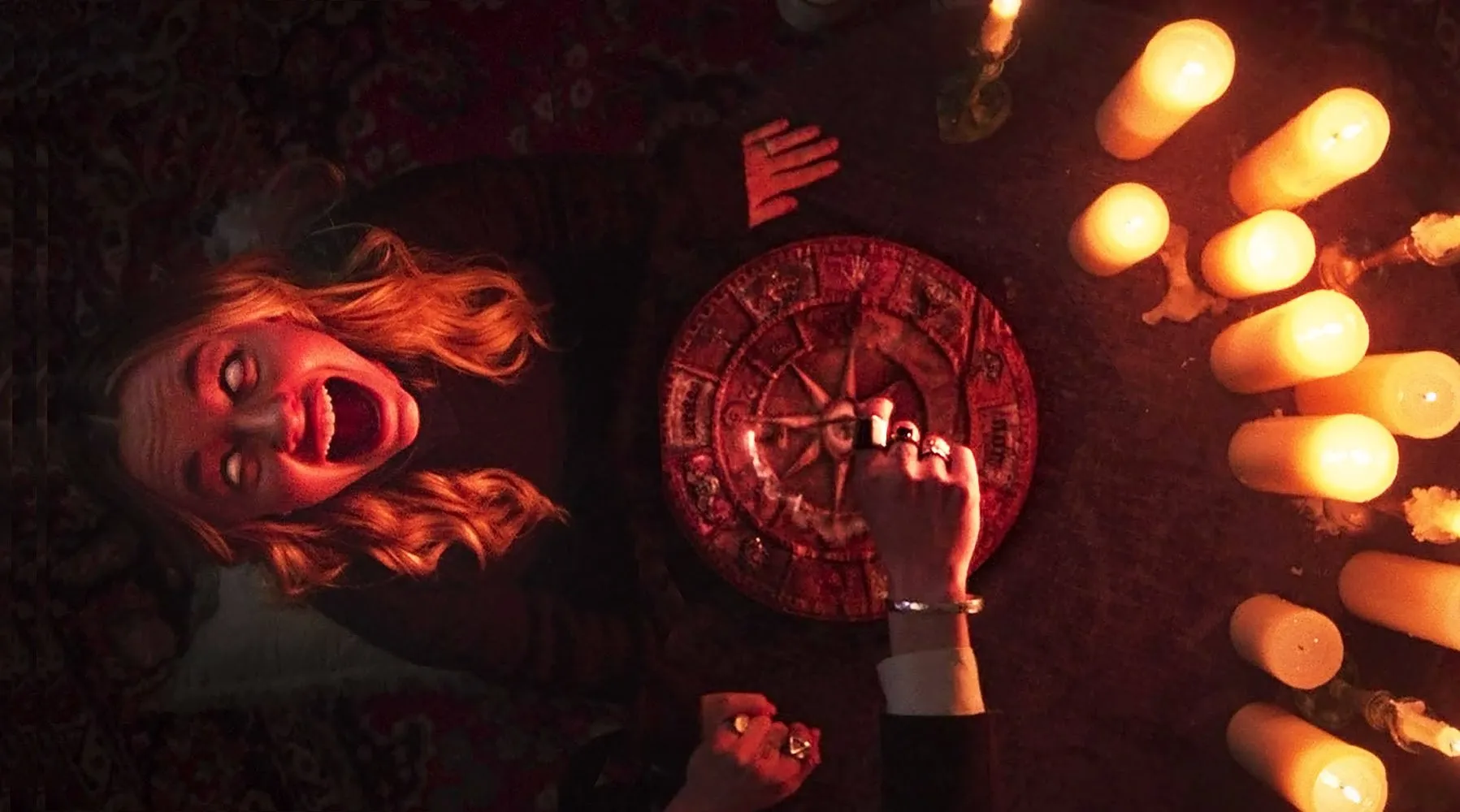
Their dreams take a dark turn when Emily, foraging for ingredients in the woods, unearths an ancient pendulum board. What begins as a fascination with the ornate object quickly descends into a dangerous obsession, awakening a malevolent power that has been dormant for centuries.
A Tale of Two Timelines
The film’s narrative engine is fueled by this dark discovery, and it attempts to ground its supernatural elements in character psychology. Emily and Christian’s restaurant is presented as the tangible manifestation of their future, a shared dream that makes the entity’s intrusion feel like a personal violation. The script explicitly uses Emily’s history as a recovering addict to frame her possession.
It draws a deliberate parallel between the two states: the secretive rituals, the consuming need, the way one’s personality is eroded by a force beyond their control. This connection gives her descent a tragic texture. The witchboard itself is a fantastic creation, a heavy, circular piece of wood etched with symbols that feel authentically esoteric. Its physical weight separates it from the cardboard game it inspired, making it feel less like a toy and more like a sacred, dangerous relic.
Its origins are traced back to 17th-century France in a series of raw, earthy flashbacks. Here, the witch Naga Soth (Antonia Desplat) battles the fanatical Bishop Grogan (David La Haye). The visual contrast between these brutal, mud-caked historical scenes and the polished modern-day setting is stark. This subplot—a powerful woman with spiritual knowledge being hunted and destroyed by a rigid patriarchal authority—is a universal archetype.
Also Read




It carries strong resonances of the chudail or dayan figure in Indian folklore, where the spirit of a wronged woman returns, often with terrifying power. Back in the present, the plot is stirred by the arrival of Christian’s ex, Brooke (Mel Jarnson), whose expertise in antiquities adds a layer of intellectual rivalry, and the outrageously sinister Alexander Baptiste (Jamie Campbell Bower). The moment Baptiste appears on screen, with his decadent mansion and knowing sneer, the film’s entire frequency changes, signaling a shift from grounded horror to operatic theatricality.
Spectacle, Splatter, and Scene-Stealing
Witchboard embraces an aesthetic of excess, operating with the chaotic, genre-blending energy of a 1990s supernatural actioner. It rejects the quiet, minimalist dread that defines much of modern horror, opting instead for a loud, vibrant, and messy sensory experience.
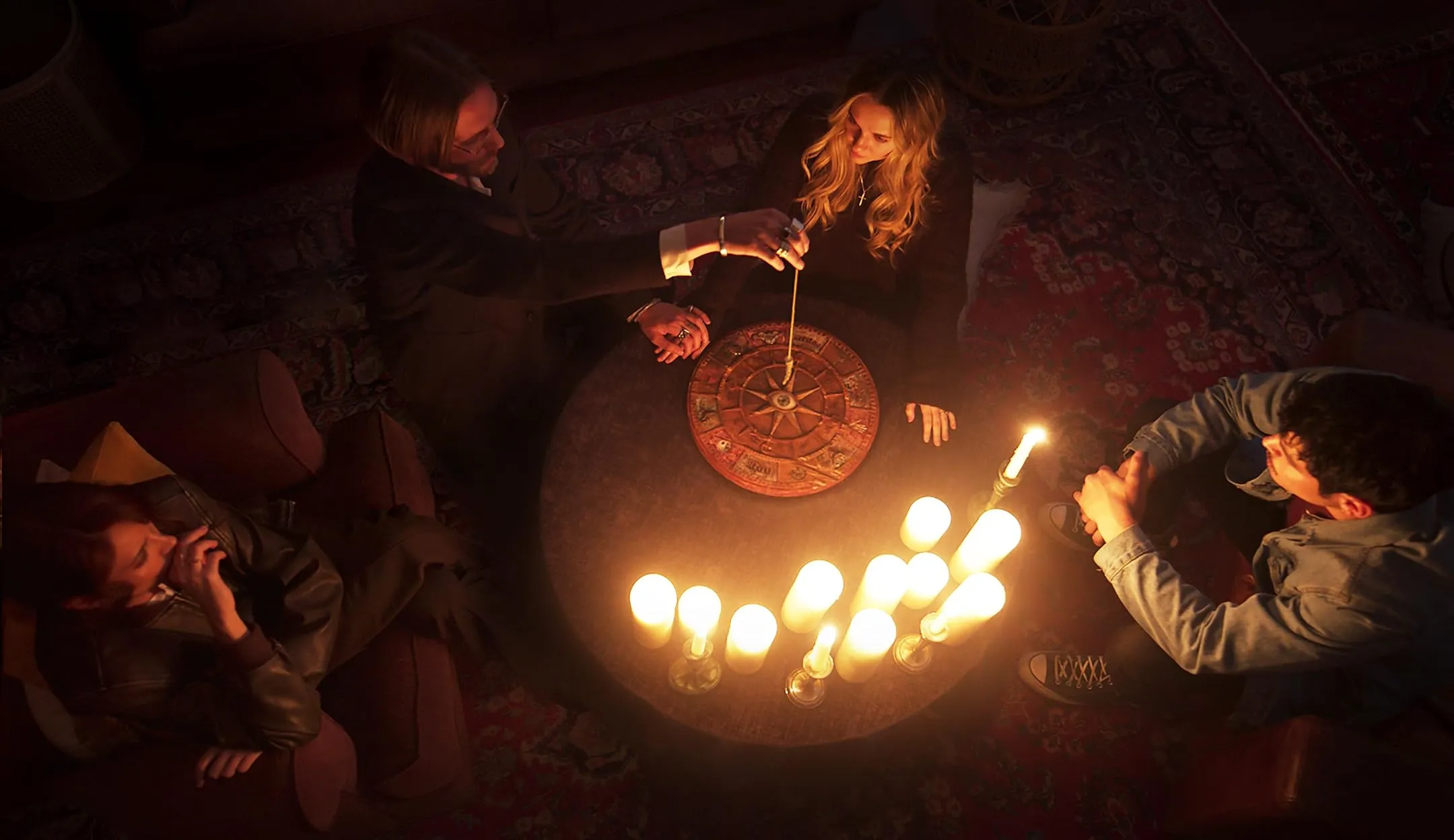
This philosophy, which prioritizes a ‘masala’ of spectacular moments over a consistent tone, will feel deeply familiar to aficionados of commercial Indian cinema. The film is not concerned with being one thing; it wants to be everything at once.
This approach finds its purest expression in an incredible sequence set in the restaurant kitchen. In a masterclass of tension building that recalls the best of the Final Destination series, Russell transforms a mundane space into a death trap. The spectral image of Naga Soth appears in the reflection of a polished pot lid; a knife block seems to offer up its sharpest blade; an industrial meat slicer begins to operate on its own.
The scene is a symphony of escalating threats that culminates in a truly satisfying eruption of violence. The film’s practical effects shine in moments like these, delivering tangible, wince-inducing gore. This makes the liberal use of cheap-looking CGI blood all the more disappointing, as a spray of digital red often follows a brilliant practical gag, cheapening the impact.
The film’s most valuable asset, however, is the human special effect that is Jamie Campbell Bower. His Alexander Baptiste is a magnetic creation of pure camp. He doesn’t just play the villain; he performs villainy with a theatrical grandeur that recalls the great antagonists of 80s Hindi cinema like Amrish Puri.
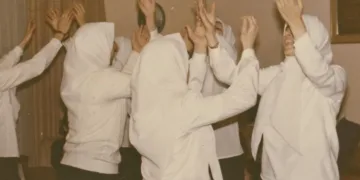
With his baroque pronouncements and entourage of silent, white-haired triplets, he chews every piece of scenery and clearly has a wonderful time doing so. His performance is so big and entertaining that it creates a tonal rift, making the sincere, dramatic efforts of the lead actors seem quaint by comparison. He understands the assignment completely: in a B-movie this flamboyant, the villain is the main attraction.
A Convoluted Climax
For all its energetic set pieces, the film falters under the weight of its own ambition. The nearly two-hour runtime is a serious detriment to its pacing. The narrative flow is constantly interrupted, creating a stop-start rhythm that prevents sustained immersion. Just as the tension in the present-day plot begins to mount, another lengthy flashback breaks the momentum.
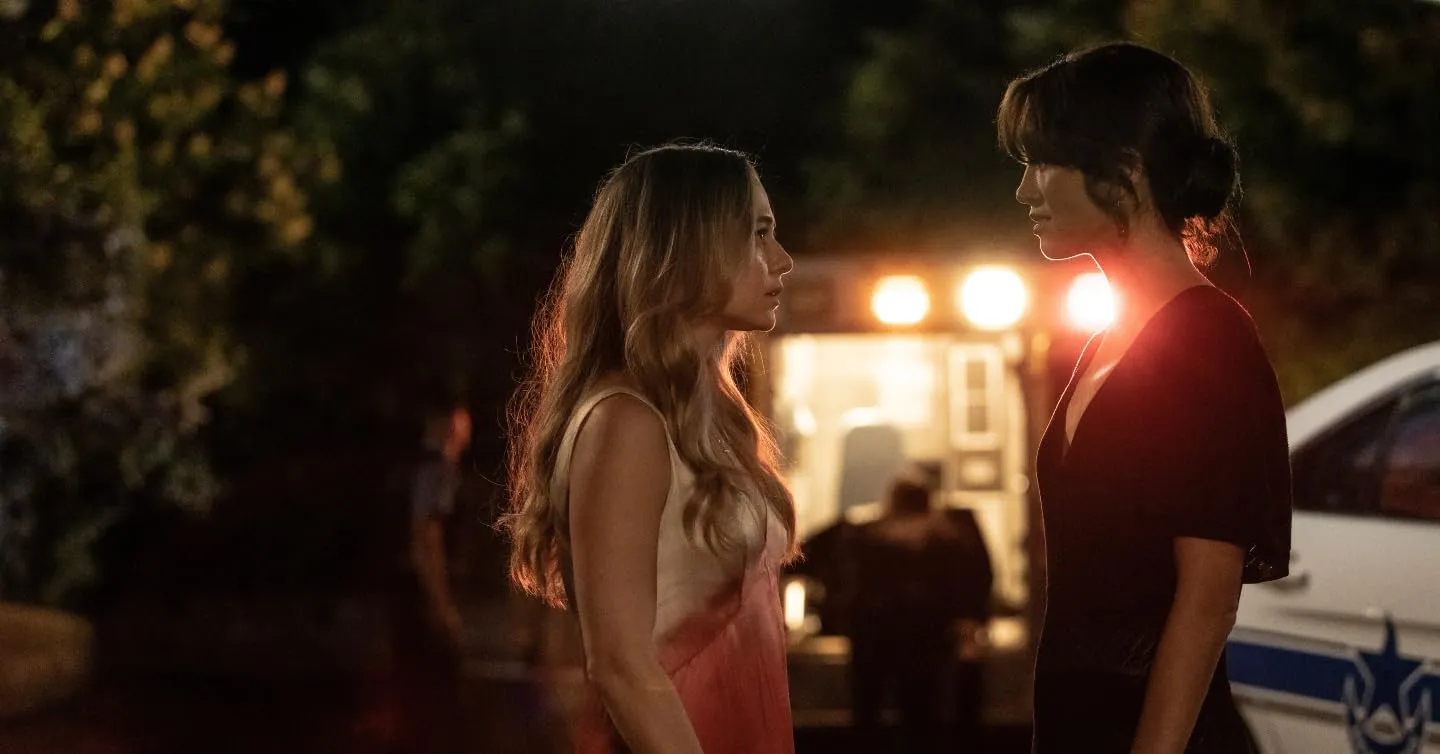
The story itself unravels into a confusing tangle in the final act. Character motivations, especially Baptiste’s, become frustratingly opaque, shifting from one goal to another without clear logic. Is he trying to help Emily, control the board, or achieve some other unstated aim? The script never settles on an answer, leaving the climax feeling arbitrary.
This confusion is amplified by a host of underdeveloped subplots. Emily’s addiction, Brooke’s lingering feelings for Christian, and Baptiste’s hedonistic lifestyle are all introduced as significant elements but are ultimately left unexplored. They clutter the narrative without adding depth, feeling like remnants of an earlier, more complex draft.
The film’s structural problems are most apparent in its ending. A wild, bloody massacre at the restaurant’s opening serves as a thrilling, large-scale climax. Yet, the film doesn’t end there. It limps onward to a second, smaller finale at Baptiste’s mansion, a talky and confusing confrontation that tries to resolve thematic threads the film hasn’t earned.
Despite these considerable flaws, the movie offers a distinct form of entertainment. Its value is not in its narrative sophistication but in its commitment to unpretentious, schlocky fun. For audiences seeking inventive kills and a show-stopping villain, Witchboard is a messy but rewarding spectacle.
“Witchboard” is a 2024 American supernatural horror film written and directed by Chuck Russell. It is a remake of the 1986 film. The film had its world premiere at the 28th Fantasia International Film Festival on July 26, 2024. It is scheduled to be released in the United States on August 15, 2025.
Full Credits
Director: Chuck Russell
Writers: Greg McKay, Chuck Russell, Kevin Tenney
Producers: Chuck Russell, Kade Vu, Greg McKay, Bernie Gewissler
Cast: Madison Iseman, Aaron Dominguez, Mel Jarnson, Charlie Tahan, Antonia Desplat, Jamie Campbell Bower
Director of Photography (Cinematographer): Yaron Levy
Composer: Sam Ewing
The Review
Witchboard
Witchboard is a chaotic and overstuffed throwback that often buckles under its own messy plot and bloated runtime. Its commitment to 90s-style spectacle is its greatest strength, fueled by a few brilliantly executed gore sequences and a deliciously theatrical villainous turn from Jamie Campbell Bower. While its narrative is a frustrating tangle, the film delivers a loud, schlocky, and entertaining ride for anyone nostalgic for a time when horror valued fun over formal perfection. It’s a flawed spell, but one with undeniable B-movie charm.
PROS
- A magnetic, scene-stealing performance by Jamie Campbell Bower.
- An entertaining throwback aesthetic that prioritizes fun and spectacle.
- Tense and well-executed horror set pieces, especially the kitchen scene.
- Effective and satisfying use of practical gore effects.
CONS
- An overlong runtime and inconsistent pacing that makes the film drag.
- A convoluted plot with unclear character motivations in its final act.
- Numerous underdeveloped subplots that feel like narrative clutter.
- Jarring tonal shifts and the use of distracting, poor-quality CGI blood.