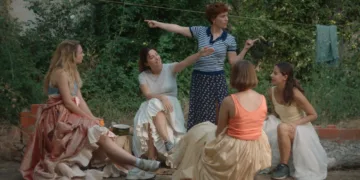











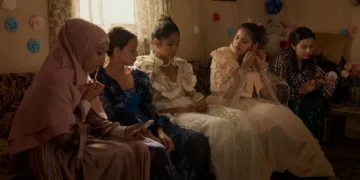









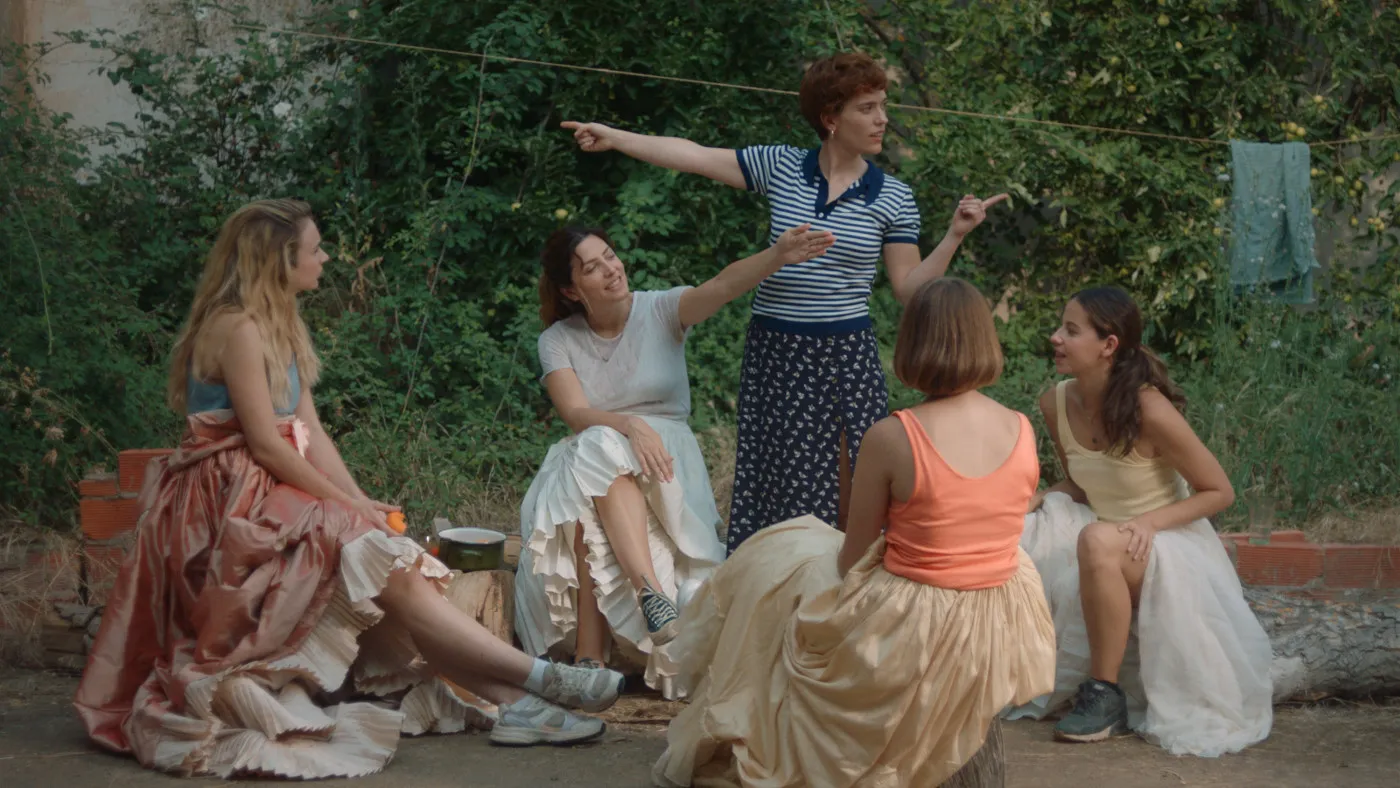

Imagine a Spanish summer, thick with heat and the hum of cicadas. This is the world of The Girls Are Alright, a film that feels less like a structured story and more like a warm, lived-in memory. The premise is simple: a playwright and four actresses escape to a rustic country house for a week.
Their stated purpose is to workshop a new play, a piece steeped in period costumes and fairy-tale ideas. The days unfold at a languid pace, filled with long, unhurried conversations that drift from the script to their personal lives.
It soon becomes clear that the rehearsal is merely a container for something more meaningful. The process of creating art melts into the act of forging connections. This quiet, observational film documents a temporary world built by five women, a space where creativity and camaraderie become indistinguishable.
The Performance of Self
The film’s most interesting mechanic is its complete dissolution of the line between reality and fiction, a technique that feels meticulously designed. Writer-director Itsaso Arana and her cast, including Bárbara Lennie and Irene Escolar, all play characters bearing their own names, immediately collapsing the distance between viewer and subject.
This choice moves beyond a simple gimmick; it functions as an invitation, positioning the audience as a confidant privy to an authentic process. The structure gracefully weaves scenes of the play’s rehearsal with the women’s private conversations, often making it impossible to distinguish between the two. A line of dialogue delivered in a period corset might be followed by an intimate chat in pajamas, with the film’s editing making the transition feel completely seamless. We are left to constantly, and delightfully, question the nature of the performance.
This entire framework finds its anchor in a key, unscripted piece of reality: Bárbara Lennie’s actual pregnancy. This biological fact grounds the film’s artistic explorations, becoming a central truth around which the performative elements circle.
Also Read






It’s an authenticating force that prevents the film’s self-awareness from feeling hollow. The dialogue frequently touches on the actor’s craft, with the women pondering how one can portray an emotion they have not personally experienced. The film offers no easy answers, instead embodying the question itself. It makes the vulnerability of the creative act its primary subject.
The Architecture of Friendship
At its center, the film is a delicate study of feminine connection, building its emotional world through the varied dynamics between the five women. The sisterhood presented is not monolithic. We see the deep, almost familial history between the two established actresses, Barbara and Irene, a bond communicated through shorthand conversation and an effortless physical ease.
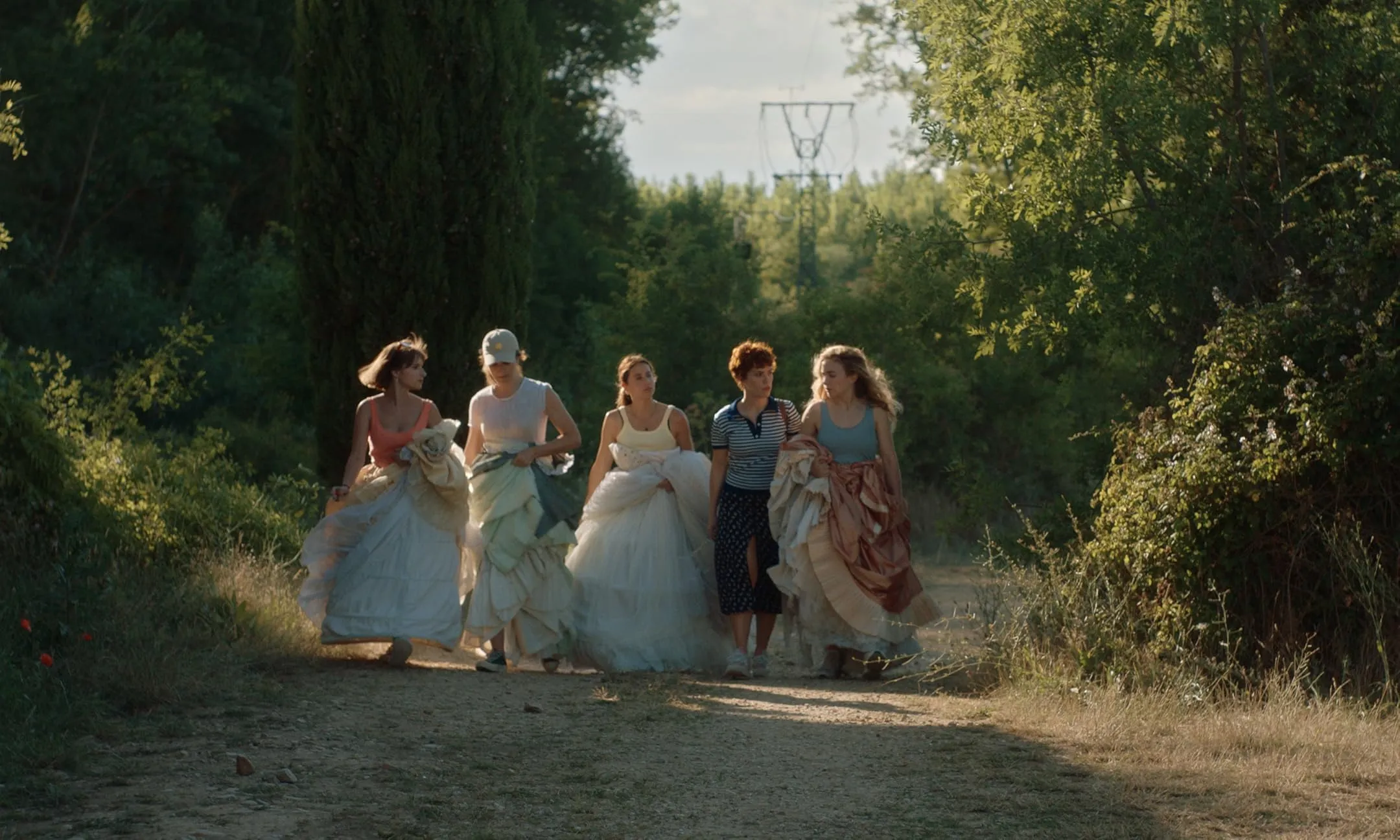
One memorable, throwaway gesture of intimacy speaks more about their shared past than pages of dialogue could. This established relationship provides a gentle contrast to the burgeoning friendship between the younger actresses, Itziar and Helena. Theirs is a connection in its discovery phase, and watching them navigate its early stages feels honest and true.
Within the safe haven of the country house, conversations cover the full spectrum of their lives. The film gives ample space to discussions of impending motherhood, the anxieties of modern romance, professional doubts, and the shared, quiet grief of losing a parent. These topics feel authentic because they are not required to serve a larger plot.
They are treated as meaningful in their own right, allowing the characters a complexity rarely afforded on screen. For most of the runtime, men exist only as voices on a phone or figures in a story. This choice is not an indictment but a deliberate method of world-building. It creates a controlled environment where female relationships can be examined as the primary narrative force, defined by their own internal logic rather than in relation to external, masculine forces.
A Quietly Radical Softness
The film’s lasting power comes from its gentle and intentional craft. The cinematography is warm and deeply attentive, functioning like another quiet participant in the house. The camera lingers on the texture of skin in the sunlight, the fabric of a costume, or the leaves on the trees, creating a distinctly tactile quality.
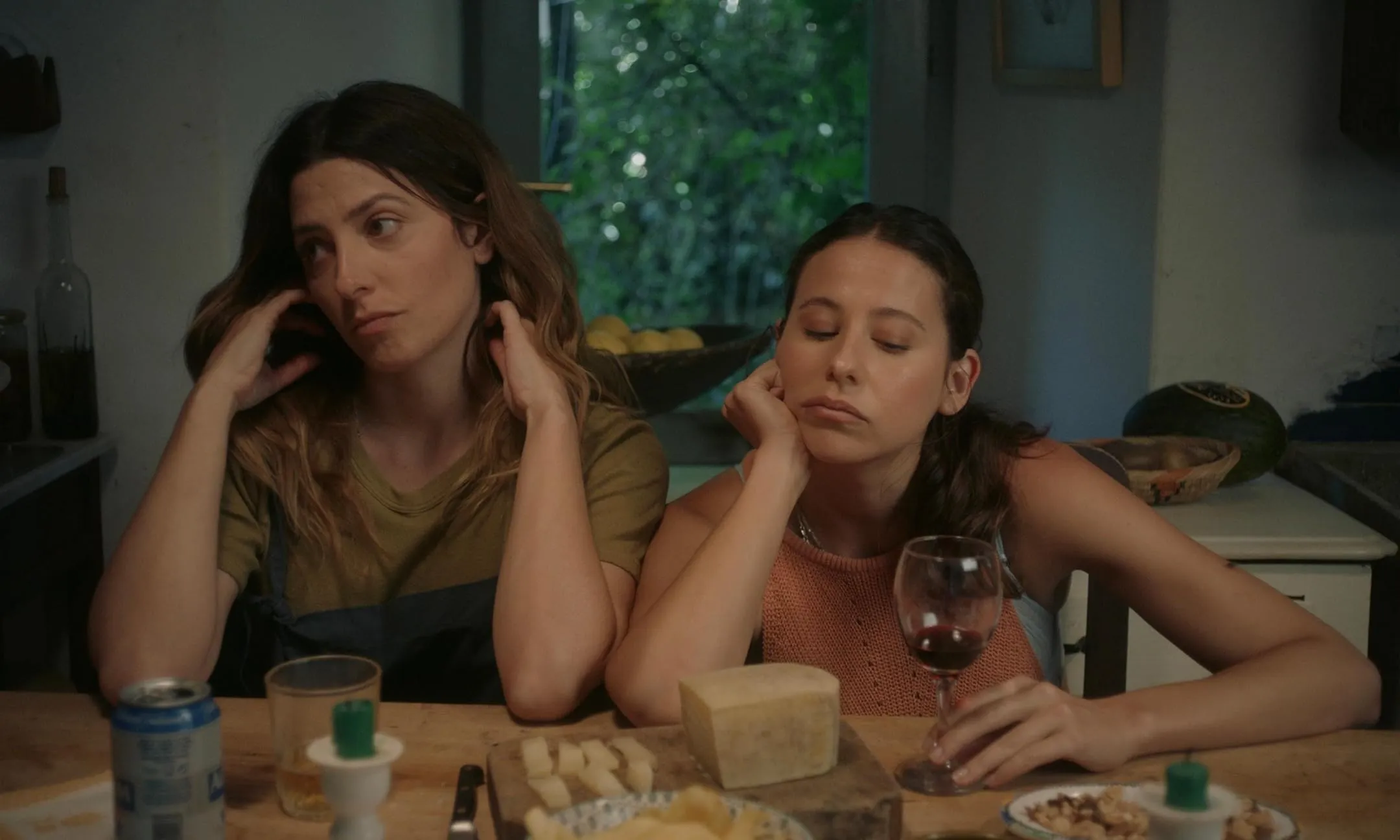
Director Itsaso Arana uses a recurring visual motif—ornate Toile de Jouy fabric—to mark the film’s chapters. The fabric’s classical, static depictions of women offer a thoughtful contrast to the active, complex, and modern femininity the film celebrates.
The pacing is deliberately unhurried, cultivating an observational, “hangout” atmosphere that prioritizes emotional immersion over narrative urgency. This patient rhythm allows conversations and feelings to unfold naturally, mirroring the characters’ own experience of a week outside of time.
Small elements of folklore, like the recurring presence of a toad and mentions of old fairy tales, are woven into the story. These touches connect the women’s present-day lives to a longer tradition of storytelling and myth, adding another layer of meaning to their creative retreat. The Girls Are Alright is a work defined by its tenderness. It feels like a cinematic letter about the importance of creation, the act of listening, and the quiet strength found in sharing stories.
The Girls Are Alright premiered at the Karlovy Vary International Film Festival on July 1, 2023. It was theatrically released in Spain on August 25, 2023.
Full Credits
Director: Itsaso Arana
Writers: Itsaso Arana
Producers: Itsaso Arana, Javier Lafuente, Jonás Trueba
Executive Producers: Itsaso Arana
Cast: Bárbara Lennie, Irene Escolar, Itsaso Arana, Itziar Manero, Helena Ezquerro, Gonzalo Herrero
Director of Photography (Cinematographer): Sara Gallego
Editors: Marta Velasco
Composer: Keith Jarrett, Niño Josele
The Review
The Girls Are Alright
The Girls Are Alright is a beautifully crafted film that finds profound intimacy in its quiet moments. Its clever blend of fiction and reality creates a warm, authentic portrait of female friendship and the creative process. While its gentle, meandering pace may not suit every taste, it is a tender and intelligent work that rewards patient viewing with its emotional honesty and sun-drenched charm. It’s a cinematic letter about the importance of connection, told with softness and confidence.
PROS
- An intelligent and seamless blend of documentary-style reality and narrative fiction.
- Features deeply authentic and moving performances from the entire cast.
- Offers a nuanced and warm portrayal of female friendship across different life stages.
- Beautiful, sun-lit cinematography that creates a strong, immersive atmosphere.
CONS
- The deliberately slow, observational pacing might feel uneventful to some viewers.
- Its lack of a conventional plot structure could be a barrier for those who prefer more narrative drive.
- The self-aware, meta-textual approach might feel slightly insular at times.