

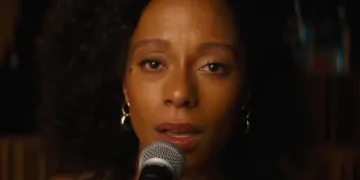
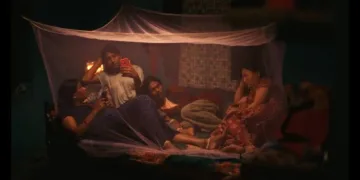

















Hind Meddeb’s documentary Sudan, Remember Us is not a work of historical summary. It is an act of intimate immersion. The film transports the viewer to the streets of Khartoum in 2019, into the charged atmosphere of hope following the removal of dictator Omar al-Bashir.
This is not a detached, geopolitical overview but a ground-level testimony, focusing its lens on the young poets, artists, and activists who embodied the revolution’s spirit. The narrative is framed with a poignant device: voice messages from 2023, where the sounds of a new war haunt the recent past.
This structure creates a somber echo, casting the bright optimism of 2019 in the shadow of what is to come. The film’s objective becomes clear. It seeks to document the soul of a generation and preserve the dream of a future that felt, for a moment, entirely possible. It prepares the audience for a personal account of a nation’s fragile hope.
The Poetry of Dissent
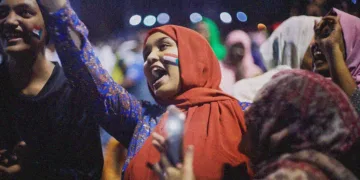
The film portrays the Sudanese uprising as a movement articulated through cultural expression. In this revolution, art is not decorative; it is the primary language of resistance. Director Hind Meddeb captures a world where poetry, music, and communal chants form the revolution’s heartbeat. This reliance on a rich oral and literary tradition distinguishes the movement.
It is a modern protest deeply rooted in a specific Sudanese heritage, connecting the new generation’s words to previous uprisings in the 1960s and 1980s. The art is both timely and timeless. It is also infused with a subversive wit, seen in moments like a mock road sign that reads, “Sorry for the Delay – Uprooting a Regime.” The camera absorbs the rhythmic cadences of recited poems and the collective energy of the singing crowds.
Through quiet conversations in cafes and homes, the aspirations of a new generation are revealed. They speak of a Sudan free from tribalism and the hypocrisy of religious leaders who preach poverty while driving luxury cars.
The film gives particular attention to the young women at the forefront. They articulate a universal desire for freedom through their specific struggle against a deeply entrenched patriarchal system, their fight becoming one for personal liberation and the political reconstruction of their entire society.
The Politics of Proximity
Meddeb’s filmmaking strategy is a statement in itself. Her choice to maintain a tight, personal focus omits the expert interviews and explanatory narration common in many Western documentaries. This “street-level” perspective forces an immediate emotional connection with the individuals on screen, humanizing a complex conflict by showing their personal stakes and shared vulnerability.

An international audience is invited to experience the events not as distant observers but through the participants’ eyes. This approach has its consequences. A viewer unfamiliar with Sudan’s political landscape may feel a lack of context. This absence is a conscious artistic choice, prioritizing the visceral human story over a detached political lesson.
The film’s visual style reinforces this, blending Meddeb’s own observant cinematography with the raw, chaotic cellphone footage from protestors and even soldiers documenting their own brutality. The polished camerawork captures the beauty and dignity of the movement, while the jarring, low-fi footage provides a visceral, unfiltered record of violence.
This dialectic mirrors the modern information environment where personal testimony collides with official narratives. The film does not aim to be a comprehensive lecture; instead, it seeks to create allies and advocates by grabbing our attention with its emotional force, compelling viewers to engage beyond the screen.
The Archive of Resilience
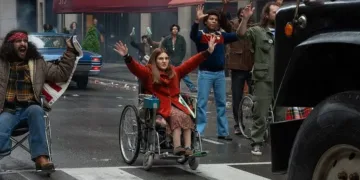
The film traces a devastating arc from the sit-ins’ initial optimism to the brutal military crackdown of June 3, 2019, the last day of Ramadan. Meddeb does not shy away from the violence, incorporating shocking footage that documents the massacre with an unflinching gaze. We witness shootings, beatings, and learn of bodies thrown into the Nile River.

The film’s opening, with its premonition of later conflict, makes this violent turn feel both shocking and tragically inevitable, amplifying the sense of profound loss. Yet the documentary’s final message is not one of complete despair. The resilience shown is tangible. By October of the same year, the protests were back, reportedly bigger and more committed than before.
This persistence in the face of such horror is central to the film’s spirit. It becomes a portrait of an unbroken will. In its closing moments, the title—Sudan, Remember Us—transforms into a direct plea.
It is a call for the world to bear witness and an appeal to the millions in the Sudanese diaspora, reminding them of the sacrifice. The film serves as a vital archive, ensuring a pivotal moment of courage is not forgotten by a world with a short attention span.
Sudan, Remember Us is a documentary film that premiered at the 81st Venice International Film Festival on August 30, 2024. It was subsequently screened at several film festivals, including the Toronto International Film Festival in September 2024 and the Doc NYC in November 2024. Theatrical releases in Europe began in France in May 2025 and in the UK in June 2025.
Full Credits
Director: Hind Meddeb
Writers: Hind Meddeb
Producers: Abel Nahmias, Michel Zana, Alice Ormières, Taoufik Guiga
Executive Producers: Abel Nahmias
Cast: Shajane Suliman, Ahmed Muzamil, Maha Elfaki, Khatab Ahmed
Director of Photography (Cinematographer): Hind Meddeb
Editors: Gladys Joujou
The Review
Sudan, Remember Us
Hind Meddeb's film is a vital and deeply moving piece of testimony. It forgoes a conventional political overview to offer something more valuable: an intimate portrait of a revolution's soul, expressed through the poetry and resilience of its youth. While its narrow focus may leave some viewers wanting more historical detail, its power lies in this very proximity, creating an unforgettable document of hope, tragedy, and the human spirit's refusal to be silenced. It is essential viewing.
PROS
- Offers an intimate and humanizing perspective on the Sudanese revolution.
- Effectively showcases art, poetry, and music as central tools of resistance.
- The narrative structure, framing 2019 with the reality of 2023, is emotionally powerful.
- Uses raw, unflinching footage to bear honest witness to historical events.
CONS
- Lacks deep political context, which may challenge viewers unfamiliar with the events.
- The deliberate street-level focus avoids exploring the larger geopolitical forces at play.