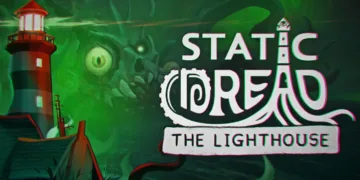

























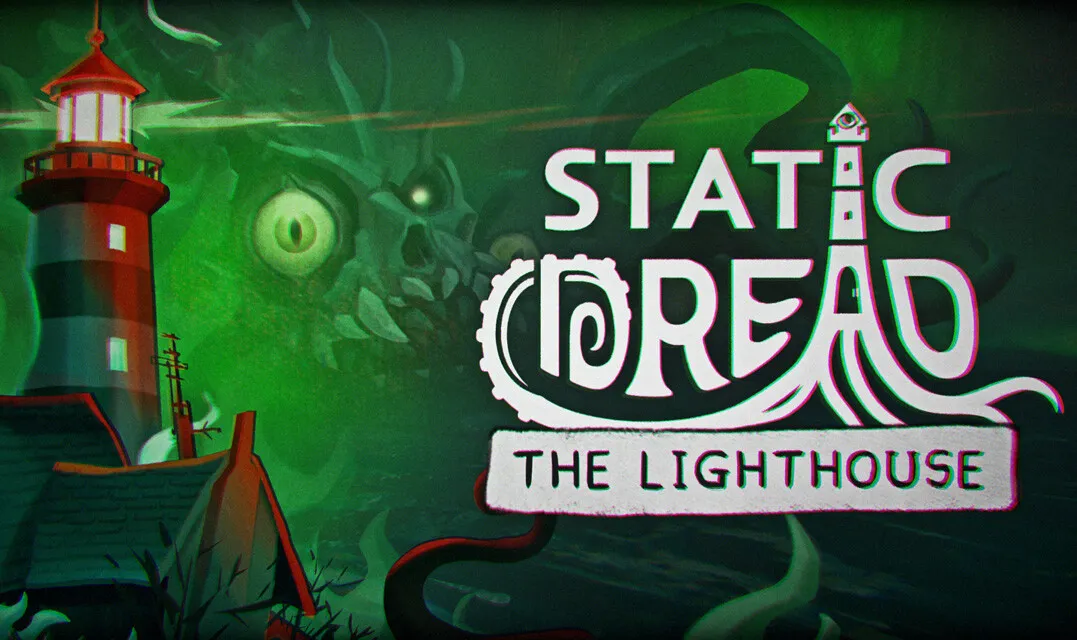

Static Dread: The Lighthouse places you into the solitary boots of a wickie, a lighthouse keeper hired for a job of immense importance. A bizarre, permanent aurora hangs in the sky, a global event that has fried modern electronics and rendered GPS navigation useless.
You are sent to a remote, forgotten island to recommission its ancient lighthouse, a vital beacon for ships now navigating treacherous waters by old-fashioned means. The work begins with a simple, rhythmic routine. You scan the crackling radio frequencies, wait for a call, chart a course, and guide the vessel to safety. This isolation creates a powerful atmosphere from the start.
The decrepit building and the lonely island feel heavy with unspoken history. The straightforward responsibility of the job provides a thin layer of comfort over a deep, unspoken unease, suggesting your duties will soon become far more complicated than simply keeping a light on.
The Keeper’s Burden
The core gameplay of Static Dread is a masterclass in slowly escalating pressure, building upon a foundation that feels deceptively simple at first. The game’s clear inspiration, Papers, Please, is evident in its procedural nature, but Static Dread trades border-crossing bureaucracy for maritime desperation. Each night, your work cycle is methodical.
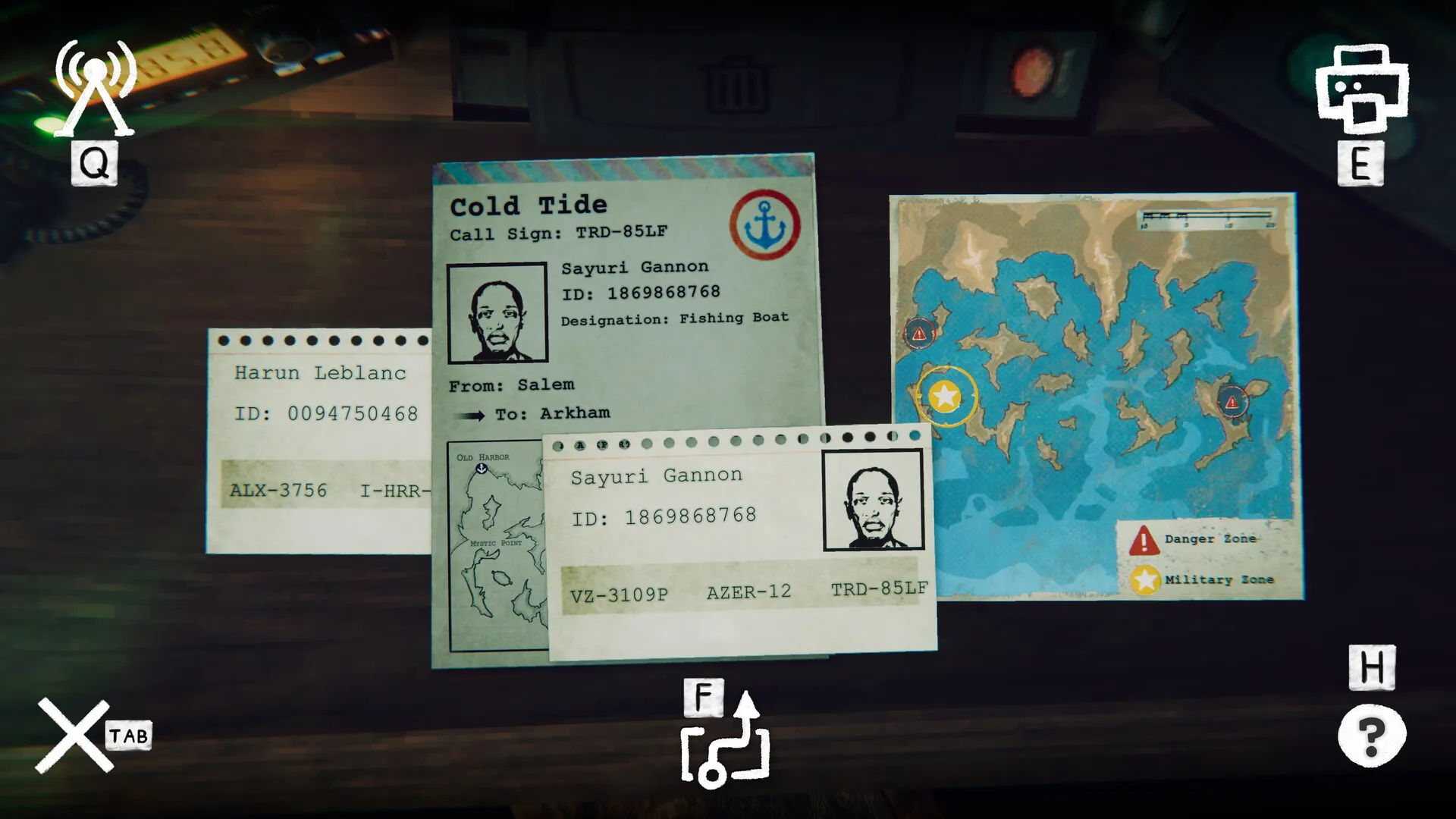
You must manually spin a dial across the radio spectrum, hunting through waves of static for a ship’s hail. The successful acquisition of a signal is followed by the mechanical churn of a fax machine delivering the vessel’s details. With this information, you turn to a large nautical chart, tracing a route that avoids hazards and leads to the correct port. This tactile process feels grounded and satisfying. It establishes a rhythm that the game will systematically disrupt.
Initially, your only concern is getting ships to their requested destinations. Soon, however, your employer’s nightly briefings add new layers of complexity. You might be ordered to divert all military vessels to a specific port for inspection. A few nights later, you must check cargo manifests for keywords related to cult activity. Then, you are tasked with verifying ship and captain identification numbers against a growing list of suspicious entities.
Each new rule is added incrementally, so you barely feel the increasing weight until you are juggling four or five verification steps for a single ship, all while the storm rages outside and the lights begin to flicker. Mistakes are not just learning experiences; they result in fines deducted directly from your pay, which is your only means of survival.
This procedural gameplay is interwoven with a demanding survival system governed by two key meters: energy and sanity. Energy is your physical resource, depleted by running around the multi-story lighthouse to fix the constantly failing equipment. If your energy bottoms out, you fall asleep on the job, an unforgivable sin for a wickie that results in immediate failure.
Sanity is your mental fortitude, a resource that drains whenever you are in darkness or witness one of the lighthouse’s paranormal manifestations. A complete loss of sanity results in being consumed by the encroaching dread. This duality creates a tense loop of risk and reward. Fixing the generator costs precious energy but restores the light, protecting your sanity.
Guiding ships successfully earns you money, but the mental toll of the job chips away at your psyche. Your earnings must be carefully spent on supplies like food, drink, and a much-needed coffee maker to keep both meters from emptying. This economic layer transforms every action into a calculated decision, forcing you to prioritize your own well-being against the demands of your increasingly nightmarish job.
A Knock at the Door
Where Static Dread transcends its mechanical inspirations is in its handling of narrative choice and moral consequence. The game’s story is not told through cutscenes but through the decisions you make under pressure. The most potent examples are the visitors who appear at your door. The standing order from your boss is unequivocal: you are on duty and must not let anyone inside the lighthouse.
The game relentlessly tests this rule by presenting you with figures who challenge your resolve. An old sea captain might arrive, wishing to honor a years-long tradition of sharing a drink at the lighthouse before a voyage. A desperate woman might appear, lost and frightened, seeking refuge from something in the woods. Later, a cryptic boy in a raincoat offers vague but essential clues, and a seemingly vicious dog appears on your doorstep.
Each visitor is a self-contained moral test. The game avoids simple right-or-wrong answers, instead focusing on the ambiguity of trust. Letting the captain in might seem harmless, but what if he is not who he says he is? Turning away the lost woman is cold, but what if she is a lure? The consequences of these choices are rarely immediate, which makes them feel more meaningful.
An act of compassion shown on the third night might provide you with a key item or an ally on the tenth. Conversely, a decision to rigidly follow the rules could lock you out of a critical story path. The game respects the player’s agency, allowing your choices to carve a distinct path through the narrative, leading to one of several endings that reflect the sum of your judgments.
This system of choice is further complicated by the conflicting voices vying for your attention. Your boss represents the cold, rational world of rules and paychecks. His orders are pragmatic, focused on maintaining order. But another voice soon bleeds through the radio static—a deep, ancient consciousness that speaks of power and hunger.
It tempts you with promises to calm the storms or reveal secrets, asking only that you guide a few ships into its waiting maw. This creates a powerful moral dilemma at the core of the experience. Do you serve the bureaucratic, human world that hired you, or do you appease the unknowable entity that seems to control the very darkness you are fighting? The game never tells you who to trust, leaving you to navigate its treacherous moral waters with only your own instincts as a guide.
The Creeping Dread
The game’s horror is achieved not through overt shocks but through a masterfully crafted atmosphere of psychological dread, anchored by its distinct presentation. The choice of lo-fi, PSX-inspired graphics is an inspired one. This aesthetic does more than evoke nostalgia for an earlier era of horror games; it is used to make the game’s world feel fundamentally unstable.
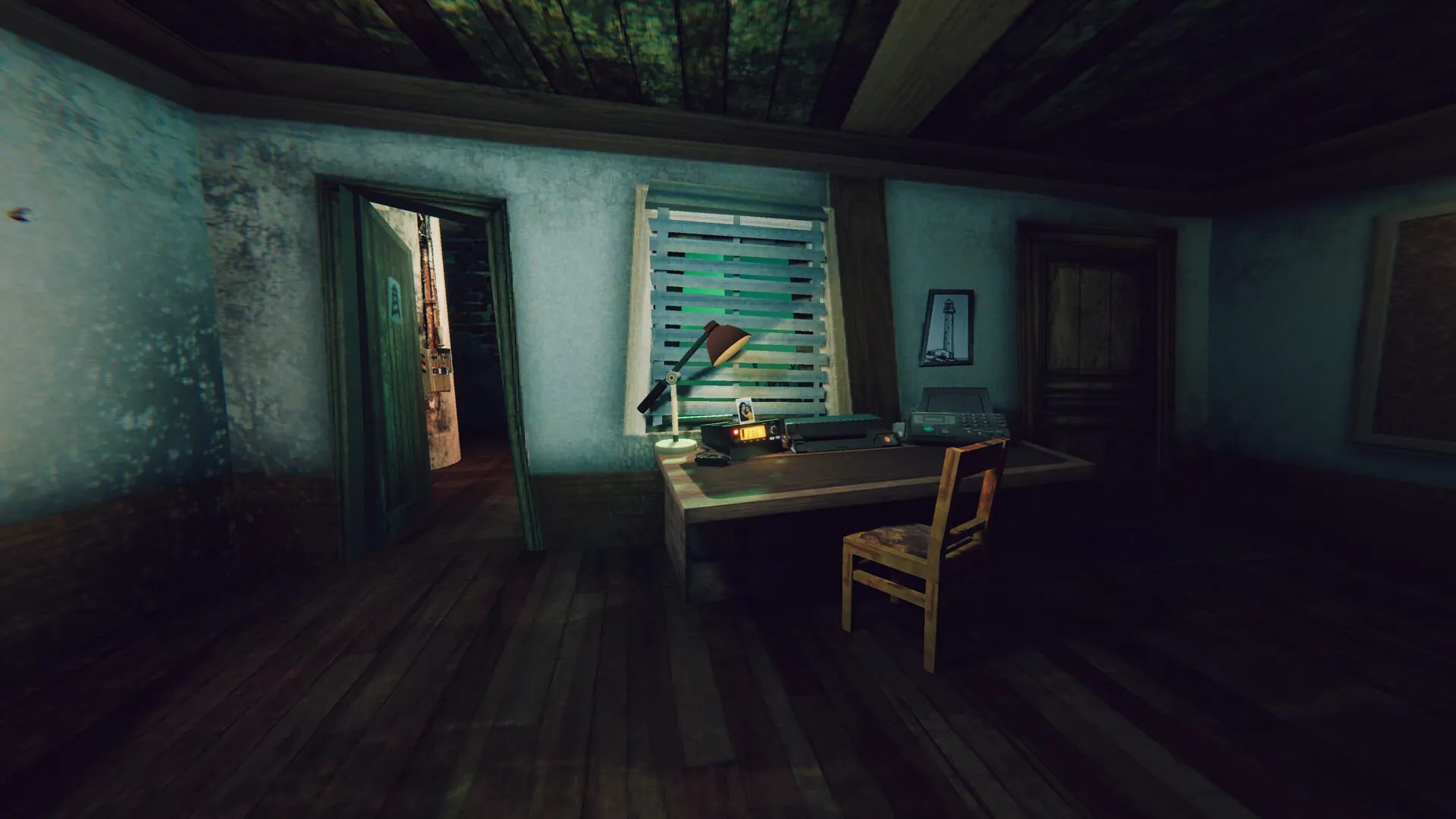
The interior of the lighthouse is a space of unsettling geometry, with slanted floors, warped doorways, and cramped, spiraling staircases that feel designed to disorient. This architectural wrongness is a visual echo of the game’s cosmic horror themes. The unique 2D illustrations of the characters are similarly uncanny, their stylized and slightly distorted features making them feel both human and alien.
The sound design is arguably the most effective tool in the game’s arsenal. The lighthouse is alive with sound: the rhythmic groan of the rotating lamp, the creak of old floorboards, and above all, the ever-present hiss and crackle of the radio. The radio is not just a tool; it is a character. You learn to read its moods, straining to hear the whispers buried beneath the static.
The garbled, distorted audio used for character dialogue further enhances the sense of unease, preventing you from ever feeling truly comfortable in any conversation. While a loud musical cue occasionally signals a major supernatural event, the game’s most terrifying moments are born from quiet. The sudden silence when the generator fails is more chilling than any monster.
This is a game that understands that the most effective horror is psychological. It builds a slow-burning tension that seeps into your bones rather than startling you with jump scares. The paranormal events are directly tied to the sanity mechanic, making the horror a personal experience. As your mental state deteriorates, the lighthouse itself decays.
Cryptic symbols bleed through the wallpaper. Oily black pools emerge from the floor. Tentacles may writhe in the periphery. The game provides you with a locker to hide in, yet for long stretches, there is nothing tangible to hide from. The threat is the environment itself and your own perception of it. The world literally becomes more hostile and monstrous as your mind breaks down, making your struggle for sanity a desperate, tangible fight for survival.
The Review
Static Dread: The Lighthouse
Static Dread: The Lighthouse is a masterclass in psychological dread and systemic storytelling. It successfully merges the procedural tension of a management sim with a branching narrative full of meaningful, ambiguous choices. While its slow-burn pacing may not suit everyone, its phenomenal atmosphere and the deeply unsettling feeling of its world make it an essential experience for fans of narrative-driven horror.
PROS
- An expert blend of procedural job simulation and survival mechanics.
- Meaningful narrative choices with significant, delayed consequences.
- Superb psychological atmosphere driven by excellent sound and art design.
- The core gameplay loop remains engaging as new complexities are added.
CONS
- The deliberate, slow-burn pacing might not appeal to all players.
- Some audio cues for horror events can become repetitive.
- The difficulty of resource management spikes significantly in the later stages.