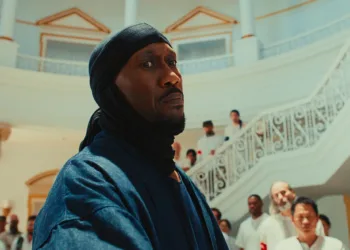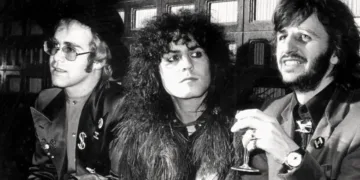




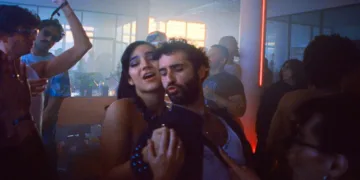


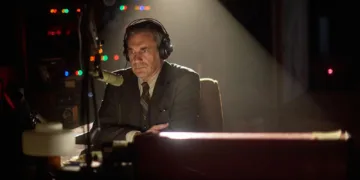




















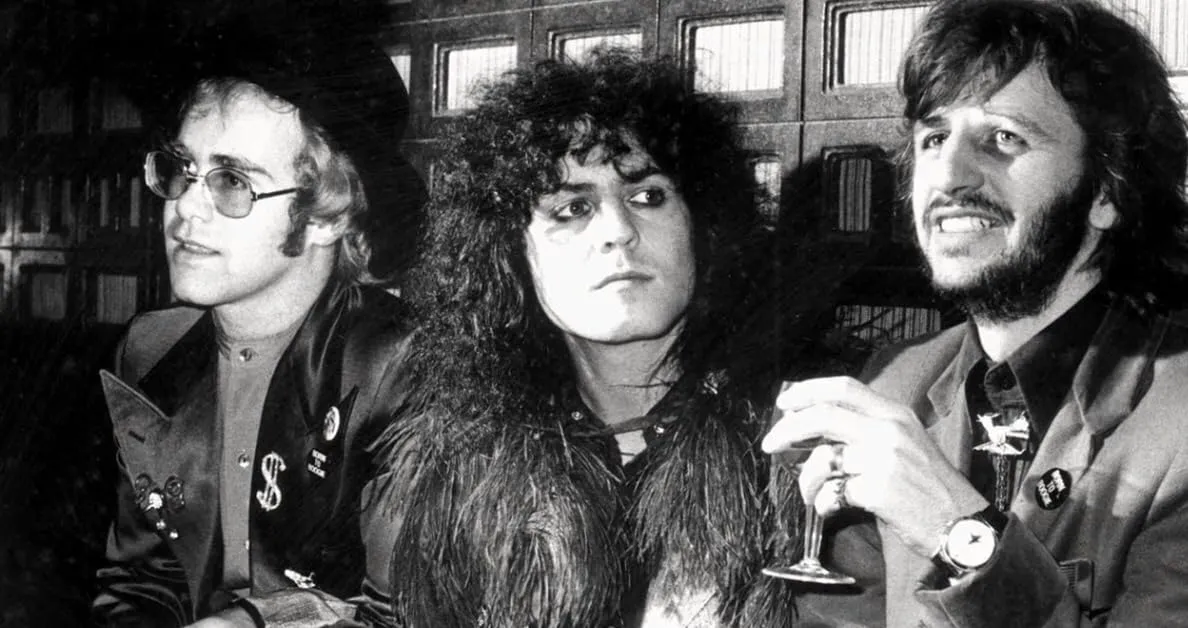

Before David Bowie’s Ziggy Stardust, there was Marc Bolan. As the frontman for T. Rex, Bolan was a foundational force of glam rock, putting on glitter and feather boas with an androgynous swagger that reshaped the look and sound of 1970s Britain.
The documentary AngelHeaded Hipster attempts to capture his legacy through a unique lens: the creation of a modern tribute album produced by the late Hal Willner. This structure immediately splits the film into two distinct parts.
One is a biographical journey using rich archival material to tell Bolan’s story. The other is a contemporary, behind-the-scenes look at artists like Nick Cave and U2 recording their interpretations of his work. The film’s central question becomes how these two narratives, past and present, speak to each other.
A Starman in the Archives
The most potent parts of the film are, without question, the moments spent with Bolan himself. Watching the rescued archival footage, much of it from television appearances and grainy concert films, feels like uncovering a lost transmission from another planet. The aesthetic itself is a cultural artifact, capturing the raw, saturated energy of the era.
The editing skillfully weaves together these performances and interviews to show a man who was cheeky, fiercely intelligent, and deeply seductive. We see this in his playful verbal sparring with interviewers and the confident glimmer in his eye as he performs. The film builds a strong case for his cultural importance, positioning him as a true pioneer. His androgyny, for example, is presented as a natural extension of his artistic persona, a revolutionary act that opened the door for many who followed.
The archival material shows his impact was immediate. Anecdotes from his peers are invaluable, painting a picture of an artist who was both a supportive friend and a confident rival. Billy Idol’s story about Bolan turning a hostile festival crowd from booing to a fifteen-minute ovation is particularly telling.
Elton John’s memory of Bolan casually announcing “I sold a million records this morning” reveals the scope of his ambition. His son, Rolan Bolan, also appears, offering a quiet, personal connection to the man behind the myth. The archival material is so strong that Bolan’s own story consistently threatens to pull the entire film into its orbit, making you forget about the tribute album.
Deconstructing the Dream
The film then shifts its focus to the studio sessions for the tribute album. This is where the narrative experiment gets complicated. The stated intention is to celebrate Bolan’s songwriting by having modern artists pull the songs apart, and the film becomes a document of that difficult process. Sometimes, this approach is revelatory.
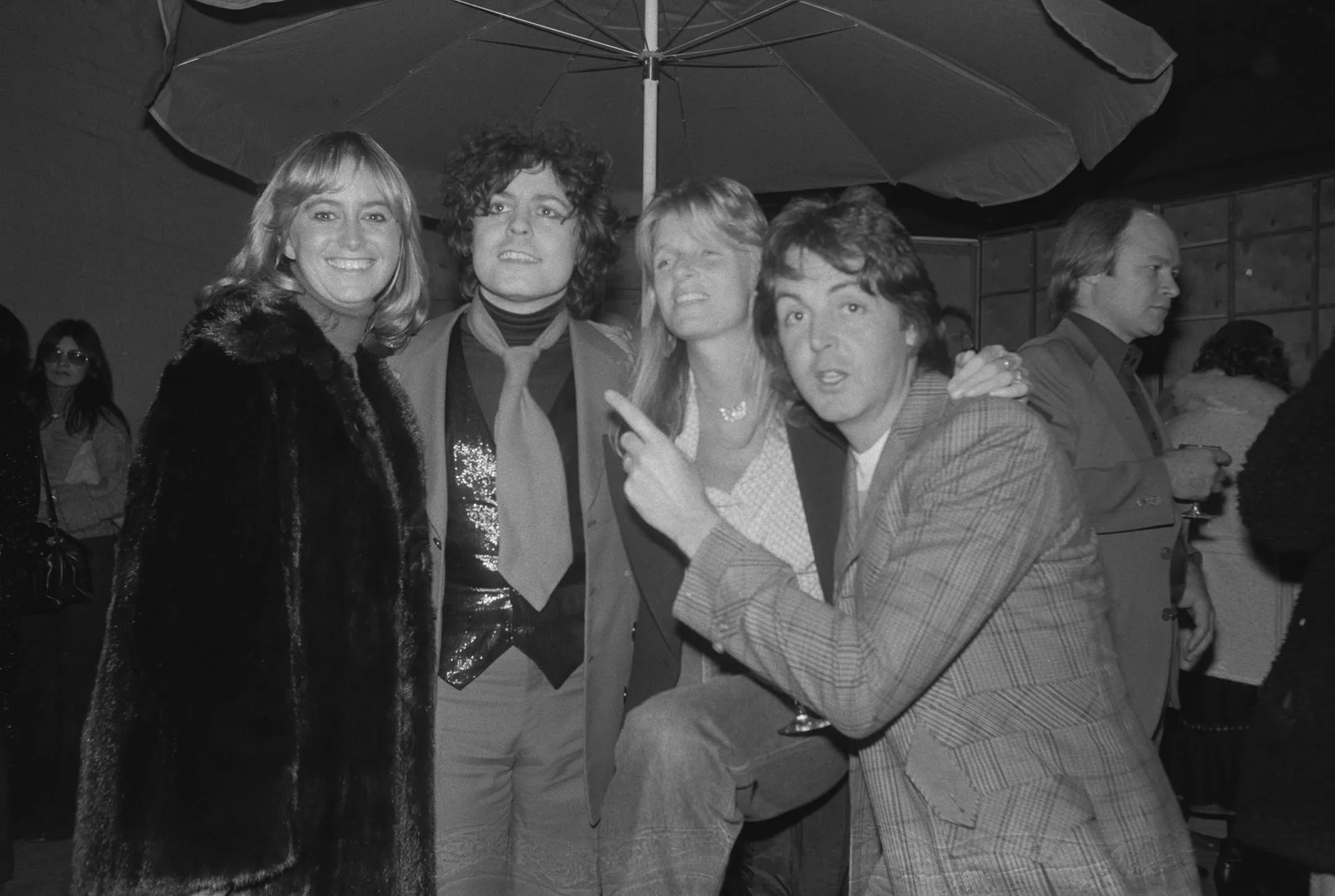
Seeing Nick Cave in the studio, transforming “Cosmic Dancer” into a sparse, haunting ballad, is a moment of pure magic. He strips away the original’s whimsical folk feel, replacing it with somber piano chords and a mournful string section. The camera lingers, allowing us to witness the deconstruction and rebuilding of a classic, revealing the melancholic heart of Bolan’s lyrics.
Similarly, Macy Gray’s reggae-infused “Children of the Revolution” gives the song a new political weight, connecting its rebellious spirit to a different tradition of protest music. These are the moments the film promises. Many other sessions, however, feel less insightful.
The challenge of reinterpreting an icon proves immense. U2’s take on “Bang a Gong (Get It On)” feels surprisingly hollow, a faithful but sterile reading that fails to find a new perspective. Many artists offer general praise for Bolan without giving much detail on their own creative process, leaving the viewer to wonder what decisions were made.
Producer Hal Willner, the project’s visionary and a master of such tribute albums, remains a peripheral figure. His death is handled almost as an afterthought, a missed opportunity to ground the tribute in a more emotional story about his final work.
Two Films in One
AngelHeaded Hipster is built on a fractured structure, and the seams show. The editing often jumps abruptly from a raw, energetic 1971 Bolan performance to a quiet, contemplative studio in the present day. This choice creates a jarring rhythm that prevents either narrative from gaining full momentum. As a work of narrative innovation, it’s a bold but flawed experiment in nonlinear storytelling.

It aims for the collage-like feel of other modern music documentaries but lacks a unifying aesthetic to hold the disparate pieces together. The film is caught between being a proper biography and a making-of documentary, achieving neither completely. It feels like getting two very different movies shuffled together. What it does succeed at is being a powerful reminder of Bolan’s genius.
I was taken back to the first time I heard “Cosmic Dancer” on a soundtrack as a teenager, and the film perfectly captures that feeling of discovery. It is a loving, if structurally unsound, remembrance that will surely send new viewers scrambling to listen to T. Rex.
It touches upon fascinating, underexplored parts of Bolan’s life—his Tolkien-inspired poetry, his early career as a model, his ambition to direct films—but only in passing. The film proves, above all, that a straightforward, focused work about Marc Bolan’s brilliant, all-too-short life is a story that still needs to be told.
AngelHeaded Hipster: The Songs of Marc Bolan & T. Rex is a documentary that explores the music and legacy of Marc Bolan and T. Rex. The film was released in US theaters on August 8, 2025 and was made available on demand starting September 5, 2025.
Full Credits
Director: Ethan Silverman
Writers: Ethan Silverman
Producers: Bill Curbishley, Ethan Silverman
Executive Producers: BMG, Dan Braun, Isaac Hoff
Cast: Marc Bolan, Ringo Starr, Nick Cave, Gloria Jones, Rolan Bolan, Joan Jett, David Bowie, Elton John
Director of Photography (Cinematographer): Gus Ford
Editors: Michael Taylor, Alex Frasse
The Review
AngelHeaded Hipster: The Songs of Marc Bolan & T. Rex
AngelHeaded Hipster is a flawed yet heartfelt tribute, torn between being a biography and a making-of documentary. Marc Bolan's own story, told through incredible archival footage, is utterly magnetic and far outweighs the inconsistent modern tribute segments. While its fractured structure prevents it from being the definitive portrait Bolan deserves, the film succeeds as a powerful reminder of his genius. It is essential viewing for fans and a worthy, if uneven, introduction for newcomers who are about to discover their new favorite band.
PROS
- Exceptional archival footage that captures Marc Bolan's charisma.
- Successfully makes the case for Bolan's importance as a glam rock pioneer.
- Features several standout tribute performances, particularly from Nick Cave and Macy Gray.
- Serves as a great introduction to the music of T. Rex.
CONS
- A jarring, fractured structure that jumps between past and present.
- The making-of segments for the tribute album are inconsistent in quality.
- Key narrative elements, like producer Hal Willner's role, feel underdeveloped.
- The film’s dual focus prevents it from fully succeeding as either a biography or a concert film.