

























The story of Jesus arrives again, another apparition in the unending procession of cinematic resurrections. This time, the chronicle is named Light of the World, and it seeks to illuminate its subject through a calculated shift in perspective.
The familiar tale of ministry and sacrifice is refracted through the eyes of its youngest witness, the Apostle John, here imagined as a boy stumbling on the periphery of the divine. This choice is a clear concession to a younger viewership, an attempt to soften the story’s formidable edges into something approachable, something a child might hold.
The film’s aesthetic follows this impulse, cloaking its narrative in the hand-drawn animation of a bygone decade. It is a ghost of a style, summoned to make an ancient story feel immediate. The result is a work that succeeds in its aim for accessibility, yet this very accessibility raises questions about what is lost when a profound mystery is rendered simple.
Ghosts in the Inkwell
There is a current of nostalgia that pulls this film’s visuals backward in time, a deliberate summoning of a past aesthetic. The hand of director Tom Bancroft, a veteran of Disney’s 1990s renaissance, is evident in every frame, making the animation a clear homage to that period and its painterly epics like The Prince of Egypt.
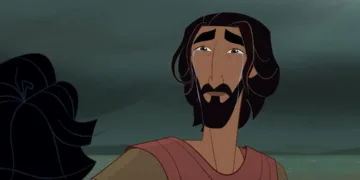
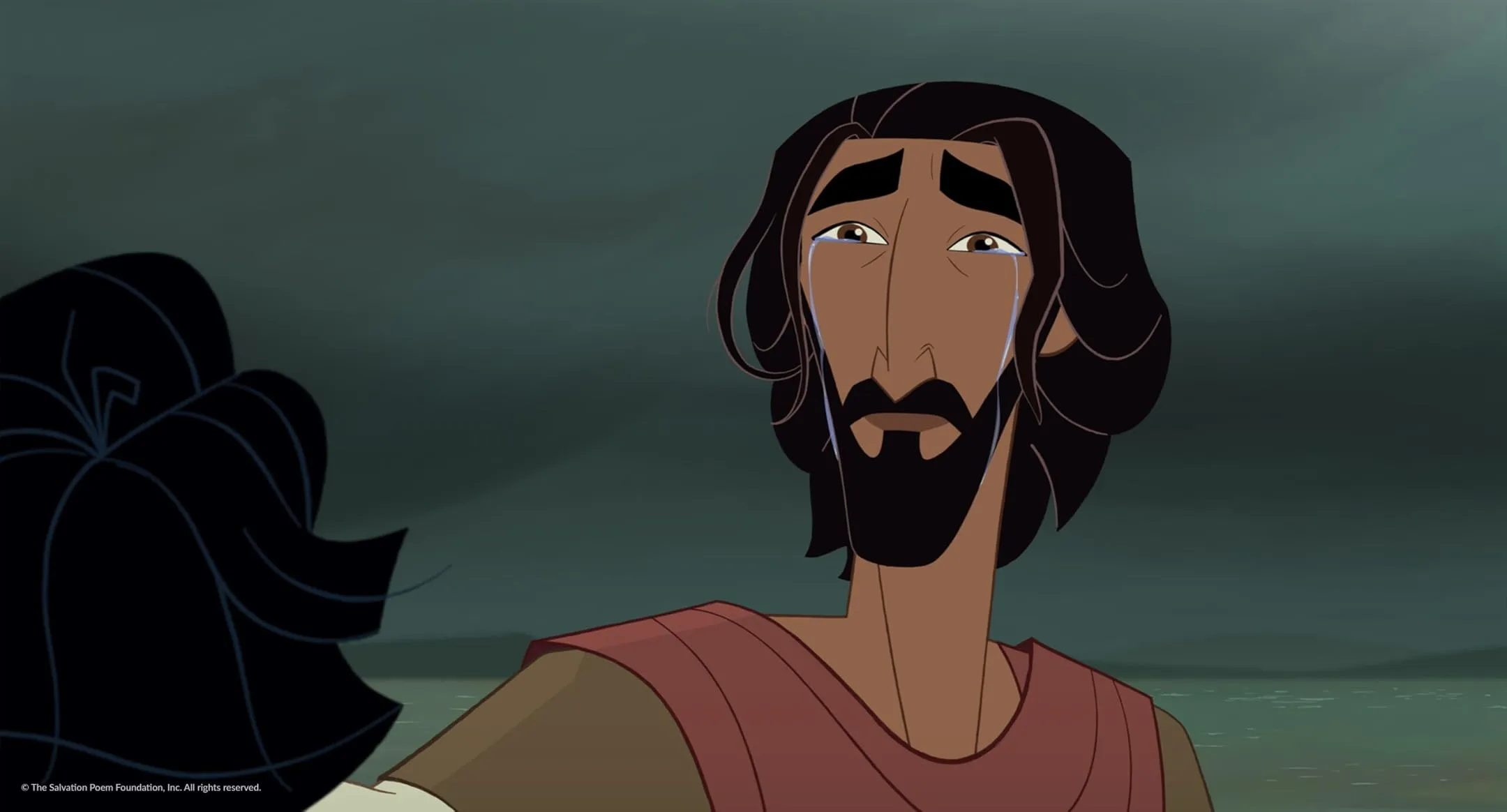
This choice to use traditional 2D animation feels less like a simple preference and more like an argument. It positions this sacred story within the same cultural memory as the secular myths of The Lion King or Mulan, a bid for a certain kind of timelessness. The style itself is peculiar; elongated faces and blockish forms give the characters the look of living hieroglyphs, figures sketched for a new faith yet steeped in an old artistic grammar.
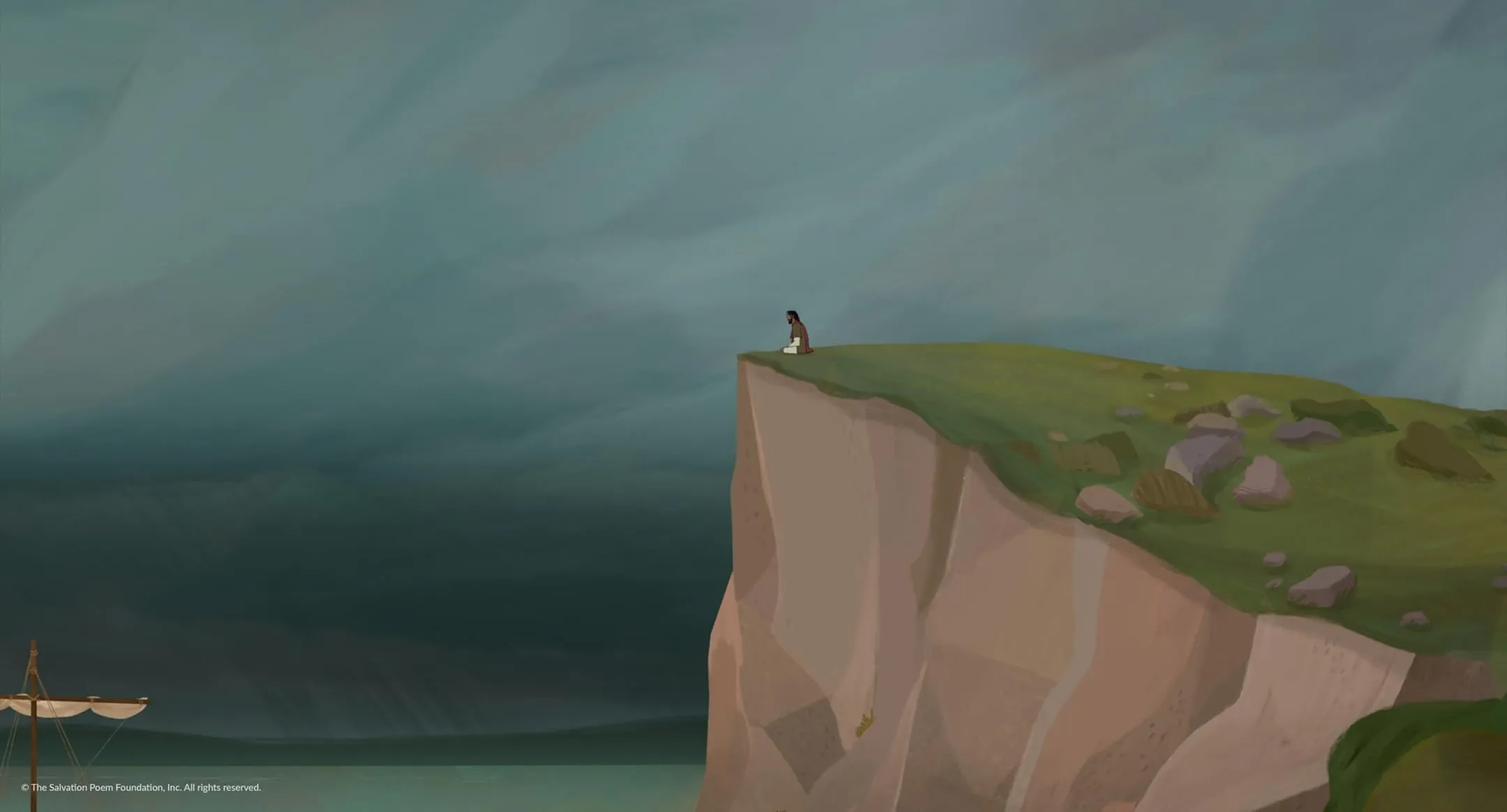
They are rendered with commendable attention to accurate brown skin tones, a detail that anchors the fantastical in a sliver of historical reality. This anchor is needed, for the film often drifts into pure symbolism. When the narrative pauses for a parable, the visual language fractures into something more abstract, a story within the story told through stark, moving shapes.
In these moments, the film acknowledges the limits of literalism, offering a glimpse into a more symbolic mode of existence. This visual dynamism is the film’s greatest power, a constant and compelling counterpoint to the narrative’s simplicity. The animation constructs a beautiful, fluid surface, a memorable skin of light and color that contains the story’s turbulent heart.
Innocence as a Narrative Cage
To place a child at the center of a cosmic drama is a perilous narrative choice, one that risks reducing profundity to pantomime. Here, a pre-teen John serves as the audience’s proxy, a clumsy and scattered boy whose wide eyes are meant to mirror our own.
The stated intent is to ground theophany in the soil of a simple, human experience, to make the divine digestible. But what is the cost of such a filter? The film uses John’s innocence not as a lens to explore the terror and wonder of the divine from a fresh angle, but as a shield to protect the viewer from it.
The raw, existential dread of witnessing a crucifixion, the bewildering physics of a miracle—these are flattened by a perspective that cannot fully process them. John is less a character grappling with impossible truths and more a passive camera, a convenient witness moved from one tableau to the next.
The execution rarely allows us into his mind; we see what he sees, but we are denied the chaotic, unformed terror that a real child might feel. This device, so clever for an audience seeking a gentle lesson, becomes a narrative cage. It traps the story in a perpetual state of simplicity, foreclosing any interpretation that is not pre-approved and safe. The immense, violent, and transformative power of the events is kept at arm’s length, held in check by a boy’s uncomprehending gaze.
The Human God and His Cardboard Saints
The film offers a rare and welcome gift in its portrayal of Jesus. This is not the serene, untouchable figure of so many interpretations, a stained-glass icon immune to the world. He is a man burdened by his purpose, his face etched with genuine pain, frustration, and fleeting joy.
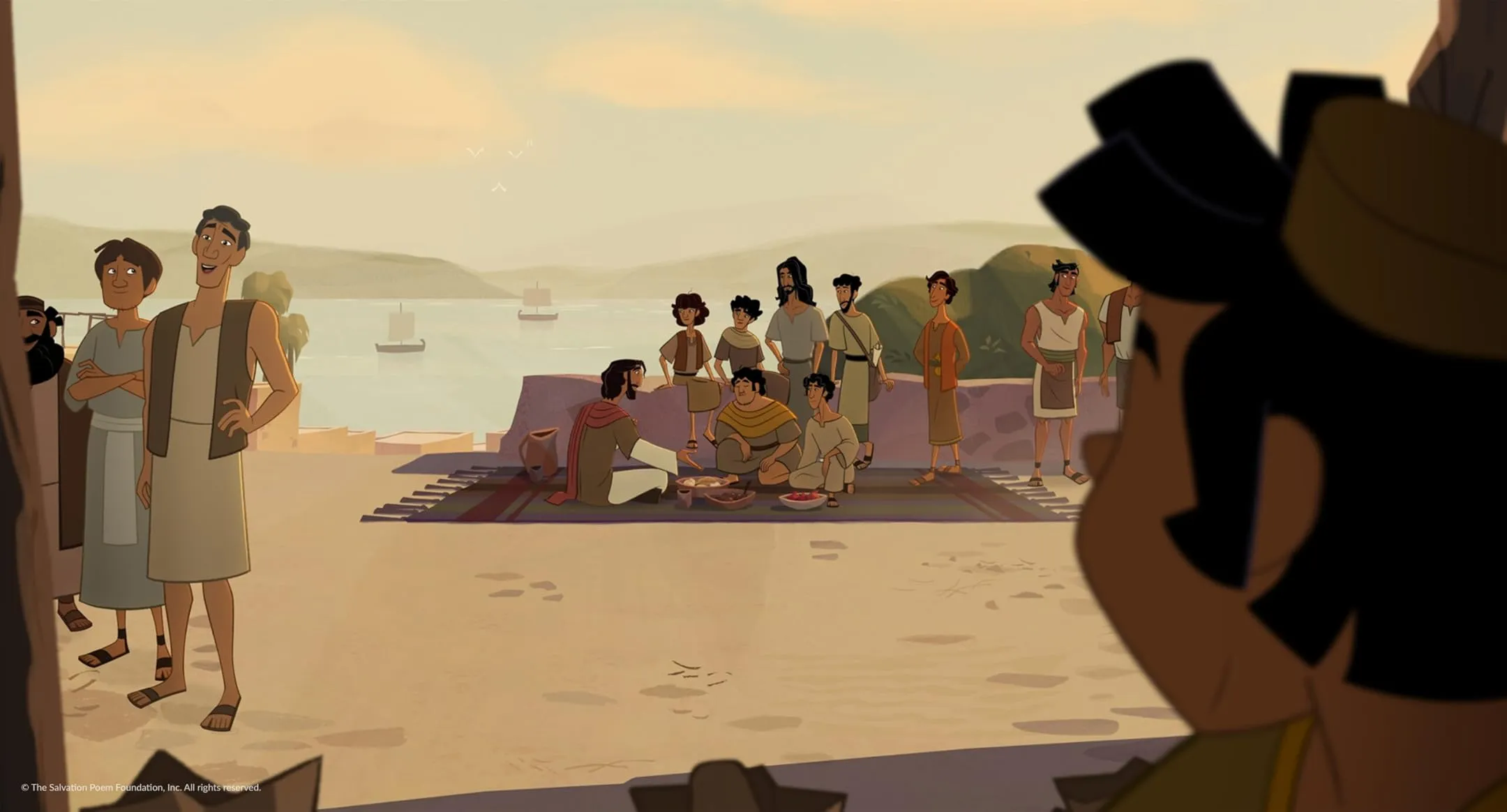
To show a divine being who can be hurt is to introduce a vulnerability that is both theologically complex and deeply compelling. He feels the weight of his mission, and this emotional honesty makes him tangible. His disciples, too, are sketched with a communal warmth, a band of friends whose laughter feels real. This focus on the central figure’s humanity, however, makes the flatness of the surrounding characters all the more noticeable.
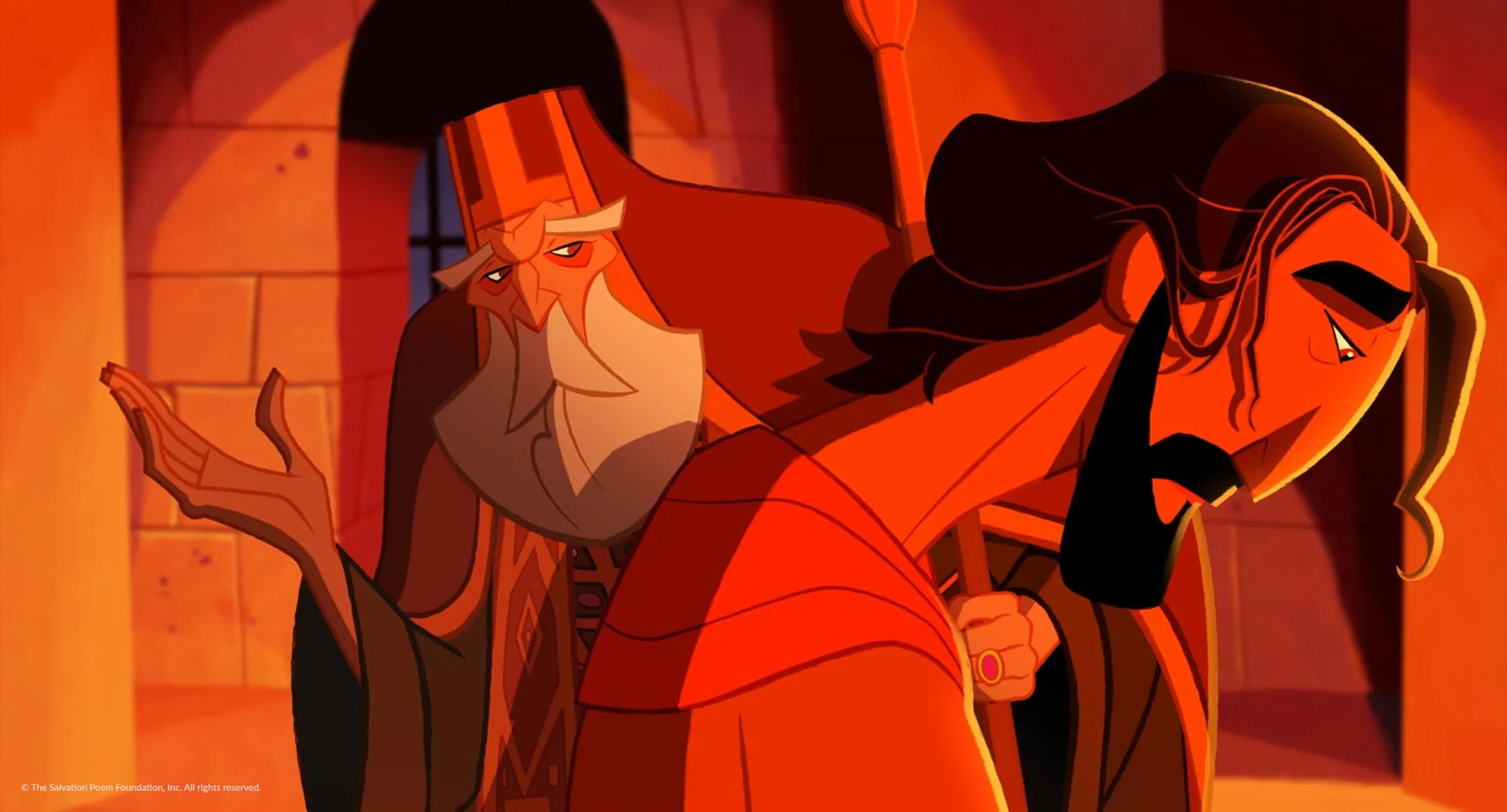
The women in the story, Mary Magdalene and Jesus’s mother, are pious shadows, their existence defined solely by their silent, unwavering affirmation of the central male figure. Their potential for depth is left entirely untapped. More grievously, Judas is reduced to a simplistic trickster, a caricature of betrayal whose motivations are left unexplored.
The tragic gravity of his choice, a subject of immense philosophical weight concerning free will and despair, is discarded for a one-dimensional villainy. This is a failure of nerve. The effort to humanize the protagonist succeeds, but it leaves him isolated, a figure of substance moving through a world of phantoms.
A Litany of Miracles, a Poverty of Meaning
The film’s ninety-minute runtime proves to be an insurmountable obstacle, forcing a sprawling spiritual history into the rigid confines of a three-act structure. The story of Jesus is not a single narrative but a collection of moments that demand contemplation, silence, and awe. Light of the World affords them none.
It moves at a feverish pace, a breathless recitation of biblical events that transforms a journey of faith into a checklist. Miracles are dispensed in a rapid montage, their power and strangeness diminished with each hurried depiction until they feel mundane. Each wonder, ticked off the list, is paradoxically drained of its wondrous quality. Key events in this passion play, from the healing of the sick to the final, world-altering resurrection, are given mere seconds of screen time.
They become plot points, not moments of revelation. The dialogue does little to slow this frantic procession. It offers weak jokes and hollow exposition, with anachronistic references that tear the fabric of the film’s reality. These intrusions reveal a lack of confidence in the source material’s own power to hold an audience. The film’s instructional purpose becomes painfully clear; it is a sermon delivered at a sprint, sacrificing the resonant silence between the words for the certainty of its message.
The movie had a world premiere at the THSC State Convention on June 6, 2025, and a theatrical release in the United States and Canada on September 5, 2025. It is a 2D-animated Christian drama that tells the story of Jesus’ life through the eyes of the Apostle John. The film was released in theaters, and tickets can be purchased through services like AMC Theatres, Fandango, and Atom Tickets.
Full Credits
Director: Tom Bancroft, John J. Schafer
Writers: David M. Armstrong, Drew Barton Armstrong, Jason Heaton, Brennan McPherson
Producers and Executive Producers: Brennan McPherson, John J. Schafer, Matt McPherson
Cast: Ian Hanlin, Benjamin Jacobson, Vincent Tong, Michael Benyaer, David Kaye, Peter New, Richard Newman, Sam Darkoh, Colin Murdock, Jesse Inocalla, Erin Mathews, Dave Pettitt, Ceara Morgana, Bill Newton, Mark Oliver, Adam Nurada, Dylan Leonard, Adam Kozlick
Editors: Rob Zeigler
Composer: Alex McKenzie
The Review
Light of the World
While Light of the World is a work of undeniable visual beauty, its hand-drawn elegance conceals a hollow core. The narrative, filtered through a sanitizing child's perspective and rushed at a breathless pace, sacrifices philosophical depth and emotional gravity for didactic simplicity. Key figures are reduced to shadows and the story's profound mysteries are flattened into a mere sequence of events. It is a gorgeously animated vessel, carrying a disappointingly weightless message.
PROS
- Stunning 2D, hand-drawn animation reminiscent of classic 1990s films.
- Creative and visually distinct art style for parables and storytelling sequences.
- A more human and emotionally expressive portrayal of Jesus.
CONS
- Extremely rushed pacing that undermines the emotional impact of major events.
- Simplistic and underdeveloped supporting characters, particularly Judas and the female roles.
- A weak, didactic script with clumsy dialogue and poor humor.
- The child-narrator device sanitizes the story's darker, more complex themes.