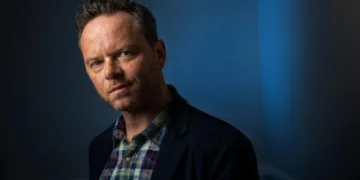
















Following a finale that left a smoking crater on Prodigy Island, Noah Hawley says conversations are underway about continuing the story of Alien: Earth. The chapter-ending hour, “The Real Monsters,” closes with Wendy and the surviving children seizing control as escaped xenomorphs overrun the facility, a power shift Hawley frames as a beginning rather than an endpoint. He describes the series as a long-arc narrative and confirms he has mapped where the journey goes, though there is no formal green light for a second season.
Hawley’s post-finale remarks circle the same thematic question the show has posed since its premiere: what happens when radical innocence meets radical power? He points to the kids’ black-and-white worldview—shaped by captivity and weaponization—and to Wendy’s narrow focus on immediate survival, choices that may carry consequences she has not yet reckoned with. The episode’s last turns hint at a wider monster ecology, including the “Eye” intelligence surfacing in a new host body, a twist designed to expand the threat beyond familiar xenomorph behavior and set up a broader conflict in any continuation.
On timing, Hawley indicates enthusiasm and preparedness but stops short of predicting when cameras might roll, noting that any return must fit within the established Alien film timeline and production realities. Industry chatter around renewal remains upbeat, yet the status is unchanged: no cancellation, no pickup, active discussions.
The creative direction he sketches suggests season two would push further into corporate ambition, synthetic agency, and the children’s emerging rule—an uneasy equilibrium in which human, hybrid, and alien instincts collide. That approach tracks with the finale’s design: keep the chess pieces on the board, widen the lens, and leave the island’s new order poised for fracture. If the series returns, Hawley signals he’s ready to move quickly from fallout to consequence.