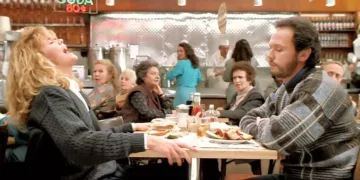






























Martin Reiner says the most famous scene in “When Harry Met Sally” was both awkward and carefully engineered: he directed Meg Ryan’s deli-floor demonstration while his mother sat a few feet away to deliver the deadpan capper, “I’ll have what she’s having.” In fresh remarks tied to a new retrospective, the filmmaker describes staging the moment at Katz’s Delicatessen and the surreal experience of cueing his mother, Estelle Reiner, for the punchline that later landed among the American Film Institute’s top movie quotes.
The set-piece’s shape emerged through collaboration. Writer Nora Ephron had explored the subject on the page; during early readings, Ryan proposed that Sally perform the act in public, turning a conversation into spectacle. Billy Crystal then floated the topper that a nearby customer would ask for “what she’s having,” a line Rob Reiner assigned to his mother for maximum contrast. The choices anchored a scene that balanced frank talk about women’s sexual experience with a crowd’s stunned silence, and they have been confirmed over years of cast and creator recollections.
Execution took work. Ryan was reportedly anxious on the day, and Reiner has recalled demonstrating the crescendos himself to calibrate pacing and volume, before Ryan delivered the take that made the final cut. Reporting and scholarship about the film note the production ran the scene repeatedly to find the rhythm that plays as spontaneous. The AFI recognition and the deli’s now-famous sign above the table testify to how firmly the moment sits in popular memory.
The sequence continues to circulate well beyond anniversary screenings. Earlier this year, Ryan and Crystal reunited at Katz’s for a Super Bowl commercial that gently echoed the original, reintroducing the setup to younger viewers and sparking another round of stories about how a joking aside became a generational catchphrase. The renewed attention aligns with Reiner’s latest reflections and the continued curiosity about how a single beat—conceived in rehearsal, refined on set, and punctuated by a mother’s cameo—helped define a modern romantic comedy.