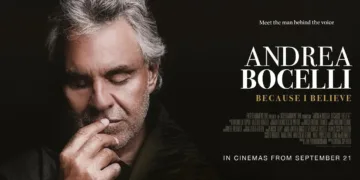



















A life story is often a negotiation with ghosts, a dialogue with the inconvenient selves one has left behind. The cinematic self-portrait, then, becomes a fascinating act of curation, deciding which spirits are invited into the light and which are left to linger in the unfilmed shadows. Andrea Bocelli: Because I Believe is a work of profound and unsettling silence.
It is not a document of a man’s life so much as it is the construction of a sanctuary, a space where all dissonance has been harmonized into a single, placid chord. Director Cosima Spender works with the full cooperation of her subject, who also serves as executive producer, resulting in a film that functions like a pristine surface. It reflects back a perfect image, but it does not permit entry.
The narrative moves between a sunlit present and a streamlined past, crafting a myth of serene destiny. It is a beautiful film about a beautiful voice. Yet its very perfection raises a disquieting question: what is the sound of a life when all its discordant notes have been edited away?
The Echo in the Dark
The film approaches the defining trauma of Bocelli’s life—the loss of his sight—with a calm that borders on dissociation. We are told of the congenital glaucoma, of the dozen childhood operations, and of the final, accidental blow on a soccer field at age twelve that extinguished the visual world forever. This event is presented not as an existential rupture, a violent tearing of the fabric of reality, but as an obstacle that forged character.
The potential abyss of that moment, the sheer terror of a boy plunged into a permanent interior, is a country the film refuses to explore. Instead, it offers us the remedies. His passion for opera, sparked by a Franco Corelli record, becomes more than a hobby; it is the raw material for building a new world made entirely of sound, a universe with its own light and architecture. His devotion to riding horses is framed as proof of his fierce independence.
It is an astonishing act of faith, moving a powerful animal through a space he can only remember and feel. The film celebrates this competence without dwelling on the courage it must require, the constant trust in a world that is no longer a given. His spirit was not broken, the narrative insists. But it offers little insight into how he pieced it back together in the dark, learning to navigate a new existence mapped by sound and memory alone.
The Architecture of a Career
Every public life is an act of construction, and the edifice of Andrea Bocelli’s career is a masterwork of controlled design. His ascent, beginning in his thirties after a pivotal collaboration with pop star Zucchero, is shown as the organic blossoming of a rare gift. He found a home in the space between worlds, bringing the emotional grandeur of opera to a global audience hungry for it.
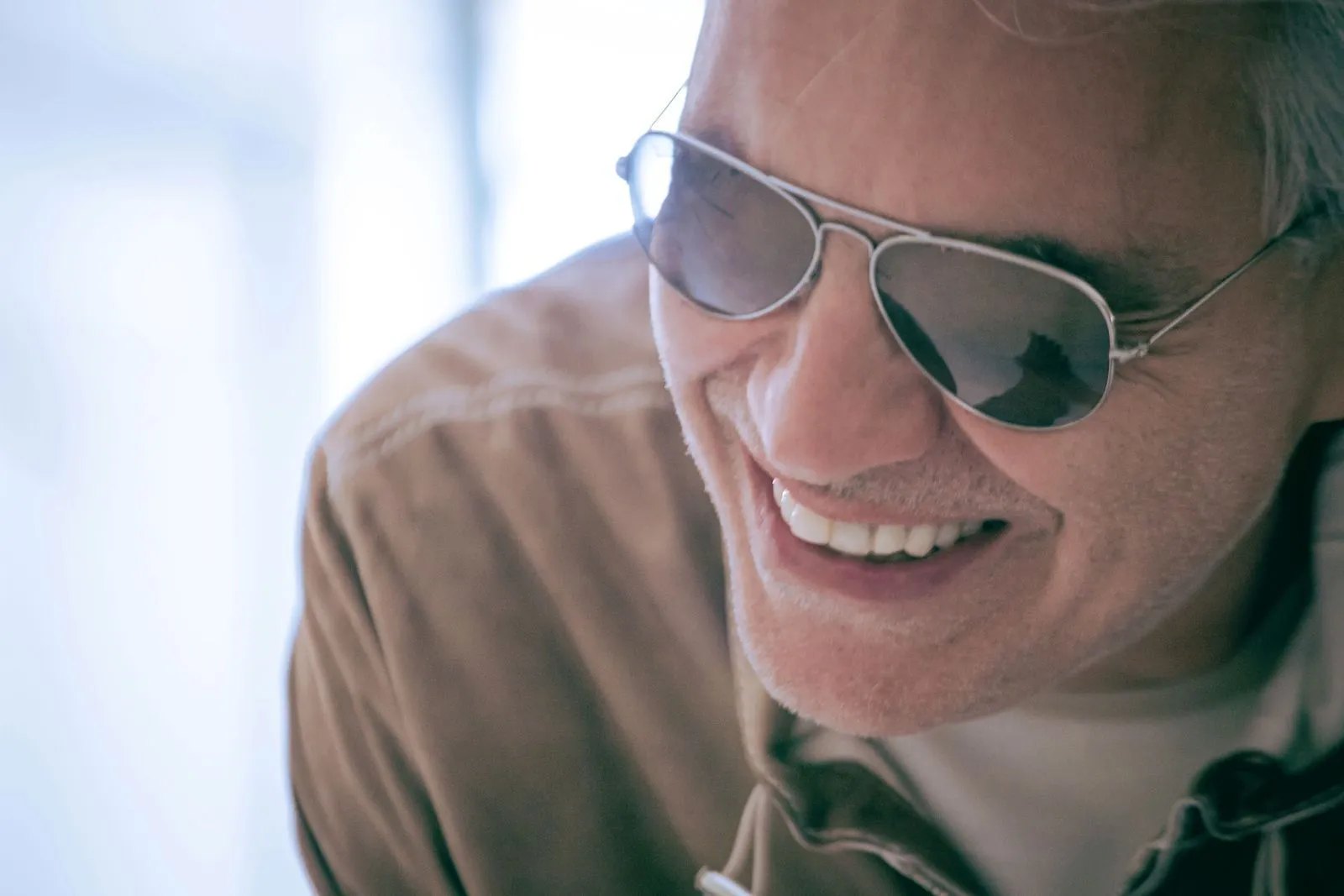
This narrative of destiny, however, is built on a carefully cleared foundation. The story is as notable for its omissions as for its inclusions. An entire first marriage and his original manager are relegated to fleeting archival glimpses, specters acknowledged only to be dismissed. The film uses the term “clean break” to describe these pivotal shifts, a phrase that sanitizes the messy, painful realities of human relationships. A life is an accumulation of debts, allegiances, and abandonments.
To present a history without these complexities is to present a fiction. His second wife, Veronica Berti, is portrayed as the guardian of this pristine narrative, a constant presence who ensures the story stays on its prescribed path. The career we see is an immaculate conception, a structure with no visible trace of the untidy scaffolding required to build it. It is a monument to success, with all the chaotic human debris swept carefully out of frame.
The Fortress of Tranquility
The film concludes in a present day bathed in the golden light of Tuscany. Here, on his ancestral estate, Bocelli exists in a state of beatific calm. He is a loving father, a gracious host, a master preparing for his next performance. The cinematography lingers on the idyllic landscapes and the soaring interiors of concert halls, creating a world of profound beauty and order.
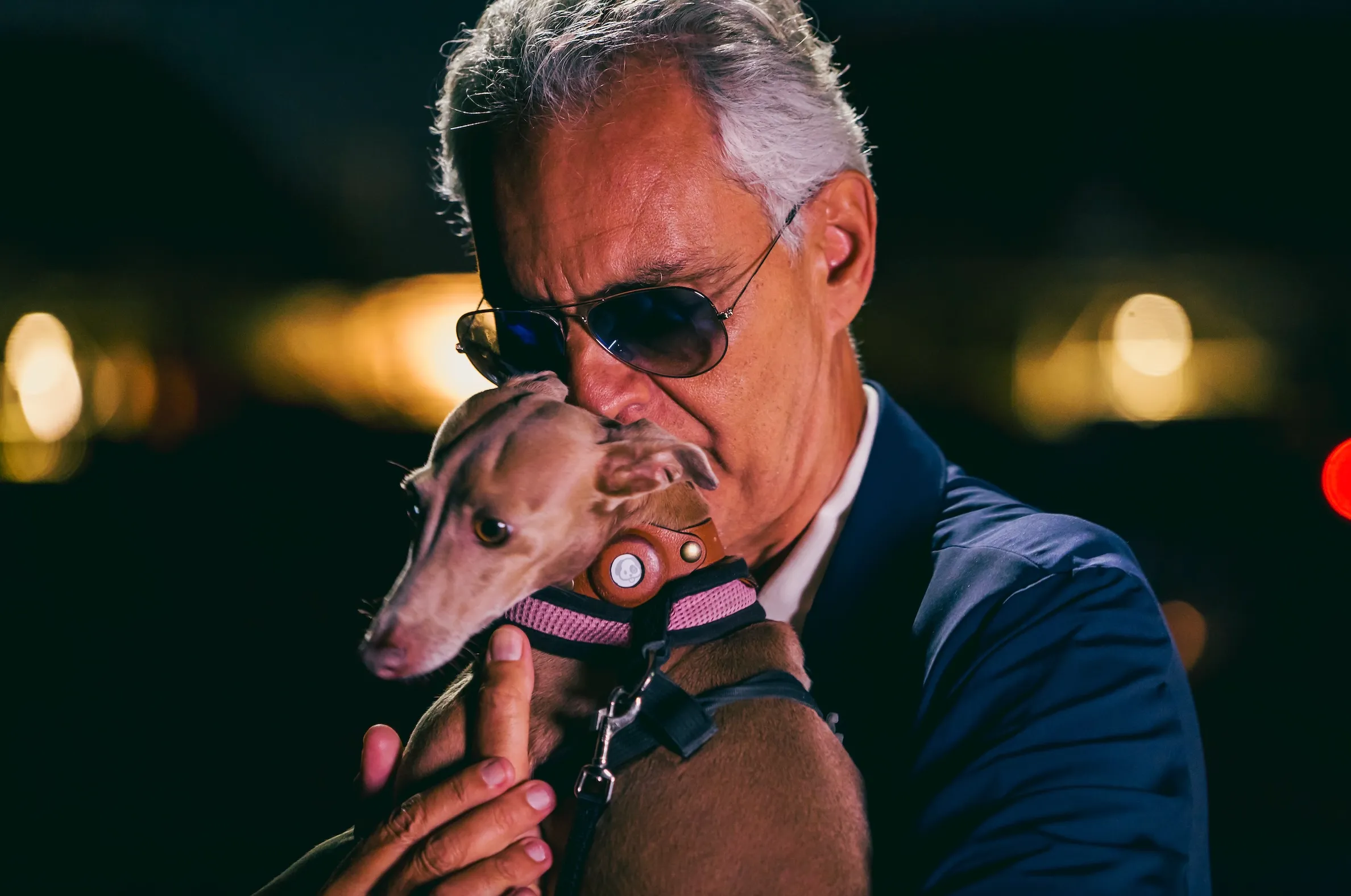
This absolute lack of conflict is the film’s most radical and unsettling statement. The romantic archetype of the artist is one of turmoil, of a soul wrestling with demons to produce beauty. Because I Believe proposes an alternative: an artist who creates from a place of complete, untroubled harmony. This serene portrait challenges our assumptions, yet it also feels airless. Where is the friction that sparks creation?
The film presents a life perfected, a man who has achieved a state of grace so complete that he seems beyond the reach of ordinary human struggle. It is a comforting vision. Perhaps the film is not truly about Andrea Bocelli at all. Perhaps it is about our collective desire for such figures, for saints without shadows, for fairy tales that assure us a life of such flawless harmony is possible. The portrait is finished, sanctified, and hung for our admiration, leaving one to ponder the richness of all that was left off the canvas.
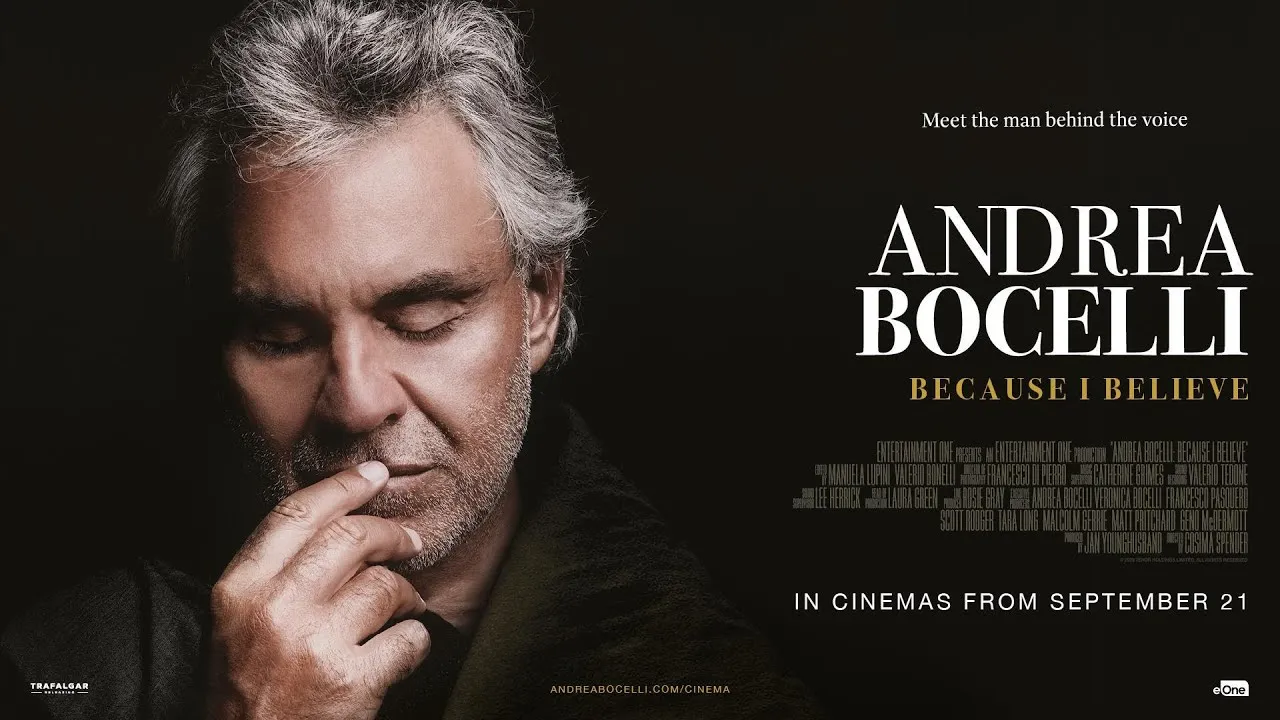
Andrea Bocelli: Because I Believe is an intimate documentary celebrating the 30-year career of the world-renowned Italian tenor, Andrea Bocelli. Directed by Cosima Spender, the film offers unprecedented access to Bocelli’s life, tracing his journey from humble beginnings in Tuscany to performing on the world’s most prestigious stages. It blends archival footage, interviews, and candid fly-on-the-wall moments with friends and family, using his 2023 concert at the Baths of Caracalla as a central anchor. The film had its world premiere at the 2024 Toronto International Film Festival and was released in a limited theatrical engagement worldwide starting September 21, 2025, distributed by Trafalgar Releasing. For current screenings and tickets, you can check the official cinema website. Being a documentary, it is expected to become available on various streaming platforms such as Apple TV+, Netflix, and Amazon Video after its theatrical run.
Full Credits
Director: Cosima Spender
Writers: Cosima Spender
Producers and Executive Producers: Jan Younghusband, Malcolm Gerrie, Matt Pritchard, Geno McDermott, Tara Long, Andrea Bocelli, Veronica Berti
Cast: Andrea Bocelli, Veronica Berti, Caterina Caselli, Zucchero, Céline Dion, Jennifer Lopez, Dua Lipa, Luciano Pavarotti
Director of Photography (Cinematographer): Francesco di Pierro
Editors: Valerio Bonelli, Manuela Lupini
The Review
Andrea Bocelli: Because I Believe
Andrea Bocelli: Because I Believe is a work of immense beauty and profound emptiness. As an authorized self-portrait, it succeeds in crafting a flawless, inspirational myth, showcasing a magnificent voice against a backdrop of Tuscan sunlight and global adoration. However, as a documentary, it is a failure of nerve. The film’s refusal to engage with conflict, shadow, or the messy complexities of a human life results in a portrait that is more a pristine monument than a man of flesh and blood. It is a beautiful sound from a silent room.
PROS
- Visually stunning, with beautiful cinematography of Italy and grand concert halls.
- Features numerous, powerful performances of Bocelli's music.
- Offers a warm and accessible overview of his life for admirers.
- Presents a consistently uplifting and inspirational tone.
CONS
- Lacks critical distance, functioning as a curated hagiography.
- Avoids any genuine exploration of personal or professional conflict.
- Significant life events and relationships are glossed over or entirely omitted.
- The resulting portrait feels one-dimensional and emotionally airless.