







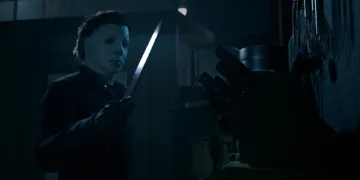

LifeLike, the third feature from Turkish filmmaker Ali Vatansever, drops us into one of the sharpest domestic tragedies imaginable: the terminal illness of 19 year old Izzet. He is confined to a sterile hospital bed that has been wedged into his parents’ cramped Istanbul apartment. The place feels airless, a home rearranged around suffering. Izzet, pinned to that bed, reaches for VRChat, a super saturated digital sprawl that offers the illusion of limitless air.
The film draws its first charge from this collision of spaces, yet the deeper pressure comes from ethics. Inspired by a landmark Turkish court case about assisted suicide, Vatansever turns toward a question that can leave language stuttering: what does unconditional parental love look like when a child’s highest wish is release? With a background in VR, he builds a hybrid style to stage the responses of Izzet (Onur Gözeten), the desperate and socially fixated mother Reyhan (Esra Kızıldoğan), and the withdrawn father Abdi (Fatih Al). Three bodies in one apartment, three private catastrophes, all orbiting the same bed.
Cinematic Schizophrenia: The Digital Divide
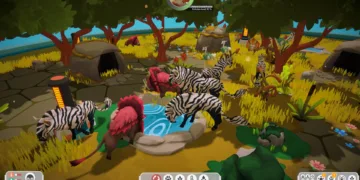
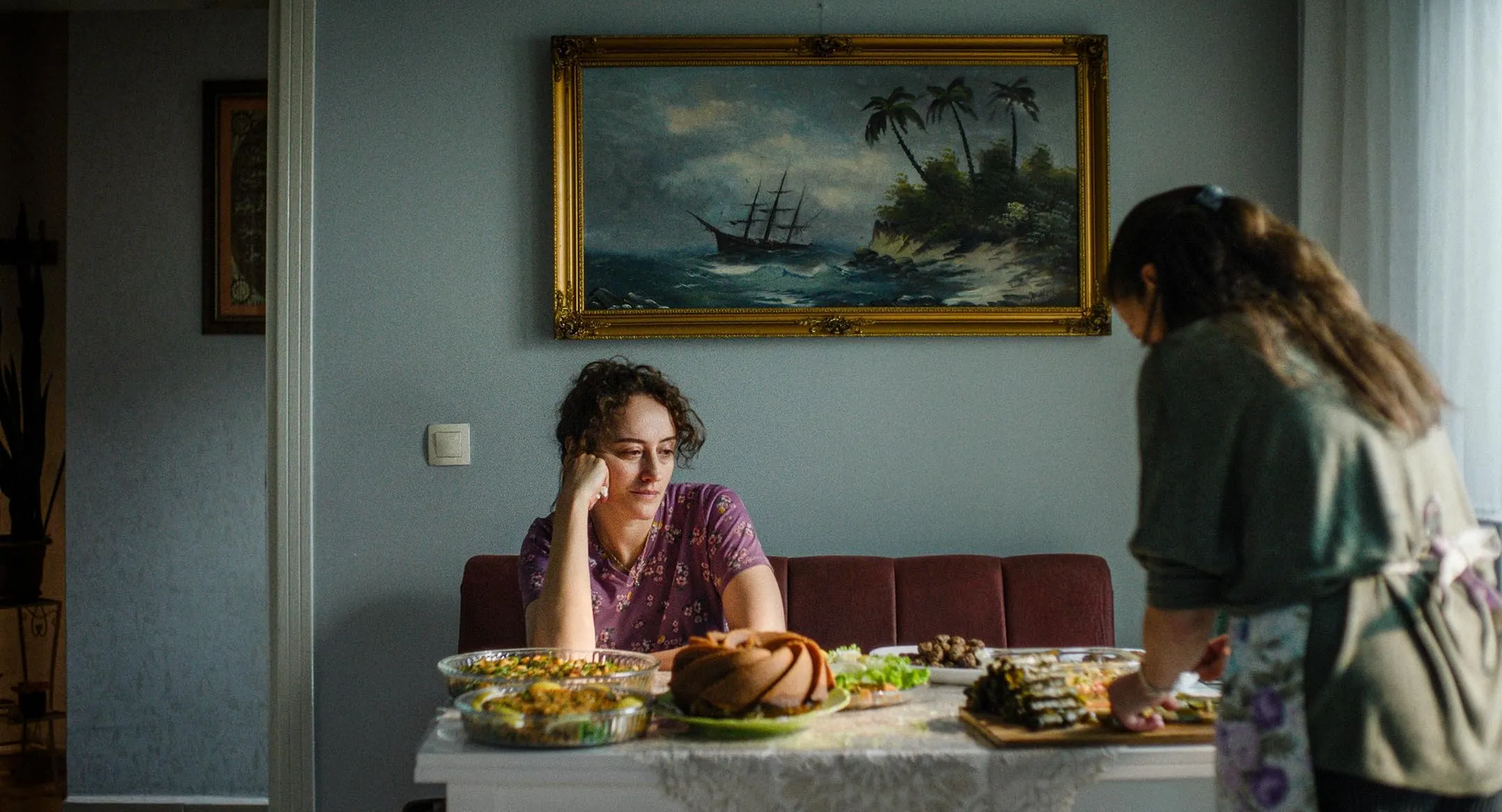
LifeLike plays as a fragmented family portrait, a cinematic mosaic in which three perspectives exist in spiritual and physical isolation. That formal split shows up in the imagery. The live action passages render the family’s daily life as claustrophobic and beige, a palette of confinement and ache. Izzet’s customized VR world answers with neon mountains and lakes, throbbing in super saturated color. Each cut between these registers operates like a change in moral temperature, not a simple shift in setting.
VR works here as a psychological prosthesis. Izzet’s healthy avatar restores small rites of youth: flirting, dancing, fighting. These are ordinary acts turned precious by absence. In this realm he is allowed to move, to be seen, to desire, and to pretend for a while that the body in the next room is not collapsing. I started thinking of this as “avatar breath,” a kind of borrowed oxygen that keeps his inner life from suffocating. The digital space functions as a mirror for his longings, and it is a surprisingly plain mirror. Mountains and lakes glow, sure, yet what he hunts inside them is the mundane.
Vatansever treats the virtual realm with a steady hand. He does not glorify it. He does not cast it as a monster. The tech sits there as a neutral tool, turning helpful or harmful according to the desperation of the person using it. That conceptual clarity is one of the film’s strengths. It carries a cost. The smoothness of the VR passages can flatten emotional textures that the narrative seems to want us to face without cushioning. I admire the coolness of the approach, and I sometimes wish the film let the rough edges scrape a little harder.
Love as Contradiction: The Parent’s Dilemma
The film’s thematic density rises from the parents’ coping mechanisms, profoundly contradictory and painfully human. Reyhan meets her son’s decline with denial that swells into ritual. She streams updates to over 50,000 followers, performing the role of influencer for miraculous recovery. Hope becomes content, and her phone becomes a second altar beside the hospital bed.
That public optimism cohabits with private superstition. She tries remedies that swing from gruesome to mythical, from decapitating a tortoise for blood to hunting a legendary Anatolian healing plant. Nothing about these acts is elegant. Everything about them is recognizable. Powerlessness will bargain with the universe in any language it can find.
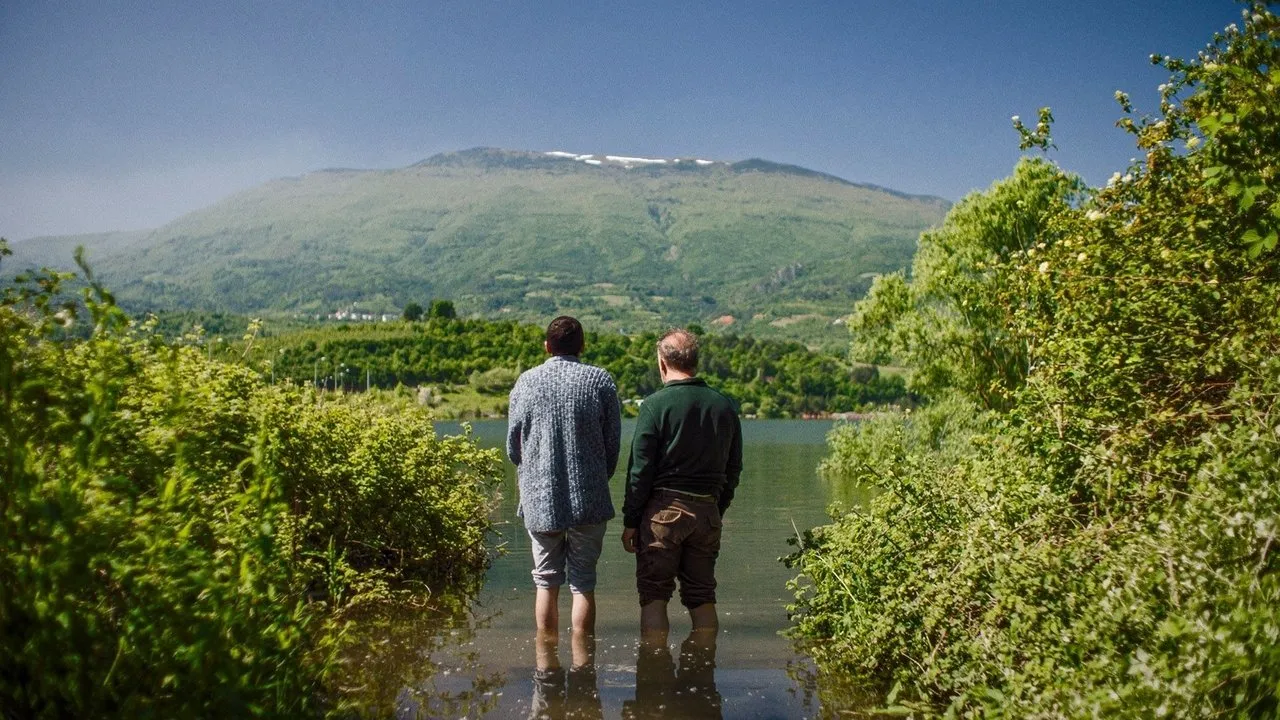
Abdi moves along a different track. He retreats into a self imposed exile of shame, commonly framed in silhouette or shadow, as if he could make himself smaller than the illness. His first battleground is conscience shaped by religion. He seeks spiritual counsel about if aiding his son’s death would be haram. Abdi’s arc forms the main dramatic spine, and it jolts awake after Izzet’s failed morphine patch suicide attempt. From there he converts his school bus into a mobile sickbed and drives toward the mountains, a last trip that feels like confession in motion.
Izzet’s VR use remains modest during these scenes. He does not chase extravagant fantasy. He rebuilds normalcy, a desperate bid to live what his diagnosis stole. An awkward meeting with his VR girlfriend in the real world underlines the limit of that escape. The avatar can gesture toward touch. It cannot carry the weight of touch. The road segment settles into a tacit understanding between father and son, quiet and devastating. In the moving denouement the lines between physical and virtual blur on screen, a visual surrender to an impossible choice, and to the strange mercy of seeing both worlds at once.
The Adventurous Frame and the Flawed Pacing
The performances hold this volatile material with care. Fatih Al gives Abdi a restrained heaviness, a man crushed by helplessness who gradually reclaims motion. His shift from withdrawn shadow to purposeful driver supplies the narrative with needed forward momentum.
Vatansever’s formal ambition, especially his willingness to braid VR aesthetics deep into the family drama, feels bold. He treats the VR look as part of the film’s language rather than a novelty, widening the ethical frame of the story and pressing on questions of authenticity and escapism in a time when selves can be built like avatars and worn like second skins.
The film also shows narrative strain. The midsection wavers, and the repeated depictions of Izzet’s debilitation slide toward monotony. The script grants us little sense of Izzet’s life before diagnosis, which thins our understanding of who he was outside this crisis and sometimes interrupts emotional allegiance. Even with those stumbles, the film earns attention through its conceptual adventurousness. Vatansever accepts a measure of emotional distance so he can pose a modern philosophical question about the digitized self. The final moments land with real force, and the hybrid approach proves its value right when it matters most.
Bir Arada Yalnız (meaning “Together Alone”), internationally known as LifeLike, is a Turkish, Greek, and Romanian co-production that premiered at the Tallinn Black Nights Film Festival in November 2025. This intense drama tells the story of Izzet, a young man with a terminal illness who finds solace and vitality in the virtual reality platform, VRChat. The film explores the profound moral and emotional conflicts within his family, particularly as his father, Abdi, grapples with the ethical dilemma of assisted suicide, while his mother, Reyhan, seeks comfort in social media fame and miracle cures. As a recent festival circuit title, the film’s wider distribution or streaming platform availability will depend on its subsequent theatrical and digital deals.
Credits
Title: Bir Arada Yalnız (LifeLike)
Distributor: Terminal Film (Production Company), Aktan Görsel Sanatlar, Foss Productions, Da Clique SRL
Release date: Premiered November 2025 (e.g., at Tallinn Black Nights Film Festival)
Running time: 115 minutes (1 hour 55 minutes)
Director: Ali Vatansever
Writers: Ali Vatansever
Producers and Executive Producers: Selin Vatansever Tezcan, Oya Özden Özdemir, Aytun Aktan Bahçeci, Antigoni Rota, Stelios Cotionis, Alexandru Dumitru
Cast: Fatih Al, Esra Kızıldoğan, Onur Gözeten, Meral Efe Yurtseven
Director of Photography (Cinematographer): Konstantinos Koukoulios
Editors: Evren Lus, Feyza Kayıkçı
Composer: Erdem Helvacıoğlu
The Review
LifeLike
LifeLike is a formally adventurous drama that grapples with the agonizing ethical dimensions of terminal illness and assisted suicide in a digitally mediated world. Its hybrid visual palette—contrasting claustrophobic reality with the boundless energy of the VR world—is conceptually strong, offering a poignant metaphor for escape and self-determination. While the film struggles with inconsistent pacing and emotional distance in its middle section, it is redeemed by finely wrought performances and an unflinching look at the impossible moral burden placed on a family. It's a challenging, distinctive work that rewards intellectual engagement.
PROS
- Hybrid Visual Palette (VR integration is conceptually bold)
- Finely Wrought Performances (Especially Fatih Al's restrained portrayal)
- Powerful Thematic Depth (Explores complex ethical questions of parental love, death, and religion)
- Distinctive and Adventurous (Pushes the aesthetic frame of the family drama)
CONS
- Pacing Issues (Midsection repetition and occasional slowness)
- Emotional Distance (Formal ambition sometimes overrides immediacy)
- Limited Character Background (Izzet's life before illness is undersketched)
- Uneven Emotional Delivery