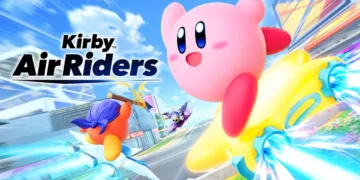


























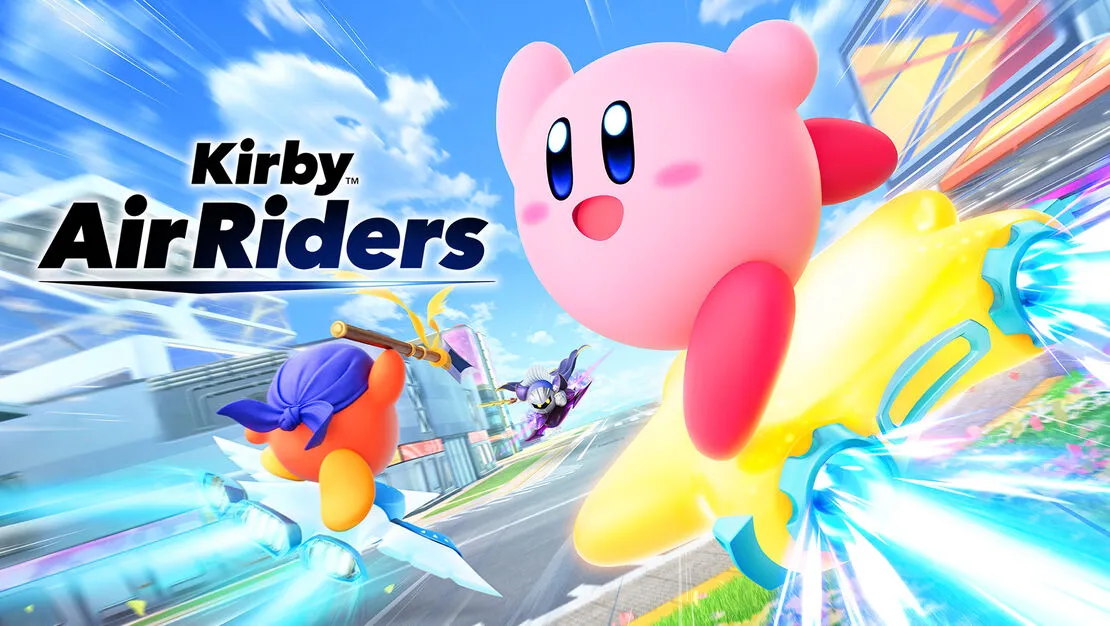

Kirby Air Riders comes back as a sequel in a triumphant, unexpected way, reviving a niche, minimalist racing concept. The game plays as an action-racing hybrid, packed with a large Kirby cast and their air-riding vehicles, called Machines. It runs on high-speed chaos and an aggressive pace, carrying the high-energy spirit often associated with games directed by Masahiro Sakurai.
The surprising depth comes from simple foundational mechanics that the game stretches into varied, sophisticated modes. Players receive a dense package with plenty to unlock, deep customization, and a massive achievement catalog to chase, giving this take on the original formula a wide and satisfying scope.
Deceptively Simple Controls and Hidden Skill
Air Ride, the primary racing mode, uses an unconventional control scheme that becomes its clearest signature. Machines accelerate automatically, leaving players to steer and master two core inputs. Boost Charge works as a brake that stores power for a charged speed burst, and it also serves as the essential drift tool for cutting corners. A second button triggers the Special attack, while a Quick Spin comes from wiggling the control stick. The setup asks players to reset their expectations for racing controls, and early runs can feel slippery and unnatural, creating a real learning hurdle.
Practice reveals how much skill sits inside that pared-back design. Success comes from chaining advanced techniques, especially timing Boost Charge for precise corner drifts and keeping momentum through lines and elevation changes. Combat on the track is part of that flow. Defeating enemies by inhaling them or using copy abilities grants speed boosts and charges the Special meter, pushing players to decide when aggression will pay off. Perfect landings after jumps matter, and drafting in another rider’s slipstream helps maintain top speed.
The pace is sharply faster than the original game, so victories demand quick reactions. Standard races are tense six-rider matches across 18 well-designed courses. Each track uses branching routes and multiple vertical access points, rewarding players who pick Machines suited to gliding or suited to ground speed. The roster includes over 20 unique Machines, each with specific quirks and handling profiles, like the Formula Star’s limited turning paired with superior speed. Individual Riders deepen the system through unique stats and Specials, such as Chef Kawasaki’s damaging curry.
System Evolution: City Trial and Road Trip
Track racing is only one part of the package. City Trial delivers a chaotic alternative, and Road Trip provides a structured campaign. City Trial, the fan-favorite mode, runs as a five-minute free-for-all on the large open map Skyah. Riders scramble to find stat boosts and better Machines, building specialized rides before the final showdown.

Random Field Events keep the map volatile, tossing in boss encounters or environmental effects like fog and energy tanks. The mode thrives on that randomness, and the Machines that reach the finale often feel shaped by pure happenstance. That unpredictability fuels a party-friendly tone where mayhem takes the lead and balance stays loose. The final phase shifts into a randomized Stadium minigame, such as Drag Race or Target Flight, where players test their custom-built rigs.
Road Trip gives solo players a surprisingly detailed single-player campaign that functions as a story mode. It remixes the full game into micro-challenges pulled from Air Ride, Top Ride, and City Trial. Hub worlds guide players toward challenges tied to different rewards, so each run reflects the player’s priorities.
Completing tasks grants stat upgrades that persist throughout the run, turning a Machine from a base model into a finely tuned powerhouse. The campaign highlights the flexibility of the main mechanics by cycling rapidly through Gourmet Races, combat trials, and flight challenges. Top Ride rounds out the trio with top-down races on miniature tracks, working as a quick, distilled break between the larger modes.
Achievements, Personalization, and Technical Polish
The volume of content is reinforced by an exhaustive achievement system. The game includes 750 achievements spread across checklists dedicated to every mode. These challenges boost replay value by reframing familiar mechanics with fresh goals, and completing them unlocks a huge pool of meaningful rewards, including new characters, Machines, music, and cosmetic items.

A smart quality feature lets players jump straight into a match with the correct parameters already set for a chosen achievement. Machine customization runs deep as well, with in-game currency spent on paint options, stickers, and accessories for personal touches.
Technically, Kirby Air Riders provides a stable base for its onscreen chaos. It holds a solid 60 frames per second during single-player play and keeps that target in four-player split-screen. Online play keeps pace through 32-player lobbies, plus casual and ranked matchmaking options. The smooth online performance seen in testing gives the high-speed racing a reliable platform.
The Review
Kirby Air Riders
Kirby Air Riders successfully expands its unique action-racing formula, delivering a game packed with content and chaotic fun. The high-speed action and unconventional two-button controls create a steep skill curve that rewards dedicated practice and mastery. While the control scheme can feel imprecise in one-on-one combat challenges, the depth in Air Ride's advanced mechanics and City Trial’s unpredictable party atmosphere make this revival a compelling and surprisingly dense experience. The enormous list of achievements and deep customization ensures significant replay value for both solo and multiplayer enjoyment.
PROS
- Unconventional, high-speed action-racer.
- Deep skill ceiling despite simple controls.
- City Trial offers chaotic, compelling party play.
- Massive amount of unlockable content and achievements.
- Excellent technical performance (60 fps) and smooth online play.
- Detailed machine customization options.
CONS
- Steep initial learning curve for new players.
- Controls lack precision for targeted combat.
- The high degree of randomness in City Trial Stadiums.
- Top Ride mode feels underdeveloped as a distraction.