
























![Kingdom Hearts Collection [I-III] Review](https://gazettely.com/wp-content/uploads/2026/10/Kingdom-Hearts-Collection-I-III-1-360x180.webp "Kingdom Hearts Collection [I-III] Review: KHII Holds Steady as Newer Entries Fluctuate 37")



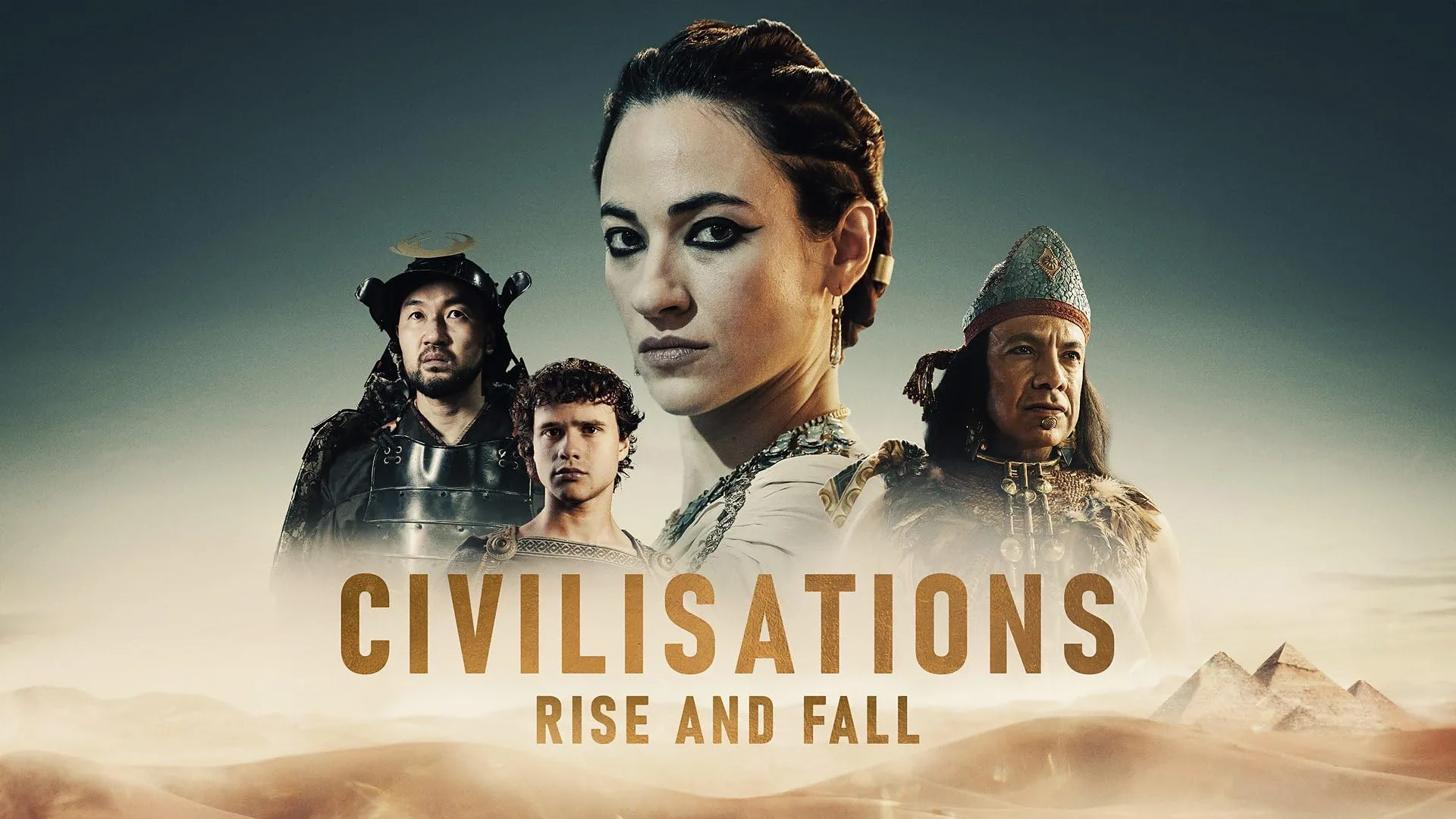

A strangely clinical fascination with collapse hangs over our age (I keep filing it under the Post-Certainty Era, a time that prefers ruins to promises). We seem to ask the past to certify our present fears. Into that mood walks Civilisations: Rise and Fall, a documentary series that steps away from the architecture of empire and looks instead at the rituals of ending. Across four episodes it behaves less like a sweeping chronicle and more like a coroner’s report on political and cultural decay.
The programme studies four grand reckonings: the final implosion of Rome, the late-stage decline of Cleopatra’s Egypt, the destruction of the Aztec empire, and the strangely belated ending of the Samurai of Japan. Each acts as a case file on systemic failure. Sophie Okonedo’s narration gives the whole exercise a calm, ceremonial weight, so even the most spectacular images sit inside a tone of steady seriousness. Through a mixture of dramatic re-enactments and a very close reading of cultural objects, the series presents one stark claim. External enemies may strike the final blow, yet the habits that ruin a society usually grow inside it.
Echoes of the Post-Certainty Era: Thematic Sickness
Civilisations: Rise and Fall builds its sharpest argument through a constant hunt for contemporary relevance. Ancient history becomes a clear diagram for present-day unease, and the links to modern anxiety are drawn in thick, permanent ink. This is not history kept at a safe academic distance. It works as a warning notice.
The engines of imperial decline, labelled here as Doom Factors, appear disconcertingly consistent across centuries. The series picks out recurring pathologies with the precision of a medical chart: corrosive inequality with the “super-rich 1%” locked into place, environmental pressure that arrives as climate catastrophe, cycles of warfare and aggression, and the refusal or inability to handle mass migration and refugee crises with any sense of humane responsibility.
The Roman section makes this diagnostic method feel concrete. A single luxury object, the ornate silver Projecta casket, is used to read a wider economic disaster. The glittering craftsmanship stands for elite wealth spiralling upward into a narrow group. The documentary argues that this concentration of riches behaves like a political poison, steadily weakening the imperial body from within. Inequality appears as a self-inflicted wound that leaves the state rigid, fragile and ready to shatter.
The material on refugees forms the series’ bluntest analogy to current politics. Rome’s fall is shown to accelerate after the short-sighted treatment of Visigoth “refugees”, especially the future attacker Alaric. Experts describe a simple fork in the road for any government that faces large-scale displacement: newcomers can be brought into the system with genuine intent, or they can be branded as permanent outsiders and enemies.
Commentators from specialist outfits such as the Centre for the Study of Existential Risk speak in cool terms about a hard rule, that complex political systems have shelf lives. For some viewers this firm layering of present-day fears onto ancient events may feel overly insistent. The patterns on screen still carry an uncomfortable ring of truth: luxury beside deep poverty, hostility to outsiders that hardens into violence. The series trades away nuanced scholarly argument for an immediate, widely grasped sense of alarm.
Curatorial Drama: Style and Substance
The production work on Civilisations: Rise and Fall matches its large ambitions. The images look polished, the editing keeps the stories moving, and the scale feels suited to continents and empires edging toward their last acts. One structural choice stands out. Recurring countdown captions (“Two years until the fall…”) sit on screen and create a kind of historical panic, a tick-tock reminder that catastrophe moves on a fixed timetable even when the people inside the story appear unaware.
As a documentary, the series leans on what might be called the Object Lesson method. Museum pieces sit at the centre as the main storytellers. The featured objects, drawn chiefly from the British Museum, are lit and discussed with the attention of a focused seminar. The damaged bronze Meroë Head of Augustus appears first as a flattering imperial portrait, then as a symbol of resistance, buried by victorious Kushites as an act of defiance against the emperor’s authority.
The Rosetta Stone serves as a literal decoding tool that opens up Cleopatra’s strategic choices in Egypt. An Aztec mosaic mask, both beautiful and unnerving, becomes a visual reminder of the smallpox epidemic carried by the Spanish conquistadors, an artwork that hints at epidemiological catastrophe. Through these pieces the audience gains a sense of objects as arguments, as serious statements stripped of any sense of mere decoration.
Civilisations: Rise and Fall draws much of its energy from Talking Heads: historians, curators and archaeologists who deliver concise explanations with clear enthusiasm. The experience feels pointedly educational, and the pace and variety of contributions keep it lively.
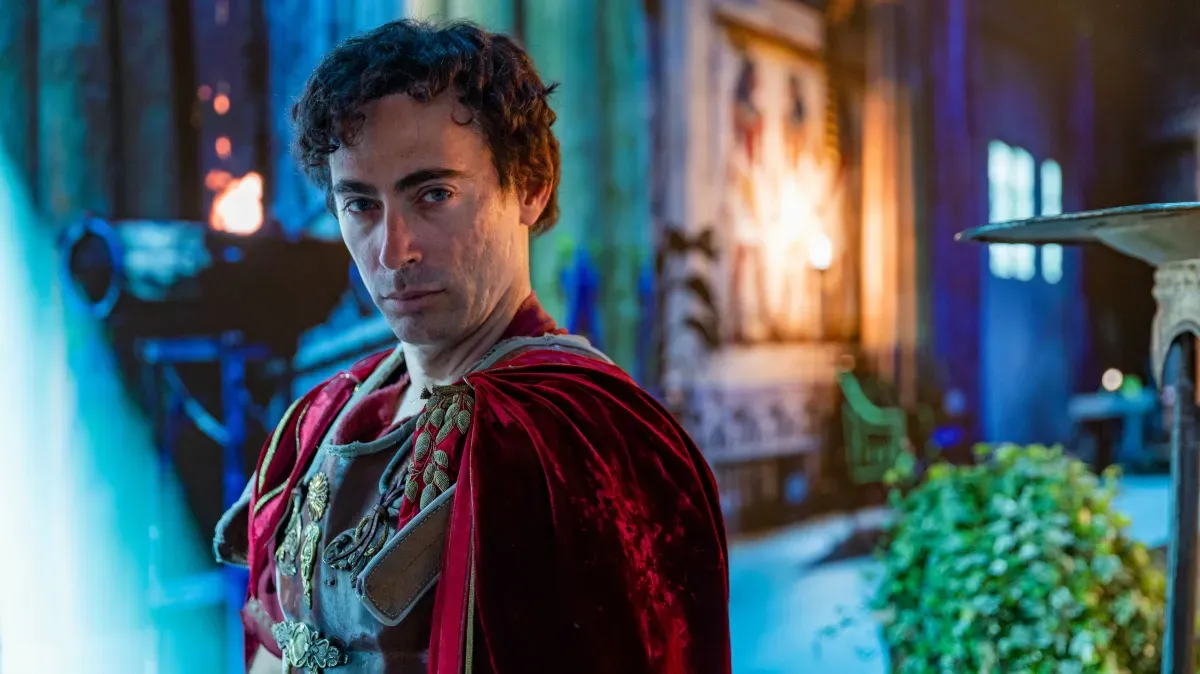
The use of dramatic re-enactment produces a mixed result. Short scenes stage decisive moments such as the last charge of the samurai or the sack of Rome, and many of these sequences achieve a stark clarity. Yet the lack of dialogue leaves actors with only posture and facial expression, which sometimes pushes them toward stylised, almost comic-book solemnity. Faces tilt toward the horizon, bodies freeze in carefully arranged anguish, and the effect occasionally approaches what could be called theatrical morbid posing. These interludes still succeed in giving concrete shape to key events, while the experts retain control of the explanatory work.
Fatal Flaws: Characters and Case Studies
The documentary’s deepest appeal lies in its habit of viewing huge historical forces through the decisions of particular people. Large-scale collapse becomes personal.
The opening episode on Rome offers a disquieting study in political psychology. The downfall of the city is traced through the entangled choices of a small circle of men. Emperor Honorius appears as selfish and weak, a leader whose inexperience and paranoia push him to discard trustworthy advisers. General Stilicho emerges as intelligent yet compromised. Alaric, the Visigoth figure who eventually takes centre stage, arrives in response to this pattern of mismanagement and betrayal. The cumulative portrait is of a system that fails because the people in charge cannot rise above petty fear and short-term thinking, a picture with obvious echoes for modern viewers.
Subsequent episodes apply the same focus to other imperial endings. Cleopatra’s Egypt comes into sharp relief through the story of her young son, hunted through the streets by assassins after her death. The end of the Aztec world is concentrated into the first encounter between Hernan Cortes and Moctezuma, a single meeting that carries the weight of an ending. The episode on Japan builds to the cultural shock triggered by US Commodore Matthew Perry’s arrival, then to the charged final stand of the samurai at the Battle of Shiroyama.
Prejudice as a structural flaw receives particularly careful treatment. A scene built around a terracotta theatre mask lays bare Roman contempt for northern peoples and leads into a discussion of the linguistic roots of the word “barbarian”.
The series presents entrenched attitudes of “othering” as central weaknesses inside each imperial system, not as minor background colour. These habits of mind contribute directly to every terminal crisis on display. Through that lens, Civilisations: Rise and Fall treats history as a record of repeated failures to deal with human difference, and human nature, in all its persistent flaws, appears as the one element that refuses to change.
The documentary series Civilisations: Rise and Fall premiered on BBC Two and is currently available for streaming on BBC iPlayer. The four-part series was recently broadcast, with an episode airing around Monday, November 24, 2025, and is part of a continuation of the landmark Civilisations series. It examines the downfall of four major ancient worlds—Rome, Cleopatra’s Egypt, the Aztecs, and the Samurai of Japan—using artifacts and dramatic re-enactments to draw parallels between ancient societal decay and modern global challenges.
Full Credits
Title: Civilisations: Rise and Fall
Distributor: BBC Two
Release date: 2025 (Initial broadcast in November 2025)
Rating: TV-PG
Running time: 60 minutes (per episode)
Director: David Lee, Richard Pearson, Duncan Singh, Patrick Dickinson
Producers and Executive Producers: Lindsey Hanlon (Producer), Simon Young (Executive Producer, BBC), Denys Blakeway (Executive Producer, Nutopia)
Cast: Sophie Okonedo, Leander Vyvey, Melissanthi Mahut, Calin Bleau, David Bedella, Adam Bond
Editors: Damian Leask, Trace Taylor
Composer: Kathryn MacLennan, Mike MacLennan
The Review
Civilisations: Rise and Fall
Civilisations: Rise and Fall offers a visually polished, high-stakes analysis of systemic failure. The series powerfully connects ancient imperial decline—driven by factors like extreme inequality and political self-harm—to modern-day anxieties. While its insistent search for contemporary resonance can feel heavy-handed, the documentary succeeds in transforming historical artifacts into compelling evidence of repetitive human flaw. It is an often-grim but ultimately vital reflection on the fragility of power and the inevitability of collapse.
PROS
- Beautifully filmed with a sleek, cinematic feel.
- Transforms museum objects into tangible evidence and narrative anchors.
- Successfully frames ancient history as an immediate, vital cautionary tale for the present.
- The focus on key individuals (e.g., Alaric, Honorius) makes the large-scale history personal and compelling.
CONS
- The persistent, explicit analogies to modern issues can detract from historical complexity.
- The silent, overly portentous acting in some dramatic scenes is a weak point.
- By focusing strictly on the fall, it naturally sidelines the complexities of the rise and long-term stability.
- The inclusion of non-traditional historical commentators occasionally feels like a forced bid for wider appeal.







