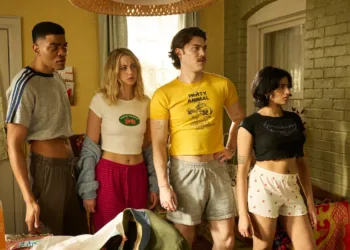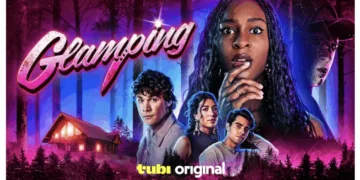



















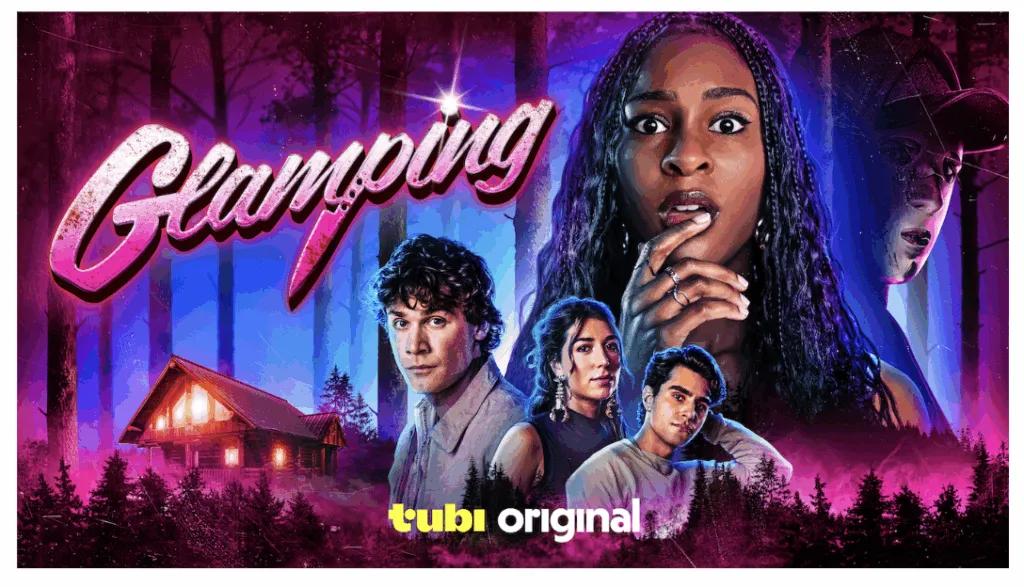

The latest Tubi release, Glamping, directed by Niki Koss, presents itself as a contemporary horror-thriller built around the pressure cooker of online life. The story follows Olivia (Rosemary Idisi), a social media influencer whose carefully curated existence collapses after a public setback: she loses her job and watches her follower count nosedive.
In an effort to regroup and, just as importantly, to produce new content, she organizes what she calls a “glamorous” retreat to a secluded cabin in the woods, inviting her boyfriend and friends along for the trip. The getaway is designed as a polished digital escape, a kind of weekend-ready backdrop for posts and videos, until a masked killer arrives and turns the trip into a fight for survival.
From the title to the promotional imagery, the film presents itself as a sleek, familiar slasher package. Rosemary Idisi anchors the cast in the lead role, while genre fans may recognize David Hernandez among the ensemble. On paper, the film sets out to combine contemporary social-media anxiety with old-school horror mechanics. In practice, it leans into an approach that feels like a conscious long game, stretching audience patience as it delays the genre payoff.
The Narrative Choice of Extreme Delay
The most striking creative decision in Glamping lies in how it organizes its story and pacing. A more traditional horror film introduces glimpses of danger within the first half hour. Those early beats plant the seed of fear and build an arc of escalating stakes. Glamping chooses a different route and commits to a long, drawn-out opening act. For a movie that runs under ninety minutes, it spends well over an hour immersed in the internal drama of the friend group.
The camera lingers on their messy relationships, their conversations about Olivia’s professional crisis, and the ongoing strain of maintaining an online persona. As someone who spends too much time scrolling through creator confessionals, I recognized the rhythms of those talks about followers and image management. The film leans so heavily on this material that scare beats recede into the background.
This emphasis on character interaction over horror beats leads directly to a pacing issue. What might read as a slow-burn strategy that uses atmosphere to generate fear instead plays like an extended, wandering build-up. There is a lot of talking, and much of it revolves around surface-level panic about social media status. That focus keeps the story from developing a real feeling of dread.
Also Read



The tension that should ground the narrative never quite appears. Rather than a sense of mounting unease, the audience spends long stretches watching friends argue, drink, and complain about their online lives. These scenes aim to deepen our understanding of the group, yet they often resemble padding that does not fully justify the amount of time given to them.
Even the title becomes part of the structural issue. “Glamping” suggests a luxe twist on camping, yet the film settles into a familiar cabin-in-the-woods setup. That mismatch hints at a project unsure about how far to lean into its high-concept hook. The extended domestic drama that dominates the first hour creates a kind of structural jolt once the violence finally arrives.
The sudden shift into slasher mode in the last act feels abrupt rather than earned, and the earlier material never fully connects to the late chaos. For viewers approaching the film expecting steady horror beats, this imbalance can feel like a test of patience, and some may mentally check out before the genre promises are fulfilled. The story trades early engagement for a late payoff that arrives too late to revive the viewing experience.
Technical Skill Versus Thematic Ambition
On a craft level, Glamping often looks and sounds like a polished streaming title. The images are clear, the sound design has weight, and the production feels controlled. Angel Barroeta’s cinematography captures the isolation of the wooded setting with a clean, composed eye.
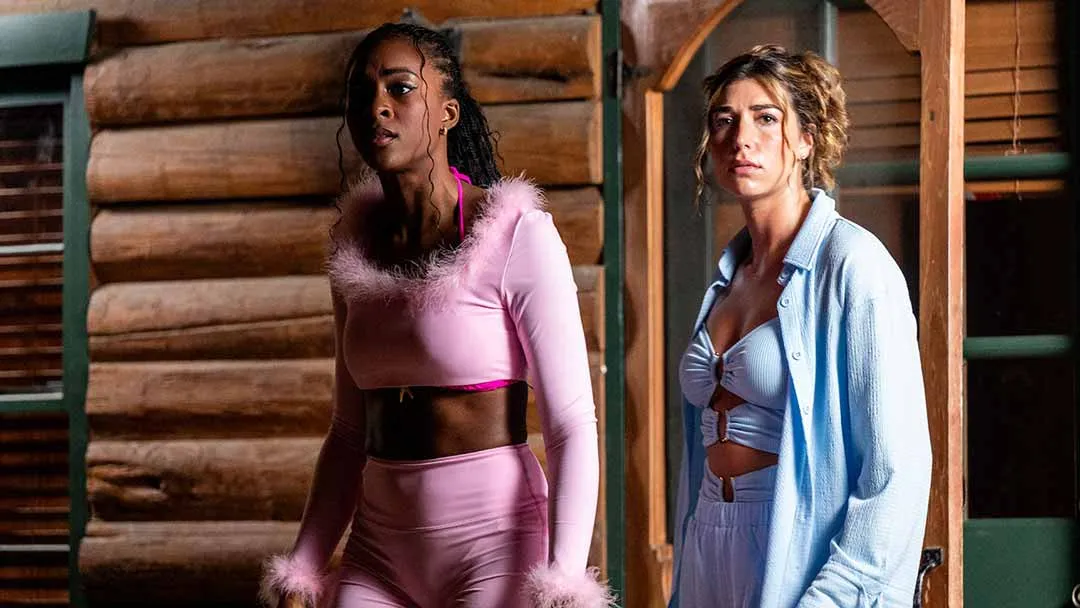
Editor Nico Alba cuts the material together in a way that keeps the film visually coherent, including during night scenes outdoors, which can often challenge lower-budget horror. The team behind the camera clearly knows how to put a professional package together. That level of technical competence, however, sits beside a script that does not fully develop its ideas.
The central theme, influencer culture built around the hunger for digital validation, feels especially timely. Using that need for approval as a horror backdrop lands very close to current anxieties about constant exposure and performative identity. The film touches on performance and the false intimacy of online relationships, but it stays near the surface of those ideas. It gestures toward the psychological pressure of living for metrics without examining what that pressure does to people over time.
Instead of really working through the emotional weight of public scrutiny, the script leans on familiar beats: characters panic over follower counts, obsess about content creation, and spiral when numbers slip. For anyone who has watched creators chase algorithms and trends, this world feels recognizable, which makes the lack of deeper exploration feel like a missed chance. The film acknowledges the digital age as its backdrop but stops short of shaping a strong point of view on how this environment distorts identity or community.
The performances sit in the middle of this tension between technical polish and thin thematic writing. Rosemary Idisi, as Olivia, carries large sections of the movie, especially during the slow early passages. She brings a degree of sympathy to a character who is written as self-absorbed and flawed, which keeps her arc mildly engaging even as the plot stalls. The rest of the supporting players struggle to stand out.
Group conversations often blend together, and the characters around Olivia sometimes feel like indistinct noise rather than a fully realized ensemble. David Hernandez makes a brief appearance that injects a small burst of personality and energy into the mix, a reminder of how much the film could have gained from sharper supporting roles. The strong craft work behind the camera cannot mask the thinness of the thematic material and the uneven approach to character.
The Final Sequence and The Short Film That Could Have Been
The final stretch of Glamping finally delivers the jolt of energy the premise promises. After a long period of dramatic build-up, the last fifteen to twenty minutes shift gears. The pace quickens, and the film finally leans into action and suspense in a way that aligns with its marketing. Sitting through that late burst feels a bit like someone finally flipping a switch that had stayed stubbornly off for most of the runtime. For a brief window, the film comes alive.
Even in that closing section, though, the horror content remains limited. The body count stays low, with only five kills across the entire film, and some of those deaths happen off-screen. The practical effects used for the violence we do see work well enough, but they appear briefly and infrequently. Earlier attempts at mood building – a few eerie dolls, a wrecked bedroom, distant glimpses of a stalker – never develop into sequences that truly unsettle. As a viewer, I could sense what the film wanted those images to do, yet they never quite land with the force the setup seems to promise.
What keeps the final act from feeling completely flat is a moment of real narrative spark. The reveal of the killer and the twist that follows create the most inventive stretch in the entire film. For the first time, the script draws a clear line between the violent acts and the story’s central concern with online validation. The film suddenly clicks into a sharper idea about how performance, audience, and harm intersect. In that moment, you can see the strong concept lurking inside the project, the kind of idea that could power a tight, focused short film.
Instead, that concept has been expanded to feature length, and the story feels stretched thin, with long patches that play like filler around a strong core scene. The last minutes ease some of the frustration built up by the long wait, but they cannot erase the sense of an hour spent watching unfocused drama. Glamping ends up as a clear example of a sharp hook that lacks the substance and structural control needed to sustain a full feature, even with impressive technical work and a committed lead performance.
Glamping is a horror-thriller film that premiered on the ad-supported streaming service Tubi on October 24, 2025. It tells the story of Olivia, a social media influencer whose life is spiraling after a public incident causes her to lose her job and a massive number of followers. Seeking a luxurious getaway to reset her life and generate new content, she takes her friends to a remote cabin, where their planned escape quickly turns into a nightmare as they are stalked by a masked killer. The film is available to stream exclusively on Tubi.
Full Credits
Title: Glamping
Distributor: Tubi
Release date: October 24, 2025
Running time: 1 hour 23 minutes (83 minutes)
Director: Niki Koss
Writers: Alexa Garster
Producers and Executive Producers: Sade Oyinade, Deshawn Plair, Rosemary Idisi, Donte Lee, Tressa Azarel Smallwood
Cast: Rosemary Idisi, Joseph Purcell, Geffen Aviva, Chris Angelis, David Hernandez, Isabella Ward, Annie Grant, Angelique Chapman, Ian Mellencamp
Director of Photography (Cinematographer): Angel Barroeta
Editors: Nico Alba
Composer: Michelle Richards
The Review
Glamping
Glamping is a narratively lopsided film. It possesses the technical polish of a professional production and ends with a clever twist relevant to influencer culture. However, its extended focus on low-stakes drama over genuine suspense results in a flat, patience-testing experience. The core slasher elements arrive far too late, revealing a feature stretched from what should have been a concise short film. It is a cinematic opportunity missed.
PROS
- Clean cinematography and editing.
- The twist connects the killer's motive to the online theme.
- Rosemary Idisi anchors the film with a sympathetic turn.
- Looks and sounds professional, especially for the platform.
- Notable appearance by David Hernandez.
CONS
- Horror elements delayed until the final act.
- Fails to fully explore the depth of influencer culture.
- Only five kills, limiting the slasher payoff.
- The abrupt pivot from drama to slasher feels disjointed.
- Characters lack meaningful development.