


















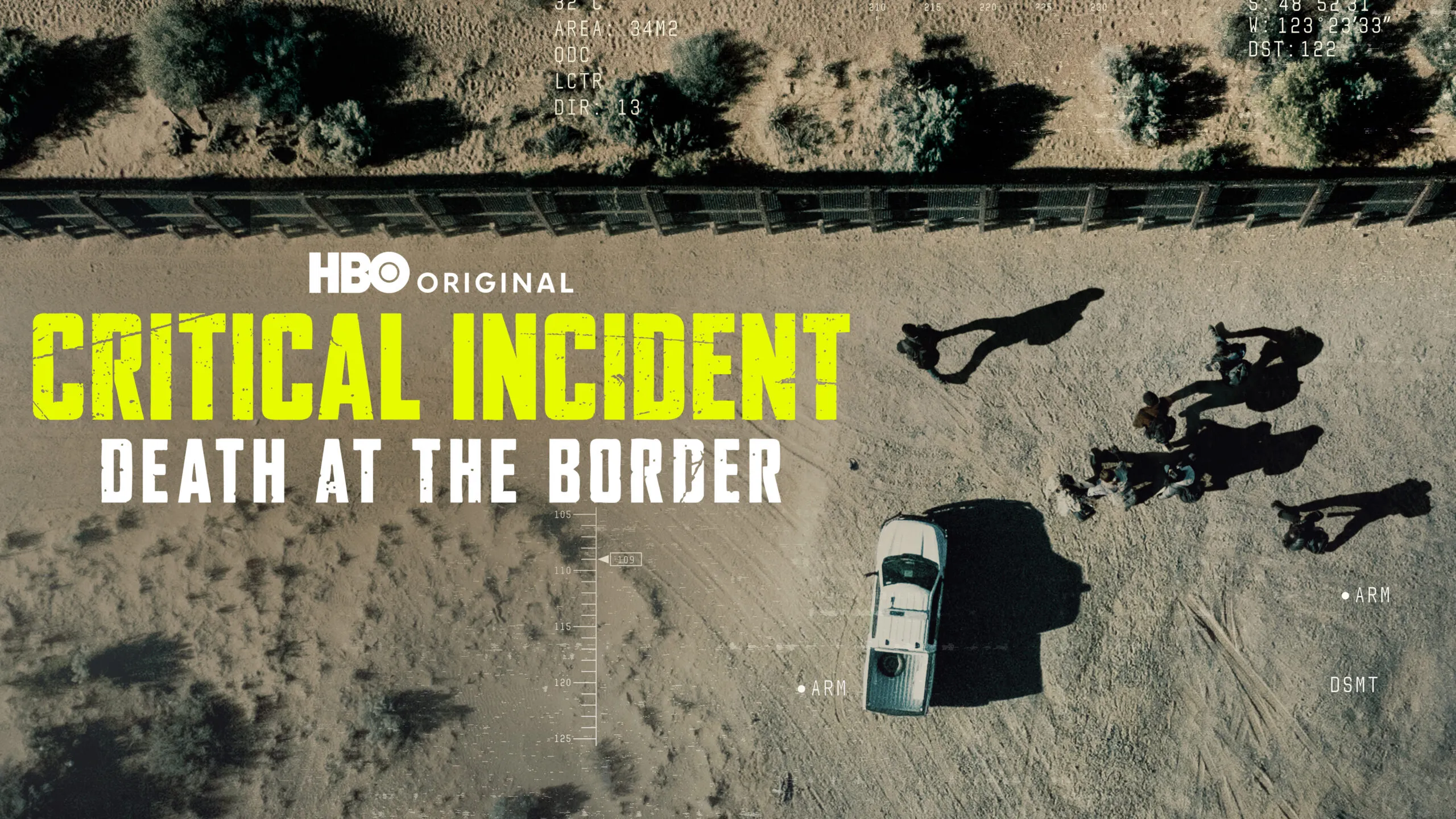

The San Ysidro port of entry has long carried a kind of built-in cinematic tension, and Rick Rowley’s documentary series walks straight into it with a story that lands like a physical blow. Rowley, an Oscar nominee known for Dirty Wars, turns his attention to the 2010 death of Anastasio Hernandez-Rojas. Hernandez-Rojas, a Mexican immigrant, had spent twenty-six years building a life in San Diego. He and his wife, Maria, were raising five American-born children. That life ends during a deportation and an attempted re-entry, a sequence that puts him in direct contact with a group of Border Patrol agents.
The series moves with the gravity of an investigation that refuses to hurry. It follows a decade-long search for answers, gathering perspectives from grieving family members, investigative journalists, and legal experts. Time itself becomes part of the mood: years pass, doors stay shut, and the push for clarity keeps grinding forward.
Rowley keeps the presentation plainspoken and disciplined, stacking one fact on top of another until the outline of something much larger comes into view. The result points to a profound failure built into the system, and it carries a charge that feels current in the way it frames personal history colliding with state power.
As I watched the series build its case, I kept thinking about the way a good jazz performance earns its intensity. It does not sprint to the loud part. It circles a theme, returns with new emphasis, and makes you hear the same phrase differently once you know what sits underneath it. Rowley structures this story with a similar patience, and that patience shapes how the tragedy registers.
Deconstructing the Official Narrative
The series takes a narrative route that matches the hard labor of dragging buried evidence into daylight. In the early stages, the Border Patrol cast Hernandez-Rojas’ death as a medical incident. That framing sidestepped the need for a use-of-force investigation, and the series treats that choice as the first major turn in a long chain of obstruction. Police inquiries hit resistance almost immediately. Official security cameras were written off as non-functional, and the scene was cleaned before investigators could gather thorough witness statements.
Investigative reporter John Carlos Frey becomes central to cracking that standstill. His work leads to mobile phone footage captured by eyewitnesses, and the images cut directly against the agency’s account. The viewing experience changes right there. What starts as a painstaking reconstruction of a case file shifts into something more urgent, because the material is no longer abstract. It becomes immediate, visible, and impossible to comfortably file away.
Also Read






Maria Hernandez-Rojas and her attorney, Gene Iredale, provide the story’s emotional steadiness and its legal drive. The series follows them through depositions where agents give vague or evasive answers, and the procedural language can feel like its own kind of fog.
Rowley’s craft shows in how the series places autopsy findings against that fog, using clinical detail to keep the reality of the violence present on screen. Hernandez-Rojas was tased while lying face down, with his hands cuffed behind his back. The series returns to details like this to keep the viewer oriented toward the human cost of delay, deflection, and official phrasing.
The Rise of Shadow Units
A large stretch of the series tracks the institutional revelations around Critical Investigation Teams, or CITs. Rowley’s reporting describes these groups as shadow units, even cover-up units, and the series presents their methods as a framework built to protect agents from civil and criminal exposure. Evidence presented includes claims that these teams removed Taser wires from the hospital and erased recordings that could have served as incriminating material. The story stops being about one incident at one port of entry and starts reading like an instruction manual for self-protection inside an agency.
The Government Accountability Office later confirmed that these units operated across seven of the nine Border Patrol sectors on the southwest border for years without oversight. That confirmation lands as a grim validation of what the series has been assembling piece by piece. It also points toward a paramilitary culture that the documentary treats as deeply rooted. The series links that mentality to a widening gap between law enforcement responsibilities and the basic human rights of people crossing the border, a gap that feels like policy made tangible through procedure.
There’s a reason this kind of story plays differently in a documentary series than it does in the churn of a short news cycle. Rowley’s approach, closer in spirit to independent investigative filmmaking, has the room to stay with documents, testimony, and the slow-motion consequences of institutional control. The series notes that the CITs were disbanded in 2022, after years of pressure and public exposure of their practices. That detail reads less like a clean ending and more like a measure of how long it can take for hidden machinery to be forced into view.
Seeking Accountability in a Locked System
The final episodes lay out how difficult it is to hold federal law enforcement accountable through domestic legal channels. A grand jury investigation stretched past three years and ended with no prosecutions of the agents involved. The series presents that stalemate as a defining expression of its central concern: power operating without meaningful consequence, even in the presence of documented harm.
With U.S. avenues stalled, the story shifts toward international scrutiny. In 2022, the Inter-American Court of Human Rights held a hearing and recognized that Hernandez-Rojas’ rights had been violated. The series treats that moment as a different kind of recognition, one that reframes what accountability can look like when national systems remain immovable. That finding also feeds back into U.S. politics, with the documentary pointing to interest in Congress and calls for renewed investigations tied to the legacy of the CIT units.
Rowley captures the exhaustion embedded in a fight that lasts more than a decade, especially when evidence gets compromised or hidden along the way. The narrative power comes from the persistence of uncertainty itself, the sense that the institutions tasked with public safety can close ranks and stay closed. The series ends without a conventional resolution, and it still lands with force because it records the human cost of secrecy and the endurance of a family and allies who refuse to let the story disappear.
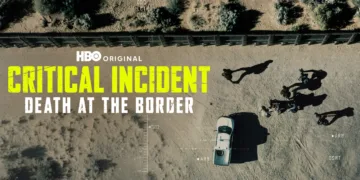
Critical Incident: Death at the Border is a compelling HBO Original Documentary that premiered on December 29, 2025. Directed by Academy Award nominee Rick Rowley, the film meticulously investigates the 2010 death of Anastasio Hernandez-Rojas, an undocumented immigrant, while in the custody of U.S. Border Patrol agents. The documentary explores the subsequent legal battles and uncovers systemic issues within the agency, including the existence of specialized shadow units. You can currently stream this documentary on HBO Max.
Full Credits
Title: Critical Incident: Death at the Border
Distributor: HBO Documentary Films, HBO Max
Release date: December 29, 2025
Rating: TV-MA
Running time: 90 minutes
Director: Rick Rowley
Writers: Rick Rowley
Producers and Executive Producers: Juliana Schatz-Preston, Karim Hajj, Rick Rowley, A.C. Thompson, Nathan Ross, Jean-Marc Vallée, Michael Antinoro, Missy Walker, Nancy Abraham, Lisa Heller, Tina Nguyen
Cast: Anastasio Hernandez-Rojas, Maria Hernandez-Rojas, John Carlos Frey, Rodney Scott, Gene Iredale, Andrea Guerrero, Pedro Rios
Director of Photography (Cinematographer): Rick Rowley
Editors: J.D. Marlow
The Review
Critical Incident Death at the Border Review
Rick Rowley delivers a haunting examination of institutional secrecy that demands attention. The series effectively pieces together a decade of fragments to expose a systemic lack of accountability. While the legal outcomes are frustrating, the documentary succeeds as a vital record of a family's endurance against a massive federal apparatus. It is a sobering look at the shadow side of law enforcement that prioritizes self-preservation over transparency.
PROS
- Patient, methodical investigative storytelling.
- Strong emotional grounding through the Hernandez-Rojas family.
- Revelatory details regarding the "Critical Incident Teams."
- High production value and clear, accessible legal breakdowns.
CONS
- The lack of a definitive legal resolution may feel unsatisfying to some.
- Certain segments are heavy with procedural jargon.