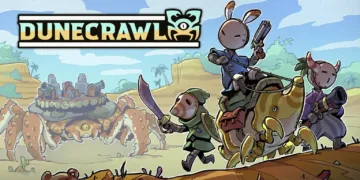






















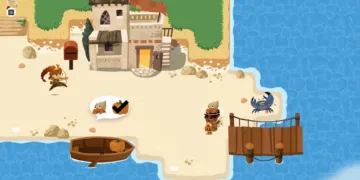








DuneCrawl sidesteps the drab, bleached palettes that tend to define desert adventures. The developers lean on a hand-drawn look that reads like a graphic novel brought to life. Architecture pulls from African and Middle Eastern styles, filling the horizon with intricate tile work and sandstone towers.
The result gives the “sandy seas” a sense of history and lived-in texture, with space for culture to show through. You cross this terrain to protect the Polloi pilgrims from the Vassals, porcelain-headed invaders driven by a strange fixation on kiln-fired crafts.
That setup carries a lighthearted charge. The tone lands in a whimsical register, keeping the story’s danger present without leaning into post-apocalyptic misery as a default mood. The game invites you to laugh at the sheer weirdness of a world that worships pottery while you fight for your life against a giant mechanical crab. Rideable beetles and other desert fauna reinforce that feeling of discovery, and the visual direction keeps moment-to-moment travel engaging. Moving between oasis islands and ruined towns stays rewarding because the world keeps offering new details to take in.
The Weight of the Walking Fortress
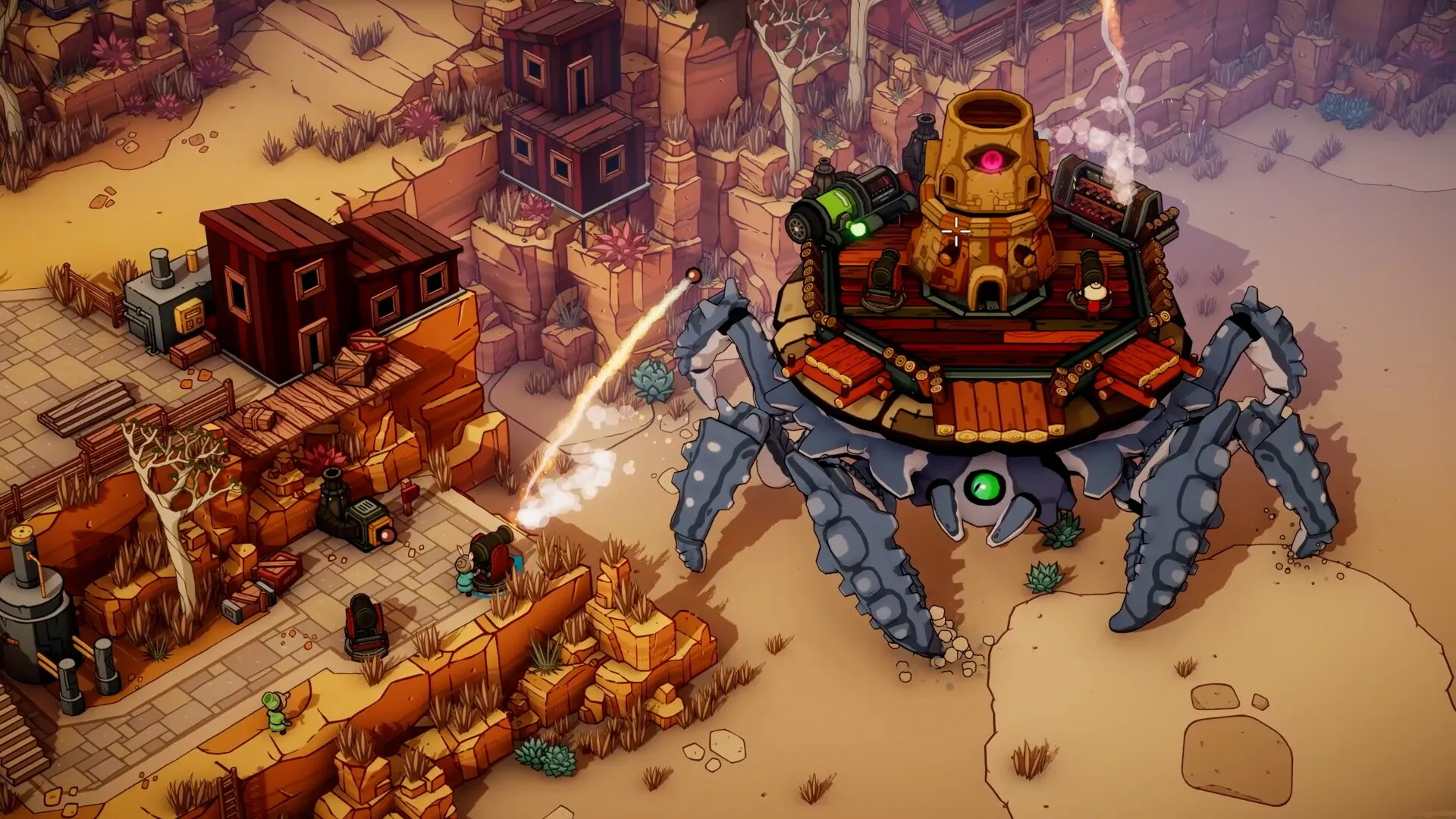
The Crab Crawler is your lifeline and your home base, a massive eight-legged war machine that asks for constant attention. Driving it across the dunes feels heavy and intentional, closer to steering a fortress than cruising in a standard vehicle. The design commits to that weight. You keep multiple systems running at once, and the game makes you feel the cost of maintaining momentum. One minute you guide the Crawler through a narrow pass, and the next you sprint to the hull to patch a damaged leg or reinforce the shields.
Combat turns the Crawler into a frantic command room. Traditional cannons let you trade shots with enemy fortifications. The game also supports more playful tactics, like loading yourself or a friend into a cannon and launching a boarding party onto an enemy vessel.
That moment hits as a highlight because it sells chaotic bravery, the kind that calls back to high-seas adventure films in spirit and rhythm. Customization helps you claim the machine as yours through naming and paint jobs, and upgrades to weaponry and stats give the mobile base a growth arc that tracks your expanding goals. The bond between pilot and machine comes through as something you build over time through upkeep, choices, and pressure.
Steel and Stamina in the Dust
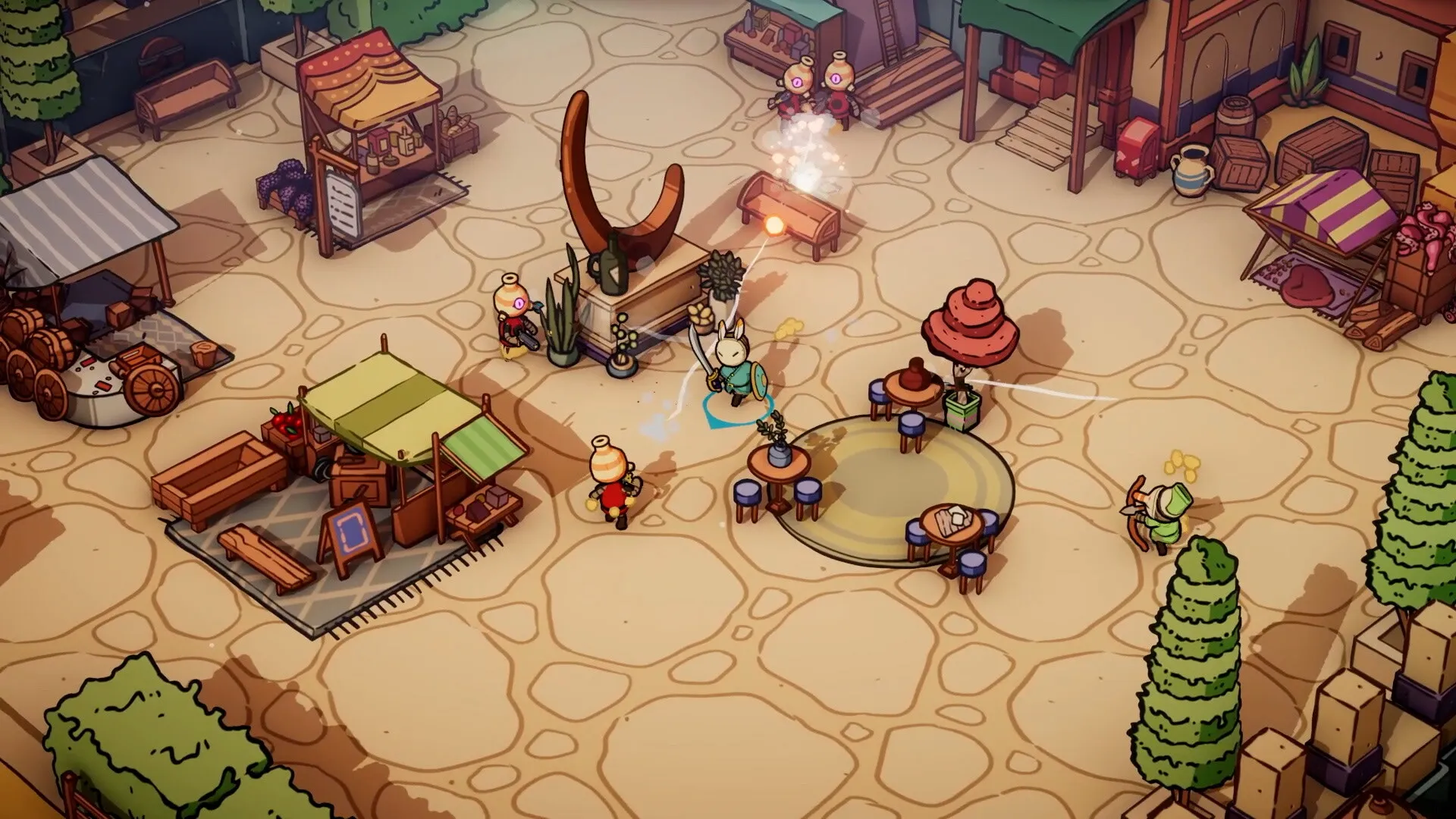
Step off the Crawler and the game shifts into tense isometric survival combat. These encounters play like bullet hell set-pieces where positioning carries real weight. Waves of fast projectiles demand clean dodges, and a stamina bar keeps you honest by punishing reckless movement. The system pushes variety because the arsenal itself invites it. One fight might ask you to control space with a curved sword, and the next might reward the reach and timing of a missile launcher that spits homing, bee-like projectiles.
The environment becomes part of your toolkit. You can grab objects in the world and hurl them at the jar-headed fiends to conserve ammunition, which adds a scrappy, improvisational feel to the action. Progression has a defining constraint: you can only swap equipped gear inside the safety of the Crawler. That rule shapes the pacing into a loop of preparation followed by execution.
You pick talismans, masks, and outfits before heading into a dungeon, then live with those choices until you return. With no traditional skill tree in play, power comes straight from the armor and weapons you scavenge, and that makes each meaningful piece of loot land as a real turning point in how you fight.
Coordination Amidst the Chaos
The game’s design leans hard into cooperation, and it feels most complete with a four-player crew. Roles emerge naturally, and the best sessions sound like a constant exchange of shouted calls and quick decisions. One player can commit to running the cannons. Another can focus on steering the Crawler into a smarter angle for a flank. That shared responsibility turns stressful encounters into wins you remember because everyone has something to do, and everyone feels the outcome.
Solo play has help in the form of an AI ghost companion, though its support stays limited. It can handle basic tasks like firing guns, and that covers the floor of functionality. Complex navigation asks for strategic judgment the assistant does not provide, so the solo experience leans more punishing. The difficulty curve reflects that multiplayer priority, since enemy density rarely drops to match a smaller party.
On the technical side, the game presents as polished. Performance stays stable at high resolutions on PC, and the experience translates cleanly to the Steam Deck. Audio keeps a low profile with an understated score and quirky character grunts that add personality without relying on extensive dialogue.
The Review
DuneCrawl
DuneCrawl is a refreshing excursion into a stylized desert where the bond between a crew and their mechanical crab takes center stage. While the on-foot combat and solo balancing feel slightly unpolished, the sheer creativity of the world and the chaotic joy of cooperative play make it a standout indie title. It favors experimental mechanics and visual flair over deep progression systems. If you have a few friends ready to coordinate a walking fortress, this is a journey worth taking.
PROS
- Inventive and vibrant hand-drawn art style.
- Engaging and unique crab-based vehicle combat.
- Hilarious and rewarding cooperative gameplay.
- Strong performance on PC and Steam Deck.
CONS
- Punishing difficulty spikes for solo players.
- Inventory management is restricted to the vehicle.
- Lack of a deep character progression system.