









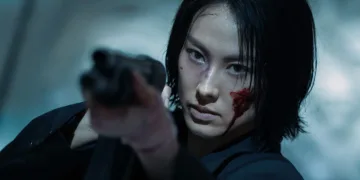












Masao Adachi finds a haunting mirror in the life of Satoshi Kirishima. The director, once a revolutionary activist himself, understands the weight of exile. His film, Escape, examines the decades-long disappearance of Kirishima, a student radical from the East Asia Anti-Japan Armed Front who vanished in 1975 following a series of corporate bombings. This silence lasted nearly fifty years, broken only by a 2024 deathbed confession in a Kanagawa hospital. Adachi treats the long absence as an inward condition, a mind trained to live without reflection.
The film studies the friction between a frozen public image and a hidden private reality. For half a century, Kirishima lived as a ghost. His youthful, smiling face stayed fixed on national wanted posters while his physical body aged into obscurity under an alias. That tension sets the premise.
Adachi views the act of fleeing as a spiritual vocation, a daily rite practiced in small choices. He suggests that hiding functions as endurance, a way of staying alive inside a world that keeps demanding a legible identity. The narrative frames the disappearance as a refusal to exist within the surveillance of the state, and that refusal carries its own hunger, its own slow erosion.
Echoes Across the Riverbank
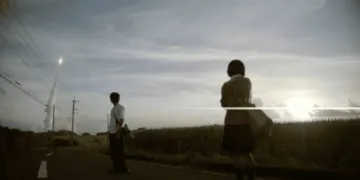
The film rejects linear progression and moves through the fractured psyche of its protagonist. Rairu Sugita plays the younger Satoshi with a quiet, magnetic fire, embodying the idealism of the 1970s radical. Kanji Furutachi portrays the elder version, now a weathered laborer named Hitoshi Uchida. These two performers often share the same cinematic space. On a rural country walk, along a desolate riverbank, the two versions of the man speak to each other as if time has turned porous.
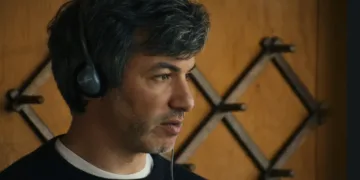
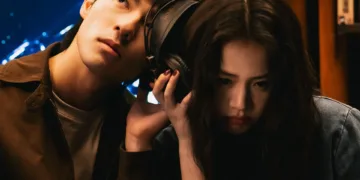
This temporal blending lets the past interrogate the present, and it also lets the present accuse the past. Furutachi delivers a performance of profound interiority. He moves with the heavy gait of a man who has carried a secret like a physical weight, each step measured, each pause edged with restraint. Sugita brings an extroverted conviction that presses against that restraint, a voice that still believes in its own heat. Their chemistry anchors the film when it slides into more experimental shifts in time.
The dialogue between them becomes a ghostly meditation on failure. One man reads like a beginning, the other reads like an ending, and the distance between them feels carved out by years spent in shadow. They look at each other as if the face across from them holds a verdict. The structure suggests that the revolutionary and the fugitive remain inseparable, two forms of the same life that cannot fully forgive itself.
The Aesthetic of Agitation
Adachi utilizes a mid-budget aesthetic that rejects commercial polish and leans into raw intellectual urgency. The film incorporates stage-play elements, giving Furutachi space for monologues that land as intimate and theatrical in the same breath. Mid-shots dominate the visual language, framing the characters with a precision that intensifies their isolation. The camera keeps returning to the body as evidence, to posture and stillness as a record of what has been endured.
Archival footage tightens the bond between fiction and history. By weaving in clips of the 1995 Tokyo subway attack and various natural disasters, Adachi links Kirishima’s personal exile to a wider history of Japanese suffering. The soundscape sharpens that atmosphere. Kinetic piano pieces collide with jazz-rock fusion, generating nervous energy that seems to vibrate under the dialogue.
These auditory choices reflect the protagonist’s shifting mental states. The music carries the rebellion of his youth and the decayed nostalgia of his later years, sometimes within the same passage, like memory refusing to settle. The sensory pressure keeps the film from drifting into the comfort of a standard biopic. It stays committed to artistic resistance, even when resistance looks like loneliness.
The Architecture of Silence
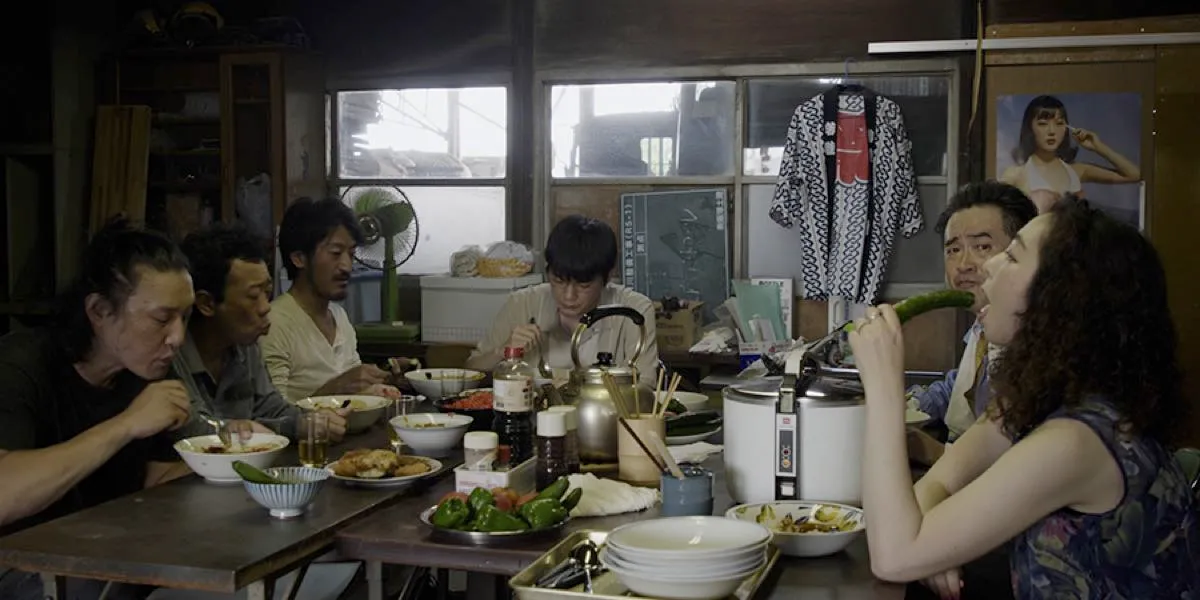
The film’s philosophy rests on the paradox of the invisible revolutionary. Kirishima followed the “Hara Hara Tokei” manual, which provided instructions on blending into the masses. He chose the construction industry as his sanctuary. A bitter irony hangs over that choice: a radical who sought to dismantle corporate structures spends his life building the physical infrastructure of the state. His labor becomes his disguise. Anonymity turns into a functional exile from his own identity, and the days begin to resemble each other until sameness itself feels like a mask.
The construction site acts as a metaphor for the way the system absorbs its dissidents. Steel, concrete, routine, hierarchy, wages, fatigue: the machinery does not need to argue with him. It only needs to keep him working. In the final act, the setting shifts to the hospital. As Kirishima approaches death, he sheds his alias, and that shedding reads as a hard-won liberation from the burden of concealment.
He reclaims his name with the calm of someone who knows there is little time left to carry it. The scene where he meets the ghosts of his former comrades offers a transcendental resolution. His solitude ends. He enters a space where his true self and his history are acknowledged, and the film leaves that recognition hanging in the air like a final breath that still contains questions.
Escape (Japanese title: Toso) is a 2025 biographical drama directed by veteran radical filmmaker Masao Adachi. The film, which had its Japanese theatrical release on March 15, 2025, recently saw its United Kingdom premiere at the Institute of Contemporary Arts in London on January 16, 2026. It tells the haunting, real-life story of Satoshi Kirishima, a student radical who vanished for nearly five decades after a series of corporate bombings, only to resurface in a hospital shortly before his death in early 2024. The film is currently available through specialized screenings at independent cinemas and is expected to reach wider streaming audiences via MUBI later this year.
Full Credits
Title: Escape (Toso)
Distributor: Uzumasa, MUBI, Institute of Contemporary Arts
Release date: March 15, 2025 (Japan), January 16, 2026 (United Kingdom)
Running time: 114 minutes
Director: Masao Adachi
Writers: Masao Adachi
Producers and Executive Producers: Emiko Fujiwara, Sanshiro Kobayashi, Yu Hirano
Cast: Kanji Furutachi, Rairu Sugita, Eriko Nakamura, Mutsuo Yoshioka, Soran Tamoto, Yuya Matsuura, Yohta Kawase, Tomomitsu Adachi
Director of Photography (Cinematographer): Yutaka Yamazaki
Editors: Tomoko Hiruta
Composer: Yoshihide Otomo
The Review
Escape
Escape is a haunting meditation on the cost of silence. Adachi finds a stark beauty in the friction between ideological fire and the cold reality of aging. It is a demanding work. The film insists that we look at the wreckage of a life lived in a state of refusal. It offers a rare look at the intersection of history and mortality.
PROS
- Masterful performances by Kanji Furutachi and Rairu Sugita.
- Inventive use of non-linear storytelling to bridge different eras.
- Thoughtful exploration of political exile and the loss of identity.
- An uncompromising aesthetic that mirrors the protagonist’s convictions.
CONS
- The low budget production style might feel sparse to some viewers.
- Avant-garde elements occasionally create moments of narrative confusion.
- The pacing requires significant patience from the audience.