




















![Kingdom Hearts Collection [I-III] Review](https://gazettely.com/wp-content/uploads/2026/10/Kingdom-Hearts-Collection-I-III-1-360x180.webp "Kingdom Hearts Collection [I-III] Review: KHII Holds Steady as Newer Entries Fluctuate 37")



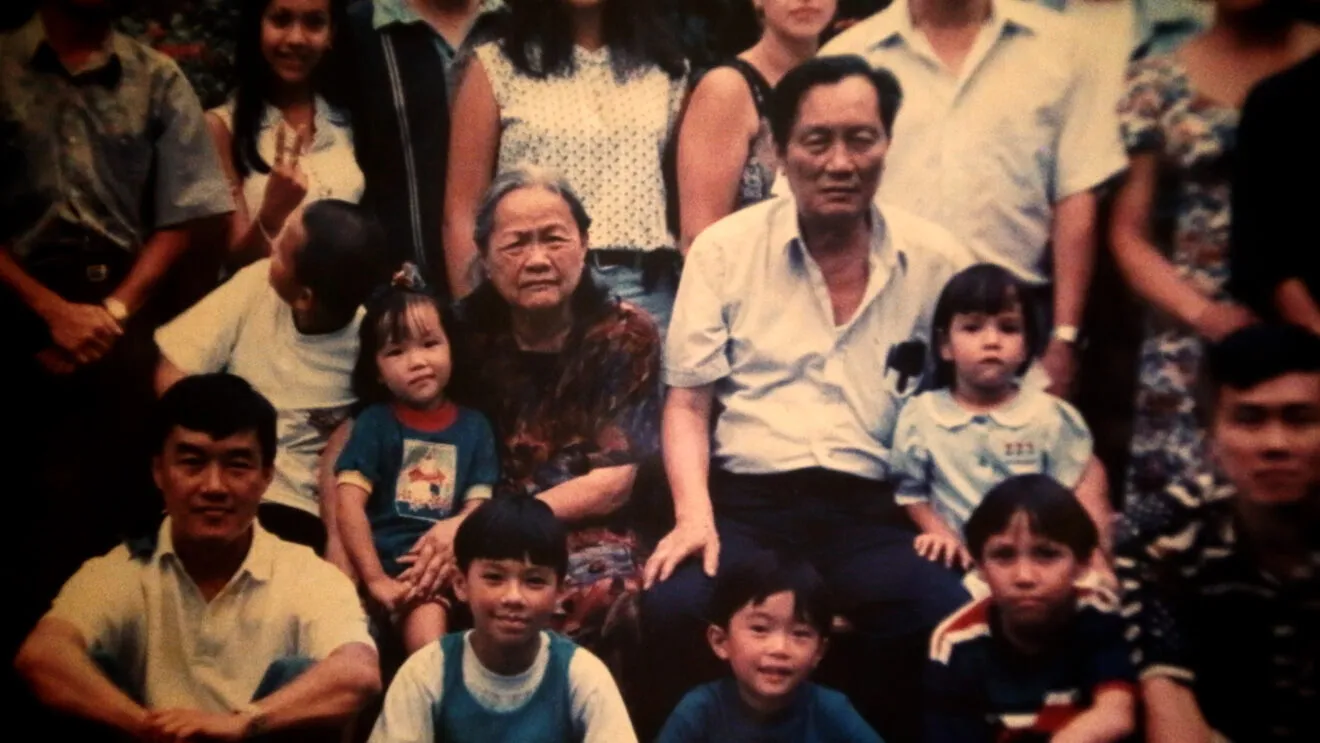

Nicole Chi Amén steps into cinema with a debut that plays like a careful self-audit conducted in half-light. The film tracks her attempt to chart a Chinese-Costa Rican identity that keeps sliding the moment she tries to secure it. Even the title, “Guián,” carries that instability. It names a paternal grandmother, a word Chi Amén spent her life applying to her maternal grandmother by mistake.
That small error becomes the film’s founding document: a piece of lived terminology that reveals how inheritance can arrive scrambled. Call it “glitch-heritage” (I will, since the movie invites this kind of labeling). The narrative grows out of beautiful misunderstandings that refuse to stay small.
The journey begins in the literal dust of a demolished family home in Costa Rica and stretches toward the humid historical weight of Guangdong, China. Watching a house come apart forces an unromantic realization. Buildings do not reliably guard legacy. Brick and cement hold weather, not memory. Chi Amén goes looking for something sturdier than architecture, some kind of belonging with better durability against time’s steady abrasion. The film keeps returning to this premise: inheritance is fragile, and the people carrying it often feel even more breakable.
The Double-Sided Mirror of Displacement
The film divides itself across two geographies, and the structure behaves like a mirror with a slightly warped reflection. Costa Rica occupies the first stretch, grounded in the rhythms of extended family life. The second stretch travels to an ancestral village in China. This design sets up a blunt truth that lands without theatrics.
Chi Amén lives in a state of perpetual guesthood in both places. In Costa Rica, taxi drivers pepper her with questions that reveal how thin multicultural awareness can be in everyday conversation. They read her face as a mismatch against a narrow idea of who “belongs.” It plays like casual curiosity, yet the effect carries the familiar sting of social sorting. A nation with a long history of migration still finds ways to patrol its visual boundaries (humans love a checkpoint, even the imaginary ones).
Guangdong offers its own version of the same sorting. Chi Amén arrives without the language of her ancestors, and the absence shapes the atmosphere. The result is a heavy quiet that presses through the film. She cannot speak the tongue of the woman she is named after. The silence becomes a kind of inheritance too, passed down through circumstance and distance.
So she turns to the camera as her functional language, building a bridge out of images and attention. The film becomes a “memento-vessel,” a container meant to hold contradictions without cracking. It studies the way identity gets judged as excessive in one setting and insufficient in another, depending on who gets to define the measuring tool.
The Aesthetics of the Peeping Observer
Visually, the film commits to a style that fits its subject: “intentional voyeurism.” The camera often adopts a peeking position, looking through metal barricades or narrow openings. This keeps the viewer in Chi Amén’s psychological posture, hovering at the threshold of her own past. The framing makes access feel conditional, always granted through a gap, never through an open door.
The aesthetic carries the rough texture of travelogue mixed with experimental home video. Handheld movement sometimes brings a faint vertigo, and the sensation suits what the film is trying to express. Memory rarely arrives as a stable tripod shot. The wobble creates a “trance-state,” a visual haze that matches recollection’s soft edges. Close-ups shift the tone toward intimacy, pulling the viewer into Chi Amén’s internal weather patterns, the small changes in expression that register as emotional micro-events.
A soft, narrated voice-over works like a tether. It keeps the audience oriented as the film drifts through time. The editing treats time as something pourable, blending the immediate present with the pressure of the past. The construction feels like a living diary, actively processing, revising, and occasionally contradicting itself. That lack of polish reads as honesty, even if it also reads as vulnerability.
Nostalgia as a Survival Mechanism
The search for the ancestral home in Guangdong gives the film its narrative backbone. Chi Amén’s goal is concrete: locate a physical marker inside a world shaped by migration and decay. The quest carries a quiet political charge. Modern life displaces people through economics, development, and history’s long tail; homes vanish, neighborhoods change names, and families learn to store their origins in stories because the coordinates stop matching the map.
In Guangdong, Chi Amén connects with elderly relatives like Lai, whose recollections act as connective tissue between the film’s two halves. The encounters carry a particular kind of tenderness, including the warmth of a Lunar New Year meal. Ritual persists even when language fails. Food, gestures, seating patterns, and shared pauses do cultural work that grammar cannot always manage. The film watches these moments with patience, letting them hold meaning without forcing an explanation.
There is an ache here that anyone from a diaspora will recognize. It is the “immigrant-void” that opens up when you realize the places your parents loved no longer exist in the form they described, and your mental picture has been built from secondhand light. The film acknowledges that void without turning it into a melodrama. Chi Amén keeps going. She stays surprisingly cheerful for someone tracing a family history through rubble and mispronounced names. That persistence becomes part of the film’s emotional logic.
I went back and forth on what the movie ultimately “achieves,” then stopped trying to lock it into a single verdict. It turns a specific family tree into a readable map of longing, and it does so without pretending longing is tidy. The final impression is simple and bruising: many of us spend our lives trying to return to a house that has already been torn down.
Guián is a deeply personal documentary that premiered at the Visions du Réel film festival in April 2023. The film explores the director’s heritage as she travels from Costa Rica to China to find her late grandmother’s ancestral home. As of 2026, the film is available for streaming on the documentary-focused platform True Story, having been released there on January 16, 2026.
Full Credits
Title: Guián
Distributor: Noche Negra Producciones, True Story
Release date: April 2023 (World Premiere), January 16, 2026 (True Story Release)
Running time: 75 minutes
Director: Nicole Chi Amén
Writers: Nicole Chi Amén
Producers and Executive Producers: Alejandra Vargas Carballo, Nicole Chi Amén
Cast: Leda Amén Funk, José Chi Chan, Flori Ng, Fong Lai Kong, Milton Barquero
Director of Photography (Cinematographer): Nicole Chi Amén
Editors: Roberth Pereira
Composer: Diego Rojas
The Review
Guián
"Guián" serves as a delicate, sensory meditation on the immigrant experience that thrives in its raw honesty. While the technical execution leans heavily into the amateurish charm of home videos, the film finds power in its depiction of a specific cultural displacement. It effectively captures the silent ache of being a foreigner in two lands simultaneously. Nicole Chi Amén creates a diary that feels deeply personal while remaining universally resonant. It stands as a quiet, thoughtful achievement in contemporary documentary filmmaking.
PROS
- Intimate and deeply personal narrative
- Unique exploration of Chinese-Costa Rican identity
- Captures a universal sense of ancestral longing
- Engaging, soft narration provides a cohesive tether
CONS
- Occasional dizzying handheld camera work
- Inconsistent pacing that feels slow in parts
- The "too personal" style may alienate some
- Technical execution feels raw and unpolished