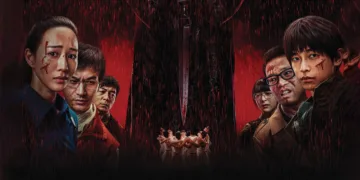


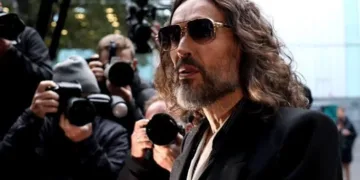
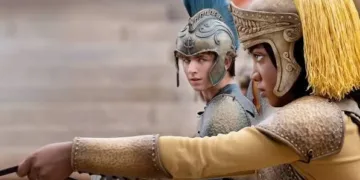




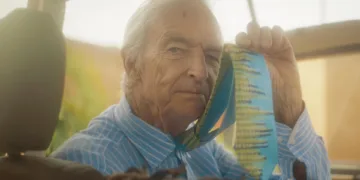
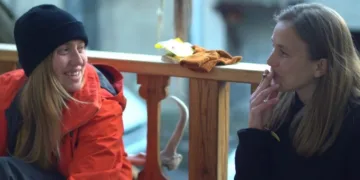




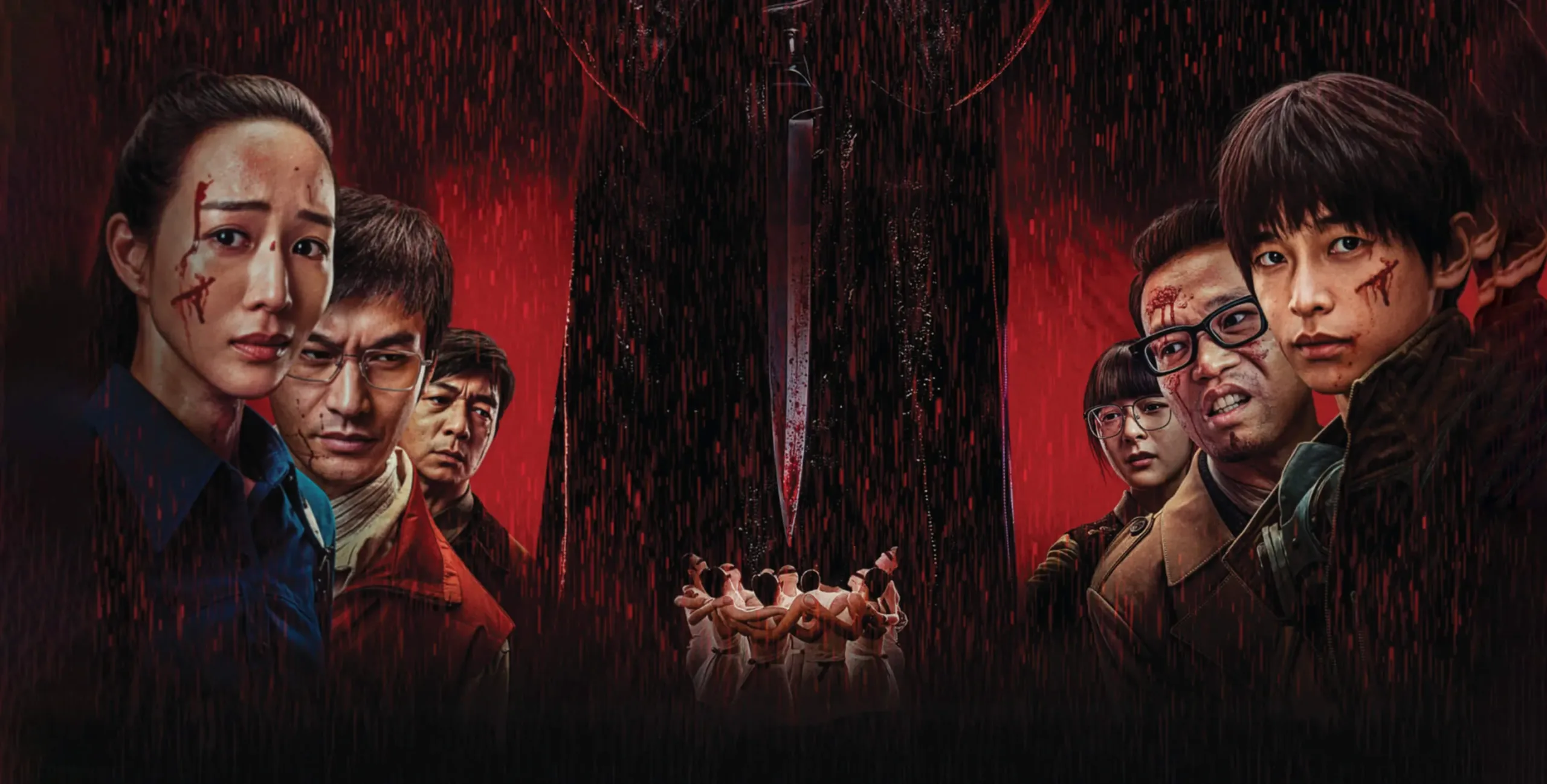
Sam Quah’s The Fire Raven sketches Doma City as a place already half-lost to itself. Environmental collapse has driven residents underground, and clean air sits behind a paywall, treated as a taxable luxury. The story kicks off with the murder of a woman named Taralah in her apartment.
A figure in a dark hooded coat and crow mask stalks the city during the Crowmoot festival, turning a seasonal ritual into a lingering threat. Detective Fang Zhengnan steps in to lead the investigation. Her younger brother, Tianyang, joins her, bringing an unusual set of tools: he draws comic books, he experiences unsettling psychic visions, and he walks with a bionic prosthetic leg.
Together they trace a string of killings that target the city’s elite, crimes tied to a devastating incident from fifteen years earlier involving a girl named Lin Xiaodi. Quah frames the film as a police procedural filtered through sci-fi imagery and a gritty graphic-novel look, in a world where corruption and hunger for payback smear the difference between lawful pursuit and vigilantism.
Echoes of 2010 and the Politics of Breath
The script runs on a strict two-track timeline, with 2010 looming over the choices made in 2025. Taralah’s death plays as a present-tense mystery pinned to Lin Xiaodi’s earlier trauma, with the assault from years ago serving as the spark that ignites the current wave of violence. Quah uses that link to paint a sociopolitical system defined by institutional decay, where accountability feels ornamental and power circulates in closed loops.
Doma City’s “Under City” gives the class divide a literal architecture. The marginalized endure suffocation below ground, and the surface elite argue policy in comfort, including the proposed air tax that turns breathing into a civic transaction. The conflict is embodied in the opposition between the activist Cai Minan and the official Ge Wen. Their clash points to a society that treats biology as a commodity, with public life organized around who gets access and who gets rationed.
Crowmoot, meanwhile, supplies cultural texture that reads like folklore repurposed for dystopia. Masks are worn to ward off evil, and that custom becomes cover for someone pursuing vigilante justice with theatrical intent. The killer selects victims among the powerful, aiming at people whose scandalous secrets can be exposed alongside their deaths. Murder turns into a public reckoning, and each revelation widens the portrait of a city rotting from the top down.
Bionic Visions and Graphic Novel Realities
Tianyang is the hinge between the film’s supernatural impulses and its sci-fi ambitions. His psychic visions and bionic left leg push him toward a superhero register, shaping how the movie frames his role in the investigation. Fang Zhengnan grounds the story in a harder procedural mode.
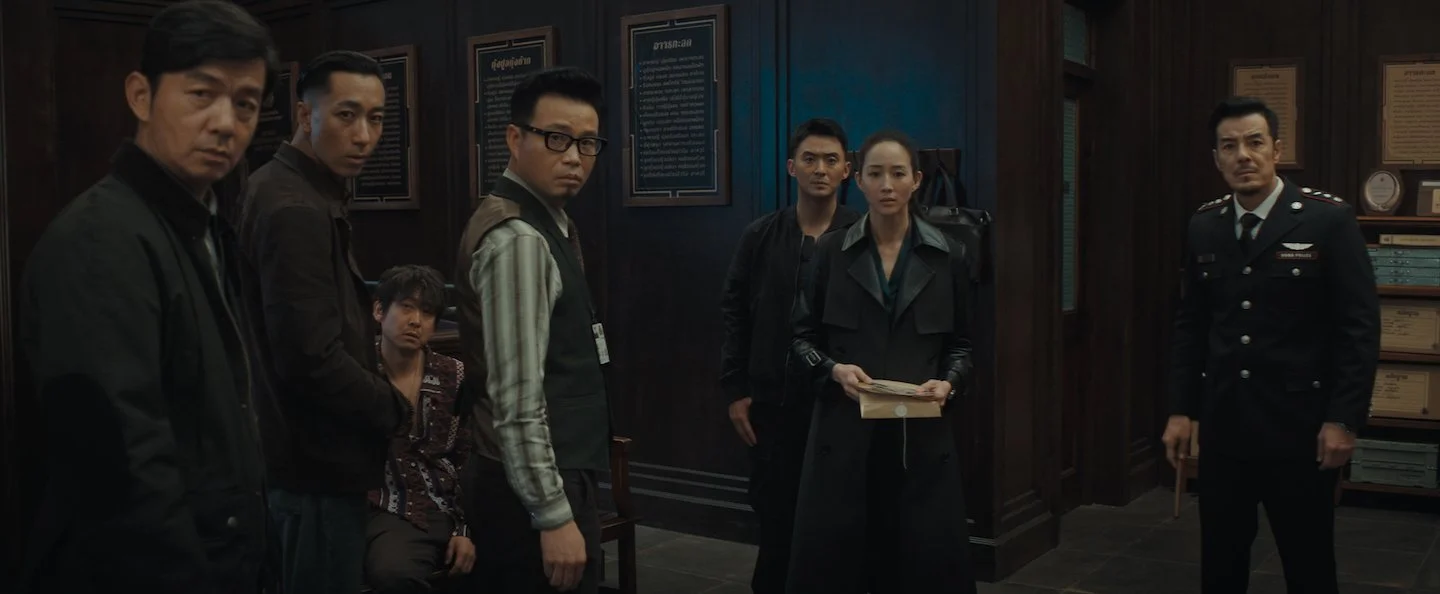
She fits the tough, no-nonsense detective archetype, and the film’s emotional steadiness comes from the bond between the siblings. Zhengnan shields Tianyang, and she also bristles at his involvement, especially when his visions pull him deeper into the case. That friction gives the story a human rhythm and echoes the film’s own tension between gritty realism and heightened fantasy.
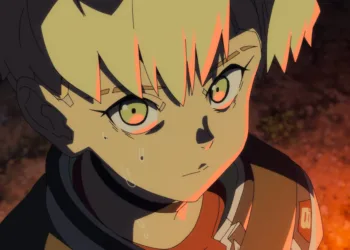
Around them, Quah builds a supporting ensemble that reinforces the graphic-novel texture. The disgraced Lin Hongyan and the rival detective Edward fill out a world of compromised careers and contested authority. Long tracking shots and a constant foggy atmosphere help the film mimic the feel of dark comic panels, where distance, framing, and haze carry as much narrative weight as dialogue. The city becomes a stylized page, and the characters move through it like inked silhouettes pressed into neon and smog.
That visual identity extends to the women in the story, and this is where the film’s aims collide. The final acts reach for a “girl power” note, with the narrative signaling empowerment and resolve. The plot’s fixation on past trauma complicates that gesture, since the same backstory that fuels the mystery also raises doubts about how earned the late-stage uplift feels. The film leans on the exploitation of women as the trigger for male-led action, a familiar genre mechanism that sits uneasily next to the movie’s contemporary styling and its stated interest in moral exposure.
Kinetic Chaos and the Speed of Retribution
Quah’s technical approach favors impact and velocity. The editing is punchy and hyper-kinetic, echoing the rhythms of modern short-form digital media. Sped-up footage and aggressive cuts keep the movie moving, and they also generate sharp tonal swings. One stretch plays like a dark slasher, the next leans into action comedy, and the film periodically slows for concentrated melodrama. The result is a restless tonal surface that draws attention to its own gear changes.
Action scenes make that instability most visible. The scooter chase and the wrestling-match brawl chase momentum first, with physical believability taking a back seat. The film embraces a pulpy, exaggerated reality in these set pieces, treating speed and impact as the guiding logic. Quah sets the tone early with an opening that follows a crow out of a misty sky and down into the cramped underground tunnels. The descent establishes atmosphere, then the film pivots into graphic violence, with crow imagery functioning as a warning sign for death closing in.
The climax on a speeding train turns into the clearest payoff for Tianyang’s mechanical enhancements. His bionic leg becomes a practical advantage in motion, and the film stages a feat of physical prowess as proof of why this character carries sci-fi hardware in a police story. The sequence ties the movie’s genre threads into a single rush of movement, favoring spectacle and cathartic action over the measured logic of a traditional mystery.
Released on New Year’s Eve 2025 in China and arriving in North American theaters in early 2026, The Fire Raven (also known as Ni Sha) is a gritty crime thriller that marks the third installment in director Sam Quah’s “killing” franchise. The story follows a witness and a determined detective in the fictional, pollution-choked Duma City as they investigate a series of murders linked to a dark secret from fifteen years prior. You can currently catch this film in select international cinemas, with digital streaming expected to follow later in the year on major Asian-focused platforms.
Full Credits
Title: The Fire Raven
Distributor: China Lion Film Distribution, Mega Films Distribution, China Film Group Corporation
Release date: December 31, 2025 (China), January 16, 2026 (United States)
Rating: MA
Running time: 116 minutes
Director: Sam Quah
Writers: Sam Quah
Producers and Executive Producers: You Wenwei, Huang Xiaoming
Cast: Peng Yuchang, Ning Chang, Huang Xiaoming, Wang Xun, Xu Jiao, Jiadong Xing, Phoebe Hou, Alan Aruna
Director of Photography (Cinematographer): Liu Yizeng
Editors: Sam Quah
Composer: Will Chen
The Review
The Fire Raven
The Fire Raven is a frenetic collision of high-concept sci-fi and gritty noir that struggles to find a consistent pulse. While its visual commitment to a graphic novel aesthetic is striking, the narrative often collapses under the weight of its own coincidences and frantic editing. It offers a fascinating, albeit messy, look at systemic decay through a pulpy lens. It is a work of ambitious excess that captures the eye but fails to anchor the heart.
PROS
- Distinctive and moody graphic novel visual style.
- Ambitious world-building regarding the "Under City."
- Kinetic and creative action choreography.
- Strong, no-nonsense performance by Ning Chang.
CONS
- Jarring tonal shifts between comedy and slasher horror.
- Over-reliance on flashbacks to explain the plot.
- Excessive use of "bionic" tropes that strain logic.
- Messy editing that mimics short-form video logic.